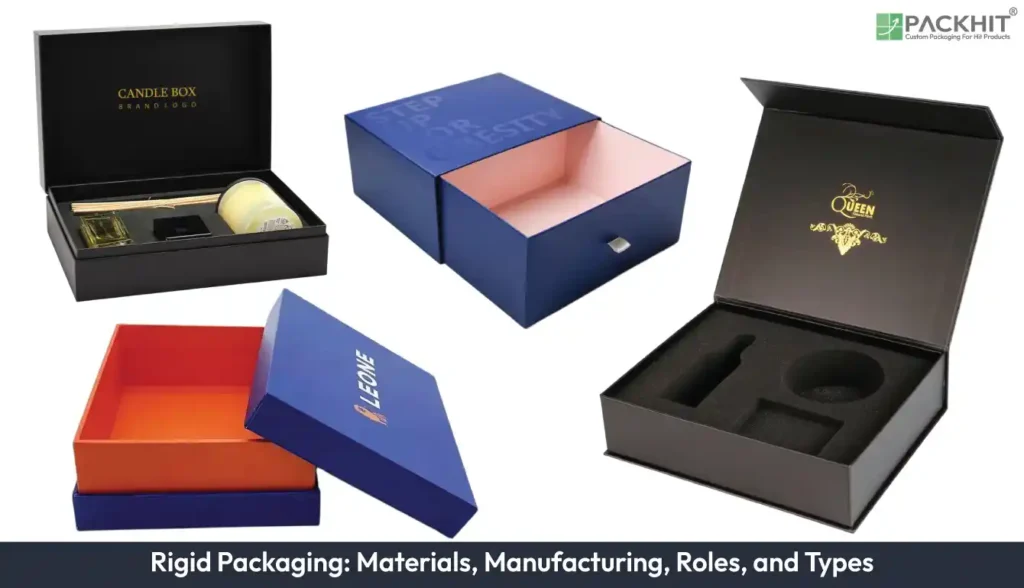
Rigid packaging is non‑flexible, shape‑retaining packaging made from paperboard, plastic, metal, or glass that can help protect fragile and high‑value products and support high‑resolution graphics, typically printed by offset. Materials can be grouped into four categories: paper-based (paperboard, chipboard, corrugated cardboard), plastics (PET, PP, HDPE), metals (aluminum, tinplate), and glass (container and borosilicate). Manufacturing follows discrete stages of material selection and preparation, sizing and cutting, printing and surface treatments, folding, gluing or assembly, quality inspection, and final packing. Rigid packaging can perform roles such as physical protection, brand presentation via high‑quality printing and finishing, and recycling for sustainability. Types of rigid packaging include two‑piece and telescopic boxes, drawer‑style trays, clamshells, tubes, tins, and trays. Rigid packaging costs typically vary widely based on material, dimensions, customization, finishing, and order volume; for many standard configurations, pricing is often in the low single- to mid-double-digit range per unit, while complex finishes can raise costs.
What is Rigid Packaging?
Rigid packaging is typically best when you need shape retention and strong protection for fragile or high-value items. If your product is lightweight and less damage-prone, flexible or semi-rigid packaging may be a lower-cost option. It uses structural walls and engineered joints to resist compression and impact during handling and transit. The material choice of rigid packaging, such as coated paperboard, tinplate, aluminum, borosilicate glass, and PET, determines its mass, recyclability, and surface finish. For printed graphics, rigid packaging commonly relies on offset printing to achieve consistent color, fine detail, and repeatable registration on coated boards. Typical applications include electronics, cosmetics, jewelry, and premium food items, where protection and visual presentation both matter.
Materials Used for Rigid Packaging
Rigid packaging materials can be classified into four primary categories based on composition and functional attributes: paper-based materials, plastics, metals, and glass. Each category offers unique advantages for durability, structural integrity, and aesthetic appeal, catering to diverse packaging requirements.
- Paper-Based Materials: These include paperboard, chipboard, and corrugated cardboard, known for their versatility, eco-friendliness, and excellent printability. Common risks include moisture sensitivity, which can cause clumping in dry goods like baking mixes, as well as the potential for scuffing and crushing. For compliance, these materials require verified food-safe coatings when used for consumables, and it is recommended to verify barrier performance against storage humidity.
- Plastics: Plastics like polyethylene and polypropylene can be used for rigid packaging due to their lightweight and their ability to be molded into complex shapes. They may also carry risks related to oxygen and light permeability, which can degrade product shelf-stability. It is necessary to verify migration compliance by reviewing laboratory test logs for sensitive products like pharmaceuticals or food to ensure the resin remains chemically inert and safe for contact with the product.
- Metals: Aluminum and tinplate can commonly be used for their strength and premium appearance, yet they are susceptible to risks such as denting and corrosion. To ensure chemical safety, it is critical to check interior liners and coatings for compatibility and regulatory compliance.
- Glass: Glass can help provide an elegant and durable solution but faces primary risks of breakage and thermal shock. Its non-reactive nature is a critical safety attribute, making it ideal for food and pharmaceutical applications where product purity is paramount.
Choosing the right substrate and coating can improve print clarity and durability during packing and transit. For example, surface treatments like matte or gloss coatings can help protect printed graphics from scuffing and make the finish match the brand feel.
How is Rigid Packaging Manufactured?
Rigid packaging manufacturing can be done by selecting and preparing dense substrates, cutting and forming parts, applying offset printing for graphics, adding laminates or surface treatments, folding and gluing or assembling structures, inspecting quality, and then packing for distribution.
- Material Selection and Preparation: Manufacturers can choose materials such as paperboard, chipboard, or corrugated cardboard based on the packaging’s durability, design, and eco-friendliness. These materials are then prepared for further processing, ensuring consistent quality and structural integrity.
- Sizing and Cutting: The selected materials are precisely measured and cut using advanced machinery to meet the specified dimensions of the packaging design. This assists in ensuring seamless assembly and minimal material wastage.
- Folding and Gluing: Pre-cut components can be folded into desired shapes and securely glued to form the basic structure of the rigid packaging. This step helps establish the foundational framework, ensuring strength and durability.
- Printing and Branding: High-quality offset printing is typically applied to incorporate branding elements such as logos, patterns, and text. This process helps enhance the visual appeal and aligns the design with the client’s branding objectives. Techniques like embossing, debossing, and metallic foiling can also be applied to elevate the packaging’s premium feel.
- Laminating and Surface Treatments: To protect the printed surface and enhance the finish, a lamination layer or specialized surface treatment, such as matte or gloss coating, is added. These treatments aid in improving the tactile and visual qualities of the packaging while safeguarding it from wear and tear.
- Quality Control and Inspection: Each unit undergoes rigorous quality checks to ensure adherence to design, structural, and functional standards. This step helps identify and rectify any defects, guaranteeing that only flawless products move to the final stage.
- Final Assembly and Packaging for Distribution: The completed rigid packaging is assembled, if required, and prepared for bulk distribution. This includes stacking, boxing, or palletizing, which can help ensure safe transit and efficient storage.
This end-to-end manufacturing process ensures that rigid packaging meets industry standards for robustness, aesthetics, and functionality. It supports diverse applications in sectors such as luxury goods, electronics, food, and cosmetics, offering tailored solutions for various product needs.
Functional Roles of Rigid Packaging
Rigid packaging typically serves three primary roles: protecting goods with durable materials against physical and environmental damage, assisting in enhancing brand identity through premium designs and high-quality printing, and supporting sustainability via eco-friendly, reusable components.
Protection and Durability
Rigid packaging is designed to protect goods from physical damage, environmental factors, and transit-related risks. Its high durability helps ensure long-term structural integrity, making it suitable for fragile and high-value items such as electronics, jewelry, and luxury food products.
Brand Enhancement
The premium appearance of rigid packaging contributes to brand perception and customer appeal. Customization options, including tailored designs and high-quality printing, can allow businesses to align packaging with their brand identity and create a memorable unboxing experience.
Reusability and Sustainability
Rigid packaging often incorporates eco-friendly materials, such as recyclable paperboard, which can help support sustainability goals. Its reusability adds value for customers and reduces environmental waste, making it an attractive option for brands prioritizing green initiatives.
Types of Rigid Packaging
Rigid packaging types can be classified by style, material composition, and functionality; each class maps to specific formats and industry examples.
| Type | Application and Description |
| Magnetic closure boxes | Often used for cosmetics, jewelry, and electronics; tends to provide a secure closure. |
| Two-piece boxes | Generally suitable for gift boxes and gourmet food; can simplify packing and display. |
| Telescopic boxes | Often utilized for apparel and electronics; tends to accommodate variable product heights. |
| Clamshell boxes | Commonly used for retail display and food items; often incorporates clear panels. |
| Shoulder neck boxes | Frequently seen with perfumes and spirits; may include internal neck supports for bottles. |
| Tray and sleeve | Suitable for confectionery and stationery; tends to offer protected presentation. |
| Custom shape boxes | Often applied to irregular or shaped goods; design can follow product geometry. |
| Foldable rigid boxes | Often used in e-commerce or storage, panels can collapse for space savings. |
| Book-style boxes | Typically used for collectibles and premium sets; hinged design may offer protection. |
| Hinged lid boxes | Often used for jewelry and accessories; tends to withstand durable handling. |
| Paper based | Paperboard and chipboard are often used for gift boxes; tends to be good for printing. |
| Plastic | PET, PP, or HDPE; often used for trays or clamshells; can be moisture-resistant. |
| Metal | Aluminum or tinplate; often used for tins or caps; tends to provide barrier protection. |
| Glass | Container glass or borosilicate; often used for bottles or jars; tends to be impermeable. |
| Protective | Foam-lined boxes or tamper-evident lids often help resist shock or abrasion. |
| Barrier | Metal tins or glass jars with seals often block moisture, oxygen, and light. |
| Customizable | Embossed boxes or padded inserts often help match brand or fit requirements. |
Rigid packaging typically incurs higher manufacturing and material costs, making it less suitable for low-margin products. Its bulkier design also results in higher shipping costs, particularly for larger items.
How Much Does Rigid Packaging Cost?
The cost of rigid packaging may vary depending on factors such as material type, design complexity, customization options, and production volume. On average, rigid packaging costs can vary for standard and customized designs. Indicative estimates for typical projects can be between $2 and $15. Bulk orders often reduce per-unit costs, making it essential for manufacturers to balance design requirements with budget constraints.
What are the Examples of Rigid Packaging?
Rigid packaging examples encompass boxes, tubes, and trays, each tailored to specific functional and aesthetic requirements across industries. These formats help ensure structural integrity and durability, making them indispensable for various applications.
- Boxes: Rigid boxes are versatile and widely used for storage, shipping, and presentation. They offer customizable designs, premium finishes, and exceptional durability, making them ideal for luxury goods, electronics, and cosmetics.
- Tubes: Cylindrical rigid packaging, such as tubes, provides precision and protection for items like cosmetics, food products, and electronics. Their unique shape and robust construction assist in enhancing both functionality and visual appeal.
- Trays: Rigid trays are designed for efficient organization and protection of products during storage or display. They can be frequently used in industries such as food packaging, electronics, and retail to ensure stability and ease of access.
These examples highlight the adaptability of rigid packaging in combining superior protection, distinctive aesthetics, and practical functionality to meet diverse industry needs.
What are the Emerging Trends in Rigid Packaging?
Emerging trends in rigid packaging typically include increased customization through advanced printing techniques, a shift toward sustainability with eco-friendly materials, and technological advancements enabling more precise and efficient manufacturing processes.
Customization and Branding
Brands can use rigid packaging to create unique and luxurious designs that stand out in competitive markets. Techniques such as embossing, debossing, and metallic foiling are gaining popularity for their ability to enhance visual appeal and align with brand aesthetics.
Sustainability Initiatives
The use of eco-friendly materials, such as recyclable paperboard and specialty papers, is becoming a key focus in rigid packaging. Manufacturers are exploring ways to reduce environmental impact while maintaining the durability and premium feel of rigid packaging.
Technological Advancements
Advancements in printing and manufacturing technologies are helping businesses with more precise and cost-effective production of rigid packaging. Digital printing techniques can be integrated alongside traditional offset printing to support smaller production runs and faster turnaround times.