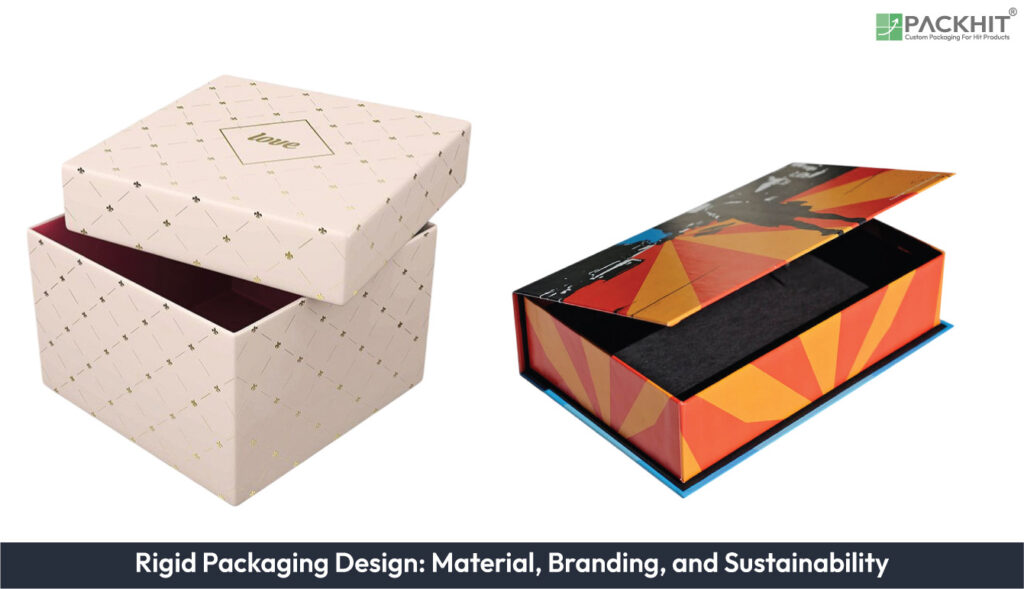
Rigid packaging design is a multi-faceted approach that combines material science, branding innovation, and sustainability principles to create packaging solutions that balance durability, aesthetics, and eco-consciousness. It utilizes materials like paperboard, corrugated fiberboard, and molded pulp, each chosen for its unique properties such as structural integrity, printability, and biodegradability. Branding in rigid packaging integrates visual elements, custom structural features, and advanced print technologies, transforming packaging into an extension of the brand identity. Sustainability is addressed through the use of recycled materials, biodegradable options, and lightweighting strategies to minimize environmental impact. These interwoven aspects, like material selection, branding, and sustainability, work cohesively to meet the diverse demands of manufacturers and consumers, ensuring that rigid packaging solutions are functional, visually engaging, and environmentally responsible.
- Materials Commonly Used in Rigid Packaging Design
- How Does Branding Influence Rigid Packaging Design?
- Sustainability Considerations in Rigid Packaging Design
- Use of Recycled Materials
- Biodegradable and Compostable Options
- Lightweighting and Material Optimization
- What Should Manufacturers Consider When Designing Rigid Packaging?
Materials Commonly Used in Rigid Packaging Design
Rigid packaging uses materials with high bending stiffness, stable geometry under load, and predictable behavior during die-cutting, scoring, gluing, and finishing. The choice affects box stiffness, edge crush risk, and how print and coatings perform across temperature and humidity cycles.
Paperboard
Paperboard is a thick, paper-based material that supports rigid box construction and high-resolution graphics. Grade selection changes surface finish and mechanical behavior. SBS (solid bleached sulfate) paperboard has a smooth, consistent surface that supports fine typography and coatings without heavy show-through. CUK (coated unbleached kraft) paperboard includes a kraft-based structure for higher strength, and it resists flexing better in cartons used for heavier contents. Choose SBS, if moisture is managed in the supply chain and print density is a priority; choose CUK, if product weight or stacking load raises the need for stiffness and edge stability.
Manufacturers also set thickness and caliper targets based on closure type and panel span. A taller lid or wider side panel increases bending stress, so the same paperboard grade often requires higher caliper for rigid feel.
Corrugated Fiberboard
Corrugated fiberboard combines a fluted medium between two linerboards. The structure creates a high strength-to-weight ratio, so cartons withstand handling drops and stacking pressure when the flute profile and liner grade match the product’s load case. Impact resistance depends on flute size, liner thickness, and burst strength, so thicker liners or a different flute profile changes compression performance. Structural integrity can be tuned through flute selection and the amount of corrugated layers, which allows rigid-style corrugated boxes for shipping and storage.
Verify the expected distribution path before finalizing the board. Frequent forklift contact or corner impacts favor higher crush resistance and edge protection inserts; long storage with humidity exposure favors coatings and adhesives matched to the moisture range.
Molded Pulp
Molded pulp is a rigid or semi-rigid form made from recycled paper or cardboard fibers. It protects products through cushioning geometry and shock absorption, not through high panel stiffness. Manufacturers use molded pulp for protective inserts, trays, and form-fitting channels because it grips irregular shapes and reduces vibration during transport. Because molded pulp deforms in a controlled way, it supports fragile items such as electronics and glassware when the insert cavities match product tolerances.
Molded pulp also changes process constraints. Fine details require higher tooling resolution, and thicker walls increase holding strength but add shipping weight, which affects freight cost and carton compression.
How Does Branding Influence Rigid Packaging Design?
Branding shapes rigid packaging by controlling what consumers see at first glance and what they feel during opening. The material finish, graphics method, and structure choices connect brand identity with durability, readability, and shelf handling.
Visual Design and Aesthetics
Visual design includes color, typography, and imagery tied to the brand style guide. Ink laydown and coating smoothness determine how solid colors and fine lines print on paperboard. SBS grades commonly support sharper contrast for brand logos because the surface texture stays consistent under coating. CUK can print well for bold graphics, but its kraft core tone can affect light background colors, so background printing often needs color control targets.
When the product is sold online, label legibility at distance becomes a constraint. Large type and high-contrast color pairs reduce reading errors on the shipping carton and on the rigid outer box.
Custom Structural Features
Structural branding changes the opening sequence and adds tactile cues. Rigid boxes can include magnetic closures for repeated opening, die-cut windows for product visibility, and embossed or debossed surfaces for brand marks. These features also affect manufacturing tolerances and cost. Embossing depth requires artwork clearance and paperboard stiffness to avoid washboarding; die-cut windows require a frame thickness that keeps the box from collapsing at the cut-out edges.
Select features based on the handling path. Retail display prefers clean edges and strong flatness, while direct-to-consumer shipping favors reinforced corners and protective inserts so the brand finish does not crack under compression.
Print Technologies
Print technologies control resolution, color repeatability, and how well graphics survive abrasion. Offset printing supports consistent solid fills and tight color matching across large runs. Digital printing supports short runs and faster turnarounds when artwork changes frequently. Hot stamping adds metallic accents on suitable stocks, while spot finishes can guide the eye toward product identifiers on the lid and front panel.
If the packaging sits in humid or cold transit, coatings and varnishes must match the base stock and adhesive system. A mismatch can cause rubbing marks, scuffing, or edge lifting that reduces brand clarity.
Sustainability Considerations in Rigid Packaging Design
Sustainability in rigid packaging design connects material sourcing, end-of-life handling, and manufacturing waste. Environmental choices impact stiffness, print quality, and recyclability, so sustainability goals require alignment with the materials and finishing methods used in production.
Use of Recycled Materials
Recycled content reduces demand for virgin fibers and changes the mechanical and visual behavior of rigid packaging. Recycled paperboard can keep the carton rigid while lowering fiber impact, but higher recycled ratios can increase sheet variability, which affects die-cut accuracy and print consistency. Recycled molded pulp also supports protective inserts with form-fitting cavities and cushioning through fiber entanglement.
Recycled content targets work best when the design considers end-market sorting rules. If the receiving facility rejects heavily contaminated paperboard, designs that include incompatible laminates and non-paper components become harder to recycle.
Biodegradable and Compostable Options
Biodegradable and compostable options reduce long-term waste accumulation when local processing accepts paper-based materials. Molded pulp can decompose under appropriate industrial conditions. Compostable coatings and adhesives reduce the chance that coatings remain as contaminants during composting. These choices matter because mixed-material barriers often prevent disposal pathways.
Choose compostable components if the product’s end market supports compost collection or industrial composting; choose conventional recyclable materials if compost acceptance is unavailable.
Lightweighting and Material Optimization
Lightweighting reduces material thickness or overall weight while maintaining required rigidity and protection. This approach lowers fiber use and reduces transport emissions tied to weight, but it also increases sensitivity to edge crush and panel buckling. Material optimization works when the design uses structural geometry, not just thinner stock. Box folding patterns, panel scoring locations, and insert support distribute compression loads and reduce deformation during stacking.
Balance lightweighting against performance tests. If field handling includes drop events or long storage in warehouses, reducing caliper too far increases corner damage risk and can compromise brand finishes and closure fit.
What Should Manufacturers Consider When Designing Rigid Packaging?
Rigid packaging design decisions map directly to three outcomes: product protection, printed presentation, and manufacturability. Material selection supports impact resistance and moisture control. Structural design supports load paths, stacking strength, and closure function. Branding requirements define print method, ink system, and surface finish compatibility. Manufacturing capabilities define tolerances for folding, gluing, die-cutting, and inserts. Sustainability goals specify fiber sourcing, adhesive type, and packaging weight targets.
Define the “structural performance” target in the context of the product load case. Use closure mechanisms and rigid board geometry for drop and compression resistance. Add features that support fit, such as liners and inserts that control product movement during transit. Treat windows, embossing, and scoring as part of the rigid structure because they change stiffness and stress concentration at fold and cut lines.
Match “manufacturing capabilities” to the chosen material and finishing steps. Choose processes that keep tolerances consistent across batches, including die-cut accuracy for corners, bands, or handholds, and coating thickness for print adhesion. Plan for how finishes behave under handling, such as scuff resistance on high-contact areas and gloss or matte differences between sides of the board.
Sustainability actions stay measurable in rigid packaging design. Reduce material usage through lightweighting and optimized board thickness while keeping compression performance within the required shipping profile. Select recycled content and compatible adhesives that support recyclability claims. Reuse-friendly design choices include standardized sizes for inserts and fewer mixed-material components that complicate separation at end of life.