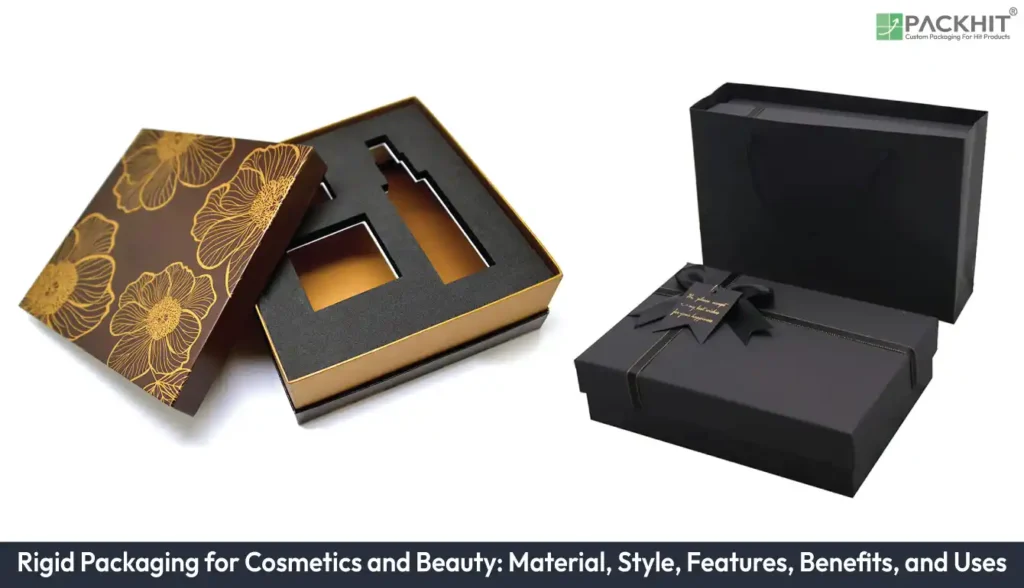
Rigid packaging combines durable materials like paperboard, plastic, glass, and metal to protect cosmetics and beauty products from damage. It can offer styles such as magnetic closure packaging, two-piece boxes, hinged lid boxes, telescopic rigid boxes, tray and sleeve boxes, and bookend boxes. Rigid packaging for cosmetics and beauty products features customization options, consumer-centric designs, and sustainability innovations. These can help ensure product protection, brand differentiation, and enhanced consumer appeal. Widely used for skincare products, makeup items, fragrances, and gift sets, rigid packaging aligns with modern branding strategies and eco-friendly goals while offering a luxurious unboxing experience.
- Materials Used in Rigid Packaging for Cosmetics and Beauty Products
- Key Styles of Rigid Packaging for Cosmetic Products
- Two-Piece Boxes
- Hinged Top with Magnetic Closure Boxes
- Telescopic Rigid Boxes
- Tray and Sleeve Boxes
- Bookend Boxes
- What Features Define Rigid Packaging for Cosmetics and Beauty Products?
- Benefits of Rigid Packaging in the Beauty Industry
- Common Uses of Rigid Packaging in Cosmetics
- How to Choose the Right Rigid Packaging for Cosmetics and Beauty?
Materials Used in Rigid Packaging for Cosmetics and Beauty Products
Rigid packaging for cosmetics is primarily constructed from materials that offer high strength, dimensional stability, and aesthetic flexibility. Common materials include:
Paperboard
Paperboard is a versatile material frequently used for premium cosmetics packaging due to its balance of strength, lightweight properties, and aesthetic adaptability. Its smooth surface is ideal for high-quality printing, embossing, and foil stamping, enabling brands to create visually striking designs. Commonly used for folding cartons and rigid boxes, paperboard also supports eco-friendly initiatives, as it is recyclable and often made from renewable resources. Brands must verify full-package sustainability; paperboard only recycles cleanly when permanently bonded plastic films, heavy foil stamping, or embedded closure magnets are eliminated from the final assembly.
Plastic
Plastic materials such as polystyrene (PS), polyethylene terephthalate (PET), and acrylic are highly favored for their durability, transparency, and moldability. These properties make them ideal for creating jars, compacts, and bottles that not only protect the product but also allow for innovative designs. PET, in particular, is celebrated for its recyclability and lightweight nature, making it a practical choice for mass-market skincare products. It is critical to note that recyclability depends on the total assembly; oversized vinyl labels or pumps with metal springs can cause optical sorters to reject an otherwise recyclable PET bottle.
Glass
Glass remains a preferred material for high-end cosmetics due to its premium look and exceptional barrier properties. It is commonly used in perfumes, serums, and other luxury skincare products, where preserving product integrity is critical. Glass packaging often incorporates intricate designs, frosted finishes, or tinted options to enhance its aesthetic appeal while protecting sensitive formulations from UV exposure. While inherently recyclable, practitioners must ensure compliance and compatibility across the full package by requesting documentation for coatings, labels, and closures to ensure they do not interfere with the intended recovery stream.
Metal
Metals like aluminum and tin are widely utilized in rigid packaging for their durability, lightweight nature, and recyclability. They are commonly found in compact cases, lipstick tubes, and decorative closures, offering a combination of functionality and style. Metal components often feature intricate embossing or anodized finishes to elevate the perceived value of the product. Despite their robust structure, it is essential to validate that the complete format, including liners and secondary components, meets migration and compatibility standards before deployment, especially when using recycled content.
The choice of material depends on the product’s functional requirements, target market, and branding strategy. For instance, glass is often chosen for high-end perfumes, while PET is favored for mass-market skincare products due to its cost-effectiveness and recyclability.
Key Styles of Rigid Packaging for Cosmetic Products
Rigid packaging in the cosmetics and beauty industry comes in various styles designed to cater to functional and aesthetic needs. Below are some of the most popular styles of rigid packaging for cosmetic and beauty products:
Two-Piece Boxes
Comprising a separate lid and base, this classic format, two-piece boxes are a hallmark of luxury skincare sets and high-end cosmetic kits. The physical lift-off action creates a deliberate, traditional unboxing reveal that enhances the customer’s perception of value. Beyond aesthetics, the dual-layered vertical walls provide exceptional stacking strength, ensuring that heavy glass jars and fragile beauty components remain meticulously protected throughout the shipping process.
Hinged Top with Magnetic Closure Boxes
Defined by a lid permanently attached to the base, hinged top boxes offer a seamless, one-piece structure that provides both convenience and security. The integrated hinge ensures a smooth, consistent opening motion, making it an excellent choice for luxury goods that require frequent access without the risk of misplacing a lid. Their construction protects contents effectively, while the unified design creates a clean, sophisticated profile that elevates the unboxing experience, making it a reliable favorite for premium retail packaging.
Telescopic Rigid Boxes
Characterized by a lid that envelops the entire depth of the base, telescopic boxes offer a classic, clean appearance with maximum structural integrity. The snug fit between the lid and base creates a vacuum-like seal that adds to the tactile premium experience during unboxing. This style provides an additional layer of reinforced protection for high-value cosmetics, making it a preferred choice for brands seeking a timeless look coupled with superior durability.
Tray and Sleeve Boxes
Utilizing a smooth horizontal sliding mechanism, tray and sleeve boxes feature an inner pull-out tray protected by an outer sleeve. It is an ideal solution for multi-item cosmetic kits, where the rhythmic reveal adds a modern, interactive element to the brand experience. The precise fit required for the drawer to glide effortlessly reflects high manufacturing standards, conveying a sense of precision and luxury that resonates with tech-savvy beauty consumers.
Bookend Boxes
Designed to open like a hardcover book, bookend boxes often feature a front flap with embedded magnets for a satisfying, secure closure. This style is exceptionally well-suited for special holiday gift sets and limited-edition palettes, as the hinged opening allows for a grand, storytelling reveal of the contents. The substantial feel and precise edge scoring provide a sense of permanence and quality, turning the packaging into a keepsake item.
By leveraging these diverse styles, manufacturers can align their packaging solutions with both product requirements and consumer preferences, ensuring practicality, appeal, and brand consistency.
What Features Define Rigid Packaging for Cosmetics and Beauty Products?
Rigid packaging for cosmetics and beauty products is distinguished by its combination of structural, functional, and aesthetic attributes. These features not only ensure product safety but also enhance consumer experience and brand visibility.
- Structural Durability: Rigid packaging is designed in a way that it can offer strength and stability, ensuring that products remain undamaged during transportation, storage, and handling. Reinforced corners, thick material walls, and interlocking designs are frequently used to provide this durability.
- Premium Aesthetics: Aesthetic appeal is a critical feature of rigid packaging, especially in the beauty industry. Techniques like embossing, debossing, foil stamping, and spot UV printing are commonly employed to create visually stunning designs. Transparent windows, vibrant colors, and sophisticated patterns further enhance the unboxing experience.
- Customization Capabilities: Rigid packaging allows for extensive customization to match specific product needs and branding strategies. Options include bespoke shapes, sizes, and finishes, ensuring that the packaging aligns seamlessly with the product and target audience.
- Functional Adaptability: Functionality is a cornerstone of rigid packaging design. Features such as magnetic closures, airtight seals, and refillable inserts are frequently integrated to enhance usability and product longevity. For example, magnetic closures are often used in luxury palettes for secure yet easy access.
- Material Versatility: Rigid packaging can be manufactured from a diverse range of materials, including paperboard, glass, plastic, and metal. Each material offers unique benefits: glass for luxury appeal, paperboard for eco-friendliness, and plastic for lightweight durability.
- Sustainability Innovations: Sustainability is increasingly integrated into rigid packaging through the use of recyclable materials, renewable resources, and biodegradable options. Many designs now feature refillable components to reduce waste and promote environmental responsibility.
- Consumer-Centric Features: Rigid packaging often includes consumer-focused elements such as ergonomic designs, easy-to-open mechanisms, and travel-friendly dimensions. These features enhance convenience and align with the lifestyle needs of modern consumers.
Benefits of Rigid Packaging in the Beauty Industry
Rigid packaging can offer several advantages that make it indispensable in the cosmetics and beauty sector:
Product Protection
The robust structure of rigid packaging can help control damage to fragile items such as glass bottles and pressed powders during transit and storage. This can ensure that products reach consumers in pristine condition, maintaining their quality and usability.
Brand Differentiation
High-quality finishes and unique designs in rigid packaging help brands stand out in a competitive market. These elements enhance perceived value and establish a premium identity, making products more appealing to discerning customers.
Consumer Appeal
Premium materials and sophisticated designs create a tactile and visual experience that resonates strongly with consumers. This enhanced unboxing experience can influence purchase perceptions and the consumer experience by leaving a lasting impression of quality and luxury.
Sustainability
Rigid packaging solutions often incorporate recyclable materials, renewable resources, or biodegradable options. These features align with the growing demand for eco-friendly products, helping brands meet sustainability goals while appealing to environmentally conscious consumers.
Common Uses of Rigid Packaging in Cosmetics
Rigid packaging is utilized across various product categories in the cosmetics and beauty industry, including:
- Skincare Products: Jars and bottles for creams, serums, and lotions often feature airtight seals to preserve product efficacy.
- Makeup: Compacts, palettes, and tubes are designed to protect delicate formulations like powders and lipsticks while offering portability.
- Fragrances: Glass bottles with intricate designs are used to convey luxury and sophistication.
- Gift Sets: Rigid boxes with custom inserts are popular for holiday collections and promotional kits, providing a premium unboxing experience.
How to Choose the Right Rigid Packaging for Cosmetics and Beauty?
Selecting the right rigid packaging involves balancing functional, aesthetic, and strategic needs through the following considerations:
- Align Material to Product: Select materials based on your specific functional and aesthetic needs; prioritize glass for high-end luxury, paperboard for eco-friendly initiatives, and plastic or metal for durable, lightweight requirements.
- Prioritize Protection: Ensure the structural design (e.g., reinforced corners, thick walls) adequately protects your product, especially for fragile glass jars or pressed powders.
- Define the Unboxing Experience: For a timeless look with maximum structural integrity, choose telescopic rigid boxes; for classic luxury sets, select two-piece boxes; and for interactive, modern kits, utilize tray and sleeve or bookend designs.
- Integrate Sustainability: Verify that your entire package assembly, including labels and closures, aligns with recyclability standards to meet environmental goals.