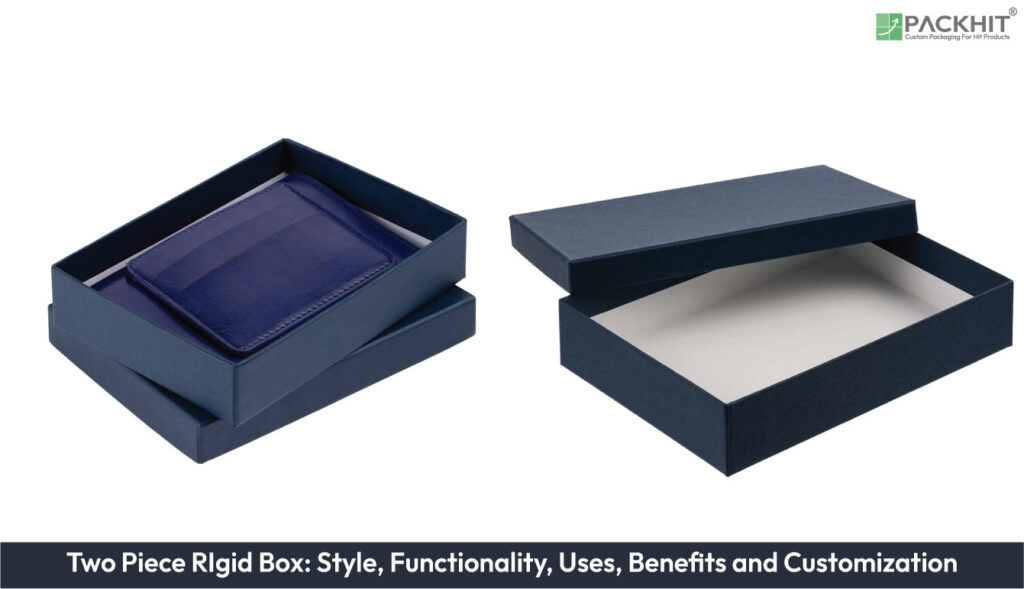
Two-piece rigid boxes provide a reusable opening format whose performance depends on board construction, lid fit, internal support, and intended handling conditions. Their practical benefits include structural stability, repeated access, and a surface that accommodates branding and decorative treatments. Applications range from luxury goods and electronics to cosmetics, apparel, food gifts, and corporate packaging, with suitability determined by the product and presentation requirements. Manufacturers can adapt dimensions, inserts, materials, printing, textures, and finishes to suit specific products and visual requirements. Environmental characteristics vary with choices such as recycled or virgin board, coverings, coatings, adhesives, and inserts rather than being inherent to the box style.
What is a Two-Piece Rigid Box?
A two-piece rigid box consists of a separate rigid paperboard base and removable lid. Compared with many lightweight folding cartons, the thicker board and fixed walls help the box retain its shape during ordinary handling, while fitted inserts can limit movement for products such as jewelry, electronics, or cosmetics.
The lid and base can use a flush, partial-telescoping, or full-telescoping fit. That configuration affects both how much of the base is covered and how the box opens, while surface treatments such as lamination, specialty paper, embossing, or foil stamping influence the finished appearance. Protection still depends on factors such as board thickness, insert design, product weight, and handling conditions.
How Does the Two-Piece Rigid Box Function?
The two-piece structure combines a rigid base with a removable lid to contain and present the product. Rigid paperboard can help protect contents against crushing and minor impacts during ordinary handling, although the level of protection depends on board thickness, box construction, internal supports, and the conditions in which the package is used. Protection against moisture, dust, or other environmental exposure likewise depends on the covering materials, coatings, closure fit, and overall package design.
The removable lid allows repeated opening and closing without requiring a folding closure mechanism. Two-piece rigid boxes can also support branding through printed wraps, embossing, foil stamping, and other surface treatments, subject to the materials and production methods used.
Benefits of Using Two-Piece Rigid Boxes
The advantages of two-piece rigid boxes extend beyond their visual appeal, encompassing functional, economic, and branding benefits:
Durability
The rigid construction of a two-piece box is designed to help protect its contents and maintain its shape during ordinary handling and storage. Actual resistance to crushing, impacts, and other physical stresses varies with board grade and thickness, structural design, inserts, product characteristics, and handling conditions.
Premium Aesthetics
Two-piece rigid boxes can be wrapped or finished with smooth papers, textured materials, laminates, printing, or decorative treatments. Depending on the materials and execution, these finishes can contribute to a presentation commonly associated with premium or luxury products.
Customization Potential
The surfaces and structure of two-piece rigid boxes can be customized using different printing methods, textures, finishes, inserts, and dimensions. Available options depend on the selected materials, structural requirements, and manufacturing process.
Environmental Considerations
Two-piece rigid boxes can be made with recycled or recyclable paper-based materials, depending on material selection and local recycling infrastructure. Environmental characteristics vary according to the fibers, adhesives, coatings, laminates, decorative elements, and other components used, so recyclability or biodegradability should be assessed for the specific finished package rather than assumed from the box style alone.
Versatility
Two-piece rigid boxes can be configured for products such as electronics, cosmetics, accessories, gift sets, and certain food or beverage items. Suitability for a particular application depends on product dimensions, weight, protection requirements, inserts, materials, and applicable storage or transport conditions.
Common Uses of Two-Piece Rigid Boxes
Two-piece rigid boxes are highly versatile and serve as an essential packaging solution across various industries. Their premium design and functional adaptability make them suitable for a wide range of applications, including:
- Luxury Goods: Ideal for packaging watches, jewelry, and high-end accessories. Their sturdy construction and refined appearance ensure that delicate items are both protected and presented in an elegant manner.
- Electronics: Frequently used for premium gadgets such as smartphones, headphones, and wearable technology. These boxes enhance the unboxing experience while safeguarding sensitive components from external damage.
- Cosmetics: Perfect for perfumes, skincare products, and makeup kits. Their customizable surfaces allow for brand-focused designs that reflect luxury and sophistication.
- Food and Beverages: Commonly employed for gourmet chocolates, artisanal baked goods, and specialty drinks such as wine or craft spirits. They ensure the safe transport of fragile items while maintaining aesthetic appeal.
- Apparel: Used for scarves, ties, and premium fashion accessories. These boxes elevate the perceived value of the product and create a memorable presentation experience for consumers.
- Corporate and Event Packaging: Often utilized for promotional items, gift sets, and seasonal event packaging such as Christmas or Halloween. The ability to customize with logos and themes enhances brand visibility and customer loyalty.
Manufacturers can use two-piece rigid boxes as a branding tool by incorporating logos, vivid designs, and compelling text. Their durable construction and high-quality finish make them an effective ambassador for products displayed on retail shelves, facilitating brand recognition and consumer trust.
How Can Two-Piece Rigid Boxes Be Customized?
Two-piece rigid boxes can be customized through material selection, printing methods, surface finishes, structural modifications, colors, textures, and internal inserts. These options allow manufacturers to adapt the box to product dimensions, protection needs, branding requirements, and presentation goals.
- Material Selection: Manufacturers can choose from various grades of paperboard, including recycled and virgin fibers, to achieve the desired balance of durability and sustainability.
- Printing Techniques: High-quality printing methods, such as offset printing, digital printing, and screen printing, enable the application of intricate designs, logos, and text.
- Surface Finishes: Finishing options, such as matte or glossy lamination, UV coating, and foil stamping, enhance the tactile and visual appeal of the box.
- Structural Modifications: Custom inserts, compartments, and die-cut windows can be added to accommodate specific product shapes and sizes, improving functionality and presentation.
- Color and Texture: A wide range of color palettes and textures, including linen, leatherette, and metallic finishes, can be applied to create a distinctive look.
Manufacturer Considerations for Two-Piece Rigid Boxes
Manufacturers manage two-piece rigid box performance by controlling materials, tolerances, and assembly steps, so the lid and base align, protect contents, and withstand handling during packing, shipping, and retail display.
- Lid and Base Fit: Select a lid-to-base fit that provides consistent opening and closing without excessive friction or looseness. Fit depends on box dimensions, board construction, covering materials, and lid configuration.
- Internal Supports and Inserts: Consider paperboard, molded fiber, foam, compartments, or other fitted inserts when the product requires positioning, separation, cushioning, or presentation support.
- Board Selection: Choose the paperboard grade and thickness according to product weight, box dimensions, required rigidity, handling conditions, and desired finish rather than relying on a single specification for every application.
- Product Protection: Evaluate product fragility, board construction, insert design, and expected handling conditions together. Rigid construction can help resist crushing and minor impacts but does not guarantee protection under all conditions.
- Moisture and Dust Exposure: Consider covering papers, coatings, laminates, lid fit, and additional protective packaging when environmental exposure is a concern. A standard two-piece rigid box is not inherently moisture-proof or dust-proof.
- Surface and Finish Selection: Choose printing, wrapping, lamination, embossing, foil stamping, or other finishes according to branding requirements, material compatibility, production quantity, and intended presentation.
- Dimensional Planning: Account for the product dimensions as well as clearance, inserts, covering materials, and lid-to-base fit when establishing internal and external box dimensions.
- Prototype Evaluation: Use a physical prototype or production sample to check dimensions, lid alignment, product clearance, insert retention, opening behavior, artwork placement, and finish appearance.
- Shipping Evaluation: For boxes intended for distribution, relevant handling and transport tests can follow prototype checks to assess whether the complete packaging system provides suitable protection before production is scaled.
- Sustainability Considerations: Evaluate the complete material system, including board, coverings, inserts, adhesives, coatings, and laminates, when considering recycled content, recyclability, or other environmental objectives.