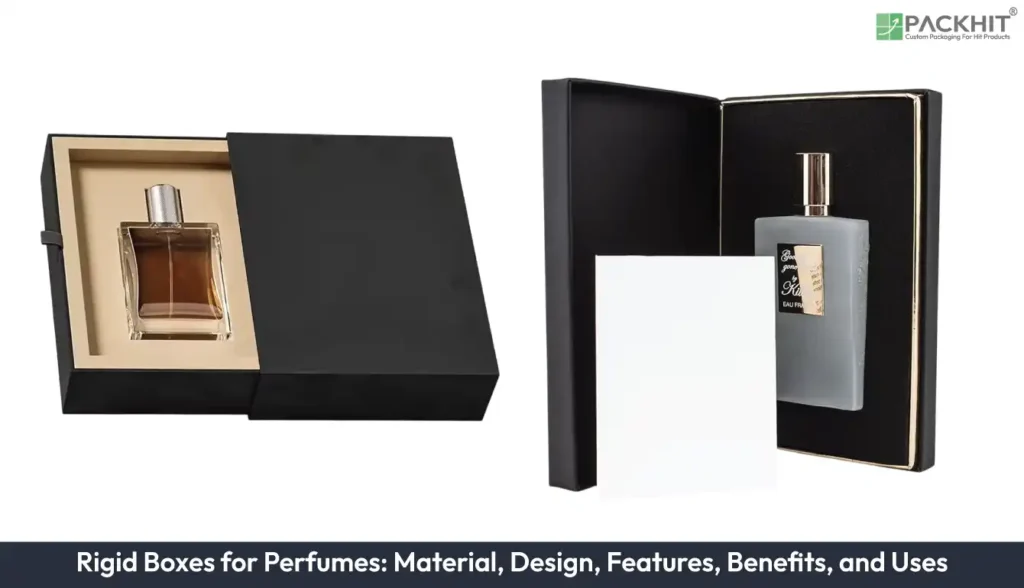
Rigid boxes for perfumes serve as a premium packaging solution, combining durability, aesthetic appeal, and functional versatility to meet the needs of both manufacturers and consumers. Rigid boxes for perfumes are constructed primarily from high-density chipboard and enhanced with specialty finishes like laminations or embossing to protect fragile perfume bottles while showcasing brand identity through custom designs. Their non-collapsible structure ensures longevity and maintains a luxurious appearance, making them ideal for high-end fragrance lines, promotional campaigns, and e-commerce distribution. Rigid boxes are customizable with internal compartments for accessories, enhancing their utility and consumer appeal. By offering superior protection, branding opportunities, and reusability, rigid boxes stand out as the preferred choice for luxury perfume packaging over alternatives like folding cartons and plastic packaging.
- Materials Used in Rigid Boxes for Perfumes
- How are Rigid Boxes Designed for Perfume Packaging?
- Aesthetic Features of Rigid Boxes for Perfumes
- Functional Benefits of Rigid Boxes for Perfume Packaging
- How are Rigid Boxes Used in the Perfume Industry?
- Manufacturing & Production Considerations for Rigid Perfume Boxes
- How Do Rigid Boxes Compare to Other Packaging Types for Perfumes?
Materials Used in Rigid Boxes for Perfumes
Rigid boxes for perfumes are predominantly made from high-density paperboard, also known as chipboard, which typically ranges between 800 and 1500 GSM (grams per square meter). Higher GSM values generally provide increased stiffness and crush resistance, which are critical for heavier or more fragile bottles, whereas lower GSM options may suffice for lightweight packaging to reduce material costs. Manufacturers should select GSM by matching insert and bottle mass; heavier glass bottles or long-distance shipping typically warrant higher GSM (1200-1500 GSM) combined with a cushioning insert, such as EVA foam or molded pulp, to prevent rattling and edge stress during transit. The outer surface of the box is often laminated with specialty papers, textiles, or synthetic coatings to enhance its visual appeal and tactile quality. Common finishes include matte, gloss, or soft-touch laminations, which not only improve aesthetics but also add a layer of moisture and scratch resistance. These performance outcomes, including durability and resistance, can vary based on the specific material choice, lamination type, and manufacturing process.
In addition to the core material, rigid boxes may incorporate internal cushioning elements such as EVA foam inserts, velvet linings, or molded pulp trays. These components are tailored to the dimensions of the perfume bottle, ensuring a snug fit and minimizing movement. For luxury applications, manufacturers may also use metallic foils, embossing, or UV spot coatings to create high-end decorative effects on the box surface.
How are Rigid Boxes Designed for Perfume Packaging?
The structural design of rigid boxes for perfumes is defined by their generally non-collapsible construction, which distinguishes them from foldable carton packaging. While rigid boxes can offer high protection and aesthetic impact depending on design and distribution conditions compared to folding cartons or plastic, they typically entail higher production costs, larger shipping footprints, and increased storage requirements, making them a strategic investment best suited for luxury and high-tier perfume markets. While this structure is intended to maintain shape, its performance depends significantly on the specific design and production quality. Clarifying that while rigid boxes can provide high levels of protection when designed with appropriate inserts and selected for the bottle weight and distribution conditions, they entail higher costs and storage requirements and may be less efficient than folding cartons for budget-focused applications.
- These boxes are typically composed of a base and lid configuration, although variations such as magnetic closure boxes, drawer-style boxes, and clamshell designs are also prevalent.
- The rigid structure is achieved by wrapping the chipboard core with a printed or textured outer layer, which is bonded using industrial-grade adhesives.
- These high-strength adhesives are intended to support the longevity of the wrap, preventing delamination or bubbling under varying storage conditions and frequent handling.
Key structural features include reinforced corners and edges, which provide additional strength and resistance to deformation. Some designs incorporate hidden magnets or ribbon closures to enhance functionality and user experience. The internal compartments are often customized to hold not only the perfume bottle but also accompanying items such as sample vials, brochures, or branded accessories, thereby maximizing the utility of the packaging.
Aesthetic Features of Rigid Boxes for Perfumes
Aesthetic customization is a defining attribute of rigid boxes for perfumes, allowing brands to align packaging design with their identity and target audience. These boxes support a wide range of printing techniques, including offset printing, digital printing, and screen printing, enabling high-resolution graphics and intricate patterns. Color schemes are often chosen to evoke specific emotions or associations, such as gold and black for luxury or pastel tones for a youthful, modern appeal.
Additional decorative elements include embossing and debossing, which create raised or recessed designs for logos and text, and foil stamping, which adds metallic accents in gold, silver, or holographic finishes. Transparent windows or die-cut patterns may also be integrated to provide a glimpse of the perfume bottle inside, enhancing consumer engagement. The tactile experience is further enriched through the use of textured papers, soft-touch coatings, or velvet laminations.
Functional Benefits of Rigid Boxes for Perfume Packaging
Rigid boxes offer several functional advantages that make them a popular option for perfume packaging, depending on design and distribution conditions:
- Their robust construction typically helps provide physical protection for fragile glass bottles, reducing the risk of breakage during handling and transportation.
- The generally non-collapsible design is also intended to maintain the box’s shape and structural integrity over time, often preserving the premium appearance of the product.
- Protective efficacy and structural integrity depend heavily on the specific design, internal supports like inserts, and shipping conditions.
- For heavier bottles or rough fulfillment routes, higher GSM and stronger corner construction matter most; if your priority is only cost, folding cartons may be sufficient.
From a branding perspective, rigid boxes often serve as a canvas for storytelling, allowing manufacturers to communicate the essence of their fragrance through design elements. The high perceived value of these boxes often enhances the overall unboxing experience, which can be a critical factor in consumer satisfaction and brand loyalty. Additionally, the reusability of rigid boxes can contribute to sustainability efforts, as consumers often repurpose them for storage or decorative purposes.
How are Rigid Boxes Used in the Perfume Industry?
In the perfume industry, rigid boxes are employed across various stages of product presentation and distribution. At the retail level, these boxes function as a key marketing tool, drawing consumer attention through their luxurious appearance and tactile appeal. Limited-edition high-end fragrance lines often rely on rigid boxes to differentiate themselves in a competitive market, using unique designs and premium materials to justify higher price points.
For e-commerce applications, rigid boxes provide the dual benefit of aesthetic appeal and protective functionality, ensuring that products arrive in pristine condition. They are also used in promotional campaigns, where the packaging itself becomes part of the brand narrative. Gift sets, which may include multiple fragrance items, frequently utilize rigid boxes with custom compartments to create a cohesive and visually appealing presentation.
Manufacturing & Production Considerations for Rigid Perfume Boxes
The production of rigid boxes involves a distinct workflow compared to folding cartons, requiring manual assembly steps for complex features.
- Workflow Steps: Production typically begins with offset or digital printing of the outer wrap, followed by lamination. Die-cutting the chipboard and the wrap paper is performed separately before they are bonded using industrial adhesives on a casemaking machine. Final assembly, including the placement of internal inserts and magnetic closures, often requires manual labor, which extends lead times.
- Storage and Logistics: Because rigid boxes are shipped pre-assembled, they require significantly more warehouse space and incur higher freight costs than flat-packed alternatives.
- Trade-offs: While they offer superior protection and shelf presence, manufacturers must balance these benefits against higher unit costs and longer shipping lead times.
How Do Rigid Boxes Compare to Other Packaging Types for Perfumes?
Rigid boxes are often a strong option for perfumes when manufacturers prioritize durability and premium presentation. Depending on goals like protection, branding, and budget, rigid boxes may be chosen over folding cartons or plastic packaging for luxury and mid-to-high-tier fragrance lines. The following table provides a detailed comparison of rigid boxes, folding cartons, and plastic packaging, highlighting their key attributes and applications to help manufacturers make informed choices.
| Packaging Type | Key Features | Advantages | Disadvantages | Use Cases |
| Rigid Boxes | Non-collapsible structureConstructed from chipboard (800-1500 GSM)Supports intricate designs and finishesCustomizable with internal compartments | Superior durability for fragile itemsPremium aesthetic appealHigh perceived valueReusable and eco-friendly | Higher production and transportation costsNon-collapsible, requires more storage space | Luxury and high-end perfume linesLimited edition packagingGift sets with multiple itemsE-commerce packaging for premium products |
| Folding Cartons | Collapsible structureMade from lightweight paperboardCost-effective printing options | Economical to produceCompact and easy to storeSufficient for basic protection | Limited structural integrityLess suitable for premium branding | Mass-market fragrancesBudget-friendly promotional campaignsTemporary or seasonal packaging |
| Plastic Packaging | Typically transparent or translucentLightweight and shatterproofCan be molded into various shapes | Cost-effective for high volumesDurable and resistant to moistureIdeal for showcasing product visibility | Perceived as less luxuriousEnvironmental concerns due to sustainability issues | Entry-level fragrance linesTravel-sized productsMass distribution where cost is a priority |
The comparison highlights that rigid boxes can be a suitable choice for brands focusing on premium quality and aesthetics. While folding cartons and plastic packaging offer specific advantages in cost, practicality, and visibility, manufacturers should weigh these options against their target audience, branding strategy, and budget constraints to determine the most effective solution.
