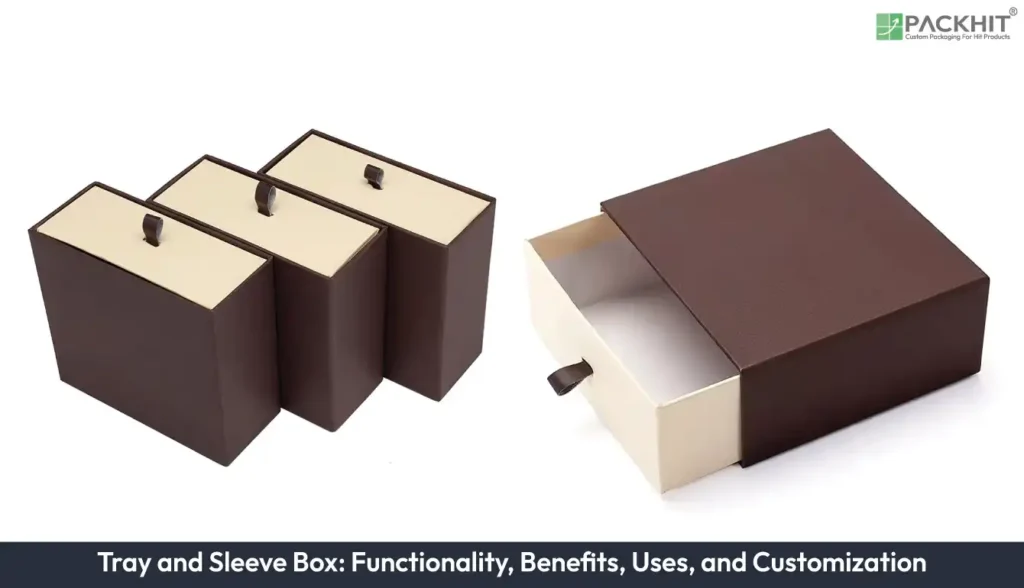
The tray and sleeve box is a premium rigid packaging solution known for its dual-component structure, combining functionality with an elevated presentation. The inner tray securely holds products in place, while the outer sleeve provides protection and enhances branding opportunities. Made from durable materials like rigid paperboard or chipboard, these boxes are customizable in terms of size, design, and finishes, making them suitable for industries such as retail, electronics, cosmetics, and food packaging. Product stability during transit depends on tray fit, insert selection, board thickness, and the use of suitable secondary packaging, while the sleek design elevates the unboxing experience. Additionally, tray and sleeve boxes offer extensive customization options, including advanced printing techniques, die-cut windows, and sustainable material choices, supporting packaging material goals where appropriate. This packaging style not only reinforces brand identity but also caters to the practical needs of manufacturers, making it a versatile choice for a wide range of products.
- What is a Tray and Sleeve Box?
- How Does the Tray and Sleeve Box Function?
- Benefits of Using Tray and Sleeve Boxes
- Durability and Structural Integrity
- Customizability for Brand Identity
- Elevated Product Presentation
- Sustainability and Eco-Friendliness
- Ease of Use and Consumer Experience
- Applications of Tray and Sleeve Boxes
- What Customization Options are Available for Tray and Sleeve Boxes?
- What to Consider Before Choosing a Tray and Sleeve Box?
- When to Choose a Tray and Sleeve Box Over Standard Folding Packaging?
What is a Tray and Sleeve Box?
A tray and sleeve box consists of an inner tray that holds the product and an outer sleeve that slides over it. The format is commonly made from paperboard or chipboard, with dimensions and material thickness selected according to the product and packaging requirements.
The tray is often die-cut to fit the product precisely, which can help reduce movement during transit when the tray fit and insert selection are appropriate. The sleeve, on the other hand, can be customized depending on supplier capabilities, materials, and finishing options with various printing techniques, finishes, and embellishments to align with branding requirements.
How are Tray and Sleeve Boxes Manufactured?
The manufacturing process of tray and sleeve boxes involves several key steps, each contributing to the final product’s quality and functionality:
- Material Selection: High-quality rigid paperboard or chipboard is chosen for its strength and printability.
- Die-Cutting: The tray and sleeve components are precision-cut to the required dimensions, to the required dimensions and tolerances.
- Printing and Finishing: The sleeve is often printed with branding elements, using techniques such as offset printing, embossing, or foil stamping.
- Assembly: The tray is folded and glued into shape, while the sleeve is constructed to slide seamlessly over the tray.
- Quality Control: Each box is inspected for structural integrity, print quality, and dimensional accuracy before packaging and distribution.
These steps help manufacturers produce the box to the specified dimensions, construction, and finish, ensuring the tray and sleeve box meet both functional and aesthetic standards, making it a reliable choice for premium packaging.
How Does the Tray and Sleeve Box Function?
The functionality of a tray and sleeve box lies in its dual-component design. The tray provides a base that can help position the product for the product, often incorporating inserts or compartments for added stability. The sleeve acts as a protective cover, providing some enclosure from dust and routine handling; protection from light, impact, or other conditions depends on the materials and construction. This sliding mechanism also facilitates easy opening and closing, enhancing the user experience.
Additionally, the rigid construction can help the box retain its shape, depending on board thickness, dimensions, product weight, and applied loads, making it suitable for stacking and shipping. The sleeve can be designed to fit snugly over the tray to prevent accidental openings, or it can include pull tabs or cutouts for ease of use. This adaptability makes the tray and sleeve box a preferred choice for high-value and fragile items.
Benefits of Using Tray and Sleeve Boxes
Tray and sleeve boxes protect retail products during handling and transport by keeping the lid and base aligned, reducing tray movement, and controlling product exposure to dust and fingerprints. Performance varies by product dimensions, board thickness, insert design, sleeve tolerance, and expected handling conditions; prototypes can help verify the selected configuration.
Durability and Structural Integrity
Rigid paperboard or chipboard can provide structural support, but performance varies with board grade, thickness, box dimensions, product weight, and handling conditions. For shipping, performance also depends on the insert design, secondary packaging, and expected handling conditions. Prototype or transport testing may be needed where specific protection performance is required.
Customizability for Brand Identity
A key advantage of tray and sleeve boxes is their high degree of customizability. Both the tray and the sleeve can be tailored to meet specific dimensions and product requirements. This flexibility extends to design options, where manufacturers can incorporate unique branding elements such as logos, color schemes, and product-specific graphics. Advanced printing techniques, including offset printing, embossing, and foil stamping, enable the creation of visually striking packaging that aligns with a brand’s identity and marketing goals.
Elevated Product Presentation
Tray and sleeve boxes can enhance product presentation through their structure, print design, and finish options. Matte, gloss, soft-touch, and other finishes can create different visual and tactile effects, but premium treatments may increase cost and affect recyclability.
Sustainability and Eco-Friendliness
In an era where sustainability is a priority, tray and sleeve boxes align with eco-friendly packaging practices. They can be made with recyclable or recycled-content paper-based materials where suitable options are available; recyclability depends on the complete construction and local recycling systems, depending on supplier options and the complete packaging construction. Manufacturers have the option to use recycled paperboard or incorporate coatings selected with specific recyclability or material goals in mind to enhance their green credentials. This makes tray and sleeve boxes an attractive choice for brands committed to pursuing packaging-related environmental goals while meeting consumer demand for environmentally responsible packaging solutions.
Note: Recyclability depends on the full construction, including coatings, laminations, adhesives, windows, inserts, and local recycling infrastructure.
Ease of Use and Consumer Experience
The design of tray and sleeve boxes prioritizes user convenience. The sliding mechanism between the tray and the sleeve allows for effortless opening and closing, creating a seamless unboxing experience. Additional features such as pull tabs, die-cut windows, and magnetic closures can further enhance functionality, ensuring that the consumer’s interaction with the packaging is both intuitive and engaging. Opening performance depends on sleeve clearance, surface finish, dimensional tolerances, and product weight.
Applications of Tray and Sleeve Boxes
Tray and sleeve boxes are employed across a diverse range of industries, each leveraging their unique attributes to meet specific packaging needs:
- Retail: Widely utilized for luxury items such as jewelry, watches, and high-end apparel, tray and sleeve boxes provide a combination of sturdy protection and elegant presentation. Their customizable design allows brands to enhance their identity while ensuring that delicate products remain secure during handling and display.
- Electronics: Can be used for gadgets, accessories, and components when the structure and inserts meet the product’s protection requirements, these boxes offer a dual benefit: robust protection against external damage and an elevated unboxing experience. Features like foam inserts or custom compartments can be added to enhance product security and organization.
- Cosmetics: Ideal for premium beauty products such as perfumes, skincare kits, and makeup collections, tray and sleeve boxes combine visual appeal with practicality. The ability to incorporate vibrant designs, foil stamping, or embossing makes them a favorite for high-end cosmetic branding.
- Food and Beverage: Commonly used for gourmet items, artisanal confectionery, and gift sets, these boxes may be used for food products where suitable food-contact materials, barriers, or liners are specified while delivering a luxurious presentation. Options like food-safe coatings and die-cut windows further enhance their functionality and consumer appeal. These applications highlight the versatility of tray and sleeve boxes in accommodating products of varying sizes, shapes, and fragility levels.
Note: Foam inserts can provide more cushioning for fragile items, while molded pulp or paperboard inserts may better suit brands prioritizing paper-based materials.
What Customization Options are Available for Tray and Sleeve Boxes?
Tray and sleeve boxes offer extensive customization possibilities, allowing manufacturers to align packaging with their brand identity and product requirements:
- Material Choices: Options include various grades of paperboard, recycled materials, and specialty finishes.
- Printing Techniques: Offset, digital, and screen printing can be used to achieve vibrant, high-resolution designs.
- Surface Finishes: Matte, gloss, soft-touch, and UV coatings enhance the sleeve’s tactile and visual appeal.
- Structural Modifications: Additions such as die-cut windows, magnetic closures, and pull tabs improve functionality and user experience.
- Inserts and Compartments: Custom inserts can be designed to hold multiple items securely within the tray.
These options enable manufacturers to create packaging that not only protects the product but also reinforces brand messaging and consumer engagement. Available materials, finishes, and structural features vary by supplier, substrate, production method, and order quantity.
What to Consider Before Choosing a Tray and Sleeve Box?
Confirm the fit, rigidity, closure method, material thickness, sleeve clearance, and branding needs for your product if you need consistent protection and repeatable packing in tray and sleeve box production.
- Product Fit: Accurate internal dimensions are important because an overly loose tray can allow movement, while an overly tight fit can make the box difficult to open.
- Insert Selection: Paperboard, molded pulp, foam, or custom die-cut inserts can be used depending on the product’s weight, fragility, and sustainability goals.
- Board Thickness: Heavier or more fragile products generally require thicker rigid board to maintain shape and resist compression.
- Sleeve Tolerance: The sleeve should slide smoothly, neither so loose that it comes off during handling nor so tight that customers struggle to open it.
- Shipping Considerations: Because rigid tray and sleeve boxes do not usually ship flat, businesses should account for storage space, freight volume, and fulfillment costs.
- Prototype Testing: A physical prototype can help verify product fit, sleeve movement, insert performance, print placement, and overall presentation before mass production.
- Finish Selection: Premium finishes can strengthen shelf appeal, but brands should balance visual impact with cost, recyclability, and resistance to scratches or fingerprints.
- Order Volume and Cost: Custom rigid packaging often becomes more cost-efficient at higher quantities, while elaborate inserts, specialty papers, embossing, and foil stamping can increase unit cost.
Note: Foil, laminations, and specialty coatings can increase visual impact but may also increase cost and affect recyclability.
Steps for Choosing the Right Tray and Sleeve Box
Use the product and distribution requirements to determine the box structure rather than selecting features individually.
- Define the product requirements: Confirm the product’s dimensions, weight, fragility, value, and whether multiple components need to be held in position.
- Select the tray and insert configuration: Use a close-fitting tray or insert where movement control is important. More fragile or irregular products may require molded pulp, foam, paperboard, or custom die-cut inserts.
- Set the opening method and sleeve fit: Choose a standard sliding sleeve for simple access, or consider pull tabs or thumb notches where easier opening is required. Sleeve clearance should account for board thickness, wrapping materials, coatings, and production tolerances.
- Evaluate shipping and storage conditions: If the package will experience parcel shipping, stacking, vibration, or repeated handling, assess whether additional cushioning or an outer shipping carton is required. Rigid tray and sleeve boxes also generally require more storage and freight space than flat-packed folding cartons.
- Balance appearance, cost, and material goals: Specialty papers, foil stamping, embossing, coatings, and complex inserts can improve presentation but may increase cost, production complexity, or affect recyclability.
- Prototype before production: Test product fit, sleeve movement, insert retention, opening force, print placement, and handling performance before approving a larger production run.
When to Choose a Tray and Sleeve Box Over Standard Folding Packaging?
A tray and sleeve box is a strong choice when the product needs more structural protection, a premium presentation, or a memorable unboxing experience. It is especially useful for high-value, fragile, or gift-oriented products where custom inserts, branded finishes, and a secure fit can improve both product protection and perceived value.