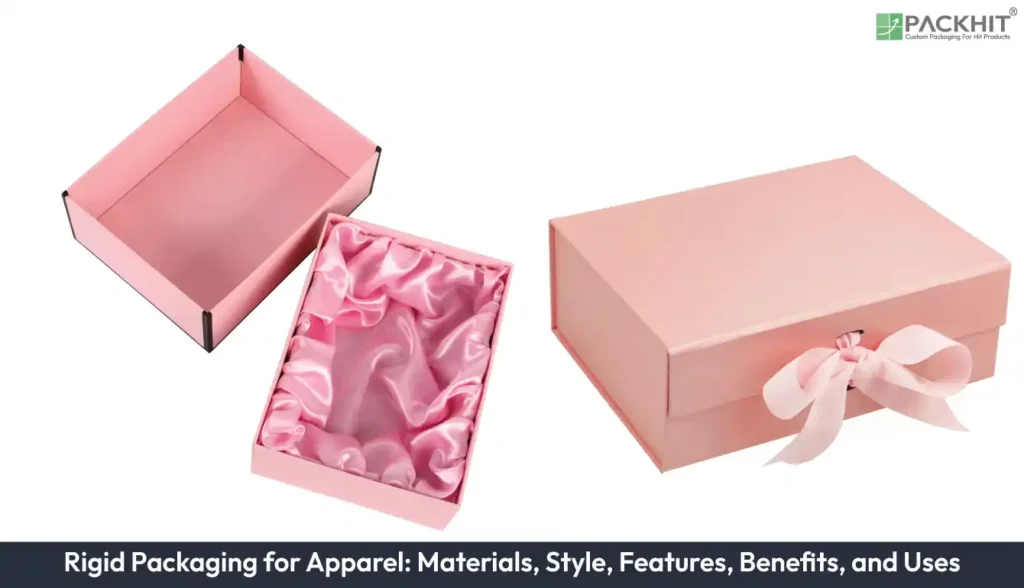
Rigid packaging for apparel combines durability, premium aesthetics, and versatile functionality to protect and present products effectively. While using rigid packaging for apparel uses materials like paperboard, corrugated fiberboard, and chipboard. Rigid packaging includes options like two-piece, magnetic closure, drawer-style, and collapsible boxes that can serve different functional and aesthetic requirements. Material durability, customizability, premium aesthetics, sustainability, and functional design elements define the quality of these solutions. These boxes can provide superior protection, differentiate brands, improve consumer experiences, and support corporate environmental goals. Lastly, the versatility of rigid packaging spans retail display, e-commerce shipping, gifting, luxury, and corporate branding.
- What Materials Are Commonly Used in Rigid Packaging for Apparel?
- Box Styles in Rigid Packaging for Apparel
- What Features Define Rigid Packaging for Apparel?
- Benefits of Using Rigid Packaging for Apparel
- Enhanced Product Protection
- Brand Differentiation
- Improved Consumer Experience
- Sustainability Compliance
- Versatility
- How is Rigid Packaging Used in the Apparel Industry?
- How to Choose the Right Rigid Packaging for Apparel?
What Materials Are Commonly Used in Rigid Packaging for Apparel?
The materials used in rigid apparel packaging are selected for their strength, sustainability, and compatibility with various finishing techniques. Common materials include:
- Paperboard: A versatile and eco-friendly material, paperboard is widely used for its balance of durability and printability.
- Chipboard: Known for its rigidity and cost-effectiveness, chipboard is a popular choice for mid-range and luxury packaging.
- Corrugated Fiberboard: Often used for e-commerce applications, this material provides additional cushioning and protection during shipping.
- Specialty Papers: Textured or coated papers are used to enhance the packaging’s tactile and visual appeal.
The choice of material depends on factors such as product type, branding requirements, and environmental considerations.
Box Styles in Rigid Packaging for Apparel
Rigid packaging for apparel is available in a variety of styles, each tailored to specific product types, branding requirements, and consumer preferences. Common styles include:
Two-Piece Boxes
Two-piece boxes consist of a base and a lid, making them a popular choice for premium apparel such as shirts, scarves, and accessories. Their rigid structure ensures product protection, while the lid allows for easy opening and closing, enhancing user convenience.
Magnetic Closure Boxes
Magnetic closure boxes feature embedded magnets for secure closure, offering a blend of functionality and sleek, modern design. These boxes are ideal for high-end apparel and gift packaging, delivering both practicality and aesthetic appeal.
Drawer-Style Boxes
Drawer-style boxes are designed with a sliding mechanism, offering compact storage and an enhanced unboxing experience. They are particularly suitable for smaller apparel items like ties and socks, combining space efficiency with a premium feel.
Collapsible Rigid Boxes
Collapsible rigid boxes provide the structural benefits of rigid packaging while enabling space-saving storage. These boxes are well-suited for e-commerce and bulk shipping applications, making them versatile for manufacturers managing high-volume logistics.
Each style can be customized with finishes such as embossing, foil stamping, and spot UV coating to align with brand aesthetics and consumer expectations.
What Features Define Rigid Packaging for Apparel?
Rigid packaging for apparel is distinguished by several defining features that contribute to its functionality and market appeal:
Material Strength
Rigid packaging is crafted from high-density paperboard, chipboard, or similar durable materials, ensuring exceptional structural integrity. These materials and the rigid construction effectively resist compressive forces to prevent product deformation. Furthermore, the application of water-resistant coatings or lamination acts as a moisture barrier, protecting apparel contents from humidity and external impacts during transit, handling, and storage.
Customizability
Rigid packaging offers extensive customization options, including dimensions, shapes, and finishes, to align with specific brand identities. Add-ons like embossing, foil stamping, and custom inserts further enhance the user experience and visual appeal, tailoring each package to unique product requirements.
Premium Aesthetics
The rigid structure supports advanced printing techniques and sophisticated finishes, such as matte or glossy coatings. This creates a high-end look that elevates perceived product value, making it particularly suitable for luxury and gift packaging in the apparel sector.
Sustainability
Sustainable practices in rigid packaging involve more than just utilizing recycled content; they also include the use of soy-based inks and water-based adhesives. Unlike traditional solvent-based options, these eco-friendly alternatives ensure the packaging remains fully recyclable in standard paper streams. By sourcing FSC-certified paper and minimizing waste, brands can better meet environmental standards and appeal to eco-conscious consumers.
Functional Design
Innovative design features, including magnetic closures, ribbon pulls, and die-cut windows, add convenience and sophistication to the unboxing experience. These elements enhance user engagement while maintaining practicality, making rigid packaging a preferred choice for apparel manufacturers.
These features make rigid packaging a preferred choice for apparel brands aiming to balance protection, presentation, and environmental responsibility.
Benefits of Using Rigid Packaging for Apparel
The adoption of rigid packaging in the apparel industry offers a range of benefits, including:
Enhanced Product Protection
The sturdy construction of rigid packaging minimizes the risk of damage to delicate fabrics and accessories during handling and transportation. This ensures that apparel products maintain their quality and pristine condition when they reach consumers. For delicate items like silk or heavily embellished garments, incorporating internal cushioning such as tissue paper or custom foam inserts is crucial to prevent micro-abrasions from interior box edges. Unlike flexible poly mailers, rigid boxes provide a stable moisture barrier, which is essential for preserving the condition of structured fabrics during long-term storage.
Brand Differentiation
High-quality finishes and customizable designs allow brands to create a unique identity. By incorporating distinctive elements such as embossing, foil stamping, and tailored dimensions, rigid packaging helps businesses stand out in competitive markets. Brands targeting minimalist aesthetics often prioritize matte lamination over high-gloss finishes for a tactile, sophisticated feel. However, be aware that matte finishes can be more susceptible to visible scuffs during rough transit; using a protective slipcover or outer sleeve is a common trade-off to mitigate this risk.
Improved Consumer Experience
Features like easy-open mechanisms and premium aesthetics enhance the unboxing experience, fostering customer loyalty. A well-designed package elevates the perceived value of the product, leaving a lasting impression on consumers. While magnetic closures offer a high-end unboxing feel, they require careful calibration. For magnetic-closure rigid boxes, select magnet strength relative to the heaviest garment weight. If the weight of a heavy garment, such as a wool coat, shifts significantly during transit, it can stress the closure mechanism; selecting magnet strength proportionate to the product weight is vital to prevent the box from opening prematurely.
Sustainability Compliance
The use of recyclable materials in rigid packaging supports corporate sustainability goals. Eco-friendly designs appeal to environmentally conscious consumers and help brands align with global efforts to reduce waste and promote sustainable practices. While paperboard components are widely recyclable, applying plastic-based laminates or metallic foils can interfere with standard recycling streams. Opting for water-based coatings or soy-based inks allows brands to achieve premium visual effects while maintaining recyclability, though this may require longer drying times in the production process.
Versatility
Rigid packaging adapts to a wide range of apparel products, from luxury items to everyday wear. This flexibility makes it an ideal solution for manufacturers catering to diverse market segments and product categories. Rigid packaging is often cost-prohibitive for high-turnover fast fashion lines. It is best applied to premium, limited-edition, or seasonal apparel collections where the perceived value added by the packaging justifies the higher per-unit cost compared to standard folding cartons.
These benefits underscore the strategic value of rigid packaging in enhancing both operational efficiency and brand perception.
How is Rigid Packaging Used in the Apparel Industry?
Rigid packaging finds extensive applications across various segments of the apparel industry, including:
Retail Packaging
In brick-and-mortar stores, rigid boxes are used to display and protect premium apparel, creating a luxurious shopping experience. Their sturdy construction and elegant design make them ideal for showcasing products while enhancing the overall retail environment.
E-Commerce Shipping
For online retailers, rigid packaging ensures that products arrive in pristine condition, reducing return rates and enhancing customer satisfaction. This type of packaging offers superior protection during transit and can be customized to reflect the brand’s identity.
Gift Packaging
Many apparel brands use rigid boxes for seasonal or promotional gift sets, leveraging their aesthetic appeal to attract buyers. These boxes are often embellished with decorative finishes, adding a premium touch that enhances the perceived value of the gift.
Luxury Apparel
High-end brands often use rigid packaging to reinforce their premium positioning and justify higher price points. The sophisticated appearance and high-quality materials of rigid boxes align with the exclusivity and elegance of luxury products.
Corporate Branding
Custom rigid boxes are frequently employed for corporate gifting, featuring logos and brand colors to enhance brand visibility. These packages help businesses leave a professional and lasting impression on clients, partners, and employees.
These use cases highlight the adaptability of rigid packaging in meeting the diverse needs of the apparel industry.
How to Choose the Right Rigid Packaging for Apparel?
When selecting packaging, consider the fit between the style and specific apparel type:
| Style | Best-Fit Apparel Use Case | Key Trade-off |
|---|---|---|
| Two-Piece | Shirts, scarves, and accessories | Slower assembly and loading due to two separate components |
| Magnetic Closure | Premium gifts and luxury apparel | Higher cost per unit due to embedded magnets |
| Drawer-Style | Ties, socks, and smaller accessories | Limited capacity for bulkier items |
| Collapsible | E-commerce shipping and logistics | Slightly lower structural rigidity compared to fixed-wall boxes |
To wrap up this guide, remember that the right rigid packaging solution is defined by a careful balance between brand aesthetics, protective requirements, and logistical constraints. By evaluating your specific apparel product types against the trade-offs of different box styles and remaining mindful of storage and handling limits, you can ensure your packaging serves as both a secure transport vessel and a compelling extension of your brand experience. If you find your needs evolving, prioritize testing and prototyping to confirm your chosen configuration holds up under real-world transit conditions
