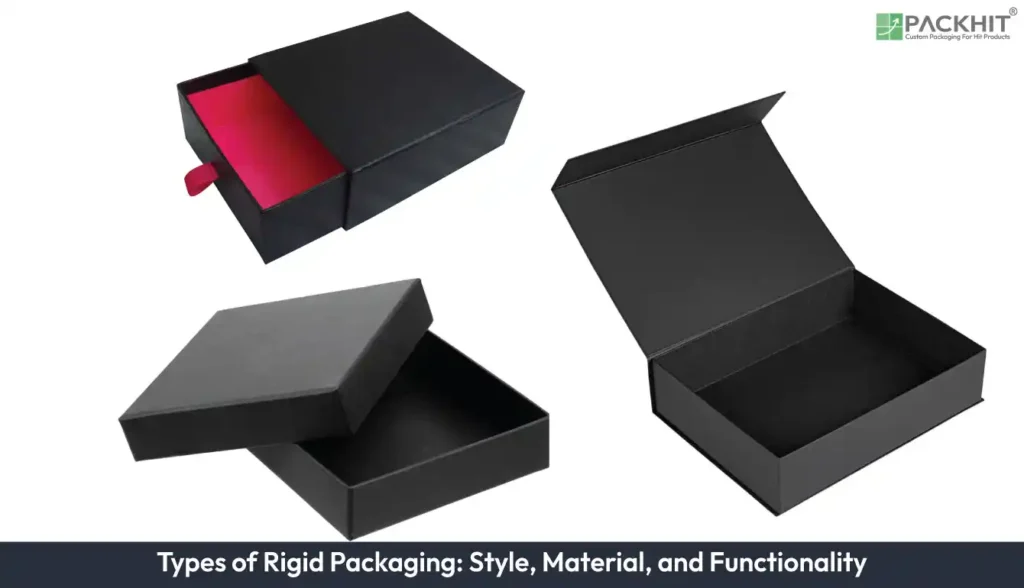
Rigid packaging is categorized into three main types: style, functionality, and customization. Each type addresses specific industry needs, ensuring product protection, aesthetic appeal, and usability. Style-focused packaging includes options like magnetic closure boxes, telescopic boxes, clamshell designs, and book-style boxes, tailored for industries such as cosmetics, electronics, and food. Material composition ranges from paper-based to plastic, glass, and metal, offering durability, eco-friendliness, or premium aesthetics. Functionality-driven designs enhance protection with tamper-evident containers, barrier packaging for extended shelf life, and customizable features to align with branding. Customization elevates packaging through structural enhancements, decorative finishes, and industry-specific adaptations, ensuring alignment with manufacturers’ goals and consumer preferences. Together, these elements demonstrate how rigid packaging supports product safety, presentation, and branding across diverse sectors.
- What are the Types of Rigid Packaging?
- 1. Rigid Packaging Type by Style
- Magnetic Closure Rigid Boxes
- Two-Piece Rigid Boxes
- Telescopic Rigid Boxes
- Clamshell Rigid Boxes
- Shoulder Neck Rigid Boxes
- Tray and Sleeve Rigid Boxes
- Custom Shape Rigid Boxes
- Foldable Rigid Boxes
- Book-Style Boxes
- Hinged Lid Boxes
- 2. Rigid Packaging Type by Material
- 3. Rigid Packaging Type by Functionality
- How Does Customization Influence Rigid Packaging Design and Applications?
- 1. Material Selection
- 2. Structural Enhancements
- 3. Surface Treatments for Premium Packaging Styles
- 4. Industry-Specific Customization Applications
- 5. Branding Integration Through Customization
- How to Choose the Right Packaging Type for the Product?
What are the Types of Rigid Packaging?
Rigid packaging can be classified into distinct categories based on style, material composition, and functionality. Each type caters to specific industry requirements, offering tailored solutions for product protection, presentation, and usability, which are discussed below:
1. Rigid Packaging Type by Style
Rigid packaging styles are tailored to meet diverse industry requirements, blending functionality and aesthetic appeal. Below are key examples of rigid packaging styles:
Magnetic Closure Rigid Boxes
Magnetic closure boxes are known for their elegance and secure design and can be widely used for luxury products such as cosmetics, jewelry, and electronics. These boxes feature embedded magnets, ensuring a seamless and sturdy closure while enhancing the premium feel of the packaging.
Two-Piece Rigid Boxes
A two-piece box comprises a separate base and lid, offering versatility and simplicity for industries like gourmet food and retail. Common applications of two-piece rigid packaging include gift boxes and high-end product packaging, where the design emphasizes accessibility and presentation.
Telescopic Rigid Boxes
Telescopic boxes are designed with adjustable depth and provide custom-fit storage for products of varying sizes. This style is particularly effective for industries such as electronics and apparel, offering flexibility while maintaining structural integrity.
Clamshell Rigid Boxes
Clamshell rigid boxes are commonly used in retail and food industries and are ideal for displaying and protecting items such as electronics, fresh produce, or baked goods. This style features transparent materials for visibility and can include locking mechanisms to ensure product safety during transport and handling. Clamshell packaging is particularly effective for showcasing intricate designs while maintaining structural integrity.
Shoulder Neck Rigid Boxes
Shoulder neck rigid boxes feature an elevated inner neck that adds sophistication to product presentation. Luxury brands use this design for items like perfumes and premium liquors, enhancing their visual appeal and creating a distinct packaging experience. Manufacturers often combine this structure with high-quality materials and decorative finishes, ensuring the packaging aligns with the brand’s premium identity and protects the product during storage and transport.
Tray and Sleeve Rigid Boxes
Tray and sleeve rigid packaging utilizes a sliding outer sleeve paired with an inner tray to create a compact and elegant design. Industries such as confectionery and stationery frequently employ this style to deliver accessibility and enhance branding opportunities. Customizable sleeves allow manufacturers to incorporate branding elements like logos and unique designs, providing a visually appealing and functional packaging solution.
Custom Shape Rigid Boxes
Custom shape rigid packaging adapts to specific product dimensions, offering manufacturers tailored solutions for intricate or irregular items. Luxury cosmetics and specialty retail industries use this packaging style to highlight product uniqueness and attract consumer interest. By aligning the design with product specifications, this packaging enhances both visual appeal and usability, meeting diverse industry needs effectively.
Foldable Rigid Boxes
Foldable rigid boxes can combine structural durability with the convenience of collapsibility, making them an ideal choice for industries focused on efficient storage and transportation. These boxes are prominently used in e-commerce, where their ability to save shipping costs and minimize storage space is highly valuable. Manufacturers often design foldable rigid boxes with reinforced edges and customizable features, such as branded printing, to enhance their appeal while maintaining functionality during shipping and handling.
Book-Style Boxes
Book-style boxes are meticulously crafted to resemble hardcover books, providing a sophisticated packaging solution for premium products such as collectible items and luxury cosmetics. These boxes feature a hinged cover that offers reliable protection while presenting the product in an elegant and refined manner. Customization options, such as embossed logos or foil stamping, are frequently incorporated to align the packaging with branding strategies and elevate the consumer’s unboxing experience.
Hinged Lid Boxes
Hinged lid boxes are designed with a fixed lid connected by a hinge, creating a sleek and durable structure for presenting products like jewelry, high-end gadgets, and luxury accessories. This style ensures ease of use and maintains the product’s safety during transportation or storage. Manufacturers often enhance these boxes with premium finishes, padded interiors, and branding elements to ensure they complement the product’s quality and aesthetic appeal.
2. Rigid Packaging Type by Material
Rigid packaging by material focuses on the composition and characteristics of packaging materials that provide durability, protection, and aesthetic appeal to products across various industries.
Paper-Based Rigid Packaging
Paper-based rigid packaging primarily utilizes thick paperboard or chipboard, offering exceptional printability and structural integrity. These materials are ideal for luxury packaging, such as embossed rigid boxes for cosmetics or gift items, and sustainable options like recycled paperboard align with eco-friendly initiatives. Manufacturers often select these materials for their versatility in branding and decorative applications.
Plastic Rigid Packaging
Plastic rigid packaging is crafted from durable polymers like PET, HDPE, and PP, delivering lightweight yet resilient solutions suitable for industries such as food storage, personal care, and retail. Features like moisture resistance and impact durability make plastic packaging a preferred choice for preserving product quality during transportation and storage.
Glass and Metal Packaging
Glass and metal packaging offer premium options for industries requiring impermeability and extended shelf life. Glass jars with airtight seals and metal tins with superior barrier protection are widely used in the food, beverage, and pharmaceutical sectors. Additionally, these materials are recyclable, appealing to brands prioritizing sustainability and environmental responsibility.
3. Rigid Packaging Type by Functionality
Rigid packaging by functionality focuses on ensuring product safety, usability, and durability through specialized designs and features.
Protective Packaging
Protective packaging prioritizesproduct safety and integrity through specialized designs such as tamper-evident containers, heat-resistant containers, and shock-absorbing inserts. These solutions are particularly valuable for industries like pharmaceuticals and electronics, where maintaining product condition during transportation or storage is critical. For example, heat-resistant containers are ideal for food packaging that requires durability under varying temperature conditions.
Barrier Packaging
Designed to provide superior protection against external elements like moisture, oxygen, and light, barrier packaging is commonly used for the food, beverage, and pharmaceutical industries. Examples include glass jars with airtight seals and metal tins, which ensure extended shelf life and preserve product quality. Brands aiming for eco-friendly solutions often opt for recyclable barrier materials to align with sustainability goals.
Customizable Packaging
Tailored packaging solutions integrate features such as reinforced edges, decorative finishes, and branding elements like logos or color schemes. These customizations enhance usability, improve consumer appeal, and strengthen brand recognition. For instance, rigid boxes with embossed logos and padded compartments are often chosen by luxury cosmetic brands to elevate their product presentation while ensuring functionality.
Below is a summary of various rigid packaging types, their defining characteristics, and criteria to help in selecting the right one for the specific needs.
| Types of Rigid Packaging | Characteristics | Selection Criteria |
|---|---|---|
| By Style | ||
| Magnetic Closure Boxes | Features embedded magnets for a secure, seamless closure. | Best for luxury products (jewelry, electronics) requiring a premium feel. |
| Two-Piece Boxes | Comprises a separate base and lid; simple and versatile. | Ideal for gift boxes or high-end retail products. |
| Telescopic Boxes | Designed with adjustable depth for custom-fit storage. | Use for electronics or apparel where flexibility is required. |
| Clamshell Boxes | Transparent materials with locking mechanisms for safety. | Best for retail items needing product visibility and security. |
| Shoulder Neck Boxes | Features an elevated inner neck for sophistication. | Preferred by luxury brands (perfumes, liquors) for visual appeal. |
| Tray and Sleeve Boxes | Sliding outer sleeve paired with an inner tray. | Ideal for confectionery/stationery where accessibility is key. |
| Custom Shape Boxes | Tailored dimensions to fit irregular items. | Select for specialty retail or intricate luxury products. |
| Foldable Rigid Boxes | Combines structural durability with collapsibility. | Best for e-commerce to reduce storage/shipping costs. |
| Book-Style Boxes | A hinged cover resembles a hardcover book. | Use for premium items or collectibles needing an elegant unboxing. |
| Hinged Lid Boxes | Fixed lid connected by a hinge; sleek and durable. | Best for high-end gadgets or accessories. |
| By Material | ||
| Paper-Based | Thick paperboard offering printability and integrity. | Ideal for luxury/branded packaging and eco-friendly needs. |
| Plastic | Durable polymers (PET, HDPE, PP) that are lightweight. | Best for food storage or retail requiring moisture/impact resistance. |
| Glass and Metal | Provides impermeability and airtight sealing. | Necessary for pharmaceuticals or food needing extended shelf life. |
| By Functionality | ||
| Protective | Includes tamper-evident, heat-resistant, or shock-absorbing designs. | Essential for products needing safety during transport (pharma/electronics). |
| Barrier | Designed to block moisture, oxygen, or light. | Required for food/beverage industries to preserve product quality. |
| Customizable | Allows integration of branding, logos, or padding. | Best for luxury brands wanting to elevate product presentation. |
Selecting the appropriate rigid packaging requires a careful assessment of your product’s specific needs, including the level of protection required, your target market’s aesthetic expectations, and logistical factors such as shipping and storage efficiency. By aligning these criteria with the material and structural options available, you can create a packaging solution that enhances brand value while ensuring product integrity.
How Does Customization Influence Rigid Packaging Design and Applications?
Customization profoundly impacts the design and functionality of rigid packaging by enabling alignment with brand identity, product-specific needs, and consumer preferences. Through tailored material choices, structural enhancements, and advanced surface treatments, manufacturers can create packaging solutions that are both functional and aesthetically appealing, meeting industry-specific requirements effectively.
1. Material Selection
Rigid packaging customization begins with material selection, offering manufacturers options such as traditional thick paperboard and innovative alternatives like recycled chipboard or biodegradable plastics. These materials can be chosen based on sustainability goals, durability requirements, or aesthetic objectives, ensuring compatibility with industry standards and consumer expectations.
2. Structural Enhancements
Custom rigid packaging often integrates structural modifications to enhance usability and product protection. Examples include reinforced edges for shipping boxes, precision-cut inserts for luxury packaging, and tamper-evident closures for pharmaceuticals. These enhancements cater to diverse industries such as electronics, cosmetics, and food, improving both functionality and consumer satisfaction.
3. Surface Treatments for Premium Packaging Styles
Surface customization techniques, including embossing, foil stamping, and UV coating, add a premium look and feel to rigid packaging styles. For instance, decorative finishes on magnetic closure boxes elevate brand presentation, while printed seals on tamper-evident containers ensure authenticity and product safety.
4. Industry-Specific Customization Applications
Customization adapts rigid packaging designs to meet unique industry demands. Food manufacturers may opt for airtight glass jars for preservation, while cosmetics brands prefer rigid boxes with padded compartments for delicate items. These tailored solutions optimize performance and enhance consumer appeal within specific sectors.
5. Branding Integration Through Customization
Rigid packaging customization supports branding integration by incorporating elements such as logos, distinctive color schemes, and unique designs. These features not only improve product presentation but also strengthen brand recognition and foster consumer loyalty.
How to Choose the Right Packaging Type for the Product?
Selecting the optimal rigid packaging requires a comprehensive evaluation that balances product protection, brand identity, and logistical efficiency.
To make an informed decision, follow these criteria:
- Define functional protection needs: Start by identifying the product’s physical requirements. If your product is fragile or sensitive to environmental conditions, prioritize functionality over aesthetics. Use protective features for electronics or barrier packaging for food and pharmaceuticals to ensure shelf life and safety.
- Establish branding and aesthetic goals: Consider the unboxing experience your target audience expects. Premium and luxury products, such as jewelry, perfumes, or collectibles, benefit from sophisticated styles like magnetic closures, shoulder necks, or book-style boxes. If your primary goal is maximizing brand visibility, choose styles like tray and sleeve or custom-shaped boxes that offer ample surface area for logos, color schemes, and decorative finishes.
- Assess logistical and operational constraints: Evaluate your supply chain and storage capabilities. If storage space is limited or shipping costs are a priority, foldable rigid boxes offer structural durability while minimizing bulk. For high-volume retail, consider the visibility and security provided by clamshell designs.
- Prioritize material suitability: Match your material choice to your product’s specific lifecycle. Paper-based materials are best for high-end branding and eco-conscious consumers; plastic is ideal for lightweight, moisture-resistant needs; and glass and metal are essential for products requiring long-term preservation and high-barrier protection.
- Paper-Based: Best for high-end branding, embossed designs, and eco-conscious consumers.
- Plastic: Ideal for lightweight, moisture-resistant needs in retail and personal care.
- Glass and Metal: Essential for products requiring long-term preservation, impermeability, and high-barrier protection.
Aligning these functional, aesthetic, and logistical factors with the specific options available can help create a packaging solution that effectively safeguards the product while strengthening its unique market position.