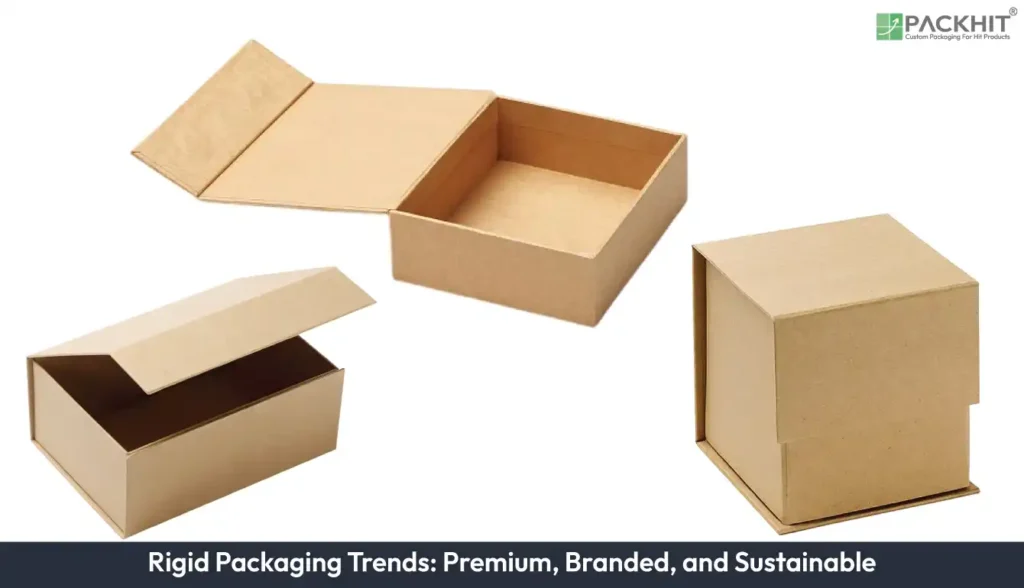
Modern rigid packaging is evolving through advanced materials, smart technology, and sustainable design to elevate brand identity and functionality. Premium, secure materials like bio-polymers and laminated paperboard are now enhanced with interactive features, including QR codes, NFC tags, and augmented reality, to maximize consumer engagement. Manufacturing priorities have also shifted toward the circular economy, utilizing mono-materials, lightweight hybrid structures, and digital printing for eco-friendly, localized customization. Integrating sensors and tracking tech optimizes supply chain efficiency, cementing modern rigid packaging as an innovative, sustainable necessity.
- Latest Trends in Rigid Packaging
- 1. Premiumization through Material Innovation
- 2. Personalization with Digital Printing
- 3. Sustainability and Circular Economy Practices
- 4. Integration of Smart Technologies
- 5. Hybrid Packaging Designs
- 6. Lightweight Solutions for Efficiency
- 7. Enhanced Branding with Interactive Features
- How is Branded Rigid Packaging Evolving?
- Integration of Advanced Printing Techniques
- Enhanced Consumer Interaction through Embedded Technology
- Focus on Unique Structural Designs
- Sustainability-Minded Branding Practices
- Tactile and Sensory Branding Elements
- Key Sustainability Trends in Rigid Packaging
- How Are Manufacturers Achieving Circularity in Rigid Packaging?
Latest Trends in Rigid Packaging
Latest trends in Rigid packaging are shaped by advancements in materials and technology, which enable manufacturers to align premiumization strategies with sustainable production goals.
1. Premiumization through Material Innovation
Premiumization through material innovation involves the use of high-quality materials like laminated paperboard, bio-based polymers, and nanotechnology coatings are redefining rigid packaging. Nanotechnology coatings help form protective barriers that prevent contamination, degradation, and physical wear to maximize durability. These materials improve durability and aesthetic appeal while incorporating anti-counterfeiting measures like holographic seals and QR codes. These advanced materials and security features significantly increase production costs and require specialized recycling processes, which can conflict with corporate sustainability goals.
2. Personalization with Digital Printing
Personalization with digital printing enables precise customization with high-resolution graphics, variable data printing, and intricate designs. This trend supports personalized packaging for seasonal campaigns, limited editions, and promotional events, boosting consumer engagement with unique brand experiences. Digital printing can face limitations in high-volume production, where traditional printing methods often remain more cost-effective and faster. Choose this approach for short, high-profit runs. If you value speed over low unit costs, you will get a better return despite the lower volume.
3. Sustainability and Circular Economy Practices
Sustainability and circular economy practices in rigid packaging emphasize recyclability, reduced material usage, and biodegradable options. Innovations such as mono-material designs and reverse logistics systems are helping manufacturers align with circular economy principles while reducing environmental impact. Reverse logistics systems help establish structured return pathways for used items, components, and packaging to enable full circularity. Their widespread success remains limited by high production costs and inadequate regional recycling infrastructure.
4. Integration of Smart Technologies
The integration of smart technologies now includes embedded sensors, RFID tags, and temperature-sensitive labels, enhancing supply chain visibility and product traceability. Temperature-sensitive labels help provide real-time visual alerts if a product breaches safe thermal limits to guarantee security. These technologies improve operational efficiency and ensure compliance with regulatory standards. High setup costs, complex data management, and cybersecurity risks can slow down adoption and require major infrastructure updates.
5. Hybrid Packaging Designs
Hybrid packaging designs combine rigid and flexible elements to balance functionality and cost-efficiency. Common in food and beverage packaging, these designs enhance usability, maintain structural integrity, and integrate seamlessly with automated filling systems. Combining dissimilar materials may significantly complicate the recycling process, often requiring specialized separation facilities that limit the package’s overall sustainability.
6. Lightweight Solutions for Efficiency
Lightweight solutions for efficiency, driven by advances in material science, have led to rigid packaging solutions such as high-strength paperboard and honeycomb structures. These innovations reduce transportation costs and environmental impact while maintaining durability. These materials remain highly vulnerable to moisture damage and can require expensive chemical coatings to ensure moisture resistance.
7. Enhanced Branding with Interactive Features
Enhanced branding with interactive features like NFC tags and augmented reality is transforming rigid packaging into immersive brand experiences. These features align packaging with brand identity and consumer expectations, increasing visibility and perceived value. Brands must balance these digital enhancements with the potential for increased production costs, technical implementation barriers, and the need for clear consumer education to ensure high adoption rates.
How is Branded Rigid Packaging Evolving?
Branded rigid packaging is undergoing significant advancements driven by technological innovation, consumer behavior, and market demands. These developments focus on enhancing brand visibility, fostering consumer engagement, and aligning packaging aesthetics with brand identity. Below are the key aspects shaping branded rigid packaging:
Integration of Advanced Printing Techniques
Regarding the integration of advanced printing techniques, digital printing technologies, such as high-resolution imaging and UV-based ink systems, are allowing brands to produce visually stunning designs with intricate detailing. Variable data printing supports mass customization, enabling brands to create unique packaging tailored to specific campaigns, demographics, or product categories. For example, seasonal designs for confectionery packaging and limited-edition cosmetic boxes leverage these techniques to create memorable consumer experiences. While digital printing excels in flexibility and customization, it often carries higher per-unit costs and slower production speeds for large-scale runs compared to traditional printing methods.
Enhanced Consumer Interaction through Embedded Technology
In terms of enhanced consumer interaction through embedded technology, interactive packaging elements, such as NFC tags, QR codes, and augmented reality features, are transforming rigid packaging into a communication portal between brands and consumers. By scanning embedded codes, consumers can access exclusive content, promotional offers, and product information, fostering brand loyalty. Augmented reality experiences, such as virtual product demonstrations, further enhance engagement by creating immersive interactions. The success of these digital features heavily relies on stable internet connectivity and intuitive user design, as complex setups or poor networks can frustrate users and lead to low adoption rates.
Focus on Unique Structural Designs
With a focus on unique structural designs, rigid packaging is evolving to include bespoke structural designs that enhance brand differentiation. Innovations such as custom die-cuts, multi-compartment layouts, and collapsible rigid boxes highlight product features while maintaining a premium feel. These designs are particularly popular in industries such as luxury goods and electronics, where packaging serves as a key branding element. These intricate structural innovations often introduce higher manufacturing costs, longer production lead times, and potential complexities in automated assembly lines.
Sustainability-Minded Branding Practices
Driven by sustainability-minded branding practices, brands are increasingly adopting sustainable packaging materials and processes to align with consumer values and regulatory requirements. For instance, the use of recycled paperboard, water-based inks, and biodegradable adhesives highlights eco-conscious branding efforts. Clear messaging on packaging, such as “100% recyclable” or “carbon neutral,” reinforces a brand’s commitment to sustainability, appealing to environmentally aware consumers. Brands must ensure these claims are fully substantiated; vague or exaggerated labeling can trigger accusations of greenwashing, leading to severe regulatory penalties and a loss of consumer trust.
Tactile and Sensory Branding Elements
Lastly, through tactile and sensory branding elements, features such as embossing, debossing, and soft-touch coatings are becoming essential components of branded rigid packaging. These elements enhance the sensory experience, creating a lasting impression and reinforcing the perceived value of the product. For example, luxury perfume brands often employ embossed logos and velvet-textured surfaces to evoke exclusivity and sophistication. These special finishes increase production costs and add time to manufacturing. Some mixed materials and coatings make the packaging harder to recycle, which can conflict with green goals.
By integrating these innovations, manufacturers are redefining branded rigid packaging to meet evolving consumer expectations while strengthening brand identity and market presence. The synergy between design, technology, and sustainability ensures that packaging remains a powerful tool for brand differentiation.
Key Sustainability Trends in Rigid Packaging
Sustainability trends in rigid packaging focus on reducing environmental impact while meeting consumer expectations and regulatory demands. These trends encompass innovative approaches in materials, design, and manufacturing processes, ensuring alignment with circular economy principles. Below are key developments shaping this domain:
- Biodegradable and Compostable Materials: Manufacturers are increasingly adopting bio-based polymers, such as PLA (Polylactic Acid) and PHA (Polyhydroxyalkanoates), for rigid packaging. These materials decompose naturally, reducing landfill waste and supporting eco-conscious consumer preferences.
- Mono-Material Designs: Simplified packaging structures using single-material compositions, like paperboard or PET, enhance recyclability. These designs minimize contamination during recycling processes, improving efficiency and reducing costs.
- Energy-Efficient Manufacturing: Advanced production techniques, such as cold forming and optimized tooling, lower energy consumption while maintaining high-quality outputs. Renewable energy sources, like solar or wind power, are increasingly integrated into manufacturing facilities.
- Carbon Neutral Packaging: Manufacturers are achieving carbon neutrality by offsetting emissions through initiatives such as reforestation projects and investments in renewable energy. Lightweight designs also contribute by reducing transportation-related carbon footprints.
- Reverse Logistics Systems: Closed-loop systems enable the retrieval and reuse of packaging materials. For example, rigid paperboard boxes with water-soluble adhesives simplify reprocessing, ensuring materials re-enter production cycles seamlessly.
- Innovative Coatings and Adhesives: Water-based, solvent-free adhesives and protective coatings are replacing traditional chemical-intensive options. These innovations reduce the environmental impact while maintaining packaging integrity.
- Consumer Education Initiatives: Clear labeling and interactive QR codes educate consumers on proper disposal methods, encouraging recycling and composting. Brands are leveraging packaging to communicate their sustainability commitments effectively.
By adopting these practices, manufacturers are not only reducing their ecological footprint but also addressing growing consumer demand for environmentally responsible products. These innovations are pivotal in aligning rigid packaging with the global shift towards sustainable development.
How Are Manufacturers Achieving Circularity in Rigid Packaging?
Material recovery systems facilitate circularity in rigid packaging by capturing reusable components. Closed-loop recycling helps enable circularity by processing post-consumer waste into new packaging. Mono-material designs support recyclability by reducing cross-contamination during sorting and reprocessing. For example, paper-based rigid boxes with water-soluble adhesives enable seamless recycling without contamination. Reverse logistics systems drive circularity by reclaiming used packaging for reintroduction into production cycles. These practices not only reduce environmental impact but also align with consumer expectations for sustainable products.
