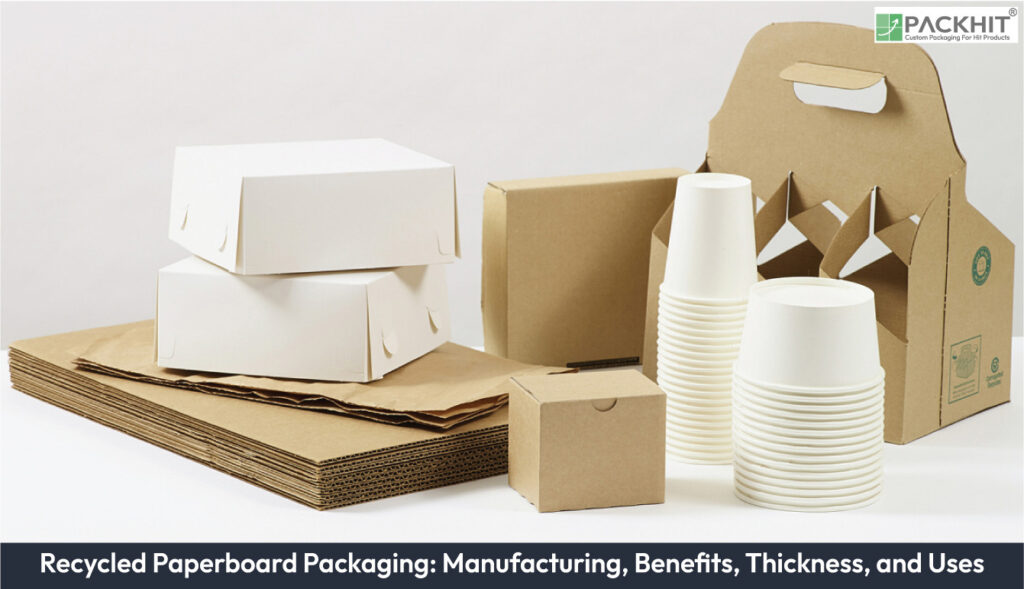
Recycled paperboard packaging is a fiber-based packaging material produced by processing recovered paper fibers into sheets or rolls for use in packaging applications. It can provide a balance of structural performance, printability, material efficiency, and recycled content, although its properties vary according to fiber composition, manufacturing process, thickness, and surface treatment. The material is manufactured through stages such as collection and sorting, repulping, cleaning, sheet formation, drying, and finishing. Different thickness grades can be selected according to the required rigidity, flexibility, protection, and packaging format. Recycled paperboard is commonly used for food and beverage cartons, consumer goods, electronics packaging, industrial applications, and other packaging solutions where recycled fiber content and functional performance are important.
- What is Recycled Paperboard Packaging?
- How is Recycled Paperboard Manufactured?
- 1. Collection and Sorting
- 2. Repulping
- 3. Cleaning and Screening
- 4. Sheet Formation
- 5. Drying and Finishing
- Benefits of Recycled Paperboard Packaging
- How Does Thickness Affect Recycled Paperboard Performance?
- Uses of Recycled Paperboard Packaging
- Limitations of Recycled Paperboard Packaging
- Moisture Sensitivity
- Recovered Fiber Variability
- Contamination and Impurities
- Incorrect Grade Selection
- Storage and Handling Requirements
- How to Choose the Right Recycled Paperboard Grade for a Rigid Box?
What is Recycled Paperboard Packaging?
Recycled paperboard packaging refers to packaging made partly or primarily from recovered paper fibers. It is a secondary fiber product, meaning it is made from recovered or recycled paper inputs such as used paper and paperboard products.
During production, recovered fibers are processed to remove unwanted materials, dispersed into a fiber slurry, formed into sheets, and dried and finished for packaging use. Important properties can include surface smoothness, stiffness, compression performance, printability, and resistance to handling conditions. These properties vary by grade, fiber composition, thickness, and surface treatment. Coatings or laminations may be used when additional surface performance, moisture resistance, or print quality is required.
How is Recycled Paperboard Manufactured?
The manufacturing of recycled paperboard involves a series of systematic steps, each designed to ensure the material is of high quality and suitable for packaging applications. Below is a detailed breakdown of the process:
1. Collection and Sorting
Production begins with the collection of recovered paper and paperboard from suitable post-consumer or industrial sources. The material is sorted to separate usable fiber from unwanted materials such as plastics, metals, adhesives, and other contaminants. The quality and composition of the recovered material can influence the characteristics of the finished paperboard.
2. Repulping
The sorted material is mixed with water in a repulping system to separate the paper into individual fibers. Additional processing aids may be used depending on the material and manufacturing process. The objective is to create a fiber slurry that can be cleaned and prepared for sheet formation.
3. Cleaning and Screening
The fiber slurry passes through cleaning and screening equipment to remove remaining unwanted materials. Different systems may be used to separate heavier particles, plastics, adhesives, ink-related material, and other contaminants. The effectiveness of this stage can affect the cleanliness and consistency of the fiber used to manufacture the board.
4. Sheet Formation
The cleaned fiber slurry is distributed over a forming surface. Water is removed while the fibers form an interconnected sheet. Pressing and subsequent processing help establish the board’s structure, density, and thickness. The resulting properties depend on the fiber furnish and the manufacturing conditions used.
5. Drying and Finishing
The formed board is dried to remove remaining moisture and may undergo additional finishing processes. Depending on the intended application, coating, laminating, calendering, or other surface treatments may be used to improve appearance, printability, moisture resistance, or other required characteristics.
Benefits of Recycled Paperboard Packaging
Recycled paperboard packaging offers several material, performance, branding, and resource-efficiency benefits, making it a practical option for brands and manufacturers across a range of packaging applications. Key benefits include:
- Supports Recycled Material Use: Incorporates recovered paper fibers into new packaging, helping reduce reliance on virgin fiber and keeping valuable materials in circulation.
- Improves Material Efficiency: Appropriate board selection helps manufacturers achieve the required strength and protection while avoiding unnecessary material use and costs.
- Provides Structural Performance: Recycled paperboard can offer reliable stiffness and support across various packaging formats, depending on board grade, thickness, fiber composition, and package design.
- Enhances Printability and Branding: Provides a suitable surface for logos, graphics, product information, and other branding elements, with print quality influenced by board grade, coating, and finishing.
- Supports Circular Material Use: Recycling paperboard allows recovered fibers to be used in new paper-based products, helping extend material use and reduce waste.
- Offers Potential Environmental Advantages: Using recovered fibers can support resource-efficiency goals and reduce dependence on virgin materials, while the overall environmental impact depends on sourcing, processing, energy use, and manufacturing conditions.
How Does Thickness Affect Recycled Paperboard Performance?
Thickness is one factor that influences the stiffness, rigidity, weight, folding behavior, and protective performance of paperboard. Thicker or heavier board may provide greater structural support for products that require additional protection or resistance to handling and compression. Thinner board may be suitable when flexibility, lower material use, or reduced package weight is more important.
However, thickness should not be treated as the only measure of performance. Fiber composition, board density, construction, coatings, moisture conditions, box geometry, and converting processes can also affect the finished package. For rigid boxes, manufacturers should therefore evaluate the complete board specification rather than selecting a grade based only on a thickness number.
Uses of Recycled Paperboard Packaging
Recycled paperboard packaging is a versatile material with applications spanning multiple industries. Below are some of its most common uses, categorized by sector:
- Food and Beverage Industry: Used for cereal boxes, frozen food cartons, beverage carriers, and other food-related packaging. Its printable surface supports attractive branding and product information.
- Electronics and Technology: Provides protective packaging for electronic devices and accessories, helping safeguard products during handling, storage, and transportation.
- Consumer Goods: Commonly used for cosmetics, toys, household products, and other consumer goods. Different thicknesses and grades allow packaging to be customized to specific product requirements.
- Industrial Applications: Heavy-duty recycled paperboard can be used for shipping containers, protective inserts, and storage solutions, offering strength and rigidity for demanding applications.
- Sustainable Packaging Initiatives: Supports sustainability goals by incorporating recovered materials, reducing waste, and contributing to more circular resource-use practices.
Limitations of Recycled Paperboard Packaging
The limitations of recycled paperboard packaging include moisture sensitivity, fiber variability, contamination, incorrect grade selection, and storage requirements.
Moisture Sensitivity
Paperboard can be affected by excessive moisture or wet conditions, which may reduce stiffness, alter dimensions, or affect the package’s appearance. Moisture-resistant coatings, laminations, and suitable storage conditions may be required for specific applications.
Recovered Fiber Variability
Recovered paper can vary in fiber type, quality, age, and contamination levels. These variations may affect the consistency and performance of the finished paperboard, making appropriate quality control and material specifications important.
Contamination and Impurities
Recovered paper streams may contain adhesives, inks, plastics, metals, and other contaminants. Although cleaning and screening processes help remove unwanted materials, their effectiveness depends on the quality of the recovered material and the recycling process used.
Incorrect Grade Selection
Choosing a board grade that is too light may result in inadequate product protection, while an unnecessarily heavy grade can increase material use, package weight, and costs. Selection should consider product weight, dimensions, stacking requirements, transportation, and handling conditions.
Storage and Handling Requirements
Paperboard should be stored and handled under suitable environmental conditions, particularly where moisture is a concern. Following supplier recommendations and application-specific requirements helps maintain board quality and packaging performance.
How to Choose the Right Recycled Paperboard Grade for a Rigid Box?
The appropriate board grade should be selected based on the requirements of the finished box rather than thickness alone. Consider the following factors:
- Product weight: Heavier products generally require greater structural support.
- Protection requirements: Fragile or easily damaged products may require a stiffer or more protective board construction.
- Box size and design: Larger boxes may require additional structural support depending on their geometry and intended use.
- Stacking and compression: Packages that will be stacked or subjected to compression during storage and transportation may require higher structural performance.
- Shipping conditions: Long-distance transportation, repeated handling, or demanding storage environments can influence the required board specification.
- Folding and converting: The board must provide the required balance between stiffness and flexibility for the box design and converting process.
- Surface requirements: High-quality graphics, special finishes, moisture resistance, or other surface properties may require a suitable coating or lamination.
- Sustainability requirements: Recycled content, recyclability, coatings, and other material specifications should be considered together rather than evaluated separately.
As a general selection principle, lighter grades may suit products with lower structural demands, medium grades can provide a balance between material use and rigidity, and heavier grades may be appropriate where greater protection or structural support is required. Exact grade selection should be confirmed against the supplier’s technical specifications and the requirements of the finished package.
