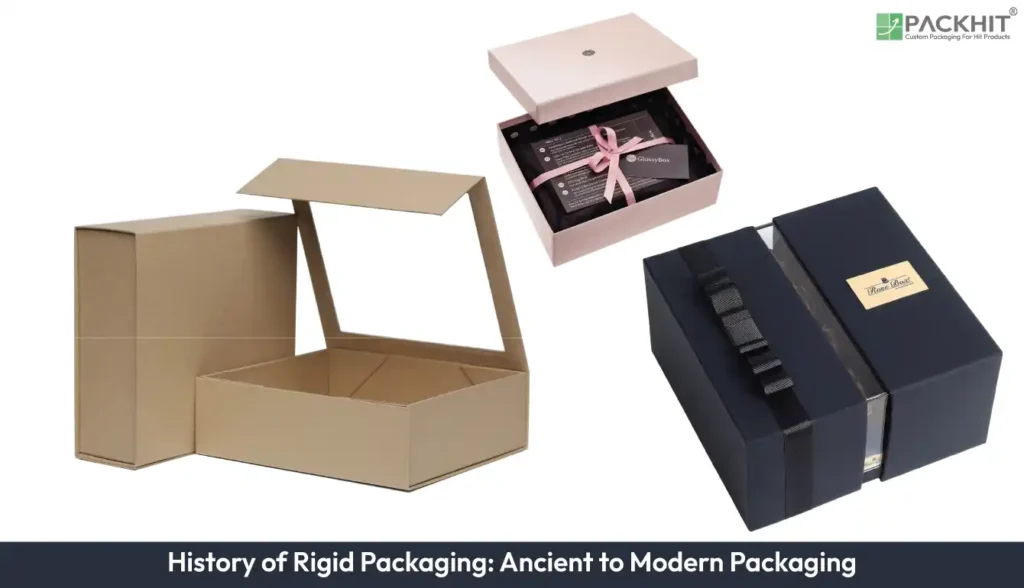
Rigid setup boxes, essential in premium packaging, have evolved from ancient utilitarian containers made of wood, clay, and stone to modern high-density paperboard solutions that integrate sustainable materials and advanced technologies. In ancient civilizations such as Mesopotamia, Egypt, and China, rigid containers were crafted to store valuables and ceremonial items, often symbolizing status and showcasing intricate craftsmanship. The Industrial Revolution introduced paperboard and mechanized manufacturing, revolutionizing box production and enabling mass creation of set-up boxes, which were wrapped in decorative materials for luxury appeal. By the 20th century, rigid boxes became synonymous with branding, as luxury brands and industries like electronics, food, and cosmetics utilized them for product protection and presentation. Modern innovations, including digital printing and smart packaging, have enhanced customization, functionality, and sustainability, ensuring their relevance across sectors such as e-commerce and luxury goods. As the industry advances, eco-friendly materials and digital technologies like augmented reality are set to further redefine the role of rigid setup boxes in packaging and consumer experiences.
- Earliest Forms of Rigid Packaging
- How Did the Industrial Revolution Transform Rigid Packaging?
- Early Manufacturers of Rigid Packaging
- What Role Did Rigid Packaging Play in 20th-Century Consumer Culture?
- How Have Modern Innovations Shaped Rigid Packaging?
- Industries that Rely on Rigid Packaging Today
- What are the Future Trends in Rigid Packaging?
Earliest Forms of Rigid Packaging
The origins of rigid packaging can be traced to ancient civilizations, where containers were crafted from natural materials such as wood, clay, and stone. These early forms of packaging primarily prioritized functional needs like preservation and security, though their reliance on heavy, often bulky materials limited portability and mass distribution, shaping the logistical constraints for early traders. While wood and stone offered significant durability, they were prone to specific failure modes; wood was susceptible to natural degradation like rot or insect damage, while the excessive weight of stone hindered large-scale transport. For example, wooden chests and carved stone boxes were increasingly used in early civilizations. These containers, often adorned with intricate carvings or inlays, were not only practical but also symbolic, reflecting the social status of their owners.
In ancient China, lacquered wooden boxes emerged in early civilizations, showcasing advanced craftsmanship and aesthetic sensibilities. Similarly, in the Greco-Roman world, rigid containers made of metal and ivory were used to store perfumes, jewelry, and other luxury goods. These early examples of rigid packaging laid the groundwork for the development of more sophisticated box designs in later periods.
How Did the Industrial Revolution Transform Rigid Packaging?
The Industrial Revolution marked a pivotal shift in the production of rigid set-up boxes. Mechanized manufacturing processes replaced manual craftsmanship, enabling the mass production of boxes with greater precision and uniformity. The introduction of paperboard as a primary material revolutionized the industry, offering a lightweight yet sturdy alternative to wood and metal. However, the shift to paperboard introduced new risks, such as tearing under pressure and high moisture sensitivity, which created the need for early moisture-control practices in storage and transport to prevent structural warping. By the mid-1800s, paperboard boxes became more commonly used for packaging consumer goods, including textiles, confectionery, and cosmetics.
One notable innovation during this period was the development of the “set-up box,” a preassembled, noncollapsible container made of thick paperboard. Unlike folding cartons, rigid set-up boxes provided enhanced structural integrity and were often wrapped in decorative paper or fabric to enhance their visual appeal. This made them particularly popular for high-end products, such as jewelry and luxury apparel. The rise of lithographic printing further expanded the design possibilities, allowing manufacturers to incorporate intricate patterns, logos, and branding elements directly onto the box surface.
For manufacturers, the choice between rigid set-up boxes and folding cartons involves a trade-off: while rigid set-up boxes offer superior structural integrity and premium shelf presence, it can occupy more shipping space and incur higher production costs compared to collapsible alternatives.
Early Manufacturers of Rigid Packaging
The earliest manufacturers of rigid packaging were small-scale artisans and workshops during the pre-industrial era, often specializing in handcrafted wooden, stone, or metal containers. These artisans catered to noble families, religious institutions, and merchants who required durable packaging for valuables and ceremonial items. As the Industrial Revolution progressed, packaging production shifted to mechanized factories, enabling larger-scale operations and reducing costs. Companies specializing in paperboard manufacturing emerged as key players in the rigid packaging industry, leveraging new technologies such as die-cutting and lithographic printing to mass-produce rigid set-up boxes.
This historical transformation underscores the importance of rigid packaging manufacturers in adapting to technological advancements and consumer demands. Their ability to integrate craftsmanship with industrial efficiency laid the foundation for the modern packaging industry, where innovation continues to drive growth and sustainability.
What Role Did Rigid Packaging Play in 20th-Century Consumer Culture?
The 20th century saw rigid packaging evolve from simple protective containers into sophisticated marketing tools, where the integration of precision-cut paperboard and high-quality lithography allowed brands to distinguish their products on crowded retail shelves. During the early 20th century, department stores and specialty retailers began using rigid boxes as a means of elevating the perceived value of their products. For instance, luxury brands such as Tiffany & Co. and Cartier adopted custom rigid boxes to reinforce their premium image and create a memorable unboxing experience for customers.
Mid-20th century global conflicts temporarily disrupted the production of rigid boxes due to material shortages, but the post-war economic boom spurred a resurgence in their use. Advances in adhesives, die-cutting, and lamination techniques allowed for greater customization and efficiency in box production. By the mid-20th century, rigid boxes became more commonly used across industries, from electronics to confectionery, as manufacturers recognized their ability to protect products while enhancing shelf appeal.
How Have Modern Innovations Shaped Rigid Packaging?
In the 21st century, rigid packaging has undergone significant innovations, driven by advancements in materials, sustainability, and design technology. Modern rigid boxes are typically constructed from high-density paperboard, with manufacturers often selecting recycled chipboard cores, the structural foundation of rigid setup boxes, ranging specifically from 1.5mm to 3mm in core thickness to balance structural rigidity against weight and cost-efficiency. The use of eco-friendly materials, such as recycled paper and biodegradable adhesives, has become increasingly prevalent in response to growing environmental concerns. When selecting modern rigid packaging, manufacturers must balance the desire for premium materials and complex finishing with the practical constraints of material sourcing and the added weight, which can influence shipping logistics and overall cost-efficiency.
Digital printing and 3D modeling have revolutionized the design process, enabling manufacturers to create highly customized boxes with intricate graphics, embossing, and foil stamping. These features not only enhance the aesthetic appeal of the boxes but also serve as powerful branding tools. Also, the integration of smart packaging technologies, such as QR codes and NFC tags, has expanded the functionality of rigid boxes, allowing them to deliver interactive experiences and track product authenticity. QR codes and NFC tags allow consumers to instantly access digital product tutorials or brand stories, bridging the gap between physical retail packaging and digital engagement.
Industries that Rely on Rigid Packaging Today
Rigid packaging is widely used for various industries, particularly those that prioritize product presentation and protection. In the luxury goods sector, they are a staple for packaging jewelry, watches, and high-end cosmetics. The electronics industry also relies on rigid boxes to safeguard delicate items such as smartphones and wearable devices during transit. Also, the food and beverage industry employs rigid boxes for premium products like artisanal chocolates and fine wines, where packaging plays a crucial role in conveying quality and exclusivity.
Custom rigid boxes have also gained traction in the e-commerce sector, where they are used to enhance the unboxing experience and reinforce brand identity. Companies such as Apple and Samsung have set benchmarks in this regard, using meticulously designed rigid boxes to create a sense of anticipation and value for their products. This trend underscores the enduring relevance of rigid setup boxes in a rapidly evolving marketplace.
What are the Future Trends in Rigid Packaging?
The evolution of rigid packaging is currently governed by a shift from purely aesthetic design to a convergence of technical innovation and regulatory necessity. Key drivers include the integration of advanced manufacturing processes, digital verification layers, and materials science to meet global circular economy standards while optimizing supply chain efficiency.
- Sustainability and Eco-materials: Adoption is primarily driven by regulatory compliance, such as reduced plastic mandates and the requirement for circularity. This necessitates a transition to plant-based adhesives and water-based coatings to ensure the final product remains fully recyclable without losing structural integrity or durability.
- Automation and Robotics: The transition from manual setup to robotic precision is a response to the technical constraint of high-volume, consistent production. Implementing these systems allows manufacturers to strictly control labor costs and maintain tight tolerances across large production runs.
- Interactive Technologies (AR & Smart): This mechanism utilizes integrated QR and NFC data layers to solve supply chain traceability and anti-counterfeiting challenges. Simultaneously, AR serves as a digital differentiator for luxury e-commerce by providing immersive brand storytelling directly on the physical substrate.
- Customization: Digital printing and 3D modeling function as essential mechanisms for rapid prototyping. These technologies significantly reduce time-to-market by allowing for the immediate iteration and execution of complex, brand-specific packaging designs.