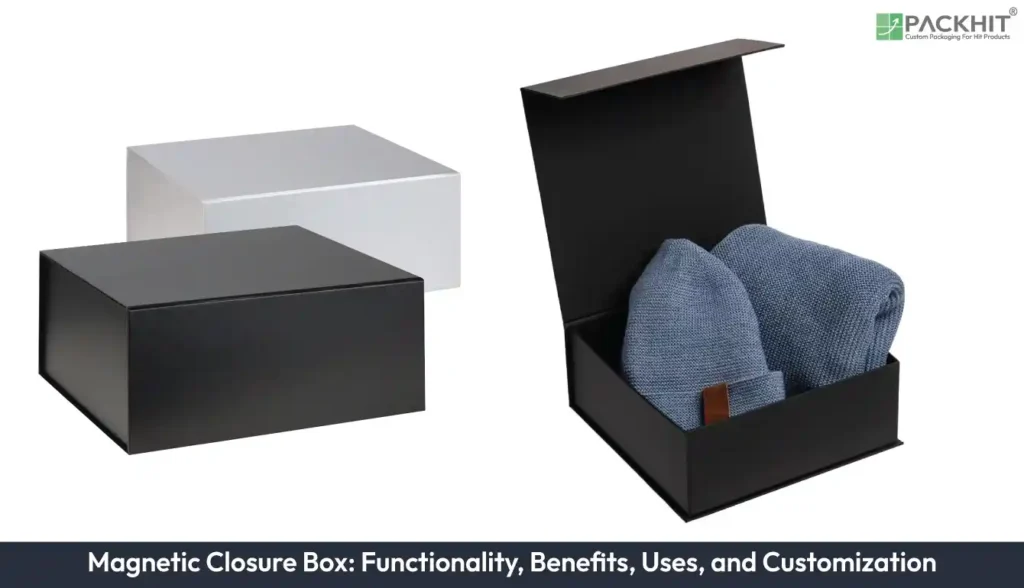
Magnetic closure boxes use concealed magnets to provide reliable functionality through repeated opening and closing. Their benefits include structural stability, convenient access, presentation value, and branding potential. Common uses of magnetic closure boxes span luxury goods, electronics, food gifts, jewelry, corporate gifting, and specialty packaging. Customization of these boxes can adapt the structure, interior, magnetic closure, materials, and finishes to product and production requirements. Manufacturers should also consider environmental factors, box style, selection criteria, closure risks, validation, and cost-effectiveness when choosing magnetic closure boxes.
- What is a Magnetic Closure Box?
- Materials Used to Construct Magnetic Closure Boxes
- How Does the Magnetic Mechanism in Magnetic Closure Boxes Operate?
- Functional Roles of Magnetic Closure Boxes
- Benefits of Magnetic Closure Boxes
- Where are Magnetic Closure Boxes Commonly Used?
- How Can Magnetic Closure Boxes Be Customized?
- How Should Manufacturers Choose a Magnetic Closure Box?
- 1. Define Product and Protection Requirements
- 2. Select the Box Structure
- 3. Specify the Closure
- 4. Plan the Interior
- 5. Choose Exterior Materials and Finishes
- 6. Validate Before Full Production
- Risks and Failure Modes of Magnetic Closure Boxes
- Are Magnetic Closure Boxes Cost-Effective for Manufacturers?
What is a Magnetic Closure Box?
A magnetic closure box is a type of rigid packaging that incorporates embedded magnets within its structure to facilitate secure closure. The core properties of these boxes include their rigid material composition, typically made from high-density cardboard or chipboard, and the integration of magnetic strips or discs. The magnetic mechanism ensures a seamless yet firm closure, enhancing both functionality and user experience. These boxes are often used for high-value products due to their ability to combine durability with an upscale appearance.
Materials Used to Construct Magnetic Closure Boxes
Magnetic closure boxes are primarily constructed from rigid materials such as chipboard, MDF (medium-density fiberboard), or high-grade cardboard. These materials provide the necessary strength to withstand external pressures and protect the contents. The magnetic components, typically neodymium magnets, are embedded within the box flaps or panels, ensuring a secure and consistent closure mechanism. The outer layer is often laminated with paper, fabric, or specialty finishes to enhance visual appeal and tactile quality.
How Does the Magnetic Mechanism in Magnetic Closure Boxes Operate?
The closure typically consists of magnets embedded beneath the covering material in the lid or closing flap and corresponding magnets or ferromagnetic metal elements positioned in the matching front or side panel of the box. When the lid is opened, these paired closure points separate. As the lid returns to its closed position, magnetic attraction between the embedded magnet and its corresponding counterpart draws the aligned surfaces together and holds them in place. Depending on the box design, the magnetic elements may be small discs placed at specific closure points or strips extending along part of the closing edge. Their placement and magnetic strength determine how firmly the lid is held while still allowing it to be opened by hand. Concealing the magnets and their counterparts beneath the outer covering preserves a clean exterior while allowing the closure to engage repeatedly.
Functional Roles of Magnetic Closure Boxes
Repeated-access products illustrate one practical advantage of this format. Cosmetics, electronics, presentation kits, and similar items can be opened and returned to the same package without relying on disposable seals or complicated closures. The rigid walls help protect the contents, while correctly positioned magnets reduce unintended opening during ordinary handling. For manufacturers, the box exterior also provides usable space for logos, product information, and decorative treatments.
Benefits of Magnetic Closure Boxes
The benefits of magnetic closure boxes are multifaceted, encompassing both practical and aesthetic advantages. Their rigid construction supports durability and long-term usability, while the magnetic closure mechanism provides a secure, repeatable closure for magnetic-closure rigid boxes during ordinary handling. From a branding perspective, these boxes offer extensive customization options, enabling manufacturers to create packaging that aligns with their product identity. Furthermore, the premium appearance of magnetic closure rigid boxes can enhance perceived product value, making this packaging format a preferred choice for presenting luxury items.
Environmental Considerations
While magnetic closure boxes are primarily designed for durability and aesthetics, their environmental impact is an important consideration. Many manufacturers now opt for eco-friendly materials such as recycled cardboard and biodegradable laminates. The magnets themselves, often made from neodymium, can be sourced responsibly to minimize ecological footprint. Additionally, the reusable nature of these boxes contributes to waste reduction, aligning with sustainable packaging practices.
Where are Magnetic Closure Boxes Commonly Used?
Magnetic closure boxes are used across multiple industries where rigid construction, repeated-access magnetic closure, and a clean exterior are useful for product protection and presentation. Their combination of durable board materials and concealed magnetic closure components makes magnetic closure boxes suitable for applications ranging from retail and electronics to corporate gifting and specialty packaging.
By serving these different applications, magnetic closure boxes demonstrate how the same rigid structure and magnetic closure mechanism can be adapted to different product, presentation, and repeated-access requirements.
- Retail Sector: These boxes are widely used for packaging high-end products such as jewelry, watches, and cosmetics. Their ability to enhance product presentation makes them an ideal choice for luxury items.
- Electronics Industry: Magnetic closure boxes provide secure and elegant packaging for premium gadgets, accessories, and other electronic devices. Their durable construction ensures protection during transportation and storage.
- Food and Beverage Sector: In this industry, magnetic closure boxes are often utilized for gift packaging of gourmet items like chocolates, wines, and specialty foods. Their aesthetic appeal adds value to the overall product experience.
- Corporate Gifting: Businesses use these boxes for promotional items and corporate gifts, leveraging customization options to align with branding objectives and create lasting impressions.
- Specialty Packaging: Magnetic closure boxes are also employed in niche markets, such as bespoke collectibles, luxury apparel, and artisanal goods, where presentation and protection are paramount.
By catering to diverse industries, magnetic closure boxes demonstrate their adaptability and value as a premium packaging solution.
How Can Magnetic Closure Boxes Be Customized?
Customization can begin with structural requirements rather than decoration. Dimensions, board thickness, lid configuration, inserts, and magnet placement can be adjusted around the product before exterior treatments are selected. Branding and finishing options may then include embossing, debossing, foil stamping, UV coating, specialty papers, ribbons, die-cut windows, and holographic details.
Design Variations and Styles
Storage and assembly requirements often determine which box style works best. Foldable versions ship and store relatively flat before assembly, whereas hinged-lid boxes arrive in a more fixed rigid form. Collapsible structures offer another way to reduce storage volume while retaining a rigid presentation after setup. The appropriate design depends on production volume, fulfillment requirements, product dimensions, and the intended opening experience.
Specialized Applications: Jewelry and Gift Packaging
Jewelry packaging often requires more than an attractive exterior. Velvet, satin, foam, or fitted inserts can help stabilize small items and protect delicate surfaces from movement and scratches. Gift boxes have different priorities and may incorporate compartments, ribbons, printed messages, tags, or custom inserts to organize several items and create a deliberate presentation sequence.
How Should Manufacturers Choose a Magnetic Closure Box?
Start with the product rather than the decorative finish. Product dimensions, weight, fragility, presentation requirements, shipping conditions, order volume, and target packaging cost should determine the box structure before visual customization is finalized.
1. Define Product and Protection Requirements
Measure the product and any accessories that will be packed with it. Fragile, heavy, or multi-component products may require thicker board, fitted inserts, dividers, or additional internal support. Products that will be opened repeatedly also benefit from a structure designed to maintain its shape through multiple opening cycles.
2. Select the Box Structure
Choose a format according to storage, assembly, and presentation requirements. Hinged-lid boxes provide a fixed rigid presentation, while foldable or collapsible magnetic boxes can reduce storage and shipping volume before assembly. The appropriate format depends on production scale, fulfillment processes, and the intended customer experience.
3. Specify the Closure
Magnet size, strength, number, and placement should suit the dimensions and weight of the lid. The closure needs enough holding force to remain shut during normal handling without making the package unnecessarily difficult to open.
4. Plan the Interior
Foam, molded pulp, paperboard, fabric-covered trays, or other fitted inserts can hold products in position and improve protection. Insert dimensions should be developed alongside the box dimensions so that the contents fit securely without excessive movement or compression.
5. Choose Exterior Materials and Finishes
Select wraps and finishes according to branding requirements, handling conditions, budget, and sustainability goals. Options can include specialty papers, laminates, embossing, debossing, foil stamping, UV treatments, and printed graphics. Decorative features should be evaluated after the structural requirements are established.
6. Validate Before Full Production
A physical prototype or production sample allows manufacturers to check lid alignment, magnet performance, insert retention, and overall fit before approving the design. For packaging intended for shipping, transport and handling tests should follow these prototype checks to identify structural or closure problems before production is scaled.
Risks and Failure Modes of Magnetic Closure Boxes
Magnetic closures depend on more than just magnet strength. Manufacturers should account for the following risks and validate the complete box construction before production:
- Loss of closure strength: A closure may become unreliable if magnets are undersized, positioned too far apart, misaligned during assembly, or separated by excessive material thickness. Damage, elevated temperatures, or unsuitable operating conditions can also reduce magnetic performance.
- Covering materials and laminates: Paper wraps, fabric, foam, laminates, adhesives, and other layers between the magnet and its counterpart increase the separation distance and can weaken the effective holding force. Final magnet selection should therefore be tested through the actual material stack rather than evaluated in isolation.
- Handling and safety: Magnets must be securely retained within the structure so they cannot loosen or detach during normal use. Manufacturers should also consider potential pinch points and any product-specific requirements where strong magnets could interfere with magnet-sensitive items or equipment.
- Prototype validation: Production-intent prototypes should be tested for opening force, closure alignment, repeated opening and closing, drop or handling impacts, and performance under expected storage and transport conditions. Testing should confirm that the lid closes consistently without requiring excessive force to open.
- Mitigation and production controls: Appropriate magnet size, polarity, placement tolerances, adhesive or mechanical retention, and sufficient board strength can reduce closure failures. Placement and retention should also be checked during production because small assembly variations can cause misalignment or inconsistent holding force.
Are Magnetic Closure Boxes Cost-Effective for Manufacturers?
Yes, magnetic closure boxes can be cost-effective for manufacturers over time, particularly for premium and high-margin products. Their durability and reusable nature can provide long-term value despite higher initial costs than standard packaging solutions. Their ability to enhance product value and brand perception often further justifies the investment. Bulk production and wholesale options can also reduce per-unit costs, making them a viable choice for manufacturers seeking premium packaging solutions. Manufacturers typically weigh higher upfront tooling/material costs against reduced damage/returns and longer service life across repeat distribution or gifting cycles.