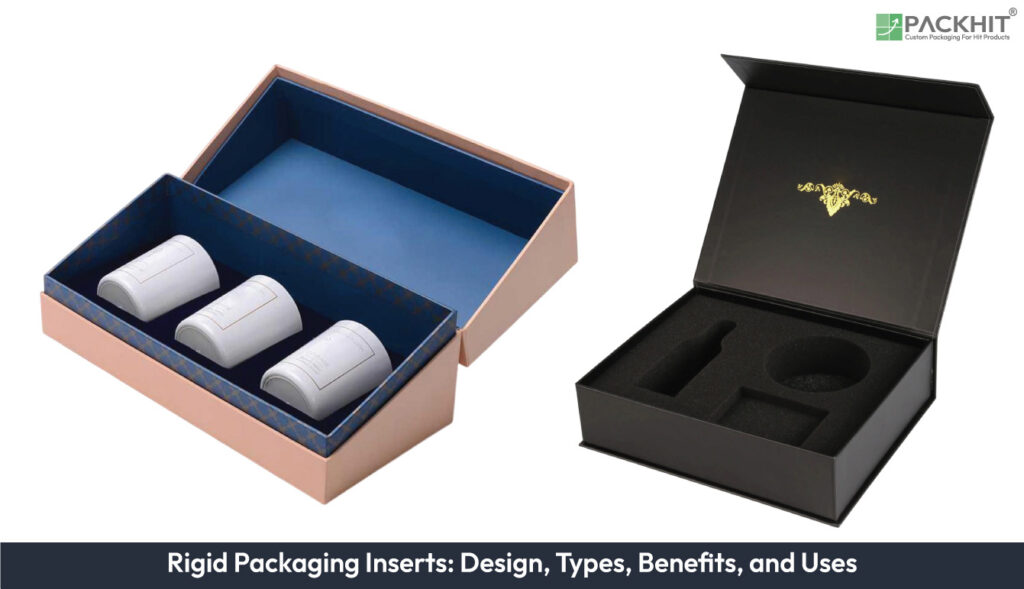
Rigid packaging inserts are structural components designed to enhance the functionality, protection, and presentation of products within rigid boxes. These inserts are crafted using materials such as foam, plastic, cardboard, and blister options, selected based on product-specific requirements like weight, fragility, or eco-consciousness. Their design involves precise material selection, structural engineering, and customization to enhance product immobilization, and reduce damage during transit. Rigid packaging insert types such as foam inserts cushion delicate items, plastic inserts offer durability and precision, and cardboard inserts provide cost-effective, sustainable solutions, while blister inserts combine visibility with protection. Industries such as luxury goods, electronics, retail, e-commerce, medical, and gift sets leverage rigid packaging inserts to ensure product safety, reinforce branding, and create a premium unboxing experience. With benefits like enhanced product protection, improved consumer satisfaction, sustainability, and versatility, rigid packaging inserts remain indispensable for manufacturers seeking robust, tailored packaging solutions.
- What are Rigid Packaging Inserts?
- How are Rigid Packaging Inserts Designed?
- Types of Rigid Packaging Inserts
- Benefits of Rigid Packaging Inserts
- Enhanced Product Protection
- Improved Consumer Experience
- Sustainability and Eco-Friendliness
- Versatility Across Industries
- How are Rigid Packaging Inserts Used Across Industries?
- How to Choose the Right Rigid Packaging Insert?
What are Rigid Packaging Inserts?
Rigid packaging inserts are internal components placed within rigid boxes to provide structural support, product protection, and enhanced presentation. Unlike flexible packaging solutions, these inserts are characterized by their inflexible and durable construction, making them ideal for safeguarding high-value or fragile items. Commonly used materials include rigid foam, molded plastic, and die-cut cardboard, each selected based on the specific requirements of the product being packaged.
Rigid packaging inserts contribute to the overall aesthetic of the packaging, often incorporating branding elements such as logos, embossing, or custom colors. This makes rigid packaging inserts a preferred choice for industries where product integrity and consumer perception are critical.
How are Rigid Packaging Inserts Designed?
Rigid packaging inserts are designed by selecting product dimensions and load conditions, then engineering the insert geometry and material thickness to control fit, cushioning, and stability during shipping and handling.
Material Selection and Structural Integrity
The design of rigid packaging inserts begins with the selection of materials that align with the product’s structural integrity and intended use. Foam inserts, for instance, are favored for their shock-absorbing materials, making them suitable for electronics and delicate items. Molded plastic inserts, on the other hand, offer precision and durability, often used for products requiring exact placement, such as cosmetics or medical devices. Cardboard inserts, while less durable, are valued for their eco-friendliness and cost-effectiveness, particularly in retail packaging.
Structural integrity is a key consideration during the design process. Inserts are engineered to fit snugly within the rigid box, ensuring that the product remains stationary. Advanced techniques such as CAD modeling and prototyping ensure optimal fit, cushioning, stability, and control of load conditions. These design outputs are decided by selecting specific materials, such as shock-absorbent foam, rigid molded plastic, or precision die-cut cardboard, based on the product’s protective requirements.
Customization and Branding
Customization is a defining feature of rigid packaging inserts. Manufacturers can tailor the design to accommodate unique product shapes, incorporate branding elements, and enhance the overall consumer experience. Techniques such as embossing, debossing, and color matching are commonly used to align the insert with the brand’s visual identity. For luxury goods, inserts may include velvet linings or metallic finishes to reinforce the premium nature of the product.
Rigid packaging inserts can be designed to include compartments or layers, enabling multi-product packaging within a single box. This is particularly useful for gift sets or product bundles, where organization and presentation are key to consumer appeal.
Types of Rigid Packaging Inserts
Rigid packaging inserts are available in various types, such as foam, plastic, cardboard, and blister inserts, each catering to specific product protection and presentation needs:
Foam Inserts
Foam inserts are widely used for their cushioning properties and adaptability. Available in various densities, such as polyurethane or polyethylene foam, these inserts are ideal for protecting fragile items like electronics, glassware, and medical instruments. Their ability to absorb shocks and vibrations makes them indispensable in industries requiring high levels of product protection.
Plastic Inserts
Molded plastic inserts are known for their precision and durability. These inserts are often custom-molded to fit the exact dimensions of the product, ensuring a secure fit. Commonly used in the cosmetics and electronics industries, plastic inserts provide a sleek and professional appearance while offering robust protection against impact and environmental factors.
Cardboard Inserts
Cardboard inserts are a cost-effective and environmentally friendly option. These inserts are typically die-cut to fit the product’s shape and are often used in retail and e-commerce packaging. While less durable than foam or plastic, cardboard inserts are lightweight and recyclable, making them a popular choice for brands prioritizing sustainability.
Blister Inserts
Blister inserts, made from thermoformed plastic, are commonly used for small, lightweight items such as cosmetics, pharmaceuticals, and consumer electronics. These inserts provide a clear, secure enclosure for the product, enhancing visibility while maintaining protection. Their rigid structure ensures that the product remains in place, even during extended handling or transit.
Benefits of Rigid Packaging Inserts
Rigid packaging inserts help enhance product protection, improve consumer experience, offer sustainable options, and provide versatility across industries.
Enhanced Product Protection
Rigid packaging inserts provide unparalleled protection for products, particularly those that are fragile or high-value. These inserts minimize the risk of damage caused by movement, impact, or environmental factors. This is especially critical for industries such as electronics, luxury goods, and medical devices, where product integrity is non-negotiable.
Improved Consumer Experience
The unboxing experience is a significant factor in consumer satisfaction, and rigid packaging inserts contribute to this by ensuring that products are presented in an organized and visually appealing manner. Custom inserts, designed to align with the brand’s aesthetic, enhance the perceived value of the product and leave a lasting impression on the consumer.
Sustainability and Eco-Friendliness
The environmental impact of rigid packaging inserts is directly tied to their material composition. Cardboard inserts are inherently recyclable and biodegradable, making them the most sustainable option for environmentally conscious brands. In contrast, while traditional foam inserts like polyurethane and polyethylene are typically not biodegradable, new advancements have led to the development of specialized biodegradable foam alternatives to reduce waste. Finally, although molded plastic inserts are valued for their durability and precision, manufacturers are increasingly introducing recyclable plastic formulations, such as PET and HDPE, to improve the environmental footprint of these rigid components.
Versatility Across Industries
The versatility of rigid packaging inserts makes them suitable for a wide range of applications. From luxury gift boxes to industrial packaging, these inserts can be tailored to meet the specific needs of various industries. Their ability to combine protection with presentation helps ensure their continued relevance in diverse market segments.
How are Rigid Packaging Inserts Used Across Industries?
Rigid packaging inserts are mainly used in luxury goods, electronics, e-commerce, pharmaceutical, and multiproduct packaging. Also, can serve specific roles across various industries as well, where their protective and aesthetic features are used to meet unique demands. Their versatility and adaptability make them an essential component in modern packaging solutions.
- Luxury Goods: In the luxury goods sector, rigid inserts enhance the unboxing experience by combining protection with premium presentation. Inserts made of velvet or foam are often used to cradle delicate items such as jewelry, watches, or high-end perfumes, reinforcing the product’s exclusivity.
- Electronics: Electronics manufacturers rely heavily on foam or molded plastic inserts to secure and protect fragile components during shipping. These inserts help minimize vibrations and impact, ensuring that items like smartphones, laptops, and delicate circuit boards reach customers intact.
- Retail and E-commerce: In retail and e-commerce, cardboard inserts are a popular choice due to their cost-effectiveness and sustainability. They are often die-cut to fit specific products, from clothing to home goods, ensuring neat organization and a visually appealing presentation upon unboxing.
- Medical and Pharmaceutical: The medical and pharmaceutical industries utilize rigid packaging inserts to ensure the safe transport of sensitive instruments, medications, and diagnostic devices. Foam inserts are frequently employed to immobilize fragile items, reducing the risk of damage during handling or transit.
- Gift Sets and Multiproduct Packaging: Rigid inserts are commonly used in gift sets or multiproduct packaging to organize and display items attractively. Inserts with multiple compartments or layers allow for secure placement of each product, enhancing both functionality and consumer appeal.
How to Choose the Right Rigid Packaging Insert?
Making an informed decision about your packaging requires evaluating several critical factors to ensure the safety and presentation of your items:
- Product Characteristics (Weight, Fragility, Shape): Consider the physical nature of your item; heavy products typically require dense foam or durable molded plastic for support, while products with complex or irregular shapes benefit from the precision of custom molding. Choose when you need to immobilize components during transit or display irregular geometries. Foam provides superior shock absorption compared to rigid cardboard but often lacks the crisp, shelf-stable aesthetic of thermoformed plastic. In electronics, choosing a high-particulate foam can result in dust contamination on sensitive components if not properly sealed or coated.
- Brand Identity and Aesthetics: The choice of material should reflect your brand values. Luxury goods often utilize premium finishes like velvet linings or custom colors to reinforce exclusivity, whereas eco-conscious brands should prioritize recyclable cardboard or sustainable materials. Choose when the unboxing experience is a primary driver of customer loyalty and perceived product value. Cardboard inserts offer a cleaner, more sustainable narrative than plastic or foam, though they may offer less structural security for fragile luxury goods. For high-end luxury, using budget-grade blister packaging can drastically cheapen the brand image, causing a mismatch between the product’s high price point and the unboxing feel.
- Logistical and Budgetary Requirements: While cardboard can offer a cost-effective solution for standard shipping and retail, durable molded plastics are essential for high-value items traversing complex or high-impact distribution cycles where maximum protection is required. Choose when shipping long distances or through complex supply chains with high-drop profiles. Blister packaging offers excellent product visibility and cost-efficiency compared to custom foam cavities, but provides less overall structural rigidity. In pharma or medical contexts, failing to choose a puncture-resistant insert material can lead to seal integrity issues if external pressure damages the inner contents during transit.
