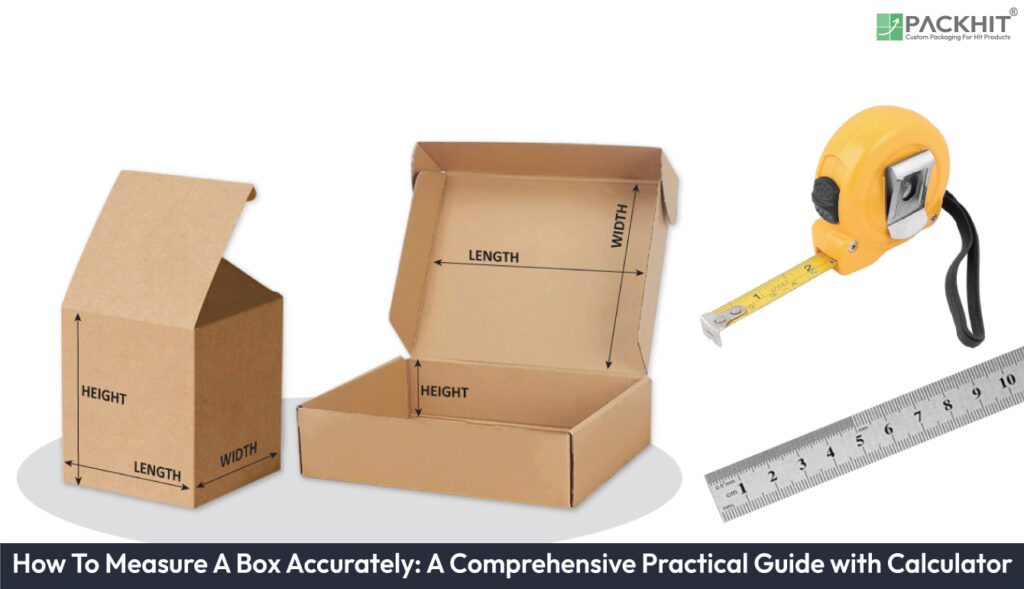
To measure box dimensions accurately, begin by preparing the box on a stable, flat surface. Measure the length along the longest edge, followed by the width of the shorter side, and the height from base to top. Multiply the length, width, and height to calculate the volume, and if required, calculate the girth by adding the height and width and multiplying by two. Be sure to record the measurements and account for allowances like padding around your product.
Accurate box measurements are essential for ensuring efficient shipping, cost-effectiveness, and product protection. Proper measurements help optimize packaging material usage, minimize shipping costs, and reduce the risk of product damage. Tools like rulers, tape measures, calipers, and digital measuring devices are commonly used for precise measurements.
- What to Know Before Measuring the Box Dimensions?
- Tools Used for Accurate Box Measurement
- How to Measure Box Dimensions?
- 1. Place the Box on a Flat Surface
- 2. Measure the Length of the Box
- 3. Measure the Width
- 4. Measure the Height
- 5. Record Measurements
- How to Calculate the Volume of the Box?
- How to Measure the Dimensions of Different Product Boxes?
- Mistakes to Avoid When Measuring Box Dimensions
- Why is Precise Box Measurement Important for Product Packaging?
What to Know Before Measuring the Box Dimensions?
Before measuring the box dimensions, following are the crucial aspects you must keep in mind.
- Using the appropriate measuring tool based on box style.
- Placing the box on a flat surface to avoid inconsistent measurements.
- Recording the box dimension in the standard order of Length × Width × Height (L×W×H).
- Measuring internal dimensions for product packaging and external dimensions for shipping purposes.
- Using consistent units of measurement such as inches or centimeters.
Tools Used for Accurate Box Measurement
The measuring tools used for accurate box measurement are listed below:
- Ruler: measures fixed-length segments for short box dimensions.
- Tape Measure: measures longer external dimensions where a rigid rule is inconvenient.
- Yardstick: measures medium exterior lengths in one continuous pull.
- Digital Caliper: measures corner-to-corner clearances and small tolerances for snug packaging fit.
- Dimensional Scanner: captures box geometry for faster sizing on multiple units.
- Laser Measuring Device: measures long spans without repositioning for large cartons.
- Mobile App with Augmented Reality (AR) Technology: estimates dimensions from a phone camera for quick checks on site.
- String: measures irregular gaps or recessed areas when a straight-edge cannot reach.
The following image shows eight tools to measure the box dimensions accurately.
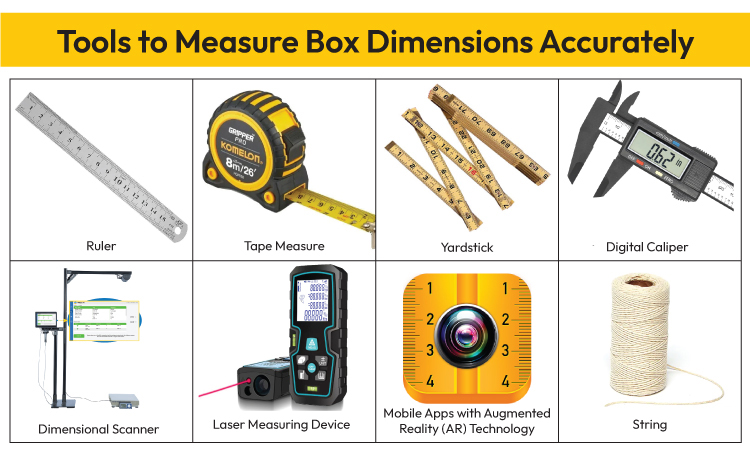
Using the appropriate measuring tool depends on the box’s size, shape, and precision requirements. A ruler or tape measure is ideal for quick dimension measurement, while a digital caliper or dimensional scanner provides higher accuracy. For irregularly shaped boxes, use flexible tools like a string alongside a ruler to ensure precise box measurements.
How to Measure Box Dimensions?
To measure the dimensions of a box, place it on a flat surface and measure the length (L), width (W), and height (H). Record the measurements in the standard order of dimensions as Length × Width × Height (L×W×H) or Length x Width x Depth (LxWxD).
A five-step guide to measuring box dimensions is given below:
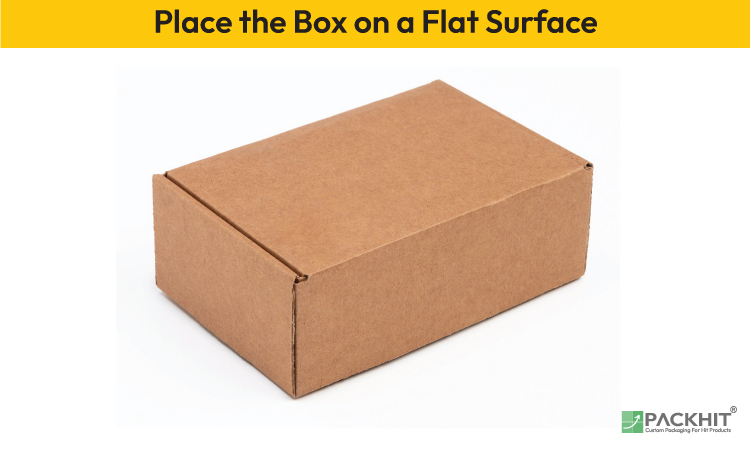
1. Place the Box on a Flat Surface
Place the box on a flat, stable surface to ensure accurate measurements. A level surface is essential to avoid inaccuracies caused by tilts or unevenness. Using a spirit level can help verify that the surface is even before starting measurements.
The image given below shows a rectangular cardboard box laid on a flat surface, as part of the preparation process for measuring the box dimensions.
2. Measure the Length of the Box
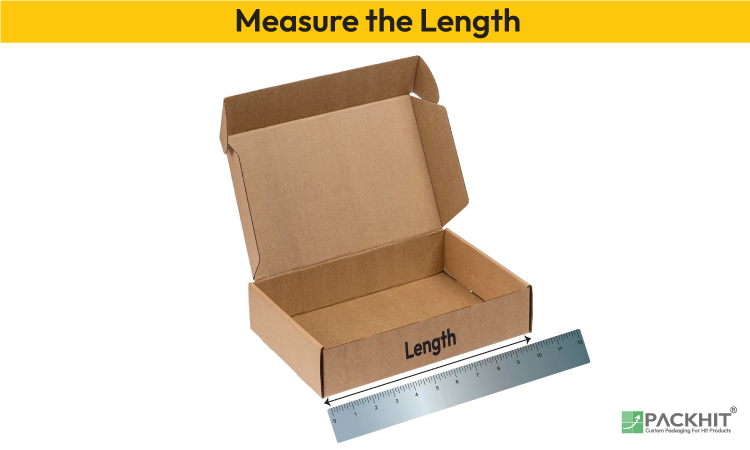
Measure the length of the box, which refers to the longest internal side. Identify this side first and align a measuring tool such as a ruler or tape measure along the edge of the box. Make sure the measuring tool is flat against the edge and tight to avoid any gaps, as this can lead to an inaccurate measurement.
The image given below shows a mailer box with a ruler placed alongside it to measure the length of the box.
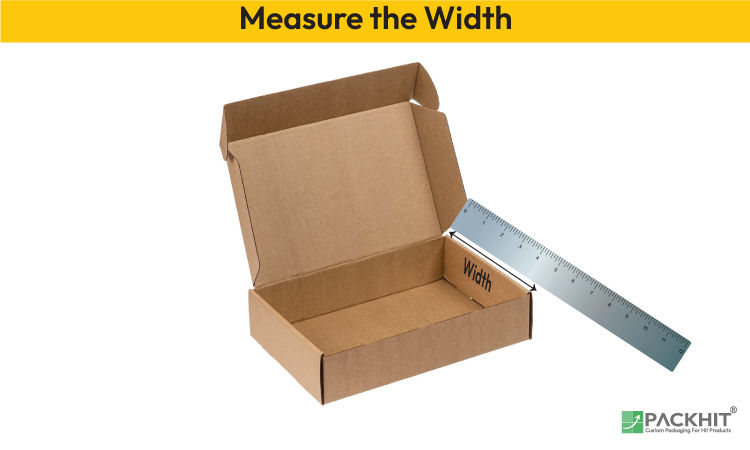
3. Measure the Width
Next, measure the width of the box, which is the shorter side and runs perpendicular to the length. Place the measuring tool at the top of the box and measure across from one edge to the other. Make sure the measuring tool is straight along the edge for an accurate measurement.
The image provided below displays an open mailer box with a ruler placed alongside it to measure its width.
4. Measure the Height
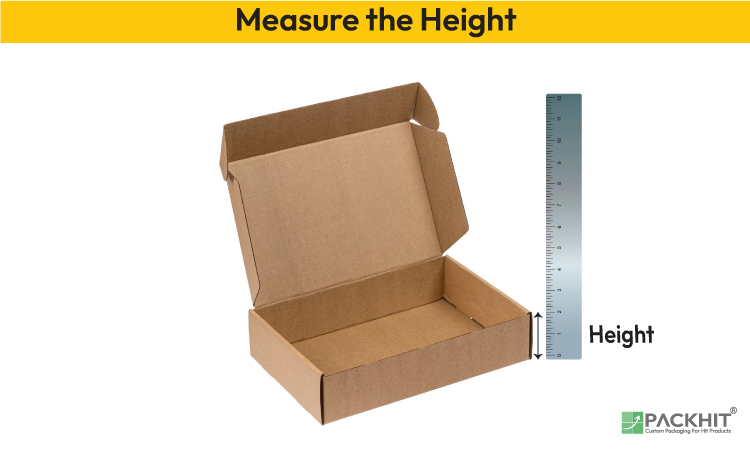
Now, measure the height or depth of the box, which is the internal vertical distance from the bottom to the top of the box. When measuring for external dimensions, include the height of the flaps, as they will contribute to the overall size of the box. If only concerned with the internal space, measure just the vertical interior dimension. Ensure the measuring tool is perpendicular to the base of the box to get an accurate vertical measurement, as shown in the image given below.
5. Record Measurements
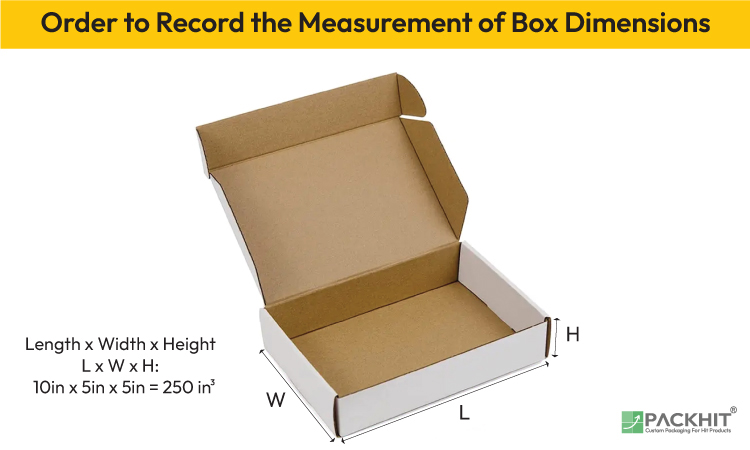
After taking all measurements, record them in the standard order of Length × Width × Height (L × W × H) as shown in the image given below.
This video shows a step-by-step process of measuring the internal and external dimensions of a box using a measuring tape and explains how to calculate the box’s volume and girth, with helpful tips on adding space for cushioning.
How to Calculate the Volume of the Box?
To calculate the volume of a box, multiply the length, width, and height to determine how well products will fit inside and optimize shipping, warehousing, and distribution processes.
The formula for calculating volume in cubic inches is given below:
Volume = Length × Width × Height
The image given below illustrates the formula to calculate the volume of the box.
Use the calculator given below to get precise volume measurements for packaging boxes.
Box Volume Calculator

How to Measure the Dimensions of Different Product Boxes?
Measuring different product boxes requires considering the unique design, purpose, and structure of each type. These box measurements not only ensure the right fit for the product but also affect the overall efficiency in storage, display, and shipping.
For step-by-step instructions for measuring specific box types (tissue, pizza, cereal, shoe), use the guides below.
- Tissue Box Dimensions: To measure tissue box dimensions, measure the length (longest base side), width (shorter side), and height (from base to top, including the lid or opening).
- Pizza Box Dimensions: To measure pizza box dimensions, record the length and width of the base and the height from bottom to top with the lid closed.
- Cereal Box Dimensions: To measure cereal box dimensions, measure the front-facing length, the side width, and the full height from base to top flap.
- Shoe Box Dimensions: To measure shoe box dimensions, take the length of the longest base side, the width of the shorter side, and the height from the base to the top of the closed lid.
Mistakes to Avoid When Measuring Box Dimensions
Common mistakes when measuring box dimensions include positioning the box incorrectly, measuring only the external dimensions, using inconsistent units, not including space for padding, and overlooking the thickness of the material.
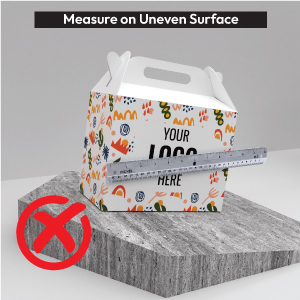
- Positioning the box incorrectly while measuring can cause inaccurate dimensions. Always place the box on a flat, stable surface to ensure precise measurements of its length, width, and height.
The image displayed below illustrates how incorrect positioning of the box during measurement can lead to inaccurate dimensions.
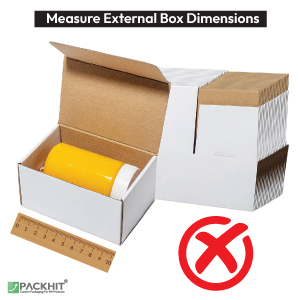
- Measuring only external dimensions creates packing and shipping errors; external sizes drive carrier pricing, while internal sizes confirm product clearance because packaging design standards reference the internal fit.
The following picture demonstrates how measuring only the external dimensions can lead to errors in shipping and packaging.
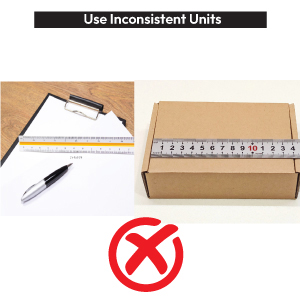
- Using inconsistent units can lead to measurement errors and calculation issues. Always use the same unit, such as inches or centimeters, for all box dimensions. Mixing units can cause confusion, incorrect volume calculations, and sizing mismatches, impacting shipping and packaging accuracy.
The visual below illustrates how using inconsistent units can lead to measurement errors and calculation issues.
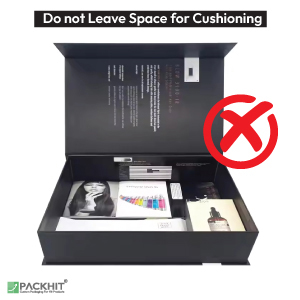
- Not including space for padding or protection materials like foam, bubble wrap, or packing peanuts while measuring box dimensions can lead to insufficient protection for the product, increasing the risk of damage during shipping. Always account for padding, foam inserts, or bubble wrap to ensure a secure fit.
The picture below illustrates how ignoring space for padding, like foam or bubble wrap, when measuring box dimensions can lead to insufficient protection and shipping damage.
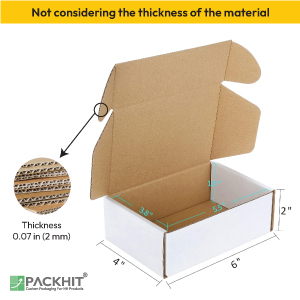
- Not considering the thickness of the material can lead to incorrect measurements, as the material’s bulk adds to the external dimensions, reducing the internal space. This can result in boxes that are too small for products, compromising product safety and leading to inaccurate shipping calculations.
The image shown below highlights how not considering the thickness of the box material can lead to incorrect measurements.
Avoiding these common mistakes ensures that your box will be appropriately sized for its contents and reduces the risk of shipping or storage issues.
Why is Precise Box Measurement Important for Product Packaging?
Precise box measurement is essential for product packaging because it directly affects product safety, material usage, cost, sustainability, and branding.
- Product Safety: Accurate measurements ensure a snug fit for the product inside the box, minimizing product movement and reducing the risk of damage during transit. A well-fitted box prevents impacts, vibrations, or crushing that can occur during transportation. Measuring the internal dimensions of the box to match the product’s dimensions is vital for a secure fit.
- Material Optimization: Measuring the boxes precisely also helps optimize material usage by ensuring the packaging is the appropriate size for the product. This approach minimizes the use of excess materials, which supports sustainability goals and reduces environmental impact.
- Cost Savings: Right-sized packaging cuts costs by reducing material use, lowering production expenses, and minimizing shipping fees based on dimensional weight. Efficiently sized packaging optimizes warehouse storage, reducing storage costs and improving logistics efficiency.
- Sustainability and Waste Reduction: Correct box dimensions reduce packaging waste and promote sustainability by using only the necessary materials, lowering environmental impact. This practice enhances brand image and appeals to eco-conscious consumers by demonstrating a commitment to responsible packaging.
- Branding and Aesthetics: Precise box measurements enhance branding and aesthetics by ensuring a perfect fit, preventing product damage, and creating visually appealing packaging that reflects the brand’s quality and strengthens customer perception.
Accurate box measurements minimize damage, cut shipping expenses, and improve customer satisfaction while supporting sustainability.
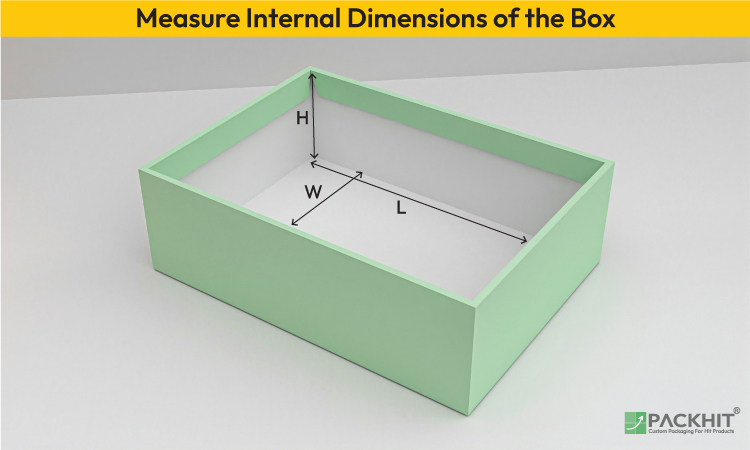
Why are the Internal Dimensions of a Box crucial for Packaging?
Internal dimensions are crucial for packaging as they determine the usable space inside the box, directly affecting product fit, protection, and the unboxing experience. A snug fit prevents product movement during transit, reducing damage risk and optimizing material use by minimizing excess packaging. Accurate internal dimensions also contribute to cost savings by reducing void space, which can lower shipping costs.
The image displayed below explains what internal dimensions of a box are and why they are crucial for packaging.
A well-fitting box enhances the unboxing experience, positively impacting customer satisfaction and brand perception, especially in e-commerce. Unlike exterior dimensions, which include material thickness, focusing on internal dimensions ensures the proper fit and effective packaging, improving safety, efficiency, and the overall customer experience.
What are the Shipping-Specific Guidelines for Measuring Boxes?
When measuring boxes for shipping, use the exterior dimensions to ensure accurate cost calculations. Measure the length, width, and height from the outermost points of the box. Carriers may require rounding measurements for billing, so check the latest carrier guidelines. Additionally, check the carrier’s size and weight limits to avoid surcharges. Keep in mind that box dimensions listed by manufacturers typically refer to interior dimensions, so always measure the exterior when preparing a package for shipping.
How to Calculate Dimensional Weight for Shipping?
Dimensional weight for shipping is calculated using (L × W × H) and a carrier-specific divisor, with dimensions in inches and the result in pounds, if you ship using the carrier’s dimensional-weight formula.
Note: Carrier DIM divisors and size/length-and-girth limits can change; verify the current service guide before calculating fees.
How do Box Dimensions impact Packaging Costs and Logistics?
Box dimensions impact packaging costs and logistics by affecting material usage, shipping fees, storage efficiency, and product protection. Larger boxes require more materials and may increase shipping costs due to dimensional weight calculations. Properly sized boxes optimize warehouse space, reduce inventory issues, and minimize product damage during transit, lowering overall expenses.
Accurate box measurements are key to saving costs and ensuring efficient packaging and logistics.
Need packaging that fits your products perfectly?
Get expert guidance from Packhit for precise, custom packaging for your products.