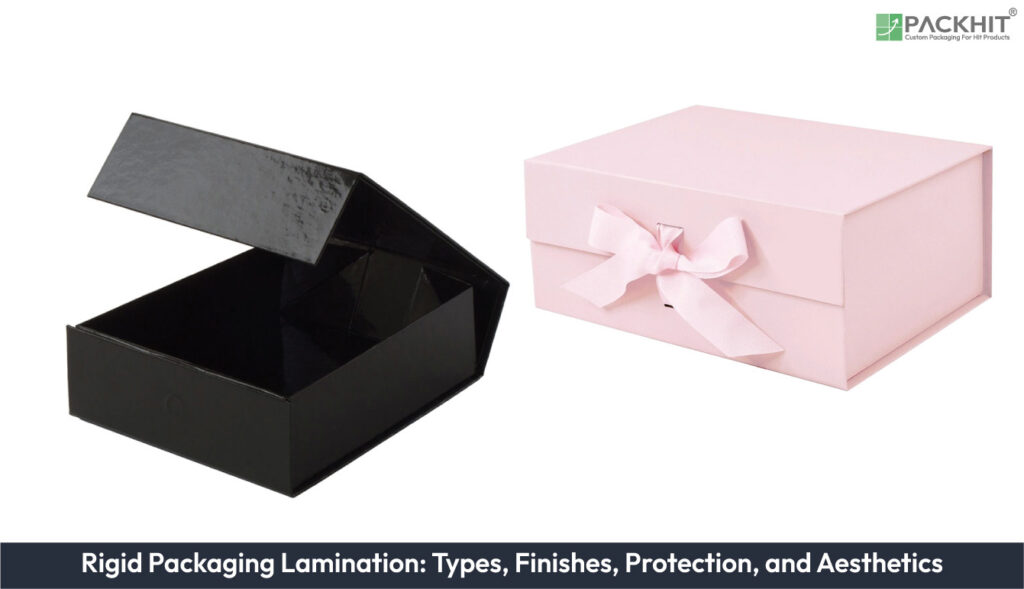
Rigid packaging lamination is the process of bonding a protective or decorative layer to rigid packaging materials such as paperboard to improve their surface performance and visual appearance. It can help protect packaging from moisture, scratches, abrasion, UV exposure, and certain chemical conditions while also supporting finishes such as gloss, matte, soft-touch, and textured effects. The main types used in rigid packaging include thermal, pressure-sensitive, solvent-based, and water-based lamination, with the appropriate method depending on the substrate, adhesive system, and required performance. Lamination also contributes to packaging aesthetics by enhancing printed colors, supporting distinctive branding, creating a premium tactile experience, and enabling a wider range of decorative effects.
- What is Rigid Packaging Lamination?
- Types of Lamination Used in Rigid Packaging
- How Do Surface Finishes Enhance Rigid Packaging?
- What Protective Attributes Does Lamination Provide?
- How Does Lamination Contribute to Packaging Aesthetics?
- How to Select Lamination for Rigid Packaging?
- Key Trade-Offs of Lamination for Rigid Packaging
- Does Lamination Make Rigid Packaging Waterproof?
- Which Laminate is Suitable for Packaging Exposed to Sunlight?
- Why do Brands Choose Lamination for Rigid Packaging?
What is Rigid Packaging Lamination?
Rigid packaging lamination refers to the application of a protective and decorative layer over packaging materials, typically paperboard or other rigid substrates. This process enhances the durability, appearance, and functionality of the packaging, addressing both practical and aesthetic needs. By integrating material science with advanced manufacturing techniques, lamination ensures superior protection against moisture, scratches, and UV exposure while elevating the visual appeal through finishes such as gloss, matte, or textured effects. It is a cornerstone of packaging design for industries like food, cosmetics, electronics, and luxury goods, where product integrity and branding are paramount.
Types of Lamination Used in Rigid Packaging
Rigid packaging lamination employs several types of lamination processes, each defined by its material composition, application method, and functional properties. The primary types include:
Thermal Lamination
Thermal lamination involves the use of heat-activated adhesive films to bond layers of material. This method is widely used for rigid packaging due to its strong adhesion and compatibility with various substrates, including paperboard and plastic. Thermal lamination is particularly effective in applications requiring high durability and resistance to environmental factors such as moisture and temperature fluctuations.
Pressure-Sensitive Lamination
Pressure-sensitive lamination relies on adhesives that activate under pressure, eliminating the need for heat. This type is commonly used for packaging that requires quick application and flexibility in design. Pressure-sensitive laminates are ideal for products with intricate shapes or surfaces that cannot withstand high temperatures during processing.
Solvent-Based Lamination
Solvent-based lamination uses liquid adhesives that cure upon evaporation of the solvent. This method provides excellent bonding strength and is suitable for applications requiring chemical resistance. However, it necessitates careful handling due to the environmental impact of solvent emissions.
Water-Based Lamination
Water-based lamination employs adhesives dissolved in water, offering an eco-friendly alternative to solvent-based methods. It is particularly favored for food packaging due to its non-toxic properties and compliance with safety standards. While it may have lower bonding strength compared to solvent-based adhesives, advancements in polymer technology have significantly improved its performance.
How Do Surface Finishes Enhance Rigid Packaging?
Surface finishes in rigid packaging lamination serve dual purposes: functional protection and aesthetic enhancement. These finishes are applied to the outermost layer of the packaging and are selected based on the desired visual and tactile qualities.
- Glossy Finish: Creates a smooth, reflective surface that can enhance color vibrancy and visual impact. Glossy laminates are commonly used for cosmetics, luxury goods, and other packaging where a high-visibility appearance is desired. They can also provide surface protection against everyday scuffs and moisture exposure.
- Matte Finish: Provides a smooth, non-reflective surface that gives packaging a refined and understated appearance. Matte laminates can reduce glare and are well suited to minimalist designs, premium electronics, artisanal products, and other applications where a subtle finish is preferred.
- Soft-Touch Finish: Adds a smooth, velvety feel that enhances the tactile experience of the packaging. It is frequently used for premium cosmetics, personal care products, luxury goods, and gift packaging. Depending on the laminate specification, it can also provide additional resistance to surface wear.
- Textured Finish: Introduces patterns, grains, or other tactile effects to create greater visual and dimensional interest. Textured laminates can help brands develop distinctive packaging and are particularly useful when a product needs a unique surface treatment that supports its overall design identity.
Choose the finish based on the primary constraint such as gloss for high-visibility color, matte for reduced glare, soft-touch for premium tactile feel, and textured finishes when you need additional surface character—then confirm the protection spec matches the expected handling and environment.
What Protective Attributes Does Lamination Provide?
Lamination adds a surface layer that can help protect rigid packaging from specific environmental and handling conditions, depending on the laminate material, adhesive system, substrate, and application.
Moisture Resistance
Moisture-resistant laminates are selected when humidity is expected during storage or handling; in those cases, confirm the laminate specification matches the substrate and that seams/edges are also protected, since surface protection depends on full package construction.
Scratch and Abrasion Resistance
A suitable laminate can help reduce visible scratches and abrasion caused by routine handling, stacking, or transportation. The appropriate specification depends on how frequently the package will be handled and how important surface appearance is.
UV Protection
UV-resistant laminates can help reduce color fading and surface degradation when packaging is exposed to ultraviolet light. Their effectiveness depends on the laminate specification and the intensity and duration of exposure.
Chemical Resistance
Some laminate systems are designed to resist particular chemical exposures, such as contact with oils or cleaning agents. This protection is application-dependent, so the laminate should be matched to the type and level of exposure expected.
How Does Lamination Contribute to Packaging Aesthetics?
Aesthetics play a pivotal role in rigid packaging, influencing consumer perception and brand identity. Lamination enhances the visual and tactile qualities of packaging, allowing manufacturers to create designs that align with their branding strategies.
- Color Enhancement: Lamination can improve the visual consistency and perceived vibrancy of printed colors, helping packaging designs maintain a strong appearance in retail and display environments.
- Brand Differentiation: Textured, embossed, metallic, or specialty laminates allow brands to create distinctive packaging that reinforces visual identity and helps products stand out from competing offerings.
- Premium Appeal: Matte and soft-touch finishes can create a refined visual and tactile experience, making them suitable for luxury, cosmetics, gifting, and other premium product categories.
- Design Versatility: Lamination supports a range of decorative effects, including metallic accents, holographic effects, textures, and patterns, giving brands greater flexibility to develop packaging that aligns with their design and positioning.
How to Select Lamination for Rigid Packaging?
Manufacturers can select a lamination system by first identifying the substrate, handling conditions, protection requirement, and desired finish.
- For frequent handling: prioritize a laminate designed to help resist scratches and abrasion, particularly when the package has a high-visibility printed surface.
- For humid or moisture-prone environments: consider a moisture-resistant laminate and evaluate whether additional protective layers are required.
- For prolonged light exposure: consider a UV-resistant specification when maintaining printed color is important.
- For chemical exposure: select a laminate specifically intended for the relevant type of exposure rather than assuming that every laminate provides the same resistance.
- For premium presentation: select the finish according to the desired visual and tactile effect, the gloss for reflectivity, matte for a subdued appearance, soft-touch for tactile appeal, or textured finishes for added surface character.
Key Trade-Offs of Lamination for Rigid Packaging
Lamination selection involves balancing protection, appearance, substrate compatibility, and application requirements. A finish chosen primarily for aesthetics may not provide the same resistance as a specification designed for a particular environmental condition. Conversely, a highly protective specification may not be necessary when the package is intended mainly for controlled retail or display conditions.
Selection rule: identify the most important exposure or handling risk first, then select a compatible laminate and finish that addresses that requirement without adding unnecessary surface complexity.
Does Lamination Make Rigid Packaging Waterproof?
Not necessarily. A suitable laminate can provide moisture resistance, but the degree of protection depends on the laminate specification, substrate, seams, edges, and application quality. “Waterproof” should not be assumed for every laminated package.
Which Laminate is Suitable for Packaging Exposed to Sunlight?
A UV-resistant specification can be considered when prolonged UV exposure is expected. Its ability to reduce fading or degradation depends on the laminate and exposure conditions.
Why do Brands Choose Lamination for Rigid Packaging?
Lamination allows brands to combine surface protection, visual appeal, and brand differentiation in a single packaging solution. By selecting an appropriate laminate and finish, brands can protect printed surfaces from everyday handling while creating packaging that aligns with their desired market positioning.
For premium products, finishes such as matte, gloss, soft-touch, textured, and metallic effects can help communicate quality and create a distinctive customer experience. Lamination can also support practical requirements such as resistance to moisture, scratches, abrasion, or UV exposure, depending on the laminate specification and application. Ultimately, brands choose lamination when they need rigid packaging that protects the package surface while strengthening visual identity, improving shelf appeal, and supporting the overall product experience.