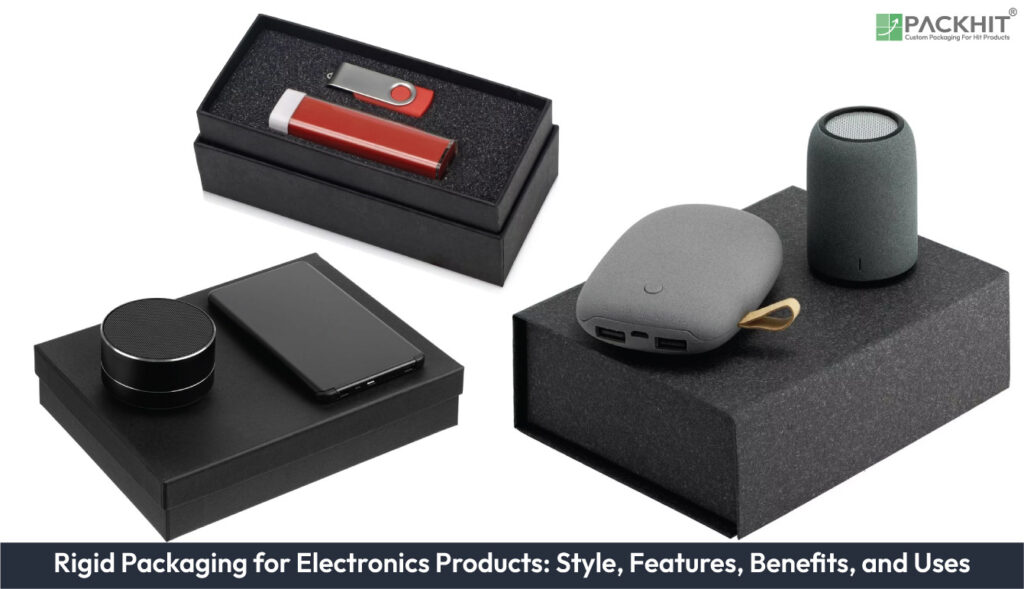
Rigid electronics packaging protects products with strong, customizable designs tailored for manufacturers. The styles range from magnetic closure boxes, bookend boxes, and two-piece boxes to cube boxes, display boxes, and die-cut boxes. Rigid packaging can also cater to diverse use cases such as retail display, industrial transport, and sustainable branding. Rigid packaging with features like anti-static properties, impact resistance, moisture barriers, and thermal insulation is designed to provide strong protection for sensitive electronics. It also has benefits such as enhanced product safety, improved brand presentation, efficient logistics, eco-friendly materials, and tailored designs, which make rigid packaging a preferred choice. Common applications of rigid packaging for electronic products span retail packaging, industrial transport, custom protective cases, and eco-friendly packaging solutions.
- Rigid Packaging Styles for Electronic Products
- What Features Make Rigid Packaging Suitable for Electronics?
- Benefits of Rigid Packaging for Electronics
- Enhanced Product Safety
- Improved Brand Presentation
- Efficient Storage and Transport
- Eco-Friendly Options
- Customization Potential
- How is Rigid Packaging Used in the Electronics Industry?
- How Strong is Rigid Electronics Packaging Under Stress?
- How to Choose the Right Rigid Packaging for Electronics?
Rigid Packaging Styles for Electronic Products
When packaging high-value, fragile electronics, only styles manufactured with a thick, non-collapsible greyboard core provide the required impact resistance and premium presentation. Out of the popular styles available, here are the specific structures engineered for rigid electronic packaging:
- Hinged Top With Magnetic Closure Boxes: The industry standard for luxury wearables. Heavily used for flagship smartwatches, premium over-ear headphones, and high-end power banks to deliver a seamless, high-retention unboxing experience.
- Bookend Boxes: Often utilized for collector’s edition physical software, high-end media collections, or multi-device tech bundles that open like a heavy hardcover book.
- Two-Piece Boxes: The classic friction-fit structures required for heavy electronics with fragile glass. These are the default rigid choices for tablet PCs, laptops, and DSLR camera boxes because they provide maximum vertical crush resistance.
- Tray and Sleeve Boxes: A sturdy rigid tray that slides out from an outer sleeve. This style is heavily used for premium phone cases, smartwatch replacement bands, and high-end wired or wireless earphones.
- Briefcase Boxes: Manufactured with thick rigid board and a carrying handle, these are used for tech influencer PR kits, drone bundles, or heavy multi-lens camera kits.
- Cube Boxes: Geometric rigid structures reserved for unique tabletop tech, such as 360-degree cameras, smart home hubs, or limited-edition Bluetooth speakers.
- Display Boxes: Thick, non-collapsible rigid boxes designed for retail countertops, built structurally sound enough to support the weight of multiple heavy items like power adapters, power banks, or boxed mice.
- Die Cut Boxes: In rigid tech packaging, this refers to thick chipboard boxes featuring custom die-cut windows or interior die-cut cavities (using EVA foam or molded pulp) precision-engineered to lock cameras, routers, or smartwatches safely in place during transit.
Each style is tailored to specific use cases, balancing factors such as cost, environmental impact, and protective performance to meet the unique needs of electronic product manufacturers.
What Features Make Rigid Packaging Suitable for Electronics?
Rigid packaging for electronic products can incorporate several specialized features to address the unique challenges posed by sensitive electronics. Key features include:
Anti-Static Properties
Rigid packaging designed for electronic products incorporates anti-static properties to prevent electrostatic discharge (ESD). This feature is essential for safeguarding sensitive electronic components, such as circuit boards and semiconductors, that are highly susceptible to damage from static electricity.
Impact Resistance
To protect electronics during transportation, rigid packaging is engineered with impact-resistant materials. This can help ensure that the packaging reduces the risk of damage, even when subjected to mechanical shocks, drops, or vibrations, providing reliability in supply chain operations.
Moisture Barrier
Moisture barriers integrated into rigid packaging help limit humidity and water ingress, which can lead to corrosion or short-circuiting of electronic components. This feature is particularly important for products stored or transported in high-humidity environments.
Thermal Insulation
Thermal insulation in rigid packaging can help shield electronics from temperature fluctuations. By maintaining a stable internal environment, this feature assists in maintaining a more stable environment, even when exposed to external heat or cold during transit or storage.
Customizable Inserts
Rigid packaging often includes customizable inserts, such as foam or molded components, to ensure a secure fit for individual items. These inserts help minimize movement within the packaging, reducing the risk of scratches, dents, or other forms of damage during handling and transportation.
These features are often enhanced through material selection and advanced manufacturing techniques, such as lamination or coating processes.
Benefits of Rigid Packaging for Electronics
The benefits of rigid packaging for electronic products extend beyond physical protection, encompassing logistical, aesthetic, and environmental advantages. Key benefits include:
Enhanced Product Safety
Rigid packaging enhances product safety by minimizing risks associated with physical damage, moisture, and static electricity. Its durable construction and protective features ensure that electronic products remain intact throughout their lifecycle, from manufacturing to end-user delivery.
Improved Brand Presentation
High-quality packaging materials and sophisticated designs can help elevate the brand presentation of electronic products. This attention to detail can contribute to a premium consumer experience, reinforcing brand identity and customer trust.
Efficient Storage and Transport
Stackable designs and dimensional stability in rigid packaging optimize space utilization in warehouses and shipping containers. This efficiency can help reduce logistical costs and ensure seamless supply chain operations.
Eco-Friendly Options
Eco-friendly materials like molded pulp and recyclable paperboard align with sustainability goals by minimizing environmental impact. These eco-friendly choices cater to the growing demand for greener packaging solutions in the electronics industry.
Customization Potential
Rigid packaging has huge customization potential as it can accommodate diverse product shapes and sizes. This versatility can enhance the fit, protection, and visual appeal of electronic products, meeting the unique needs of manufacturers and consumers alike.
These benefits can make rigid packaging a preferred choice for manufacturers seeking to balance protection, cost-efficiency, and consumer appeal.
How is Rigid Packaging Used in the Electronics Industry?
Rigid packaging plays a pivotal role across various stages of the electronics supply chain, from manufacturing to end-user delivery. Common applications include:
Retail Packaging: Rigid boxes and clamshells are widely used for consumer electronics, combining protection with attractive designs to enhance shelf appeal.
Industrial Transport: Thermoformed trays and molded pulp packaging are employed for bulk transportation of components between manufacturing facilities.
Custom Protective Cases: High-value electronics, such as medical devices or aerospace components, often require rigid cases with advanced protective features.
Eco-Friendly Packaging Solutions: Biodegradable rigid packaging is increasingly adopted by environmentally conscious brands.
The versatility of rigid packaging allows it to meet diverse requirements, from high-volume industrial applications to premium retail presentations.
How Strong is Rigid Electronics Packaging Under Stress?
Rigid packaging is engineered to withstand various stress conditions encountered during transportation, storage, and usage. Performance attributes include:
- Compression Resistance: Maintains structural integrity under stacking pressure.
- Impact Absorption: Reduces damage from drops or collisions.
- Thermal Stability: Protects electronics from temperature extremes.
- Moisture Resistance: Prevents water ingress in humid or wet environments.
Packaging designs can incorporate reinforced structural layers for compression and impact, along with specialized thermal barriers and moisture-resistant coatings. Where applicable, manufacturers can involve the use of drop tests and environmental simulations, using criteria that match the product and shipping profile.
How to Choose the Right Rigid Packaging for Electronics?
To choose the right rigid packaging for electronics, you should evaluate your product’s specific protection needs against the features and styles available. Based on the provided document, here is how you can approach the selection process:
1. Assess Necessary Protective Features
First, identify the level of protection your product requires based on its sensitivity:
- Anti-Static Properties: Necessary if your product contains sensitive components like circuit boards or semiconductors to prevent electrostatic discharge.
- Impact Resistance: Essential for products susceptible to damage from drops, mechanical shocks, or vibrations during transit.
- Moisture Barrier: Important for protecting against humidity or water ingress, which can cause corrosion or short-circuiting.
- Thermal Insulation: Required if the product needs shielding from significant temperature fluctuations.
- Customizable Inserts: Use foam or molded components to secure items within the packaging, reducing movement that could cause scratches or dents.
2. Select a Suitable Style
Once you have defined the protective requirements, choose a structural style that fits your product type and presentation goals:
- Luxury Wearables: Use hinged top with magnetic closure boxes for high-end items like flagship smartwatches, premium over-ear headphones, or luxury fitness trackers to deliver a seamless, high-retention unboxing experience.
- High-Value and Fragile Items: Use two-piece or telescopic boxes to provide maximum vertical crush resistance for glass-fronted devices such as tablet PCs, laptops, and DSLR camera bodies.
- Premium Accessories: Use tray and sleeve boxes for a sturdy, sliding presentation ideal for designer phone cases, smartwatch replacement bands, or high-end wireless earbuds.
- Tabletop Tech: Use cube boxes to create geometric, compact packaging for uniform items like smart home hubs, compact Bluetooth speakers, and 360-degree cameras.
- Heavy Retail Sets: Use rigid display boxes structurally engineered to support the collective weight of multiple heavy retail units, such as power adapters, high-capacity power banks, or computer mice on retail countertops.
- Large Kits: Use briefcase boxes with integrated carry handles for multi-piece equipment bundles, drone kits, or tech influencer PR packages.
- Specific Securing Needs: Use die-cut boxes featuring precision interior cavities (lined with high-density EVA foam or molded pulp) to immobilize complex shapes like wireless routers, camera lenses, and sensitive peripherals during transit.
3. Consider Logistical and Brand Goals
Finally, factor in your broader business objectives:
- Sustainability: Look for materials like molded pulp and recyclable paperboard if minimizing environmental impact is a priority.
- Logistics: Choose designs that offer stackable, dimensionally stable profiles to optimize warehouse space and shipping costs.
- Brand Value: High-quality rigid packaging materials and sophisticated design can elevate the perceived value of the product, reinforcing customer trust.
