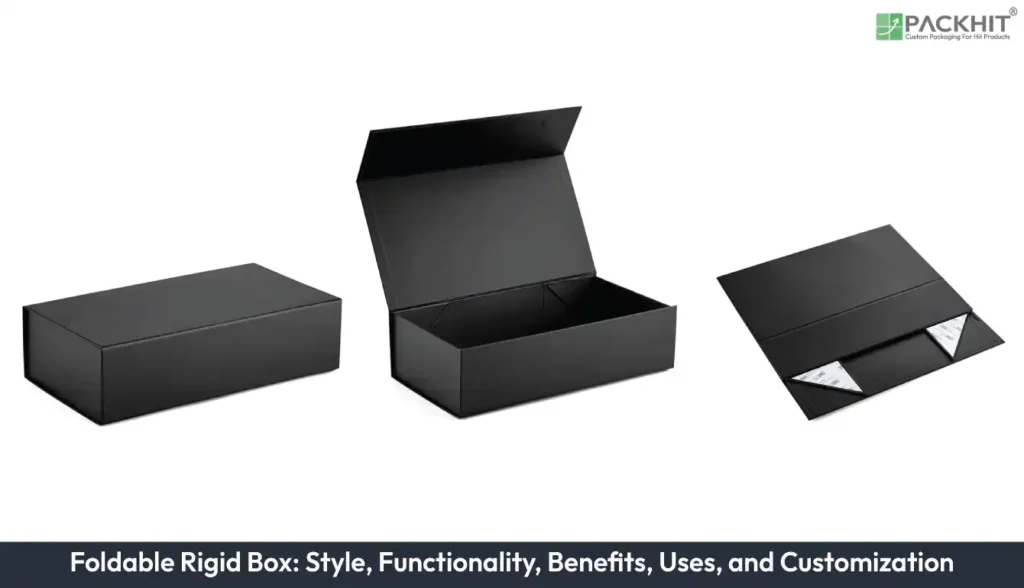
Foldable rigid boxes combine a rigid-board structure with collapsible panels that allow the box to ship and store flat before assembly. Manufacturers can choose magnetic, tab, or adhesive closures depending on reuse and setup needs, while fitted inserts help control movement for fragile or irregular products. Chipboard or paperboard thickness can be selected according to product weight and required rigidity, and finishes such as foil, embossing, UV coating, or lamination can be added for branding. Their main advantage is balancing premium presentation with reduced storage volume, but for rough transit, high stacking loads, or maximum structural stability, a fixed rigid box or protective outer shipper may be more suitable.
- What Defines a Foldable Rigid Box?
- How Do Foldable Rigid Boxes Function?
- Benefits of Using Foldable Rigid Boxes
- Space Efficiency of Foldable Rigid Boxes
- Durability and Protection
- Aesthetic Appeal in Packaging
- Customizability for Brand Alignment
- Sustainability Considerations
- Uses of Foldable Rigid Boxes
- Customization of Foldable Rigid Boxes
- How Do Magnetic Closures Work in Foldable Rigid Boxes?
- How Can Sustainability Be Addressed in Foldable Rigid Box Customization?
- When Should Manufacturers Choose a Foldable Rigid Box?
What Defines a Foldable Rigid Box?
A foldable rigid box is a type of packaging that combines the robust construction of rigid boxes with the collapsible functionality of foldable designs. These boxes are typically made from high-density paperboard or chipboard, materials known for their strength and durability. Unlike traditional rigid boxes, which are fixed in shape, foldable rigid boxes are designed with creases or hinges that allow them to be flattened when not in use, significantly reducing storage space requirements.
The core structural feature of these boxes is their collapsible mechanism, which is often reinforced with magnetic closures or adhesive strips to ensure stability when assembled. This design innovation allows manufacturers to achieve a balance between premium presentation and logistical efficiency, making foldable rigid boxes a unique solution in the packaging industry.
How Do Foldable Rigid Boxes Function?
The functionality of foldable rigid boxes is rooted in their structural engineering. These boxes are designed with pre-scored folding lines or hinges that enable them to collapse flat. The score and hinge design affect how neatly the box collapses and reforms, so crease alignment and hinge stiffness should be checked against the intended magnetic, tab, or adhesive closure. When needed, the box can be reassembled by unfolding and securing the sides, often with the aid of magnetic closures or interlocking tabs. Reusability depends on the folding joints, panels, and closure remaining intact during repeated assembly and opening.
Magnetic closures, a common feature in high-end foldable rigid boxes, provide both ease of use and a secure seal. These closures are embedded within the box’s structure, ensuring that the box remains closed during handling and transportation. The rigid board helps the box retain its shape during repeated assembly, provided the folding hinges, panels, and closure remain intact. Reusability depends on the board construction, hinge design, closure type, and handling conditions.
Performance depends on the folding structure, hinge design, closure method, and board rigidity. Magnetic closures suit repeated opening, while adhesive strips are better for one-time setup; interlocking tabs reduce added components but require accurate folding and alignment.
Benefits of Using Foldable Rigid Boxes
Foldable rigid boxes offer manufacturers and retailers benefits such as space efficiency, durability, visual appeal, customizability, and sustainability. Prioritize flat storage when shipping and warehousing efficiency matter most; prioritize board stiffness, secure closures, and fitted inserts when protection is the main requirement; and prioritize printing and finishes when presentation is more important. These choices can affect material use, assembly complexity, cost, and recyclability.
Space Efficiency of Foldable Rigid Boxes
One of the main advantages of foldable rigid boxes is their ability to collapse flat when not in use. This can reduce the storage space required in warehouses and improve shipping efficiency before the boxes are assembled. For manufacturers handling large packaging volumes, this feature can make inventory storage and handling more manageable.
Durability and Protection
Foldable rigid boxes are typically made from rigid chipboard or paperboard that helps support and protect the packaged product. The level of protection depends on factors such as board thickness, box construction, insert design, product weight, and handling conditions. Heavier or fragile products may require thicker board, reinforced panels, or fitted inserts to reduce movement.
Aesthetic Appeal in Packaging
These boxes can support premium presentation through finishes such as embossing, debossing, foil stamping, UV coating, and laminated or printed wraps. Such features are especially useful for luxury goods, corporate gifts, cosmetics, electronics, and other products where presentation is an important part of the packaging experience.
Customizability for Brand Alignment
Manufacturers can customize foldable rigid boxes by adjusting their dimensions, board type, closure mechanism, inserts, printing, and surface finishes. Magnetic closures may be selected for repeated opening, while adhesive strips or tabs can be used where simpler assembly is preferred. Interior inserts can also be designed to improve fit and product organization.
Sustainability Considerations
The collapsible format can reduce storage and shipping volume compared with fully assembled rigid boxes. Manufacturers can also select recyclable paperboard, lower-impact inks, adhesives, and finishes where suitable. However, recyclability depends on the complete construction of the box, including coatings, laminations, inserts, and magnetic components.
Uses of Foldable Rigid Boxes
Foldable rigid boxes are widely used across various industries, particularly in sectors where product presentation and protection are paramount. Common applications of foldable rigid boxes are mentioned below:
- Luxury Goods Packaging: Foldable rigid boxes are a preferred choice for packaging high-end products like watches, jewelry, and perfumes. Their premium construction and customizable design options, such as embossing and foil stamping, elevate product presentation, creating a sense of exclusivity and enhancing perceived value.
- Retail and E-commerce: These boxes are ideal for packaging items such as electronics, apparel, and subscription kits. Their durable structure protects products during transit, while their sleek appearance ensures a memorable unboxing experience that resonates with consumers.
- Food and Beverage: Specialty food products like chocolates, gourmet snacks, and artisanal beverages benefit significantly from foldable rigid boxes. The sturdy material safeguards the contents, while the option for custom inserts ensures secure placement of delicate items, preserving their quality.
- Corporate Gifting: Widely used for packaging corporate gifts, promotional items, and branded merchandise, these boxes offer extensive customization possibilities. Features like tailored designs, branded printing, and decorative closures make them an excellent choice for conveying professionalism and brand identity.
- Event and Seasonal Packaging: Foldable rigid boxes are increasingly popular for seasonal gift sets and event-specific packaging. Their ability to incorporate festive designs, personalized messages, and limited-edition branding helps businesses capitalize on seasonal markets effectively.
The adaptability of foldable rigid boxes to various product types and market segments underscores their importance in modern packaging strategies. Choose foldable rigid boxes when premium presentation is required, but flat shipping or storage is also important; fixed rigid boxes may be preferable where maximum structural stability is the main priority.
Customization of Foldable Rigid Boxes
Foldable rigid boxes can be customized according to product weight, protection needs, opening frequency, branding, and sustainability goals.
- Material Selection: Foldable rigid boxes are commonly made from high-density paperboard or chipboard; manufacturers should match board thickness and stiffness to product weight, required rigidity, and folding performance.
- Closure Mechanisms: Use magnetic closures for repeated opening, adhesive strips for permanent assembly, or ribbon ties for presentation-focused packaging. Pre-scored lines or hinges control how the box collapses and reforms, so crease alignment and hinge stiffness should suit the selected magnetic, tab, or adhesive closure.
- Surface Finishes: Embossing, foil stamping, UV coating, and laminations can add texture or visual emphasis, but some finishes may affect recyclability.
- Printing and Branding: Logos, product details, and decorative graphics can be printed to support brand consistency.
- Interior Features: Foam, paperboard, or molded inserts can reduce product movement and improve fit for fragile or irregular items.
Before finalizing the design, consider fragility, storage space, closure security, insert fit, finish durability, and recyclability.
How Do Magnetic Closures Work in Foldable Rigid Boxes?
Magnetic closures are built into the lid or side panels to keep the box securely closed while allowing repeated opening. They work best when the board thickness, panel alignment, closure strength, and product weight are properly matched. Compared with permanent adhesive strips, magnets are better suited to reusable presentation packaging, although they can add material complexity and may affect recyclability.
Foldability improves storage efficiency, but it can reduce structural stability if panels, hinges, or closures are poorly aligned. For heavier products or frequent handling, manufacturers should prioritize board stiffness, secure assembly, and fitted inserts over collapsibility alone.
How Can Sustainability Be Addressed in Foldable Rigid Box Customization?
As part of foldable rigid box customization, manufacturers can select recyclable paperboard, lower-impact adhesives, water-based inks, and suitable finishes where available. The collapsible design can also reduce storage and shipping volume. However, recyclability depends on the complete construction, including coatings, laminations, inserts, adhesives, and magnetic components.
When Should Manufacturers Choose a Foldable Rigid Box?
Choose foldable rigid boxes when flat storage, premium presentation, and repeated assembly are priorities. Use magnetic closures for repeated opening, adhesive strips for permanent setup, and thicker board or fitted inserts for heavier or fragile products. For high compression loads, rough transit, or maximum structural stability, a fixed rigid box or stronger outer shipping box may be more suitable. For manufacturers, the main trade-off is between collapsibility, closure security, structural rigidity, and storage efficiency.
The main decision factors for foldable rigid boxes include cost drivers, production timeline factors, and conditions that may require a different packaging structure.
- Cost Drivers: Board grade, magnetic closures, custom inserts, printing, and specialty finishes can increase production cost.
- Timeline Drivers: Lead time is affected by structural design, artwork approval, printing, finishing, insert complexity, and closure assembly.
- Escalation Criteria: Choose a fixed rigid box or add an outer shipper when the product is very heavy, highly fragile, exposed to rough transit, or requires greater compression resistance.