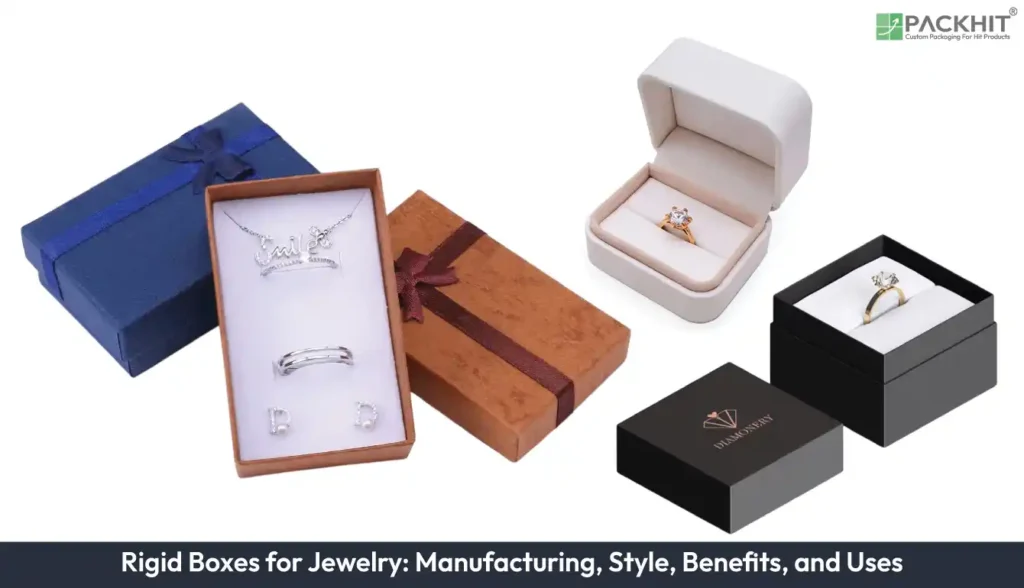
Rigid boxes for jewelry are premium packaging solutions designed to protect delicate jewelry while providing an elegant and memorable presentation. They are typically made from thick paperboard and can be customized with decorative wraps, protective inserts, closures, and luxury finishes to suit different jewelry products and brand identities. Their manufacturing process combines precise cutting, assembly, wrapping, feature integration, and quality control, while different box styles offer options for rings, necklaces, bracelets, earrings, watches, and jewelry sets. Rigid jewelry boxes also provide benefits such as durability, premium presentation, customization, brand differentiation, and reusability, making them suitable for retail, promotional, and e-commerce applications.
- What are Rigid Boxes for Jewelry?
- How are Rigid Boxes for Jewelry Manufactured?
- 1. Die-Cutting
- 2. Scoring and Folding
- 3. Adhesive Reinforcement
- 4. Wrapping
- 5. Feature Integration
- 6. Interior Assembly
- 7. Quality Control
- What Rigid Box Styles are Used for Jewelry?
- Benefits of Rigid Boxes for Jewelry
- Common Uses of Rigid Boxes in the Jewelry Industry
- Retail Packaging
- Promotional and Gift Packaging
- E-commerce Packaging
- Jewelry Collection Packaging
- Bridal and Event Jewelry Packaging
- Jewelry Storage and Presentation
- How do Rigid Boxes for Jewelry Align with Sustainability Goals?
- How to Choose the Right Rigid Box Style for Jewelry?
What are Rigid Boxes for Jewelry?
Rigid boxes for jewelry are premium packaging solutions designed to protect and present delicate items such as rings, necklaces, bracelets, earrings, and watches. Constructed from rigid paperboard, these boxes provide a stable structure that can help protect jewelry during storage, transportation, and display. Their rigid construction and customization options make them suitable for jewelry brands seeking a premium presentation.
These boxes are often wrapped in decorative materials such as specialty papers, velvet, or leatherette. The choice of wrapping and interior construction can influence the appearance, handling experience, and level of protection provided by the finished package.
Key Features of Rigid Boxes for Jewelry
The defining features of rigid boxes for jewelry include their sturdy construction and extensive customization options. Made from rigid paperboard, these boxes are designed to maintain their shape and provide structural support for the packaged item. Exterior materials such as velvet, leatherette, or specialty papers can provide an elegant finish that complements a jewelry brand’s visual identity.
Customization options include color schemes, embossed logos, foil stamping, and UV spot finishes. Internally, compartments, dividers, and foam or fabric inserts can be configured around specific jewelry items. For example, ring slots can help keep rings positioned in place, while dividers can separate multiple pieces within a set. The appropriate combination of box style, closure, wrapping, and insert depends on the jewelry type, presentation requirements, storage needs, and expected handling conditions.
How are Rigid Boxes for Jewelry Manufactured?
The manufacturing process of rigid boxes for jewelry involves several precise and sequential steps to ensure durability, aesthetic appeal, and functionality. These steps are outlined below:
1. Die-Cutting
High-density paperboard is cut into specified dimensions using appropriate cutting equipment. Accurate cutting establishes the components required for the box structure and subsequent assembly.
2. Scoring and Folding
The paperboard is scored along predefined lines to create sections for assembly. Accurate scoring helps the components align correctly during construction.
3. Adhesive Reinforcement
Adhesive is applied to join and reinforce the structural components. The adhesive system and application method contribute to the stability of the assembled box.
4. Wrapping
The assembled structure may be wrapped with decorative materials such as velvet, specialty papers, or leatherette. The wrapping primarily affects appearance and surface feel, while the overall packaging performance also depends on the underlying box construction and interior design.
5. Feature Integration
Additional elements can be incorporated according to the intended application. These may include magnetic closures, ribbon ties, or transparent window panels. Each feature should be selected according to the required balance between presentation, access, closure security, and package construction.
6. Interior Assembly
The interior can include foam inserts, fabric linings, compartments, or dividers. These components help position jewelry and reduce movement inside the box during handling and transportation.
7. Quality Control
Finished boxes can undergo quality checks for structural stability, surface finish, dimensions, closure operation, and conformity with the specified design. These checks are designed to help ensure that the finished packaging meets the required quality and presentation standards.
By following these steps, manufacturers produce rigid boxes that not only meet the functional requirements of jewelry packaging but also align with luxury branding and consumer expectations for quality and design.
What Rigid Box Styles are Used for Jewelry?
The main rigid box styles used for jewelry include lift-off lid boxes, magnetic closure boxes, drawer-style boxes, hinged lid boxes, foldable rigid boxes, window display boxes, book-style boxes, and shoulder boxes. Each style offers different advantages in terms of presentation, protection, functionality, and brand appeal.
- Lift-Off Lid Boxes: One of the most popular styles, these boxes feature a separate lid that lifts off completely, providing an elegant and clean presentation. This design is ideal for showcasing rings, earrings, or bracelets in retail settings or gift packaging.
- Magnetic Closure Boxes: Equipped with hidden magnets, these boxes offer a seamless and secure closure mechanism. They are particularly suitable for high-end jewelry like necklaces or watches, as they add an element of sophistication and ensure tamper resistance.
- Drawer Style Boxes: Also known as slide-out boxes, this style features an inner compartment that slides out like a drawer. Commonly used for bracelets and necklaces, they provide a unique unboxing experience that aligns with luxury branding.
- Hinged Lid Boxes: With a lid attached to the base via a hinge, these boxes are convenient and functional. They are often used for jewelry sets or larger items, providing both durability and ease of access.
- Foldable Rigid Boxes: These collapsible boxes combine the sturdiness of rigid packaging with the space-saving benefits of foldable designs. They are increasingly popular for e-commerce or bulk packaging needs, where storage efficiency is a priority.
- Window Display Boxes: Featuring a transparent panel made from acrylic or other clear materials, these boxes allow customers to view the jewelry without opening the packaging. They are often used for showcasing products in retail displays.
Each of these styles can be further customized with features such as textured finishes, ribbon pulls, or internal inserts tailored to specific jewelry items. By selecting the appropriate rigid box style, manufacturers can not only protect their products but also enhance their brand’s market presence and consumer appeal.
Benefits of Rigid Boxes for Jewelry
Benefits of rigid boxes for jewelry are given below:
- Durability and Protection: Rigid boxes provide excellent protection for delicate jewelry, with strong paperboard construction and protective inserts that help prevent scratches, dents, and damage during handling and transportation.
- Brand Differentiation: Customizable designs, premium finishes, foil stamping, embossing, and unique textures allow jewelry brands to create packaging that reflects their identity and enhances the perceived value of their products.
- Enhanced Consumer Experience: Features such as magnetic closures, ribbon ties, and soft-touch finishes create a luxurious unboxing experience that increases customer satisfaction, encourages brand loyalty, and leaves a lasting impression.
- Premium Presentation: The elegant and sophisticated appearance of rigid boxes complements high-value jewelry, creating a presentation that communicates quality, exclusivity, and attention to detail.
- Sustainable Packaging: Many rigid boxes can be made using FSC-certified paperboard, recyclable materials, water-based adhesives, and eco-friendly finishes, helping brands reduce their environmental impact.
- Reusable Design: Their sturdy construction makes rigid boxes suitable for reuse as jewelry storage or decorative organizers, extending their lifespan and reducing packaging waste.
- Customization: Rigid boxes can be tailored to different jewelry types, sizes, colors, shapes, and branding requirements, making them a flexible packaging solution for jewelry manufacturers and retailers.
Common Uses of Rigid Boxes in the Jewelry Industry
The common uses of rigid boxes in the jewelry industry are given below:
Retail Packaging
Rigid boxes are used for rings, necklaces, bracelets, earrings, watches, and jewelry sets. The interior can be adapted to the product; for example, ring slots can hold rings in position, while necklace supports or compartments can help organize longer pieces.
Promotional and Gift Packaging
Rigid boxes can be used for limited-edition collections, wedding jewelry, anniversary gifts, holiday collections, and other occasion-based presentations. Magnetic closures, ribbons, special finishes, and customized inserts can be selected to support the intended gifting experience.
E-commerce Packaging
For online jewelry sales, rigid boxes can provide a structured presentation when the package reaches the customer. The design should also account for handling, storage, and shipping conditions rather than focusing only on appearance.
Jewelry Collection Packaging
Brands launching a coordinated collection can use customized rigid boxes to maintain a consistent presentation across rings, earrings, bracelets, necklaces, and matching sets. Shared colors, finishes, logos, and insert designs can create visual consistency while allowing individual interiors to accommodate different products.
Bridal and Event Jewelry Packaging
Rigid boxes can be used for bridal collections, wedding-party gifts, anniversary jewelry, and other event-related products. Individual compartments, personalized finishes, and coordinated colors can help distinguish different pieces within a collection or gift set.
Jewelry Storage and Presentation
Rigid boxes can also serve as presentation and storage packaging after purchase. Compartments, dividers, ring slots, and fitted inserts can help organize individual pieces when the box is reused.
How do Rigid Boxes for Jewelry Align with Sustainability Goals?
Sustainability considerations for jewelry packaging can include material sourcing, recycled or recyclable components, adhesives, coatings, package durability, reuse, and end-of-life options. Some manufacturers may use responsibly sourced paperboard, water-based adhesives, or selected recyclable materials as part of their packaging strategy. However, the environmental performance of a rigid box depends on the complete material and manufacturing system rather than one material feature alone.
Reusability can also extend the useful life of a rigid box when customers use it for jewelry storage or other purposes. Manufacturers seeking specific sustainability outcomes should evaluate material specifications, certifications where applicable, production processes, transportation, and end-of-life requirements as part of the overall packaging design.
How to Choose the Right Rigid Box Style for Jewelry?
The best box style depends on the jewelry product and the intended packaging experience.
| Jewelry or requirement | Suitable style to consider | Main consideration |
|---|---|---|
| Rings and earrings | Lift-off lid or window box | Easy presentation and product visibility |
| Necklaces and bracelets | Drawer or hinged box | Interior positioning and chain management |
| Watches | Hinged or magnetic box | Appropriate insert and secure closure |
| Jewelry sets | Hinged, drawer, or lift-off box | Compartments and separation between pieces |
| Premium gift packaging | Magnetic or drawer style | Unboxing and presentation experience |
| E-commerce packaging | Foldable or rigid shipping-oriented construction | Storage, handling, and package efficiency |
| Retail display | Window or presentation-focused box | Product visibility and branding |
When selecting a style, manufacturers should first identify the jewelry type, required insert, closure requirement, display needs, and expected handling conditions. The choice should then balance product security, presentation, storage efficiency, accessibility, and shipping requirements rather than relying on appearance alone.
