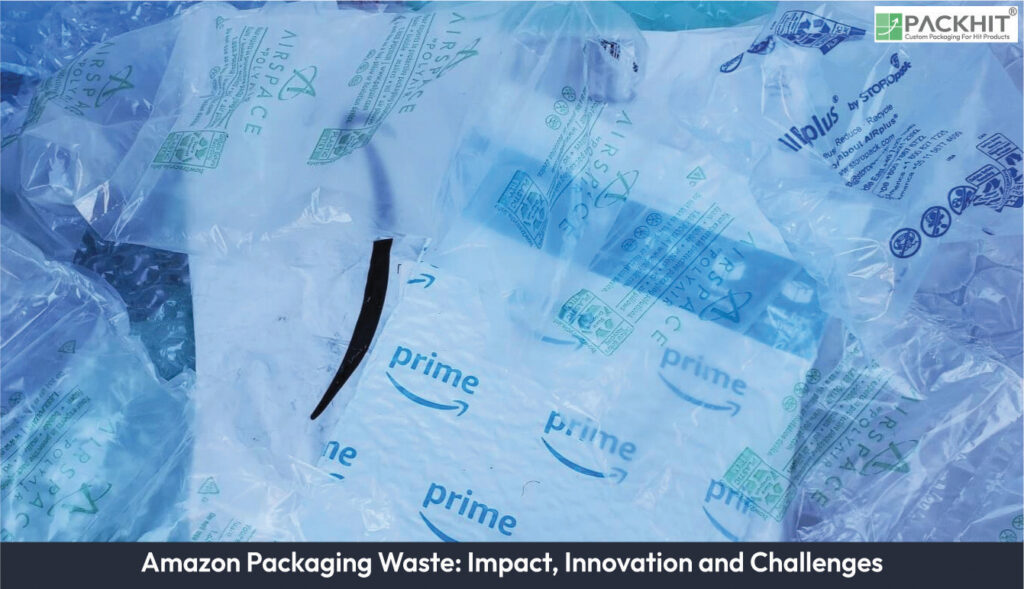
Amazon packaging waste mainly consists of cardboard, plastic films, and mixed-material packaging generated through high-volume shipping. Its environmental impacts arise primarily from material production, resource use, manufacturing emissions, and disposal. Amazon’s waste-reduction efforts include optimizing package sizes, increasing recyclable packaging, and developing alternative materials. However, product-protection requirements, limited recycling infrastructure, and the scalability of sustainable materials remain ongoing challenges.
- What is Amazon Packaging Waste?
- Environmental Impact of Amazon’s Packaging Waste
- Environmental Impact of Corrugated Cardboard
- Challenges with Plastic Films in Packaging
- Post-Consumer Waste Management and Composites
- How Does Amazon Reduce Packaging Waste?
- Amazon’s Initiatives to Reduce Packaging Waste
- Optimizing Package Sizing Through Technology
- Innovations in Sustainable Packaging Materials
- What Challenges Persist in Reducing Amazon’s Packaging Waste?
- Scalability of Sustainable Materials
- Balancing Packaging Reduction with Product Protection
- Regulatory and Market Pressure
- How Can Manufacturers Measure Packaging Waste?
What is Amazon Packaging Waste?
Amazon packaging waste consists of materials discarded after e-commerce fulfillment, delivery, returns, and product handling. Six common examples are corrugated boxes, paper mailers, plastic films, air pillows, adhesive labels, and padded envelopes that combine paper with plastic. Waste volume depends on shipment count, product dimensions, packing rules, delivery distance, damage rates, and returns. Its environmental effects include fiber and fossil-feedstock demand, manufacturing emissions, transport impacts, and disposal losses. Local collection, sorting, recycling, composting, and landfill systems determine the end-of-life result for each material.
Manufacturers assessing Amazon packaging waste must separate material use from disposal performance. A package can contain recycled fiber yet lose recovery value if wet, contaminated, laminated, or rejected by the local program. Amazon-reported packaging results also require a date, baseline, material boundary, product category, facility scope, and geographic scope. The available article context does not verify exact historical figures, so this section avoids presenting unverified program counts or reduction percentages as general facts.
A useful waste inventory records four points for each shipping format: material mass, component construction, shipment performance, and end-of-life route. Record paper grade and recycled content for a corrugated box, resin and gauge for a film, and coating or adhesive chemistry for a composite mailer. Pair those records with damage, return, and replacement data. This method distinguishes a smaller package from a package that merely shifts waste into product damage or reverse logistics.
Environmental Impact of Amazon’s Packaging Waste
Amazon packaging waste affects the environment during material production, shipment and handling, and post-consumer disposal. Each stage has different causes, data requirements, and measurement limits.
Environmental Impact of Corrugated Cardboard
Corrugated cardboard uses fiber, water, energy, coatings, inks, and transport. Virgin fiber can increase forest pressure if responsible sourcing and recycled content do not balance demand. Recycled fiber reduces new-pulp demand, but collection, sorting, pulping, and drying still consume resources. Repeated recycling also shortens fiber length. Food residue, plastic labels, wet-strength additives, and laminated coatings can reduce recovery in a paper mill. Manufacturers can reduce the burden by selecting right-sized boxes, specifying verified recycled content, limiting coatings, and confirming acceptance of the finished package in the intended recycling program. Packaging demand and recycling outcomes vary by market and measurement method, so unsupported annual growth rates should not be presented as universal facts.
Box specifications also affect material efficiency. A lighter board grade is not a reduction if it causes panel collapse, corner damage, or repeated over-boxing. Compare edge-crush or burst performance with the actual product mass, pallet pattern, humidity exposure, and carrier handling conditions. For paper-based packaging, document the board grade, basis weight, flute profile, dimensions, print coverage, adhesive, and recovery instruction.
Challenges with Plastic Films in Packaging
Plastic films, including air pillows, shrink wrap, and thin mailer liners, often lack curbside recycling access. Their flexible shape can wrap around sorting equipment, and product residue can prevent recovery. Film production uses fossil-based feedstocks and creates emissions before delivery. A frequently cited 2022 estimate placed global plastic-waste recycling below 9%, but that result depends on definitions, polymer categories, datasets, and geographic scope. It does not describe every film type or every local recycling rate. Manufacturers assessing a film component must identify its resin, thickness, additives, labels, contamination risk, and accepted end-of-life route instead of treating all plastic packaging as one category.
Post-Consumer Waste Management and Composites
Post-consumer management becomes more difficult when one package combines materials with different processing routes. Three examples are paper mailers with plastic bubble layers, coated paperboard, and cardboard with bonded labels. Consumers can remove a component, but the remaining package may still fail local sorting rules. Composite packaging therefore creates both a design problem and an infrastructure problem. A paper-based package performs better in recycling when its fibers remain recoverable, its coatings do not block pulping, and local programs accept the complete construction.
Disposal instructions must match the package as sold. A label that names only the paper face can mislead users if a plastic layer remains bonded to it. Test the complete package, state whether components require separation, and verify the instruction against the collection system in the target market. Municipal acceptance, mill specifications, and contamination limits can change, so packaging records require periodic review.
How Does Amazon Reduce Packaging Waste?
Amazon reduces packaging waste through package-size controls, reduced-material formats, supplier requirements, and programs that assess whether products can ship in their original packaging. Results vary by product, fulfillment site, market, and measurement method. Amazon-reported outcomes require the reporting date, baseline, included materials, and geographic scope before they support a comparison. Claims about certification counts, packaging-weight reductions, or avoided tonnage require a dated company report or independent assessment.
Amazon’s Initiatives to Reduce Packaging Waste
Amazon’s Frustration-Free Packaging program focuses on removing unnecessary layers, reducing hard-to-open formats, and using recyclable packaging where local systems can process it. Amazon has reported participation and material reductions across different reporting periods, but the available context does not verify an exact certification count, launch milestone, or percentage reduction. Those claims require the relevant date, baseline, product categories, packaging materials, facilities, and geographic coverage. A certified package is not automatically recyclable in every municipality because collection and processing rules differ. Manufacturers can use the program as one packaging requirement among several, then confirm fiber grade, board strength, print chemistry, adhesive type, and local recovery instructions.
The program assessment also depends on product and supply-chain conditions. A package that ships without an additional container must pass handling tests, protect the product, display required information, and remain compatible with fulfillment equipment. Manufacturers preparing a submission can retain package drawings, material declarations, test reports, product photographs, and shipment-failure records. These documents support a dated comparison without repeating unsupported historical performance figures.
Optimizing Package Sizing Through Technology
Automated dimension records and machine-learning systems can match a product with a smaller box or mailer, reducing empty space and filler use. The result depends on accurate product measurements, packaging-stock availability, damage thresholds, and handling points in the delivery network. Amazon has reported reductions from package-sizing measures, but the available evidence does not verify a universal tonnage result. A credible comparison states the baseline period, counted materials, included facilities, and whether avoided material reflects gross use or net use after returns, replacements, and damage. Manufacturers can apply the same method by recording product dimensions, box dimensions, void-fill mass, damage rates, and return-related packaging for each shipping configuration.
Innovations in Sustainable Packaging Materials
Paper mailers, recycled fiber, molded-pulp inserts, and plant-based coatings can replace selected plastic components if they protect the product and match local recovery systems. A coating that breaks down in an industrial composting facility does not automatically compost in a backyard pile or landfill. Material claims therefore require a stated standard, test condition, collection route, and geographic scope. Manufacturers evaluating paper-based formats can compare fiber recovery, barrier chemistry, moisture resistance, product damage, package weight, and disposal instructions instead of relying on the material label alone.
What Challenges Persist in Reducing Amazon’s Packaging Waste?
Reducing Amazon’s packaging waste remains difficult because packaging must protect products during storage, automated handling, transport, delivery, and returns while meeting material and waste rules that differ by location.
Scalability of Sustainable Materials
Sustainable materials face three practical limits: supply, cost, and end-of-life capacity. Recycled fiber quality varies with feedstock and processing. Compostable formats require the correct collection route and industrial composting conditions. If a municipality lacks that route, a certified compostable package can still enter landfill or incineration. Large-scale adoption also depends on machine compatibility, moisture resistance, print and adhesive chemistry, and consistent performance during shipment.
Balancing Packaging Reduction with Product Protection
Packaging reduction must preserve product protection at each handling point. A box that uses less material but increases breakage can create replacement shipments, reverse logistics, damaged inventory, and additional packaging. Testing can measure compression, vibration, drop performance, moisture exposure, and damage rates for the actual product and distribution route. The comparison includes packaging mass and waste created by product loss.
Regulatory and Market Pressure
Extended producer responsibility requirements can assign packaging reporting, financing, labeling, or recovery duties to producers and sellers. Effective dates, covered materials, obligated parties, and fee structures differ across states, municipalities, and countries. A package specification that meets one market can require changes in another. Manufacturers can document package composition, recycled content, supplier records, test results, and disposal instructions for each target market, then review those records when a relevant law, fee schedule, labeling rule, or collection requirement changes. Delivery speed, customer expectations, retailer requirements, and damage targets can conflict with material reduction, so packaging decisions require both environmental and logistics data.
How Can Manufacturers Measure Packaging Waste?
Manufacturers can measure packaging waste by comparing material mass, package performance, and verified recovery routes for a defined product and shipping configuration. Start with a baseline period and record the package components used per shipment. Then compare the revised format against the same product volume, fulfillment conditions, and geographic scope.
- Material data: Record component name, mass, dimensions, fiber or resin type, recycled content, coating, adhesive, and supplier.
- Operational data: Record pack time, machine compatibility, void-fill quantity, shipping configuration, and over-box frequency.
- Protection data: Record compression, drop, vibration, moisture, damage, return, replacement, and customer-complaint results.
- Recovery data: Record the local collection route, sorting restrictions, mill or processor acceptance, contamination limit, and disposal instruction.
Report gross packaging reduction separately from net reduction after damaged products, replacement shipments, and return packaging. This distinction prevents a lighter package from appearing successful when it increases total material use elsewhere. Keep the calculation date, units, exclusions, and market boundary with the result.