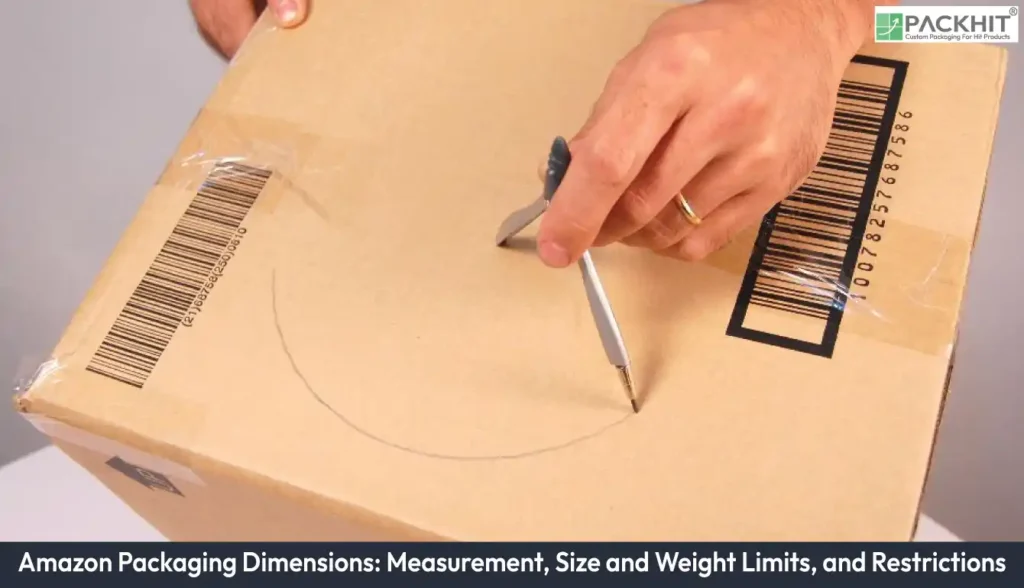
Amazon packaging dimensions refer to the physical measurements (length, width, and height) required to align with fulfillment operational guidelines. Adhering to these requirements is essential for manufacturers to optimize logistics, reduce shipping costs, and avoid non-compliance fees.
To control costs, manufacturers must measure external dimensions accurately and apply the standard domestic dimensional weight formula: (Length × Width × Height) ÷ 139. For inbound logistics, standard shipping boxes sent to fulfillment centers must not exceed 36″ × 25″ × 25″ or 50 lbs. For individual product size tiers, a standard-size item must stay within 18″ × 14″ × 8″ and weigh under 20 lbs; anything larger is classified as Bulky or Extra-Large (up to 150 lbs or more).
Proper product design involves minimizing void space, securing contents with sustainable materials, and validating designs through resources like Amazon’s APASS network. For boxes exceeding 50 lbs, Amazon enforces specific handling protocols, requiring “Team Lift” safety labels on all sides. Manufacturers are also encouraged to prioritize recyclable or biodegradable materials and avoid non-compliant adhesives or finishes. By optimizing these dimensions, manufacturers can prevent dimensional-weight surcharges and successfully navigate Amazon’s size and weight limits.
- What are Amazon Packaging Dimensions?
- Measurement of Amazon Packaging Dimensions
- 1. Calculate the External Dimensions
- 2. Apply Dimensional Weight (DIM) Formula
- 3. Check Compliance with Size Limits
- 4. Optimize Internal Packaging
- 5. Validate with Amazon’s Tools
- Amazon’s Packaging Weight and Size Limits
- Standard vs. Oversized Packages
- Shipping Heavy Items
- Ensuring Weight Distribution and Packaging Integrity
- What Restrictions Apply to Amazon Packaging Dimensions?
- How Can Manufacturers Optimize Packaging Dimensions for Amazon?
What are Amazon Packaging Dimensions?
Amazon packaging dimensions refer to the physical measurements (length, width, and height) of a package and their alignment with Amazon’s specified guidelines. These dimensions help ensure that packages are compatible with Amazon’s fulfillment processes, automated systems, and storage facilities. Properly adhering to these dimensions helps manufacturers optimize logistics, minimize shipping costs, and avoid potential non-compliance fees.
Measurement of Amazon Packaging Dimensions
Measuring Amazon packaging dimensions requires precise calculations of a package’s physical aspects: length, width, and height. These measurements typically need to align with Amazon’s strict dimensional guidelines to facilitate integration with its automated fulfillment systems and to avoid potential extra fees or shipment rejections.
1. Calculate the External Dimensions
Start by calculating the package’s external dimensions in inches. Use a rigid measuring tape to capture the longest side (length), the median side (width), and the shortest side (height). Ensure accuracy to the nearest 1/8th of an inch, as even small deviations can impact dimensional weight calculations and shipping costs.
2. Apply Dimensional Weight (DIM) Formula
Amazon commonly uses the dimensional weight formula (Length × Width × Height) ÷ 139 to calculate the billable shipping weight of a package. Comparing the DIM weight to the package’s actual weight determines the value used for billing purposes. This formula incentivizes compact packaging designs, reducing void space and optimizing shipping efficiency.
3. Check Compliance with Size Limits
Ensure your package complies with Amazon’s typical size guidelines:
- Standard-size packages: Standard maximum dimensions are generally 25 inches on the longest side, 20 inches on the median side, and 15 inches on the shortest side.
- Oversized packages: Packages exceeding standard limits are generally classified as oversized, which may require special handling and incur additional fees.
- Minimum dimensions: Packages typically must meet minimum dimension thresholds (such as 6 inches × 4 inches × 1 inch) to ensure compatibility with automated systems.
4. Optimize Internal Packaging
To optimize the internal packaging, start by minimizing empty spaces and secure the contents with appropriate void fillers, such as biodegradable packing peanuts or air cushions. This ensures the package remains structurally sound during transit and reduces the risk of damage.
5. Validate with Amazon’s Tools
Manufacturers can use Amazon’s APASS (Amazon Packaging Support and Supplier Network) to assist in validating packaging designs. This network provides access to certified packaging experts and tools to help align with Amazon’s dimensional and material guidelines.
By following these steps, manufacturers can accurately determine packaging dimensions and align their designs with Amazon’s requirements, optimizing logistics and reducing operational costs.
Amazon’s Packaging Weight and Size Limits
Amazon generally enforces specific weight and size guidelines for packaging to promote compatibility with its fulfillment systems and efficient logistics. These thresholds are typically categorized into standard-size and oversized packages, each subject to specific guidelines and potential fees.
Standard vs. Oversized Packages
Standard packages typically should not exceed 50 pounds in weight. Dimensions are also commonly restricted to a maximum of 25 inches on the longest side, 20 inches on the median side, and 15 inches on the shortest side. Packages exceeding any of these dimensions or weight criteria are classified as oversized. Oversized packages can weigh up to 150 pounds and require additional handling, often incurring higher shipping fees. For items over 50 pounds, Amazon typically suggests using a “Team Lift” label to ensure safe handling during warehouse operations.
Shipping Heavy Items
For heavy shipping items weighing more than 100 pounds, Amazon frequently recommends or requires palletized shipping to help prevent damage and facilitate safe handling. Standard pallet guidelines typically specify dimensions of 40 inches by 48 inches with a common maximum total height (including the pallet) of 72 inches.
Ensuring Weight Distribution and Packaging Integrity
Proper weight distribution within a package is critical to maintaining structural integrity during transit. Uneven weight can compromise packaging, increasing the likelihood of damage. To mitigate this, Amazon recommends using double-walled corrugated cardboard for heavy items. Internal bracing materials, such as foam inserts or air pillows, should be used to secure the contents and prevent shifting. This not only protects the product but also ensures compliance with Amazon’s packaging guidelines.
Amazon packaging limits and handling requirements can vary by fulfillment program, product category, marketplace, and current policy. Verify the applicable dimensional, weight, labeling, and pallet requirements before finalizing a package.
What Restrictions Apply to Amazon Packaging Dimensions?
Amazon provides specific restrictions on packaging dimensions and materials to ensure environmental responsibility and operational efficiency. Certain non-recyclable materials, like expanded polystyrene (EPS) foam, are prohibited. Instead, manufacturers must use recyclable or biodegradable materials such as corrugated cardboard, paperboard, or compostable plastics. These choices promote sustainability and align with Amazon’s eco-friendly initiatives.
Packaging adhesives, inks, and coatings are often designed to align with specific sustainability standards. Preferred options include water-based adhesives and soy-based inks, which are less harmful to the environment compared to solvent-based alternatives. Metallic or glossy finishes, which complicate recycling processes, are sometimes avoided to facilitate easier recycling.
Amazon also generally expects packages to adhere to its dimensional guidelines to help ensure compatibility with automated fulfillment systems. Packages that fail to meet these guidelines may incur penalties, experience shipment delays, or face possible rejection. This underscores the importance of designing packaging that is both functional and aligned with Amazon’s operational guidelines.
Note: Amazon packaging limits and handling requirements can vary by fulfillment program, product category, marketplace, and current policy. Verify the applicable dimensional, weight, labeling, and pallet requirements before finalizing a package.
How Can Manufacturers Optimize Packaging Dimensions for Amazon?
Manufacturers can optimize packaging dimensions for Amazon by adhering to its dimension and weight guidelines, using sustainable materials, and enrolling in the Frustration-Free Packaging program. Leveraging Amazon’s APASS network can provide access to certified packaging suppliers and design consultants.
To reduce shipping costs, manufacturers should prioritize compact packaging designs that minimize void space and align with DIM weight calculations. Using standardized pallet sizes and ensuring proper weight distribution can further enhance operational efficiency and reduce handling risks.
To move forward, manufacturers should conduct a comprehensive audit of their current packaging portfolio against Amazon’s specific size tier thresholds to identify immediate cost-saving opportunities and ensure operational readiness.