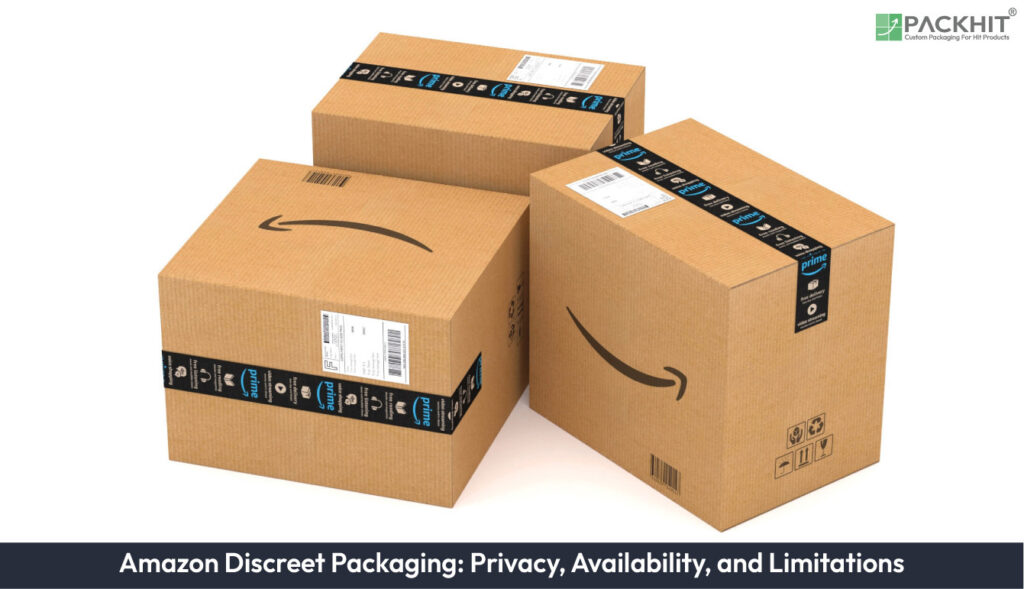
Amazon discreet packaging refers to a delivery option where products are shipped in plain, unbranded boxes or envelopes, devoid of any identifying marks or logos. Amazon discreet packaging is a privacy-focused delivery option that uses plain, unbranded boxes or envelopes to conceal product contents during transit. Its availability and level of privacy depend on the item, seller, fulfillment arrangement, destination, and order settings. Amazon employs several measures to maintain privacy, such as opaque packaging materials, simplified shipping labels, and segregation protocols at fulfillment centers. The service is widely available across the United States and select international markets, though subject to limitations like additional costs, category restrictions, and regional availability. For manufacturers, discreet packaging enhances customer satisfaction, protects brand reputation, and expands market opportunities for privacy-sensitive products, provided they comply with Amazon’s strict packaging guidelines and logistical requirements.
- How Does Amazon Protect Privacy Through Discreet Packaging?
- Unbranded Packaging for Customer Privacy
- Opaque Materials for Content Concealment
- Simplified Shipping Labels for Anonymity
- Fulfillment Handling and Segregation Limits
- Where is Discreet Packaging Available on Amazon?
- Regional Availability in the United States
- International Availability and Key Regions
- How Can Manufacturers Verify Availability?
- Limitations of Amazon Discreet Packaging
- What Products are Eligible for Amazon Discreet Packaging?
- Packaging Material Requirements for Amazon Discreet Packaging
- Amazon Discreet Packaging Impact on Logistics
- How Can Manufacturers Benefit from Amazon Discreet Packaging?
How Does Amazon Protect Privacy Through Discreet Packaging?
Amazon’s discreet packaging generally limits visible product information through plain outer packaging and simplified shipping labels, but the exact process depends on the item, seller, fulfillment arrangement, destination, and order settings. Amazon does not publish one universal discreet-packaging specification for every product. The points below describe common packaging controls rather than a guarantee for every shipment. Manufacturers can confirm the applicable method in Seller Central, the relevant fulfillment instructions, and the shipment record for the product.
Unbranded Packaging for Customer Privacy
Plain corrugated boxes or mailers can conceal a product’s retail identity from people who see the parcel during delivery. A manufacturer can assess this control by checking whether the outer package shows a product name, category mark, promotional image, or seller-specific branding. Amazon packaging may still display Amazon marks, carrier information, required handling statements, or regulatory labels, so unbranded does not mean completely anonymous.
Opaque Materials for Content Concealment
Opaque paperboard, corrugated cardboard, and interior packing materials block a direct view of the product. The outer package also requires enough compression strength and closure security for the product’s weight, dimensions, and handling conditions. Kraft paper and corrugated cardboard are material examples, not proof that Amazon assigns one material to every discreet order. Manufacturers can test a proposed carton or mailer by checking opacity, seam strength, fit, and resistance to routine transit abrasion before requesting fulfillment approval.
Simplified Shipping Labels for Anonymity
Shipping labels generally contain the delivery address, tracking data, and carrier or fulfillment information rather than a full product description. They can still include legally required details, shipment identifiers, return information, or hazmat markings. A label review provides a practical verification method: compare a sample label with the product detail page and confirm which product-specific fields remain visible. Amazon or the carrier controls the final label format, so a manufacturer cannot assume that every label excludes every descriptive term.
Fulfillment Handling and Segregation Limits
Amazon fulfillment centers use automated and manual handling steps, but the available information does not establish that every discreet order follows a separate physical workflow. Order routing, storage, picking, packing, carrier transfer, and returns can involve different systems and personnel. Manufacturers can document the fulfillment path, inspect sample shipments, and report packaging discrepancies through the applicable Amazon support channel. This method is more reliable than treating segregation or manual checks as universal controls.
These measures can reduce the amount of product information visible on the outside of a parcel. They do not guarantee privacy from every participant in the delivery chain, household member, receiving department, carrier, customs authority, or returns process. For a paper-based custom package, the manufacturer also remains responsible for accurate dimensions, material specifications, closure performance, required warnings, and seller or fulfillment compliance.
Where is Discreet Packaging Available on Amazon?
Availability must be confirmed for the specific product, destination, seller account, and fulfillment method. Public descriptions do not establish a single worldwide program with identical rules. Availability can differ between Amazon fulfillment, seller-fulfilled orders, marketplace countries, product categories, and delivery services. These conditions can change, so confirm the applicable requirements in the relevant Amazon account workflow before relying on this information.
Availability note: No verified date is supplied for the operational information in this section. Check the current Amazon account instructions at the time of listing, shipment, or packaging approval.
Regional Availability in the United States
Amazon ships products throughout the United States, but that fact does not confirm discreet packaging for every ZIP Code or order. Product size, inventory location, carrier handoff, delivery speed, packaging inventory, and regulatory requirements can affect the package selected for an order. A manufacturer targeting US customers can verify the result by entering representative destinations, reviewing fulfillment settings, and examining packaging samples from more than one fulfillment location. One shipment does not establish nationwide availability.
International Availability and Key Regions
International packaging practices vary by marketplace and destination. The United Kingdom, Germany, India, and Japan operate under different carrier networks, customs rules, labeling requirements, and seller programs. A package that conceals product branding in one country can require additional customs or handling information in another. Manufacturers selling internationally can check each marketplace’s current fulfillment and packaging instructions rather than infer availability from US shipments.
Product type, package dimensions, weight, battery or hazardous-material status, customs requirements, and seller-fulfilled routing can restrict discreet packaging. Rural delivery areas and third-party logistics arrangements can also produce different outer packaging. These limits matter for custom paper packaging because a carton that fits one fulfillment specification may exceed another site’s dimensional, labeling, or drop-test requirements.
How Can Manufacturers Verify Availability?
Manufacturers can verify availability by checking the current Amazon Seller Central instructions for the account, product, marketplace, and fulfillment method, then confirming the result with a controlled shipment. The verification record can include the ASIN or SKU, destination ZIP Code, package dimensions, fulfillment channel, label image, outer-package photographs, and date of review. Amazon may change packaging and routing procedures, so a historical sample does not establish a permanent rule. If Seller Central does not identify a discreet option, the manufacturer can ask Amazon support whether the request is permitted for that product instead of describing the option as confirmed.
Process note: No verified date is supplied for the Seller Central guidance in this section. Confirm the applicable requirements in the relevant Amazon account workflow before relying on this information.
Limitations of Amazon Discreet Packaging
The five practical limitations are cost, category eligibility, regional variation, processing effects, and compliance requirements. The effect of each limitation depends on the product and fulfillment arrangement.
- Additional costs: Custom cartons, opaque mailers, inserts, extra quality checks, and revised artwork can increase packaging costs. Amazon fees, seller packaging costs, and third-party logistics charges follow different schedules, so the manufacturer must confirm the applicable rate.
- Category restrictions: Products such as hazardous materials, liquids, batteries, oversized goods, and temperature-sensitive items can require markings or handling controls that conflict with complete discretion. Eligibility depends on the product’s physical and regulatory characteristics.
- Regional variation: Marketplace country, destination, carrier, customs process, inventory location, and delivery service can change the outer package and visible label information. US availability does not prove availability in the United Kingdom, Germany, India, Japan, or another country.
- Processing effects: A requested material, size, or packing step can affect available inventory, routing, or processing time. Amazon does not publish a universal delay for discreet packaging, so manufacturers must measure order data for the relevant SKU instead of promising a fixed delivery impact.
- Compliance requirements: The package must meet Amazon’s current dimensional, weight, closure, barcode, labeling, and product-safety requirements. Privacy treatment cannot remove a warning, customs declaration, carrier mark, or other disclosure required by law or by the fulfillment process.
For manufacturers, the defensible claim is limited: discreet packaging can reduce visible product identification when Amazon confirms the option for the relevant order. It does not provide a guaranteed confidential delivery method, and a sample review plus current Seller Central confirmation remains the appropriate basis for product-specific packaging claims.
What Products are Eligible for Amazon Discreet Packaging?
Amazon discreet packaging generally applies to products whose exterior packaging does not identify the product. Eligibility is not universal. Amazon can vary the packaging method by product dimensions, seller-fulfilled or Amazon-fulfilled status, destination, carrier, and the active packaging program. The categories below describe common privacy use cases, not a guarantee that every item receives a discreet shipment.
- Personal care items: Hygiene supplies, skincare products, incontinence products, and other goods that customers may prefer to receive without product identification.
- Adult products: Sexual wellness products and related accessories that can reveal sensitive purchasing information.
- Health supplies: Home-care tools, diagnostic kits, and non-prescription medical supplies that contain private health information. Prescription medicines follow separate pharmacy, labeling, and regulatory requirements.
- Confidential documents: Legal papers, contracts, and private correspondence that require an opaque outer mailer or carton.
- Luxury goods: Small, high-value products for which a plain outer package can reduce visible product information. Discreet packaging does not replace carrier insurance, signature service, or theft controls.
- Specialty products: Niche goods, limited releases, and custom paper-packaged products that require privacy at the shipping stage. A manufacturer must confirm the shipping configuration before treating this category as eligible.
For a manufacturer, the practical test has three parts: the product must fit the available package format, meet Amazon packaging and compliance rules, and move through a fulfillment arrangement that supports the selected packaging method. Oversized cartons, products with unusual shapes, temperature-sensitive goods, leaking contents, batteries, and hazardous materials can require separate handling or exclusion. Regional restrictions also apply. Check the current product-specific instructions and fulfillment settings in the relevant Amazon seller or vendor account before printing a packaging specification.
Packaging Material Requirements for Amazon Discreet Packaging
Discreet packaging uses an opaque outer layer that protects the product without revealing its contents. Amazon may use kraft paper, corrugated boxes, polyethylene mailers, or other approved formats depending on package size, weight, puncture risk, moisture exposure, labeling space, and sortation needs. These are examples, not a universal material list.
Manufacturers should verify fit, closure, label placement, and package performance through appropriate compression, vibration, and drop testing. Fragile, liquid, loose-component, or perishable products may require additional internal protection, sealing, insulation, or temperature control.
Packaging and carrier requirements vary by program and destination. Shipping labels, return information, regulatory warnings, and other required markings may still be visible, and required identifiers should not be removed for discretion.
Amazon Discreet Packaging Impact on Logistics
Discreet packaging can protect product privacy without changing basic shipment tracking, but its operational impact depends on the fulfillment route. Plain outer packaging can reduce visible product information, while added mailers or inserts may increase material use, storage, dimensional weight, and packing time.
Manufacturers can compare package type, pack time, damage or leakage rates, and privacy-related complaints across a defined shipment sample, separating Amazon-fulfilled from seller-fulfilled orders. Verify current packaging, labeling, and destination requirements before changing specifications, as responsibilities may differ among Amazon, the seller, and the carrier.
How Can Manufacturers Benefit from Amazon Discreet Packaging?
Amazon discreet packaging can protect product privacy and reduce visible product cues, but its availability depends on the item, seller account, fulfillment method, and destination. Manufacturers can assess three practical benefits: fewer product details exposed during delivery, less stigma for products such as personal-care items, and a clearer privacy claim for customers. These benefits describe possible outcomes, not a guarantee that every Amazon shipment receives an unmarked outer carton.
For a manufacturer, the first check is product eligibility. Confirm the packaging and fulfillment requirements in the applicable Amazon seller or vendor workflow, then verify the result with the assigned fulfillment arrangement before changing the retail pack. Amazon may apply its own shipping carton, mailer, label, or handling process. The manufacturer’s printed carton therefore cannot determine the appearance of the final shipment in every order.
- Privacy: Use a neutral outer pack if the product category, fulfillment route, and destination support that treatment. Keep the product name, imagery, and identifying text off exposed shipping surfaces.
- Brand protection: Separate the retail package from the transport package. A private shipment can reduce unwanted disclosure, but it does not remove responsibility for accurate instructions, warnings, and legally required labeling on the product pack.
- Operational review: Compare the proposed carton with Amazon’s size, weight, labeling, and prep requirements. Test barcode placement, closure strength, dimensional weight, and resistance to crushing before production.
A paper-based manufacturer can document this review with three records: a dieline and material specification, photographs of the sealed retail pack, and a shipment test report covering label readability and carton damage. A small personal-care carton, for example, can use restrained exterior graphics while retaining full ingredients and safety information inside the retail pack. This example shows a packaging choice; it does not prove Amazon eligibility.