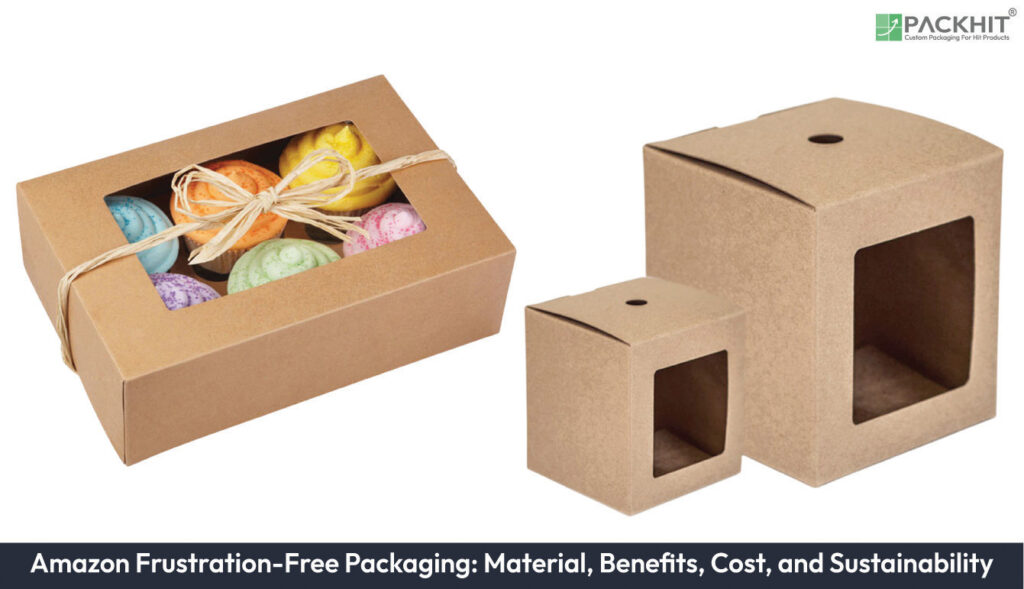
Amazon Frustration-Free Packaging (FFP) is a packaging initiative aimed at simplifying packaging, reducing unnecessary materials, and improving customer convenience. It can involve materials such as corrugated cardboard and molded pulp, with packaging designs developed around product protection, opening experience, and e-commerce distribution requirements. For manufacturers, adopting FFP may involve packaging redesign, material changes, testing, and adjustments to production processes. Potential benefits include reduced packaging components, streamlined handling, and changes in material and shipping requirements, although the actual outcomes depend on the product and packaging configuration. The program also reports environmental benefits from reducing packaging materials, but any specific environmental total should be verified against a current source with matching measurement boundaries before being presented as a quantified result.
- What is Amazon Frustration-Free Packaging?
- Materials Used in Amazon Frustration-Free Packaging
- Benefits of Frustration-Free Packaging for Manufacturers
- Reduced Assembly Time
- Minimized Material Handling
- Material Choice by Product Constraint
- Supply Chain Compatibility
- Lower Shipping Expenses
- Compliance Incentives
- Material Cost Control
- Improved Brand Perception
- Improved Customer Handling
- Market Differentiation
- Cost Implications of Adopting Frustration-Free Packaging
- How Does Frustration-Free Packaging Contribute to Sustainability?
- Reduction in Packaging Waste
- Lower Transportation Emissions
- Use of Circular-Economy Materials
- Reported Environmental Impact
- What Manufacturers Should Consider Before Adopting Amazon FFP?
What is Amazon Frustration-Free Packaging?
Amazon Frustration-Free Packaging (FFP) is an e-commerce packaging program that reduces unnecessary packaging and makes products easier to open. FFP packages generally remove components such as plastic clamshells, wire ties, and loose plastic fillers. Recyclable paper-based materials, including corrugated fiberboard and molded pulp, replace those components where product protection permits. The package ships without a separate Amazon overbox for products that meet the applicable packaging and testing requirements.
FFP has three operating aims: reduce packaging waste, shorten unpacking time, and protect products through parcel handling. A package can use recyclable material and still fail if it exposes the product to damage, contains hard-to-remove ties, or does not meet the applicable distribution test. Manufacturers therefore assess opening steps, package dimensions, material separation, product restraint, and shipping performance together.
Materials Used in Amazon Frustration-Free Packaging
Amazon Frustration-Free Packaging uses fiber-based materials for the outer package and internal protection, with the exact specification determined by product weight, geometry, fragility, and distribution conditions. Common materials include corrugated cardboard, molded pulp, paperboard, and compatible paper-based tapes or adhesives.
Corrugated Cardboard
Corrugated cardboard forms the main shipping structure in many FFP packages. Its fluted inner layer resists compression, while the outer liner protects the product from abrasion and handling. Recycled fiber content can lower virgin material use, and the finished board enters established paper-recycling streams in areas that accept corrugated containers. Board grade, flute profile, edge crush strength, and box dimensions must match the product and shipping conditions.
Molded Pulp
Molded pulp cushions impact when its formed cavities, corner blocks, trays, or end caps hold the product away from the carton walls and spread a local load across a larger fiber surface. For example, molded-pulp end caps can restrain a fragile product with projecting corners during a drop, while a tray can limit sliding and reduce repeated contact with the carton. This protection depends on cavity fit, wall thickness, fiber density, compression strength, product mass, and the direction of the impact; molded pulp does not provide a fixed shock-absorption rating across all designs. Humidity can soften the insert and reduce its ability to retain shape, so compression and transit testing under the intended storage and shipping conditions remain necessary. Recycled paper fiber and, in some specifications, agricultural fibers can form these inserts without a plastic shell.
Paperboard and Paper-Based Adhesives
Paperboard can separate product surfaces, close smaller cartons, or form folded internal supports. Water-based and starch-based adhesives join fiber components in some package constructions. Adhesive quantity, coating type, and tape selection still matter because large amounts of non-fiber material can affect sorting and recycling. Manufacturers should confirm compatibility with their intended recycling stream rather than assume that every paper-based component is accepted everywhere.
Material selection balances protection, opening effort, manufacturing method, recycling access, and shipping cost. A paper-based package is not automatically FFP-compliant. The complete pack, including closures and inserts, must meet the applicable program requirements and protect the product through the intended fulfillment route.
Benefits of Frustration-Free Packaging for Manufacturers
Amazon Frustration-Free Packaging offers manufacturers several benefits:
Reduced Assembly Time
Removing shrink film, wire ties, bubble wrap, and excess filler reduces the number of assembly operations. Fewer folds, closures, and manual restraints can shorten pack-out time and reduce labor at the packaging station.
Minimized Material Handling
A package with fewer components requires fewer material bins, replenishment tasks, and line-side checks. Standardized cartons and inserts also reduce sorting work during production, although a new design can require tooling or process changes during implementation.
Material Choice by Product Constraint
Manufacturers can match each fiber material to a specific packaging task rather than replace every component with one material.
| Material | Primary role | Manufacturer decision |
|---|---|---|
| Corrugated cardboard | Forms the outer shipping carton and resists compression. | Select board grade, flute profile, and carton dimensions for product weight and parcel handling. This choice usually affects die lines, pallet quantity, and billable shipping dimensions. |
| Molded pulp | Restrains a fragile or irregular product with cavities, trays, corner blocks, or end caps. | Use a formed insert when movement or impact presents the main risk. Budget for mold development and check insert compression after humidity exposure. |
| Paperboard | Separates surfaces or forms folded supports inside smaller cartons. | Choose folded structures when the product needs positioning without a molded tool. Check whether coatings and printed components fit the intended paper-recycling stream. |
| Paper-based adhesive or tape | Joins or closes fiber components. | Limit adhesive and tape to the amount required for closure strength. Confirm that the adhesive does not prevent sorting or recycling of the principal fiber components. |
For example, a compact rectangular product with stable surfaces may use a corrugated carton and folded paperboard support, avoiding a molded-pulp tool. A fragile product with projecting corners may require molded-pulp end caps inside a stronger corrugated carton. The second design can add tooling cost, but it may reduce product movement and damage during parcel handling. Testing determines whether the lower-cost construction provides enough protection.
Supply Chain Compatibility
FFP packaging enters Amazon fulfillment operations without the extra consumer-facing packaging that some products require. Correct dimensions, secure closures, readable labels, and adequate product restraint reduce handling problems in automated and manual fulfillment steps.
Lower Shipping Expenses
A smaller package can reduce dimensional weight and increase units per pallet or trailer. The actual freight effect depends on carrier rules, product density, carton dimensions, and the number of units shipped in each load.
Compliance Incentives
A package that meets the applicable Amazon requirements can reduce packaging-related chargebacks or other compliance costs. Manufacturers must confirm current program terms because requirements, testing methods, and fee policies can change.
Material Cost Control
Replacing plastic shells and loose fillers can reduce material count and waste at the pack-out station. Fiber materials do not always cost less per unit, so the calculation should include tooling, scrap, labor, freight, damage, and recycling costs.
Improved Brand Perception
Packaging that opens with fewer tools and leaves less waste can support a brand’s sustainability claims. Those claims require accurate material and recycling information. A manufacturer should not describe a package as recyclable unless the relevant component and local collection system support that statement.
Improved Customer Handling
Pull tabs, tear strips, foldable cartons, and accessible closures reduce the effort required to reach the product. Fewer sharp ties and rigid plastic parts can also reduce opening-related complaints and discarded packaging.
Market Differentiation
A verified reduction in material use can distinguish a product in categories where packaging waste affects purchase decisions. Manufacturers should support that position with package specifications and measured material reductions rather than broad environmental language.
Cost Implications of Adopting Frustration-Free Packaging
FFP adoption creates redesign and validation costs before it produces savings. The financial result depends on product dimensions, order volume, protective requirements, labor, freight rates, tooling, damage rates, and Amazon’s current compliance terms.
- Initial investment: Package engineering, die development, prototypes, drop testing, compression testing, transport trials, artwork revisions, and production-line changes create the main redesign costs. Fragile products and irregular shapes usually require more test cycles than rectangular products with stable components.
- Tooling and testing: Die-cut tooling, molded-pulp forms, fixtures, and laboratory tests add fixed costs before production begins. Record each tooling charge and divide it across the expected production volume to estimate the per-unit effect.
- Raw material reduction: Removing secondary cartons, plastic restraints, and loose fillers reduces the quantity of packaging material per shipment. Recycled-fiber pricing, board grade, pulp density, supplier minimums, and regional availability determine the resulting unit cost.
- Material selection: Corrugated fiberboard, paperboard, molded pulp, and paper-based cushioning have different compression strength, moisture resistance, weights, and recovery rates. Select the lowest material quantity that protects the product during Amazon fulfillment and parcel transport.
- Lower shipping expenses: Smaller packed dimensions or lower weight reduce freight charges when the change crosses a carrier’s dimensional-weight or weight threshold. Compare packed length, width, height, billable weight, pallet quantity, average shipment distance, and damage rate for both package designs.
- Dimensional efficiency: A compact package can place more units on each pallet and in each truck or fulfillment shipment. Measure the packed product rather than the empty carton, because inserts and protective clearances affect the final shipping dimensions.
- Damage-related costs: A lower material cost does not represent a saving if product damage, returns, replacements, or customer-service claims increase. Use transit-test results and historical damage rates to check whether the redesigned package maintains adequate protection.
- Economies of scale: Higher production volumes spread tooling, testing, and artwork costs across more units. Calculate the break-even volume by comparing the redesign cost with the expected material, freight, and damage-cost reduction per unit.
- Shared components: Common cartons, paper inserts, and repeatable die-cut patterns reduce purchasing and machine-setup costs across related products. Keep shared parts only when they do not add unused space, excess board, or extra assembly steps.
- Cost comparison: Compare total packaging cost per saleable unit, including materials, tooling amortization, labor, testing, freight, storage, returns, and damage replacement. This calculation gives manufacturers a clearer result than comparing the carton price alone.
How Does Frustration-Free Packaging Contribute to Sustainability?
Amazon Frustration-Free Packaging can reduce environmental burdens by using less material, increasing fiber recovery, and lowering shipment volume. The result depends on package weight, material sourcing, manufacturing energy, transport distance, product damage, and the recycling facilities available to customers.
Reduction in Packaging Waste
Removing plastic fillers, wire ties, oversized cartons, and duplicate boxes reduces the amount of packaging discarded after delivery. A package assessment should measure material mass and component count, including coatings, labels, closures, and protective inserts.
Lower Transportation Emissions
Compact packages can increase units per pallet, trailer, or delivery vehicle. That change can reduce fuel use per unit shipped, but the result depends on the transport mode, route, loading efficiency, and product damage rate. A smaller package that causes more damage does not produce the same environmental benefit.
Use of Circular-Economy Materials
Fiber packaging supports material recovery when the package uses accepted grades and reaches a suitable recycling facility. Recycled content reduces demand for virgin fiber, while molded pulp can replace some plastic cushioning. Recycling access varies by location, so manufacturers must distinguish material recyclability from actual local collection.
Reported Environmental Impact
The program reports a reduction in packaging materials, but the amount, measurement period, product scope, and calculation method require verification before publication of a specific figure. The supplied information does not establish the date, boundaries, or independent basis for the frequently repeated claim that FFP has reduced more than 1 million tons of packaging materials. Manufacturers should therefore describe that figure as unverified unless they confirm it against a current Amazon source with matching measurement boundaries.
What Manufacturers Should Consider Before Adopting Amazon FFP?
Manufacturers should evaluate product protection, packaging materials, package dimensions, production requirements, and the applicable Amazon Frustration-Free Packaging (FFP) criteria before adopting the program.
- Product protection: Ensure packaging protects the product through handling, shipping, drops, vibration, and compression.
- Packaging design: Reduce unnecessary materials and components without weakening protection.
- Dimensions and materials: Evaluate package size, fiber composition, recycled content, coatings, closures, and internal protection.
- Total cost: Consider redesign, tooling, testing, production, materials, and shipping—not material cost alone.
- FFP requirements: Confirm the latest Amazon criteria, test methods, and acceptance conditions for the product category and program level.
- Finished-package testing: Qualification applies to the complete product-and-package combination, not just the carton material.
- Failure risks: Check for product damage, opened closures, collapsed panels, exposed contents, broken seals, or loss of containment.
- Change management: Retest after changing dimensions, materials, closures, or protective components.
- Documentation: Record the tested configuration, dimensions, component weights, material composition, recovery instructions, and test results.
- Sustainability claims: Base claims on the actual finished package and realistic recycling or recovery options.
- Certification: Use laboratory testing or formal certification review when required by Amazon.
