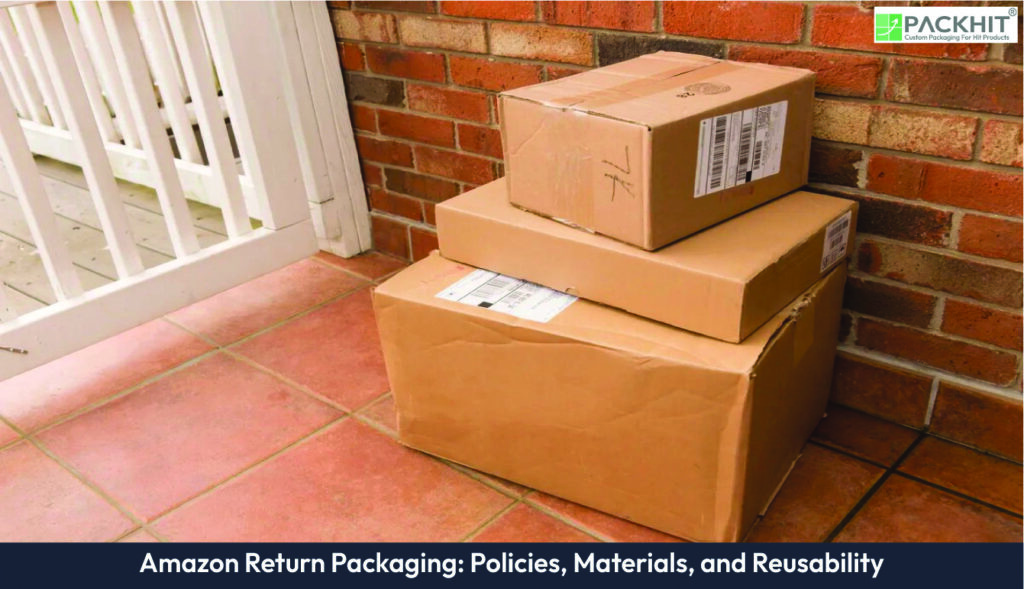
Amazon’s return packaging system encompasses stringent policies, innovative materials, and a strong focus on reusability to align with its sustainability goals. Policies like Frustration-Free Packaging (FFP), Ship-In-Own-Container (SIOC), and Prep-Free standards emphasize eco-friendly designs that minimize waste while ensuring product protection and ease of handling. Durable materials such as corrugated cardboard, kraft paper fillers, and plastic alternatives are selected for their functionality and recyclability, supporting Amazon’s commitment to reducing environmental impact. Reusability is integrated through resealable designs, durable constructions, and circular economy initiatives like Amazon Second Chance, which promote recycling and extended material lifecycles. Manufacturers aiming to meet these standards benefit from smoother integration into Amazon’s supply chain, reduced penalties, and a strengthened reputation for eco-responsibility, making compliance both a strategic and logistical necessity.
- What are Amazon’s Policies on Return Packaging?
- Frustration-Free Packaging (FFP) Standards
- Ship-In-Own-Container (SIOC) Framework
- Prep-Free Packaging Standards
- Sustainability Goals and Vendor Compliance
- Materials Used in Amazon Return Packaging
- How is Reusability Integrated into Amazon Return Packaging?
- Resealable Packaging Designs
- Durable Material Construction
- Recycling Pathways and Circular Economy Programs
- What are the Implications for Manufacturers in Amazon Return Packaging?
What are Amazon’s Policies on Return Packaging?
Amazon return packaging policies aim to keep shipments intact, reduce customer friction, and support materials that can return to recycling or reuse routes. Program requirements vary by seller, item category, and the Amazon fulfillment method. Manufacturers should verify the latest Amazon program documentation before changing packaging designs.
For manufacturers, packaging choices affect three operational points: transit protection, how easily the package can be handled during returns, and how the package materials can be sorted after intake. Amazon expects packaging to meet the applicable criteria for durability, handling, and recyclability.
Frustration-Free Packaging (FFP) Standards
Amazon’s Frustration-Free Packaging (FFP) program defines packaging design goals that reduce excess materials and make opening straightforward for customers. FFP-aligned packaging typically removes unnecessary outer layers, keeps the number of material types low, and avoids materials that obstruct common recycling processes. For return packaging, this structure matters because reverse logistics relies on quick intake and sorting.
A common trade-off appears during sizing. Designs that use fewer layers still need sufficient fit to limit product movement and corner stress during transit. If a lighter-weight carton flexes, the reduction in material can increase damage rates.
Ship-In-Own-Container (SIOC) Framework
Ship-In-Own-Container (SIOC) requires the product’s package to function as the shipping container with no additional outer box in the outbound flow. The same idea supports returns because the package surface stays part of the logistics chain, so shipping labels and protection layers need to work together.
In practice, SIOC changes construction details. Manufacturers choose cartons or paper-based cases that resist crushing and seal securely, if the product uses cushioning, and if the packaging includes markings or release features that reduce handling steps. Requirements depend on item weight class and drop/stack testing outcomes used by the applicable Amazon program.
Prep-Free Packaging Standards
Prep-Free packaging reduces or removes Amazon steps that modify or rework packaging before shipment. Prep-Free aligned designs aim for ready-to-ship packaging that can move through distribution without added reinforcement or repackaging.
For returns, the effect shows up in intake speed. Packaging that already includes the needed closure, labeling space, and structural strength can be processed with fewer interventions. If your packaging requires extra tape, relabeling, or reinforcement to reach required handling strength, the prep-free assumption may not apply.
Sustainability Goals and Vendor Compliance
Amazon’s sustainability initiatives support packaging that uses lower-impact materials and improves recyclability outcomes. Vendor guidance typically favors recycled content where possible and encourages materials that can be handled by existing waste management systems. Requirements and consequences for non-compliance depend on the specific Amazon program, the item category, and the policy terms in effect at the time of shipment.
If policy terms for your program restrict certain materials, manufacturers should treat those restrictions as design constraints. For example, avoiding hard-to-recycle foams and choosing paper-based void fill can reduce sorting friction in reverse logistics, if your materials match the local recycling stream expectations.
Materials Used in Amazon Return Packaging
Amazon return packaging materials usually balance three constraints: product protection during transit, packaging compatibility with the applicable Amazon handling standards, and the ability to recycle or reuse materials after returns. Material selection also changes how many handling steps the package needs during returns.
Corrugated Cardboard
Corrugated cardboard is a common choice for return packaging because it provides impact resistance with comparatively low mass. Manufacturers often select double-wall or triple-wall corrugated sheets for heavier products to control crushing and edge deformation during stacking.
Recycling performance matters because reverse logistics routes typically prioritize paper fiber recovery. Cardboard has a high recycling rate in the U.S., and that positioning supports carton designs that stay within common fiber-recycling categories.
Kraft Paper and Paper-Based Fillers
Kraft paper and other paper-based fillers serve as void-fill cushioning in return-ready packaging. These materials reduce product movement inside the carton, limit scuffing from contact, and fill empty space so the item does not shift during repeated handling.
Paper-based fillers also simplify post-return sorting compared with mixed-material composites, if the filler remains paper-only. Manufacturers often choose crumpled kraft paper, paper inserts, or paper wrap designs that fit the product geometry.
Plastic Alternatives
Amazon discourages many single-use plastics, but certain plastic formats can appear in return packaging when they meet program requirements. Examples include polyethylene mailers and air pillows made from recycled content, when those materials stay compatible with the applicable recycling rules.
Material permission depends on the packaging form and local handling. If a plastic component cannot be separated during sorting, or if it falls outside the allowed material list for the relevant program, the packaging can create processing friction during returns.
How is Reusability Integrated into Amazon Return Packaging?
Reusability in return packaging focuses on making the package easy to reclose and handle again without adding new components. Packaging that supports repeated use must keep closures functional, maintain structural strength, and avoid material combinations that prevent efficient sorting.
Resealable Packaging Designs
Many return packages use resealable features such as adhesive reclosers or reusable closure strips. When closures remain intact after opening, customers can reuse the same carton for the return, reducing the need for extra packaging materials.
Reseal design affects both convenience and integrity. A closure that loses adhesion after one open cycle can fail early, so manufacturers often select closure materials that keep grip strength after typical customer handling conditions.
Durable Material Construction
Durable construction supports repeated shipping cycles. Reinforced cartons, tear-resistant paper, and compatible internal supports reduce seam splits and punctures during returns, especially for items that experience corner loads.
Durability also interacts with protection design. Stronger cartons still need internal restraint so the product does not strike the outer walls, particularly if the carton experiences drop or compression during warehouse intake.
Recycling Pathways and Circular Economy Programs
Amazon promotes circular economy approaches that include recycling and repurposing information for returned materials. Programs such as Amazon Second Chance provide customers with guidance on recycling and reusing eligible packaging components.
For manufacturers, the practical goal is to design packaging that fits common recycling streams. Reducing the number of mixed materials, keeping labels and adhesives in manageable categories, and using paper-based structures help align packaging with post-return sorting behavior.
What are the Implications for Manufacturers in Amazon Return Packaging?
For manufacturers, aligning with Amazon’s return packaging policies and standards is both a logistical and strategic imperative. Compliance ensures smoother integration into Amazon’s supply chain, reduces the risk of penalties, and enhances brand reputation among environmentally conscious consumers. Adopting sustainable and reusable packaging practices can lead to cost savings over time, as materials are optimized for efficiency and recyclability.
By understanding the policies, materials, and reusability mechanisms outlined above, manufacturers can develop packaging solutions that meet Amazon’s requirements while contributing to broader sustainability goals. This alignment not only facilitates operational efficiency but also positions manufacturers as responsible partners in the e-commerce ecosystem.