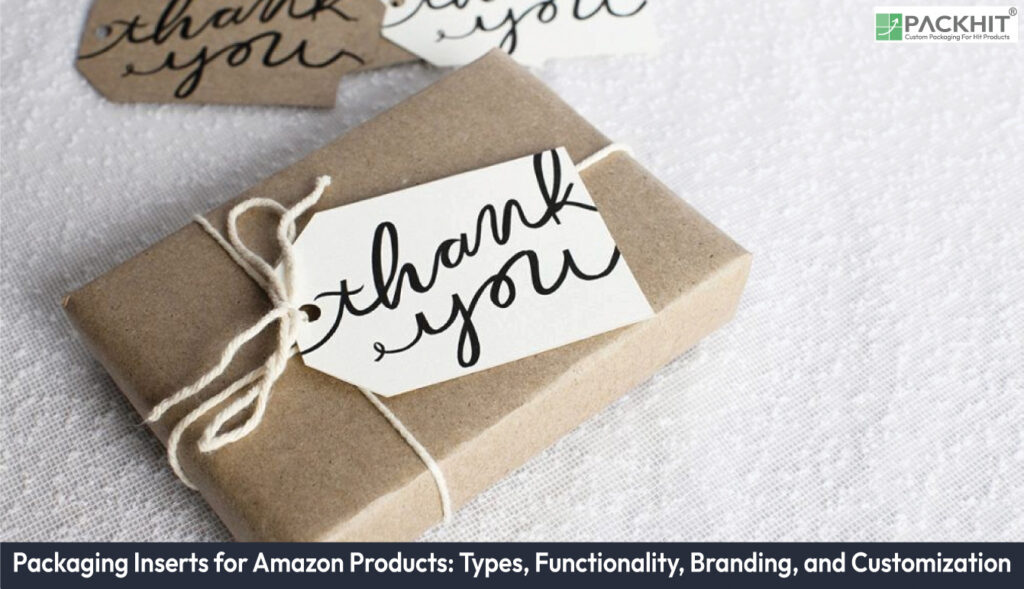
Packaging inserts for Amazon products serve as versatile tools that address multiple strategic objectives, including customer engagement, product protection, and operational efficiency. These inserts are categorized into three main types: informational inserts, protective inserts that ensure product safety during transit, and promotional inserts that foster customer loyalty through offers or samples. From a branding perspective, packaging inserts reinforce brand identity with logos, taglines, and personalized messages, while customization options, such as material selection, dimensions, and design elements, align them with specific branding goals and consumer preferences. By adhering to Amazon’s strict packaging guidelines, manufacturers avoid penalties and maintain seller performance metrics. The benefits of packaging inserts include improved customer retention, reduced support inquiries, enhanced brand visibility, and strengthened trust. Inserts contribute to operational efficiency by reducing product damage, streamlining communication, and lowering fulfillment costs. For Amazon sellers, leveraging well-designed packaging inserts not only enriches the unboxing experience but also provides a competitive edge in the e-commerce marketplace.
- What are Packaging Inserts for Amazon Products?
- Types of Packaging Inserts Used for Amazon Products
- Functional Role of Packaging Inserts in Amazon Product Shipments
- Facilitating Product Education
- Improving Packaging Stability
- Adding Supplementary Utility
- How Do Inserts Reduce Shipping Damage?
- How Do Packaging Inserts Support Branding Efforts for Amazon Sellers?
- Customization Options for Packaging Inserts
- Material Choices for Packaging Inserts
- Dimensional Configurations
- Design and Aesthetic Options
- Printing Techniques for High-Quality Inserts
- Impact of Material Selection on Functionality
- Packaging Insert Checks Before Amazon Fulfillment
- How Do Amazon Guidelines Regulate Packaging Inserts?
- Quantifiable Benefits of Effective Packaging Inserts
- Why are Packaging Inserts Critical for Amazon Sellers?
What are Packaging Inserts for Amazon Products?
Packaging inserts for Amazon products are paper-based or molded components placed inside a product package. They can present usage instructions, warranty terms, safety information, promotional messages, or a secondary product component. A structural insert also holds the item in position during handling and parcel transport. Manufacturers use the insert format, material, print area, and message according to the product dimensions, protection requirements, and brand guidelines.
An insert does not replace the exterior shipping carton or Amazon packaging requirements. Its function depends on its position inside the package, the amount of empty space, the product’s weight, and the forces expected during distribution. Printed content must also match the product, avoid misleading claims, and exclude instructions that conflict with applicable safety or marketplace requirements.
Types of Packaging Inserts Used for Amazon Products
Packaging inserts used in Amazon shipments fall into three primary categories: informational, protective, and promotional. A single printed card can combine two categories, while a formed pulp or corrugated component usually serves a structural purpose.
Informational Inserts
Informational inserts present product instructions, warranty terms, assembly steps, care directions, and safety warnings. Clear headings, numbered steps, diagrams, and readable type help customers locate the required information without opening a separate support channel. A QR code can point to a digital manual if the printed card still identifies the product and states the basic safety information.
Protective Inserts
Protective inserts restrain the item and reduce contact with the package walls. Common materials include foam, molded pulp, corrugated cardboard, and die-cut paperboard. The insert geometry must match the product’s length, width, height, weight, and fragile areas. A poorly fitted component can leave movement gaps or apply pressure to a sensitive surface.
Promotional Inserts
Promotional inserts contain messages such as a thank-you note, product registration prompt, care reminder, discount code, or information about a compatible item. Promotional content must remain accurate and must not ask customers to manipulate reviews or provide misleading feedback. A thank-you note, care reminder, or registration prompt can support post-purchase communication without replacing required instructions or safety information.
Manufacturers can combine these categories when the package has enough internal space. For example, a folded paperboard card can show setup instructions on one panel and a product registration message on another, while a die-cut base holds the product below it.
Functional Role of Packaging Inserts in Amazon Product Shipments
Packaging inserts perform four practical functions: they present product information, restrict movement, separate components, and carry post-purchase messages. The correct function depends on the product and package construction.
Facilitating Product Education
A printed insert gives the buyer immediate access to usage instructions, warranty activation steps, troubleshooting guidance, and care requirements. Short numbered procedures work well for assembly or first use. Clear educational inserts may reduce some support questions, depending on product complexity, instruction quality, and customer needs.
Improving Packaging Stability
A structural insert fills selected voids, separates parts, and limits product movement during handling. Corrugated cardboard adds folded compression strength, molded pulp conforms to designated contact points, and foam cushions localized impact. The material, thickness, folds, and contact area must correspond to the product load rather than being selected by appearance alone.
Adding Supplementary Utility
An insert can hold replacement parts, a measuring tool, a sample, or a care accessory. Each added item requires a defined location, a retention method, and a packing check. A component that shifts inside the carton can scratch the primary product or obscure the printed instructions.
How Do Inserts Reduce Shipping Damage?
Inserts reduce shipping damage by restricting movement and distributing contact forces across selected areas. Thickness, stiffness, elasticity, and tensile strength affect how an insert responds to compression and impact. A component cut to the product dimensions reduces rubbing, scratching, and breakage caused by repeated movement. Fragile electronics, glassware, and parts with exposed finishes often require separate cavities or cushioning zones rather than a flat card alone.
How Do Packaging Inserts Support Branding Efforts for Amazon Sellers?
Packaging inserts support branding by placing the company name, logo, color system, typography, and product message inside the package. A consistent layout identifies the manufacturer and connects the printed card with the product label, manual, and exterior packaging. A short care instruction or registration prompt can communicate more clearly than a large promotional block.
The message must remain relevant to the purchased item. A seasonal coupon, compatible-product notice, or reorder reminder can support customer retention, but the result depends on the offer, timing, product category, and customer response. Promotional copy must not interfere with safety instructions or required product information.
The Impact of Personalization on Branding
Personalized inserts can address the buyer by name, identify the purchased product, or present a segment-specific message. Variable data printing changes text, codes, or images between copies without changing the base artwork. Personalization and loyalty-focused inserts may encourage repeat purchases, but results vary by offer, audience, product, and measurement method. Manufacturers can assess the results with controlled coupon codes or registration codes rather than assuming a fixed percentage increase.
Customization Options for Packaging Inserts
Manufacturers can customize packaging inserts through material selection, dimensions, folds, print coverage, surface treatment, and message structure. These choices affect package fit, protection, unit cost, recycling instructions, and production speed.
Material Choices for Packaging Inserts
Paper stock suits instruction cards, registration cards, and lightweight promotional pieces. Recycled kraft paper communicates a natural material choice and can support standard recycling streams when inks and coatings permit. Coated paperboard produces sharper color and a smoother surface. Corrugated cardboard and chipboard add stiffness for dividers, platforms, and retaining structures. Molded pulp uses a formed fiber structure for cushioning and component separation.
Dimensional Configurations
Dimensional customization includes flat cards, folded leaflets, scored partitions, die-cut trays, and multi-cavity supports. A flat card uses limited internal space, while a folded leaflet carries more text within the same footprint. A die-cut or formed insert requires accurate measurements for product clearance, retention points, and assembly tolerances.
Design and Aesthetic Options
Design choices include type size, contrast, color, icons, diagrams, bleed, trim, and barcode placement. A restrained layout leaves room for safety warnings and operating steps. Variable data printing can add customer-specific codes or regional instructions, provided the data is checked before production.
Printing Techniques for High-Quality Inserts
Offset printing suits larger runs that require consistent color across a fixed design. Digital printing supports shorter runs, version changes, and variable data. Water-based or UV-cured coatings can add resistance to scuffing or moisture, although the coating affects recyclability and should match the chosen paper stock. A production proof confirms color, trim, folds, barcodes, and legibility before the full run.
Impact of Material Selection on Functionality
Material selection affects stiffness, cushioning, fold performance, print quality, moisture response, and end-of-life handling. Corrugated board supports heavier components, coated paperboard supports detailed graphics, and molded pulp separates parts within a formed cavity. Antimicrobial treatments require a product-specific justification and compatibility review, especially for inserts placed near food, cosmetics, or medical products.
Packaging Insert Checks Before Amazon Fulfillment
Manufacturers can check five items before sending packaged products to Amazon fulfillment: product fit, retention, print accuracy, package weight, and handling performance. A physical pack-out test confirms that the insert fits the production carton and does not press against vulnerable surfaces. A drop or vibration test can reveal movement, crushed edges, loose components, or abrasion. The final review also checks instructions, warnings, contact details, barcodes, language, and promotional wording.
How Do Amazon Guidelines Regulate Packaging Inserts?
Review current Amazon packaging and communication policies before printing an insert. Requirements can vary by marketplace, product category, message type, and distribution method. Inserts may include product instructions, safety information, care guidance, warranty terms, or neutral brand information when consistent with the product and applicable rules.
Promotional content requires closer review. Avoid incentives tied to positive reviews, requests to change negative feedback, or directions to complete Amazon transactions outside the platform. Check QR codes, URLs, and other calls to action because linked content can also affect compliance. Keep a record of the marketplace, SKU, insert version, policy verification date, and linked-page version used for approval.
Can Non-Compliant Inserts Affect Seller Performance Metrics?
Non-compliant inserts can create listing or account risk, depending on the policy and circumstances. Avoid assigning a fixed penalty to every violation. Keep the approved insert, verification record, SKU, marketplace, and linked content, and compare the printed insert against the approved version during production.
Note: This is general compliance guidance, not legal advice.
Quantifiable Benefits of Effective Packaging Inserts
Effective packaging inserts can support customer communication, product handling, and repeat-purchase behavior when their content matches the product and applicable marketplace rules. Manufacturers can track six practical outcomes:
- Customer retention: Measure repeat-order rate, reorder interval, and SKU-level activity. Use permitted product education, care instructions, or replenishment information without tying benefits to positive reviews.
- Post-purchase engagement: Track QR-code scans, page visits, video completions, support requests, and warranty registrations separately. Record the insert and landing-page versions used.
- Brand visibility: Assess branded support inquiries, direct visits, or survey responses. Keep product names, logos, instructions, and required warnings clear and consistent.
- Reduced customer queries: Compare support contacts per order before and after an insert change, and classify inquiries by topic to identify recurring product or safety issues.
- Cost efficiency: Calculate total insert cost per shipped unit, including printing, finishing, packing time, storage, and reprints, then compare it with the materials or support activity it replaces.
- Customer trust: Track return reasons, support contacts, and feedback by insert version. Keep warranty, return, care, and product-use information accurate and consistent with actual terms.
Compare results over defined periods and account for other changes such as pricing, listing edits, seasonality, advertising, product defects, or fulfillment conditions before attributing an outcome to the insert.
Why are Packaging Inserts Critical for Amazon Sellers?
Packaging inserts place product guidance, brand information, and post-purchase instructions inside the package at the point of use. Their value depends on the product, insert design, and applicable Amazon requirements.
- Product guidance: Inserts can explain setup, care, safety, assembly, warranty terms, and approved support options, helping reduce avoidable use errors.
- Product protection: Folded or die-cut inserts can stabilize products, separate accessories, and limit movement during transit. Material, thickness, dimensions, and placement should be validated through package testing.
- Brand identification: Consistent colors, typography, terminology, and contact information help customers recognize the manufacturer and locate support.
- Compliant communication: Promotional claims, review requests, QR codes, and external links should be checked against current Amazon and applicable legal requirements.
- Format selection: Informational inserts suit product guidance, while structural inserts support transit protection. Manufacturers should verify content, dimensions, materials, language, and version before production.
The insert should fit the package, support the product’s immediate needs, and remain consistent with the approved listing and documentation.