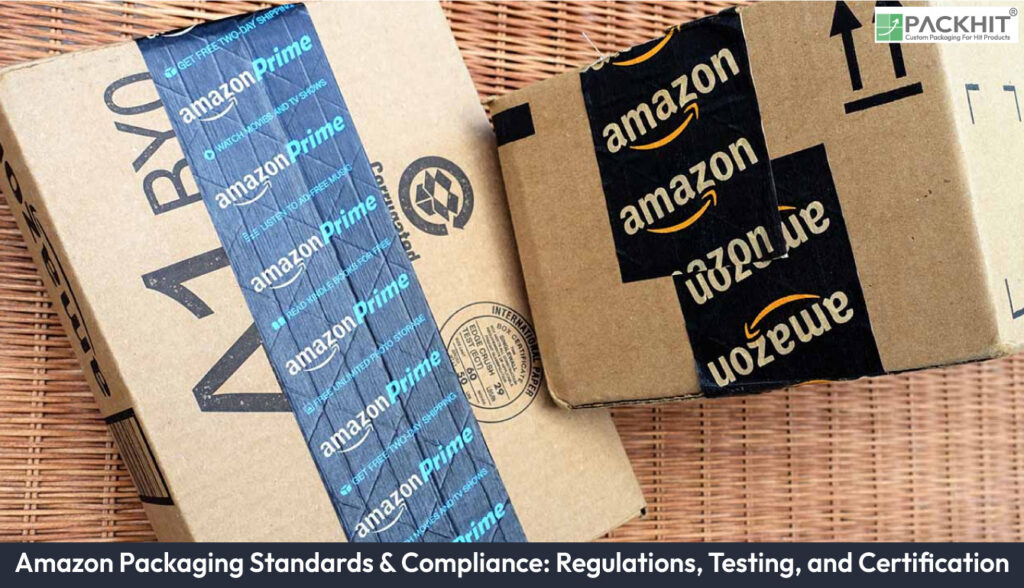
Amazon’s packaging standards set requirements related to sustainability, functionality, and customer experience. These standards include the Frustration-Free Packaging (FFP) program, which categorizes packaging into three tiers: Frustration-Free Packaging, Ships in Own Container, and Prep-Free Packaging. Each tier aims to improve logistics and reduce excess packaging. Compliance may involve environmental laws, product-specific regulations, labeling requirements, and packaging testing, depending on the product and marketplace. Testing and material evaluation can help validate packaging suitability, while certification or approval requirements vary by program and packaging type. Manufacturers can support compliance by working with approved testing resources, selecting suitable materials, conducting regular quality checks, optimizing packaging for logistics, and training teams on applicable requirements.
This page provides general guidance rather than a dated compliance verification. Amazon program rules, test methods, submission procedures, eligibility conditions, laws, and enforcement practices can change. Confirm the current Amazon requirements, applicable regulations, testing protocol, certification scope, and destination-market rules before approving artwork, ordering materials, testing samples, or shipping production units. Record the verification date, source version, product identifier, package revision, and marketplace in the compliance file.
- What are Amazon’s Packaging Standards?
- 1. Frustration-Free Packaging (FFP, Tier 1)
- 2. Ships in Own Container (SIOC, Tier 2)
- 3. Prep-Free Packaging (PFP, Tier 3)
- What Regulations Govern Amazon Packaging Compliance?
- How is Packaging Tested for Amazon Packaging Compliance?
- Certification Process for Amazon Packaging Compliance
- 1. Design Submission
- 2. Testing and Validation
- 3. Certification Approval
- Which Amazon Packaging Certifications are Required for Compliance?
- What are the Consequences of Non-Compliance with Amazon’s Packaging Standards?
- How Can Manufacturers Reduce Amazon Packaging Compliance Risk?
What are Amazon’s Packaging Standards?
Amazon’s packaging standards set requirements for packaging design, materials, product protection, labeling, and preparation within Amazon’s fulfillment network. The requirements address package dimensions, strength, opening methods, recyclability, and the preparation required before shipment. The applicable criteria depend on the product category, package configuration, destination marketplace, and current Amazon program rules. A manufacturer must distinguish the retail package, the shipping package, and any overbox used in the fulfillment path.
1. Frustration-Free Packaging (FFP, Tier 1)
Frustration-Free Packaging reduces unnecessary packaging and supports opening without tools. The package uses materials and construction that protect the product while limiting plastic film, wire ties, and other difficult-to-remove components. Recyclability depends on the material combination and the rules in the relevant marketplace. Manufacturers must confirm whether the proposed paperboard, corrugated fiberboard, coatings, inks, adhesives, and plastic components meet the current program criteria. A fiber-based package can still raise review questions when coatings, windows, labels, laminated layers, or mixed-material inserts affect collection or processing.
2. Ships in Own Container (SIOC, Tier 2)
Ships in Own Container packaging allows an eligible product to ship in its own package without an additional overbox. The package must withstand the handling, stacking, vibration, compression, and drop conditions associated with the intended fulfillment path. Removing an overbox can reduce material use, but it places greater demands on the primary shipping container, printed labels, closure system, and product cushioning. Exposed surfaces require attention because scuffing, punctures, crushed corners, and label damage can occur without a second shipping carton.
3. Prep-Free Packaging (PFP, Tier 3)
Prep-Free Packaging arrives at the fulfillment center without routine extra preparation. The packaging configuration limits tasks such as bubble wrapping, taping, bagging, or adding protective labels. The exact preparation rules depend on the product, its risk profile, and Amazon’s current fulfillment instructions. A manufacturer must confirm the approved configuration before treating a package as prep-free. Small loose parts, sharp edges, leakage risk, exposed product surfaces, and weak closures can change the preparation decision.
Meeting a packaging tier can reduce repacking work and packaging waste, but certification does not replace product-safety, transportation, environmental, or labeling obligations. Manufacturers remain responsible for checking requirements that apply to the product and the shipment destination. Treat each tier as a defined package-and-fulfillment qualification, not as a general certificate for the company or all products.
What Regulations Govern Amazon Packaging Compliance?
Amazon packaging compliance combines Amazon policies with laws and standards that apply to the product, material, shipment, and destination. No single regulation covers every package sold through Amazon. A U.S. manufacturer must identify the applicable federal, state, local, and destination-market requirements before selecting materials or approving artwork. The review must also identify whether the package contacts food, contains a regulated substance, accompanies a battery, or carries a product with special handling instructions.
1. Environmental Regulations
Environmental obligations can cover packaging waste, recycled content, material restrictions, labeling, and producer responsibility. Examples include state packaging laws in the United States and packaging-waste rules in other jurisdictions. Requirements differ by location and can change. Do not treat a general reference to an EPA guideline or the European Union Packaging and Packaging Waste Directive as proof that a specific package complies with every applicable rule. Check the current law, effective date, covered materials, reporting party, threshold, and destination before making a recycled-content, recyclable, compostable, or reduced-waste claim.
2. Product-Specific Regulations
Product-specific rules can apply to food-contact packaging, pharmaceuticals, cosmetics, children’s products, batteries, chemicals, and electronics. Food-contact materials, for example, may require a review under applicable FDA requirements. Hazardous products can require prescribed markings, closures, documentation, and transport packaging. Electronics may require controls for static discharge or physical damage. The product classification determines which obligations apply. Review the complete bill of materials, including inks, coatings, adhesives, labels, inserts, and protective films, when a substance or contact restriction applies.
3. Labeling and Documentation
Packaging labels can identify the product, shipment, handling condition, recycling information, warnings, country of origin, and regulated contents. Requirements vary by product and destination. Check barcode quality, label placement, required symbols, language, documentation, and Amazon fulfillment instructions before printing. Incorrect or missing information can cause receiving problems, relabeling, shipment holds, or marketplace action. Any statement about fines, delisting, account-health effects, or other penalties depends on the applicable authority, contract, current Amazon policy, and enforcement process. Do not present a specific penalty as a fixed consequence without a current source and defined jurisdiction.
How is Packaging Tested for Amazon Packaging Compliance?
Packaging is tested against the hazards expected during storage, fulfillment, and delivery. A test plan can examine drops, compression, vibration, shocks, climatic exposure, package dimensions, product movement, opening effort, and material performance. Amazon program requirements determine which tests apply to a specific package. Test the complete packaged product, including the production-intent materials, closure method, labels, inserts, and accessories that affect weight or movement.
ISTA Testing
ISTA procedures, including an applicable Amazon-specific protocol when required, can simulate distribution hazards such as drops, compression, and vibration. The laboratory must use the current procedure and the correct test sequence for the product and package. Test scope depends on package size, weight, fragility, shipping method, and fulfillment channel. A test report does not by itself establish compliance with every Amazon requirement or law. Confirm the procedure number, revision, laboratory status, sample quantity, conditioning requirements, acceptance criteria, and report scope before testing.
Material Analysis
Material analysis checks characteristics such as basis weight, thickness, tensile strength, tear resistance, compression performance, moisture response, coating composition, adhesive behavior, and recycled or restricted substances. For paper-based packaging, the review can include corrugated board grade, flute profile, fiber composition, inks, coatings, and closures. Biodegradability claims require defined test methods and claim language; recyclability depends on the material design and available collection systems. Retain supplier specifications and incoming-material records so the tested package can be compared with production batches.
Usability Testing
Usability testing measures opening effort, tool requirements, tear-strip performance, access to the product, loose components, and the amount of waste produced during opening. These results support an FFP assessment when the package is submitted under the applicable program criteria. The manufacturer must also confirm that easier opening does not reduce tamper evidence or product protection. Record the test sample, opening method, observed hazards, and any design change made after the review.
Certification Process for Amazon Packaging Compliance
The certification process generally includes package design review, testing, documentation, and program submission. The exact workflow, laboratory eligibility, fees, and approval period depend on Amazon’s current requirements and the product’s intended marketplace. Treat a certification record as time- and scope-sensitive. Reconfirm it if the product, package, fulfillment route, or applicable program changes.
1. Design Submission
Manufacturers prepare packaging drawings, dimensions, bill of materials, product weights, closure details, label artwork, photographs, and material documentation. The submission must identify the package configuration that Amazon will evaluate. Keep revision records because a change to board grade, coating, insert, adhesive, dimensions, or closure can affect test results. Include the marketplace, fulfillment path, product identifier, sample description, and date of the specification used for the submission.
2. Testing and Validation
The package undergoes the required tests through an approved or otherwise accepted testing provider. The manufacturer reviews failures, corrects the design, and repeats the applicable tests. Use the current Amazon instructions and the current ISTA procedure, if Amazon requires ISTA testing for the submission. A passed test applies to the tested configuration; it does not automatically cover a substitute board, changed dimensions, revised product weight, or different closure.
3. Certification Approval
After the submission passes the applicable review, Amazon records or approves the packaging qualification for the relevant program and product configuration. Approval applies only within its stated scope. It does not automatically cover a different size, material, product, marketplace, or shipping configuration. Save the approval record, test report, package drawing, bill of materials, and verification date together.
Which Amazon Packaging Certifications are Required for Compliance?
Amazon Packaging Certification requirements depend on the product, package, fulfillment path, and current Amazon program rules. The three commonly referenced tiers are Frustration-Free Packaging (FFP), Ships in Own Container (SIOC), and Prep-Free Packaging (PFP). Manufacturers must confirm whether Amazon requires, permits, or does not currently recognize a specific tier for the product. Amazon requirements, testing pathways, and enforcement consequences can change, so confirm the current criteria for the relevant product, marketplace, and jurisdiction before relying on this overview.
Choose FFP when opening effort, excess components, and material recovery are the primary review points. Confirm that the complete package protects the product and satisfies the current material and opening criteria. FFP is a package-design qualification, not a general approval for every paperboard or corrugated format.
Choose SIOC when the product package must travel without an overbox. Verify the package dimensions, weight, closure, exposed surfaces, labels, cushioning, and distribution-test sequence for the intended fulfillment path. A package that works as a retail carton can require structural changes before it functions as its own shipping container.
Choose PFP when the fulfillment configuration must arrive without routine extra preparation. Review product-specific risks, including loose parts, sharp edges, leakage, exposed surfaces, and weak closures. PFP status depends on the approved product-and-package combination, not on the use of paper-based materials alone.
Use a configuration review before selecting a tier. Record five decision inputs: product identifier, package dimensions and weight, material bill of materials, fulfillment route, and destination marketplace. Then compare the package with Amazon’s current program criteria and the applicable transportation, product-safety, environmental, and labeling rules. A single product can require different evaluations after a size change, material substitution, package redesign, marketplace change, or fulfillment-route change.
Each tier addresses a different combination of packaging waste, transit protection, fulfillment labor, and opening requirements. Certification does not remove the manufacturer’s responsibility for applicable product, environmental, labeling, and transport rules. Recheck the program status when the marketplace, product version, package dimensions, material specification, or fulfillment route changes. A documented review date, current source record, and configuration-controlled package specification provide the clearest basis for an Amazon packaging compliance decision.
What are the Consequences of Non-Compliance with Amazon’s Packaging Standards?
Non-compliant packaging can create financial, operational, product-quality, and reputational problems. The exact consequence depends on the product category, Amazon program, selling market, shipment route, and requirements in force on the date of review. Amazon packaging requirements and enforcement practices can change, so confirm the applicable program documentation before treating any consequence as a current rule.
- Financial charges: Applicable Amazon program terms may specify fees, reimbursement adjustments, or other charges for packaging that fails a stated requirement. The amount and trigger depend on the product, fulfillment method, market, and documented violation.
- Marketplace restrictions: A product that does not meet an applicable packaging or labeling requirement may face shipment delays, listing restrictions, or removal from sale under the relevant Amazon program. Verify the current enforcement language before making a delisting claim.
- Transit damage: Weak paperboard, inadequate cushioning, open seams, or incorrect package dimensions can increase crushing, tearing, moisture exposure, and product loss during handling. These failures can raise returns, replacements, customer complaints, and inspection costs.
- Environmental non-alignment: Packaging that conflicts with an applicable material, recyclability, or waste requirement can create compliance and customer-perception problems. Requirements differ by market and program, so manufacturers must check the current environmental criteria for the intended sales channel.
Before production, retain the package specification, material composition, dimensions, test records, labeling review, and approval evidence. Recheck those records against the current Amazon documentation for the product and destination market. This verification step separates confirmed packaging requirements from possible consequences that depend on program terms or later policy changes.
How Can Manufacturers Reduce Amazon Packaging Compliance Risk?
Manufacturers reduce Amazon packaging compliance risk by verifying requirements before design approval, testing, production, and shipment. A documented review should identify the product classification, target marketplace, fulfillment route, package configuration, applicable laws, Amazon instructions, test protocol, laboratory status, and approval evidence. Assign an owner to each requirement and close open findings before production release.
- Confirm scope: Identify the selling marketplace, fulfillment route, product category, package dimensions, package weight, shipping hazards, and regulated materials. Check whether the package enters an Amazon fulfillment program with separate preparation, labeling, or testing conditions.
- Control materials: Keep supplier specifications, bills of materials, and declarations for paperboard, corrugated fiberboard, coatings, inks, adhesives, plastics, and recycled content. Record the board grade, basis weight, coating type, recycled percentage, and supplier revision for each production component.
- Review sustainability claims: Select recyclable paper-based components when the applicable market and product requirements permit them. Confirm fiber claims, recycled-content statements, coatings, laminations, and material combinations against relevant labeling and environmental rules. A recyclable claim depends on the actual material combination and the collection rules in the target market.
- Validate artwork: Check barcodes, warnings, recycling marks, handling symbols, languages, country-specific information, and required product identifiers before printing. Scan production-intent barcodes at the intended size and contrast if the package uses machine-readable identification. Keep the approved artwork file with its revision and package version.
- Test the final package: Submit production-representative samples to an APASS-recognized or otherwise qualified testing provider, according to the applicable Amazon protocol and product category. Test the complete shipping configuration, including the outer carton, inserts, closures, labels, and protective materials. A change in board grade, insert, closure, adhesive, or dimensions can invalidate earlier results, so compare every change against the approved test configuration.
- Audit operations: Review incoming materials, artwork revisions, line clearance, barcode application, carton sealing, pallet preparation, and shipment records at defined intervals. Investigate failed inspections and quarantine affected stock before shipment.
- Train personnel: Give design, purchasing, quality, production, and shipping staff written instructions for material control, artwork release, testing, labeling, and deviation handling. Update the instructions after a requirement, supplier, package, or fulfillment route changes.
- Maintain records: Retain test reports, certificates, approvals, drawings, bills of materials, revisions, inspection results, and supplier documentation for the period required by the applicable program or law. Link each record to the package version and production lot so the shipped configuration can be traced.
Verify current Amazon requirements and applicable regulatory obligations with Amazon and a qualified compliance professional or approved testing provider before acting. Requirements can change, and non-compliant packaging can lead to rework, relabeling, shipment delays, added preparation, product damage, removal from a fulfillment program, or other marketplace and regulatory consequences. Release packaging only after the documented review, required testing, and corrective actions are complete.