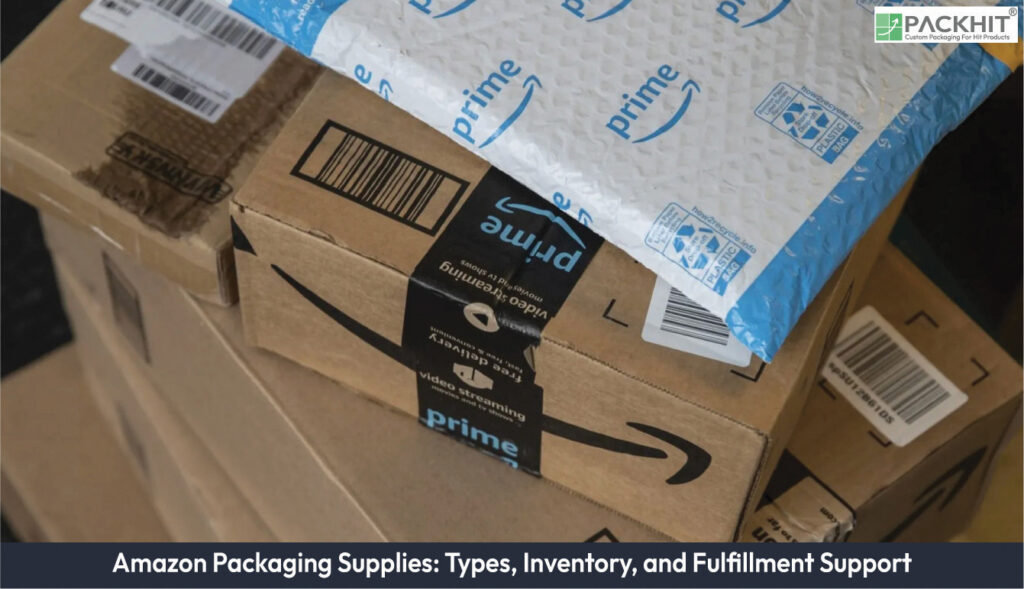
Amazon Packaging Supplies covers the materials used to pack, protect, and prepare products for e-commerce fulfillment. Common options include corrugated boxes, padded envelopes, air pillows, kraft paper, stretch film, poly bags, and temperature-controlled packaging. Selection depends on product size, protection needs, shipment conditions, packaging requirements, and applicable Amazon programs such as Frustration-Free Packaging (FFP). Manufacturers should also check current requirements for labeling, testing, materials, and packaging preparation before production, as these can vary by product and program.
- Types of Amazon Packaging Supplies
- Corrugated Boxes
- Bubble Wrap
- Padded Envelopes
- Air Pillows
- Kraft Paper
- Stretch Film
- Shrink Wrap
- Poly Bags
- Packaging Tape
- Temperature-Controlled Packaging
- How is Packaging Inventory Managed for Amazon Packaging Supplies?
- What Fulfillment Support Mechanisms are Available for Amazon Packaging Supplies?
- Frustration-Free Packaging (FFP)
- Shipment Data and Preparation Checks
- Automated Packaging Measurement
- Damage Minimization Protocols
- Verification and Recordkeeping
- How Do Manufacturers Benefit from Using Amazon Packaging Supplies?
Types of Amazon Packaging Supplies
Packaging supplies used for Amazon fulfillment include 10 practical categories: corrugated boxes, bubble wrap, padded envelopes, air pillows, kraft paper, stretch film, shrink wrap, poly bags, packaging tape, and temperature-controlled materials. This classification describes supplies used to pack products for Amazon-related shipping; it does not mean that Amazon supplies, owns, or sells every item. The manufacturer, seller, contract packer, packaging supplier, or fulfillment provider may purchase and manage the materials. The correct choice depends on product weight, dimensions, breakage risk, moisture exposure, transit temperature, and the selected fulfillment channel. Availability, supplier lead times, and Amazon packaging requirements can change by program, product, marketplace, and demand period, so confirm current instructions before setting purchase quantities or releasing a package design.
Corrugated Boxes
Corrugated boxes use a fluted paper layer between linerboards to resist compression and puncture. Select the board grade, box dimensions, and closure method from the product weight and expected handling conditions. Box size also affects void space, dimensional weight, and the quantity of cushioning material. Packaging suppliers or fulfillment operators may provide these cartons, but their use for Amazon fulfillment does not establish an Amazon-supplied relationship. Some Amazon packaging programs use separate testing or certification criteria, so do not treat a standard corrugated carton as automatically compliant with Frustration-Free Packaging requirements. Confirm the applicable package-test method and current program criteria before production.
Bubble Wrap
Bubble wrap cushions fragile products against impact and vibration. Choose the bubble diameter, film thickness, and wrap layers according to the product’s surface sensitivity and breakage risk. It can protect glass, ceramic, and finished surfaces, but it does not replace a box that resists compression or a package test that applies to a specific program. Bubble wrap used for Amazon fulfillment can come from a third-party supplier or a fulfillment provider; the category alone does not show that Amazon supplies it.
Padded Envelopes
Padded envelopes combine an outer paper or plastic layer with a cushioning lining. Use them for flat or small products that do not require rigid protection, such as soft goods, documents, or low-risk accessories. Check the finished package for abrasion, seal strength, barcode placement, and dimensional limits before assigning it to a fulfillment method. The packing party remains responsible for confirming the envelope specification unless a written program or service agreement assigns that task elsewhere.
Air Pillows
Air pillows fill empty space and limit product movement inside a shipping carton. Their performance depends on film thickness, seal quality, inflation pressure, and exposure to temperature changes. Confirm the required recyclability and disposal instructions for the destination market, because material acceptance can vary by jurisdiction and program. Air pillows are a void-fill material used in fulfillment packaging, not evidence that Amazon owns or distributes the packaging stock.
Kraft Paper
Kraft paper wraps products and fills voids without adding plastic film. Paper weight, crumple pattern, and fill volume affect cushioning and movement control. Use enough paper to prevent contact between the product and carton walls, then verify that the selected paper meets applicable material, recycling, or packaging-program requirements. A manufacturer can buy the paper directly, place it with a contract packer, or receive packing service under a fulfillment agreement.
Stretch Film
Stretch film holds cartons or unit loads together during pallet storage and transport. Film gauge, stretch ratio, wrapping pattern, and load weight determine containment strength. It belongs to secondary or tertiary packaging in most shipping operations and does not replace the product-level packaging required for individual customer orders. Its presence in an Amazon-bound shipment identifies a transport use, not a supply relationship with Amazon.
Shrink Wrap
Shrink wrap is a plastic film that contracts around a product or bundle after controlled heat is applied. It can group multiple units and add a tamper-evident layer, but the film type, gauge, perforation, and heat process must match the product. Confirm whether the selected packaging method satisfies current labeling, ventilation, recycling, and safety rules for the applicable fulfillment route. Packaging used for Amazon fulfillment may be supplied by a manufacturer or third-party vendor; describe it as Amazon-supplied only when current documentation establishes that relationship.
Poly Bags
Poly bags enclose small products, loose components, and sets to limit dust and loss during handling. Bag thickness, closure type, dimensions, and labeling depend on the product and fulfillment route. A suffocation warning, barcode placement, or sealed-bag requirement can apply in particular cases, so verify current instructions rather than assuming that every transparent resealable bag is accepted. A poly bag used for Amazon fulfillment is not automatically an Amazon-provided material.
Packaging Tape
Amazon packaging tape closes corrugated cartons and reinforces seams. In this article, the term refers to tape used for Amazon fulfillment, not to tape necessarily manufactured, sold, or distributed by Amazon. Select tape by adhesive type, width, backing material, and application temperature. Apply enough tape to maintain the seal through expected handling, then inspect adhesion and barcode readability if labels are placed near the closure.
Temperature-Controlled Packaging
Temperature-controlled packaging combines insulated liners, gel packs, dry ice, or other thermal components to keep perishable goods within a specified temperature range. The required configuration depends on the product’s allowable exposure time, starting temperature, shipping duration, and carrier conditions. Food, pharmaceutical, and other regulated products can carry additional packaging, marking, and transport requirements that Amazon packaging guidance alone does not define. Confirm the responsible supplier, pack-out owner, and carrier conditions before assigning the materials to an Amazon fulfillment route.
These materials address different failure modes: crushing, impact, abrasion, product movement, moisture, tampering, and temperature change. Manufacturers can compare the package against product specifications, transit tests, material rules, and the current requirements for the selected Amazon channel. A packaging choice is not Amazon-compliant solely because it appears in a general supply category. The phrase “Amazon packaging supplies” therefore describes a use context unless a source or agreement expressly identifies Amazon as the supplier, owner, or program administrator.
How is Packaging Inventory Managed for Amazon Packaging Supplies?
Packaging inventory for Amazon fulfillment is managed through demand forecasts, stock counts, reorder points, supplier lead times, and production schedules. Amazon-specific inventory behavior depends on the relationship between the manufacturer, seller, vendor, fulfillment provider, and Amazon program. Public descriptions do not establish that every supplier receives real-time packaging data or uses the same warehouse integration. Availability and replenishment timing can also change during demand surges, seasonal peaks, supplier disruptions, or program changes. Product inventory held in an Amazon facility and packaging inventory owned by a manufacturer are separate records unless an agreement combines them.
Stock Monitoring
Stock monitoring records quantities for cartons, protective materials, labels, and thermal components at each storage location. A manufacturer can set reorder points from average consumption, supplier lead time, safety stock, and seasonal demand. FBA inventory tools track sellable product inventory, but that fact alone does not prove direct visibility into a manufacturer’s packaging stock. Recheck counts when product dimensions, order volume, packaging specifications, or the fulfillment route changes.
Supplier-Managed Replenishment
A supplier-managed replenishment arrangement assigns stock review and reorder tasks to the packaging supplier. The parties define ownership, storage location, minimum quantity, replenishment trigger, delivery window, and shortage response in a written agreement. The term Vendor-Managed Inventory does not indicate that Amazon provides or requires this arrangement for every packaging supplier. Confirm the agreement’s active service levels and review dates before relying on supplier-held stock or stock stored at an Amazon-related facility.
Just-in-Time Replenishment
Just-in-time replenishment schedules packaging deliveries close to the planned production or packing date. The method reduces stored stock but increases exposure to supplier delays, transport interruptions, forecast errors, and seasonal demand. Keep a documented safety quantity for materials with long lead times or limited substitutes. Confirm current supplier lead times before linking a reorder point to an Amazon demand forecast.
What Fulfillment Support Mechanisms are Available for Amazon Packaging Supplies?
Fulfillment support for packaging used in Amazon shipments can include packaging instructions, shipment data exchange, product preparation checks, testing, and warehouse process controls. The applicable mechanism depends on the account type, product category, fulfillment route, marketplace, and active Amazon program. Advanced Shipment Notification (ASN), Frustration-Free Packaging (FFP), and Automated Packaging Measurement Systems (APMS) are program-specific references, not universal services available to every manufacturer. Confirm the current documentation, account permissions, and effective date before treating any mechanism as an active requirement. These mechanisms describe support or controls around Amazon fulfillment; they do not by themselves show that Amazon supplies the packaging materials.
Frustration-Free Packaging (FFP)
Frustration-Free Packaging is an Amazon packaging program with its own qualification and packaging criteria. In general, participating packaging reduces unnecessary material and allows easier opening while protecting the product. Confirm the current certification path, test method, labeling rules, eligible product conditions, and marketplace scope before using the FFP name in specifications or marketing copy.
Shipment Data and Preparation Checks
Shipment data and preparation checks connect product identification, carton contents, labels, and delivery information. An ASN may form part of a particular vendor or logistics workflow, but its required fields, timing, and transmission method depend on the governing agreement or system. Keep carton records consistent with the physical shipment and retain the submitted data for audit review.
Automated Packaging Measurement
Automated packaging measurement can record package dimensions, weight, and related handling data for packing or shipping decisions. The equipment, measurement tolerance, and business use are not established for every Amazon shipment by the general term APMS. Verify the system name, access conditions, measurement rules, and current documentation before attributing a specific measurement process to Amazon.
Damage Minimization Protocols
Damage minimization uses package specifications, closure checks, drop or vibration testing, compression assessment, and temperature review when those tests apply to the product and shipping route. Test conditions must state the package configuration, product mass, test sequence, acceptance criteria, and record owner. General references to Amazon drop testing or temperature tolerance do not replace the current instructions for a particular program.
Verification and Recordkeeping
Verify Amazon-specific claims against current seller, vendor, packaging-program, or logistics documentation before production release. Record the document title, access date, applicable marketplace, product category, packaging revision, and approving person. Recheck the requirements after a material change, fulfillment-channel change, or program update. Where no current source confirms an operational detail, describe it as general packaging guidance rather than as an Amazon requirement.
Manufacturers can reduce packaging risk by separating three questions: does the package protect the product, does it meet the material and labeling rules for the shipment, and does the selected Amazon program accept the configuration? Availability, fulfillment processes, and packaging requirements can vary by Amazon program, product, and demand period. Confirm the applicable current requirements and lead times before planning inventory or packaging. Unless documentation states otherwise, use “packaging supplies used for Amazon fulfillment” to distinguish the use of the materials from an Amazon-supplied product relationship.
How Do Manufacturers Benefit from Using Amazon Packaging Supplies?
Packaging choices can support fulfillment, product protection, cost control, and sustainability goals. Manufacturers should compare material specifications, pack-out dimensions, order volumes, and total packaging cost against current Amazon requirements.
- Scalability during peak seasons: Set reorder points based on supplier lead times and forecasted demand. Record package dimensions, weight, material grade, and case quantities for each SKU, and keep approved substitutes available where supply risk exists.
- Checking Amazon packaging requirements: Confirm current packaging, labeling, prep, and fulfillment rules for each product and shipment method. Verify carton dimensions, barcode placement, closure methods, and protection requirements before production.
- Reducing damage and packaging waste: Test packaging under relevant shipping conditions and compare pack-out options by material use, internal clearance, assembly time, damage rates, and disposal instructions.
- Managing cost and inventory: Calculate total packaging cost, including materials, printing, storage, labor, freight, damage, and disposal. Track supplier, part number, material grade, minimum order quantity, lead time, stock level, reorder point, and approved substitutes.
- Supporting sustainability reporting: Track material weight, recycled content, reuse, and disposal instructions. Verify current requirements before making claims about named Amazon programs, and use measurable, supplier-supported characteristics where applicable.
A specification-based review gives purchasing, production, and compliance teams a consistent basis for approving packaging supplies.