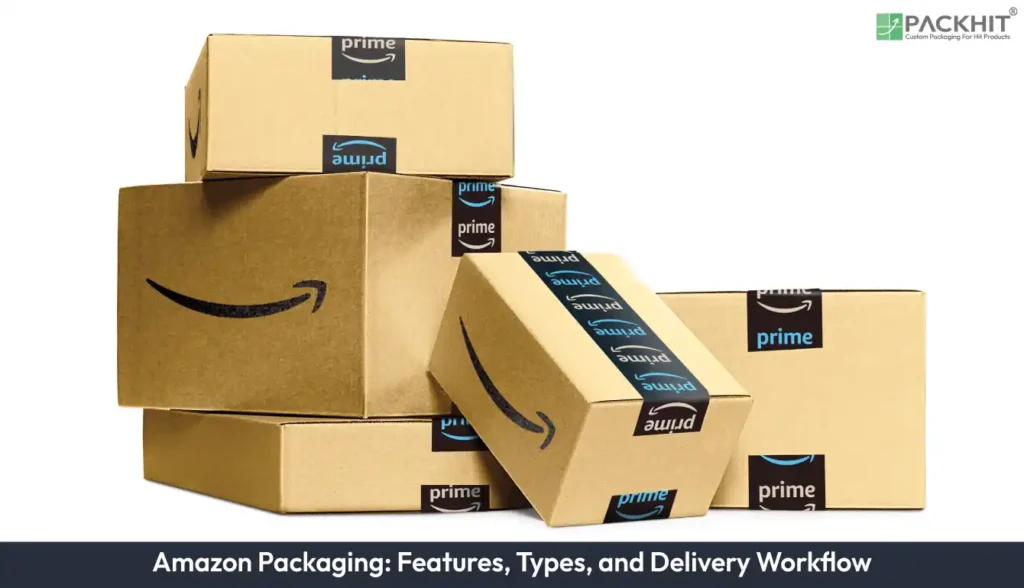
Amazon packaging is the packaging system used to protect products, manage material use, and support efficient delivery. It focuses on durable protection, practical material choices, consistent package dimensions, easy opening, and clear labeling for automated handling. Amazon packaging includes Frustration-Free Packaging, Prep-Free Packaging, and Standard Packaging, with common materials such as corrugated cardboard, paper-based mailers, and LDPE polybags.
Packaging decisions are influenced by the product’s size, weight, fragility, and shipping requirements. Amazon’s fulfillment process uses these factors to support efficient packing, sorting, and delivery while reducing unnecessary packaging. For manufacturers, meeting these requirements can simplify fulfillment, improve product protection, and support compliance with Amazon’s packaging standards.
- What is Amazon Packaging?
- Which Key Features Define Amazon Packaging?
- How are Amazon Packaging Types Classified?
- What Materials Does Amazon Use in Packaging?
- How Does Amazon’s Delivery Workflow Optimize Packaging?
- Sustainability Initiatives in Amazon Packaging
- How Much Does Amazon Packaging Cost?
- How to Request Packaging from Amazon?
- Common Packaging Failure Modes (and How to Prevent Them)
- How Does Amazon Packaging Impact Manufacturers?
What is Amazon Packaging?
Amazon packaging is the complete packaging system used for items sold on Amazon. It covers the outer carton or mailer, the protective inner materials, and the closure method from the moment the shipment leaves fulfillment until delivery handoff. Amazon aligns packaging decisions with item size, fragility risk, and destination so the shipment arrives intact and scans cleanly through sorting and last-mile processing.
The system follows three operational constraints: transit protection, reduced packaging material mass per order, and clear, repeatable handling for warehouse teams and delivery carriers. Common implementations include carton designs that stack predictably, tamper-evident features that lower the risk of accidental opening, and label areas positioned for automated scanning in high-throughput equipment. Amazon also targets measurable packaging waste reduction as part of its stated net-zero carbon direction for 2040, using right-sizing and fewer void-filling components.
Which Key Features Define Amazon Packaging?
Amazon packaging includes specific features that support safe transit, predictable handling in fulfillment, and customer-friendly opening. Each feature maps to manufacturing constraints and carrier handling behavior.
- Impact protection: Corrugated cartons and padded mailers limit movement during drops. Reinforced corners, crush-resistant panels, and snug inserts reduce edge impacts and scuffing.
- Closure security: Tamper-evident tape, locked flap geometry, and controlled closure points reduce accidental opening. Secure seals protect product integrity at delivery.
- Material reduction: Right-sized cartons reduce space, which lowers the amount of void fill. Fewer filler components also reduce packaging mass while keeping protection requirements for the product category.
- Recyclability controls: Paper-based cushioning and carton structures support recycling pathways. Adhesive and ink selections also matter because they change separation behavior during processing.
- Stack stability: Consistent outer dimensions support stable stacking during packing and trailer loading. Stable geometry reduces deformation in mixed-load shipments.
- Customer-frustration reduction: Frustration-Free Packaging designs reduce extra layers and simplify opening. That approach lowers the amount of mixed-material packaging customers must separate.
- Automation readability: Machine-readable labels and barcodes include quiet zones and consistent placement. Clear scan zones support sorting accuracy and reduce misrouting risk.
For manufacturers, these features translate into repeatable outcomes. Transit damages drop when movement is controlled. Fulfillment throughput improves when packaging dimensions and label placement match warehouse workflow.
How are Amazon Packaging Types Classified?
Amazon uses three main packaging classifications: Frustration-Free Packaging (FFP), Prep-Free Packaging (PFP), and Standard Packaging. Each category reflects a different readiness level and a different protection requirement.
Frustration-Free Packaging (FFP)
Frustration-Free Packaging (FFP) removes unnecessary outer layers so customers can access the product with minimal effort and without tools. FFP uses simplified material types that support easier recycling. This category fits items that ship securely with limited additional protective shells, such as many books and common household goods when the inner product protection is already adequate.
Prep-Free Packaging (PFP)
Prep-Free Packaging (PFP) applies when the product ships in packaging that already meets Amazon shipping standards. Amazon fulfillment can process the unit with fewer secondary materials because the manufacturer-ready pack keeps structure during transit. This classification reduces the amount of secondary cardboard and lowers the void-fill volume when the original pack controls movement.
Standard Packaging
Standard Packaging covers shipments that require extra protection or extra components for transit stability. It includes corrugated shipping cartons, padded mailers, and protective polybags depending on the item. Standard Packaging fits variability in weight, fragility, and shapes because inserts and corner protection can be added where needed to prevent corner impacts.
What Materials Does Amazon Use in Packaging?
Amazon packaging materials focus on strength-to-weight behavior, protection during drops and compression, and end-of-life recyclability. The most common choices include corrugated cardboard for cartons, padded mailers for small or light goods, and polybags made from low-density polyethylene (LDPE) for lightweight non-fragile shipments.
Secondary material choices support labeling performance and protection. Water-based adhesives and soy-based inks support recyclability targets by reducing hard-to-separate components in sorting and material recovery. Amazon also evaluates alternative formats such as mushroom-based packaging and compostable bioplastics for specific use cases. For manufacturers requesting paper-based options, recyclable paper structures and compatible coatings help meet packaging requirements without adding mixed-material complexity.
How Does Amazon’s Delivery Workflow Optimize Packaging?
Amazon’s delivery workflow selects packaging requirements through a step-by-step process. Each stage passes item attributes to the next decision so teams pack the right box or mailer and apply the correct protection level for the item.
- Product intake: Fulfillment centers receive inventory and scan it. Systems classify items by size, weight, fragility risk, and destination zone.
- Packaging type selection: Eligibility rules and automated decision logic assign a classification such as FFP, PFP, or Standard Packaging based on the item’s protection needs.
- Right-fit packing: Packers select cartons or mailers sized to limit space. Inserts, corner protection, or cushioning is added when movement control prevents edge impacts.
- Sealing and security: Closures complete secure flap engagement or tamper-evident tape placement. This reduces accidental opening and supports consistent scan performance at downstream checkpoints.
- Automated labeling: Machine-readable labels and barcodes are applied or verified. Label placement supports scanning through sortation equipment and reduces manual rework.
- Sorting and load planning: Conveyors and robotic systems route packages by destination. Stable outer cartons reduce deformation during high-throughput loading and unloading.
- Real-time tracking: Tracking events update during each handoff. Accurate scan points support delivery timing and reduce customer service workload tied to exception handling.
- Waste and material optimization: Packaging designs aim for fewer layers and optimized material usage. Recyclable components and reduced void fill lower total packaging mass per order.
For manufacturers, the workflow links packaging design to measurable operational results. Packaging that matches the decision rules reduces transit failures, reduces sortation delays from readable labels, and lowers material weight when right-sized options apply.
Sustainability Initiatives in Amazon Packaging
Amazon uses packaging rules and certifications to reduce waste across the inbound and outbound flow. The manufacturer-facing initiatives that most often affect paper-based packaging choices are:
- Frustration-Free Packaging Program: Packaging opens with minimal effort and ships with fewer protective layers. The program focuses on reducing void fill and excess outer wrap, then targets 100% recyclability where local facilities support it.
- Compact by Design Certification: Certified packaging reduces air space and uses carton geometry to lower outer dimensions. Each shipment packs more sellable units per truckload, which changes carton size and dunnage volume decisions.
- Single-Use Plastics Phase-Out: Amazon replaces common plastic components with renewable and recyclable material types. Typical swaps include replacing plastic film and switching to paper-based or recyclable cushioning inserts.
- Climate Pledge Friendly Program: Products that meet higher sustainability criteria receive visibility cues in fulfillment. Manufacturers align material selection and process controls with documented environmental requirements.
- Renewable Material Integration: Amazon supports paper-based designs that use water-based adhesives, soy-based inks, and compostable bioplastics in eligible components. Examples include water-based glue for carton assembly and compostable internal wraps for select items.
- Net-Zero Carbon Goals: Packaging requirements connect to Amazon’s net-zero target by 2040. Packaging decisions focus on material reduction and freight efficiency because shipping volume drives transport emissions.
How Much Does Amazon Packaging Cost?
Amazon packaging costs vary by product dimensions, unit weight, and the packaging class you request. For standard-size items, manufacturers often see direct packaging spend around $0.50 to $2.00 per unit, depending on carton strength, cushioning type, and whether the design supports frustration-free opening.
Oversized and fragile categories typically cost more because they need higher-grade corrugation, corner protection, or extra cushioning. Those designs can also interact with fulfillment fee tiers, so the landed cost rises when package size pushes the shipment into a different tier.
How to Request Packaging from Amazon?
Requesting Amazon packaging ties packaging inputs to product specifications. Accurate inputs reduce rejection during review and reduce damage risk in transit. The request workflow generally follows these steps:
- Access the appropriate platform: Sign in to Amazon Seller Central or Vendor Central, then open the packaging resources section that matches your program type.
- Locate the packaging request form: Use the form under packaging guidelines or the resources tab. Review the packaging standards pages before entering product data.
- Provide detailed product specifications: Enter dimensions, weight, fragility notes, and special handling requirements. Add examples of what must not be stressed, such as glass faces or coated surfaces.
- Select the appropriate packaging type: Choose between Frustration-Free Packaging (FFP), Prep-Free Packaging (PFP), or Standard Packaging based on category and how the item ships inside a carton. Keep the choice consistent with the protection level required for the product.
- Attach supporting documentation: Upload product images, material or compliance documents, and packaging test results used internally.
- Submit the request: Send the completed form through the platform submission portal. Verify units of measure and carton orientation fields to avoid downstream misclassification.
- Await review and approval: Amazon reviews compatibility and may request packaging adjustments. If feedback changes the protection approach, update the packaging type and inputs before resubmission.
Correct packaging requests reduce packing errors at receiving and packing stations. They also improve customer-ready presentation by matching item size and protection needs to the selected program type.
Common Packaging Failure Modes (and How to Prevent Them)
Packaging failure during transit usually traces back to a protection mismatch, incorrect request data, or labeling and automation issues. The fixes below align with the Amazon packaging request workflow and the protection level decisions in FFP, PFP, and Standard Packaging.
- Impact damage: Cartons with insufficient cushioning show dents or cracked corners after drop events. Root cause is often under-rated corrugation strength or missing shock-absorbing inserts. Prevention uses the correct protection class for fragility and restrains the item with measured void fill.
- Crush and compression failure: Stacked cartons deform when box strength and stacking tolerance do not match the distribution profile. Symptoms include bowed sides and crushed internal packaging. Prevention selects carton grade for expected stacking loads and avoids oversized voids that allow shifting.
- Puncture and abrasion: Sharp edges penetrate thin wraps or tear paper cushioning. Symptoms include punctures, scuffs, and damage to coated surfaces. Prevention adds edge protection or switches internal cushioning type while keeping the outer carton within the same size constraints used in the request.
- Size and weight data errors: Incorrect dimensions, weight, or orientation in the request create the wrong fit inside the carton. Symptoms include excessive movement, weak closures, and higher return rates. Prevention uses consistent measurement methods for length, width, height, and net weight, then aligns dunnage volume to those exact values.
- Fragility handling mismatch: Treating a fragile item as standard causes seam and corner failures even when the carton appears intact. Symptoms include broken components inside the box. Prevention uses fragility notes in the request and selects a packaging type that matches that handling requirement.
- Label and automation misreads: Barcode or label placement issues slow scanning, create mis-sorts, or route items incorrectly during automation. Symptoms appear as delayed processing, repack events, or receiving exceptions at fulfillment centers. Prevention keeps label areas flat and unobstructed, follows label orientation rules from the request guidance, and avoids covering labels with tape or wrinkles.
- Closure or sealing inconsistency: Weak closure methods open cartons during handling. Symptoms include partially opened lids and missing internal components. Prevention uses closures aligned with the carton design, confirms adhesive type and application coverage, and reduces reliance on fragile single-point seals.
If the same SKU shows repeat damage patterns, update protection inputs first. Then adjust the packaging request inputs and, when needed, switch between FFP, PFP, and Standard Packaging to reduce mismatch risk between the item’s protection needs and the selected program.
How Does Amazon Packaging Impact Manufacturers?
Amazon packaging standards influence manufacturers by shaping protection methods, carton build choices, and how units move through US fulfillment. When packaging matches Amazon handling patterns, warehouses scan faster, and inbound shipments face fewer processing holds.
Standards change the upstream planning work. Carton size, closure style, cushioning type, and labeling placement determine whether items arrive ready for automated sort lanes or require manual relabeling. That reduces re-packing after receipt and shortens correction cycles during high-volume intake.
Shipping performance also depends on shipper construction. Lower internal voids limit product movement during transit, and stronger shipper walls reduce punctures and edge collapse for fragile or high-value SKUs.
- Frustration-Free Packaging alignment: Frustration-Free Packaging (FFP) reduces hard-to-open materials. Many manufacturers use right-sized paper-based cartons and cushioning that protect the item in transit while still allowing consumers to access the product with minimal tape removal.
- Ship-ready compliance checks: Amazon packaging rules cover how items are labeled and prepared for processing. When manufacturers follow labeling and carton-prep expectations, fewer units get held for inspection, which keeps sellable inventory timing closer to planned inbound schedules.
- Cost efficiency through standardized builds: Standard carton dimensions reduce mixed-size sorting labor and lower void fill requirements. Less secondary packaging also cuts material purchases and disposal work, especially when paper-based structures match the product category and required cushioning.
- Packaging and sustainability targets: Amazon’s net-zero carbon goal for 2040 includes packaging-related efforts. Manufacturers that reduce material weight, remove unnecessary layers, and use paper-based designs can align cost control with carbon reduction by cutting excess packaging mass.
- Fewer fulfillment issues: Packaging that controls movement and protects corners lowers receiving problems such as crushed cartons, broken components, and damaged labels. Those failures trigger downstream replacement, customer support cases, and additional inbound handling.
Amazon packaging impacts manufacturers most when packaging design links to operations. Specifications affect carton build on the line, scan and sort behavior at the warehouse, and damage rates after the carrier picks up the package.