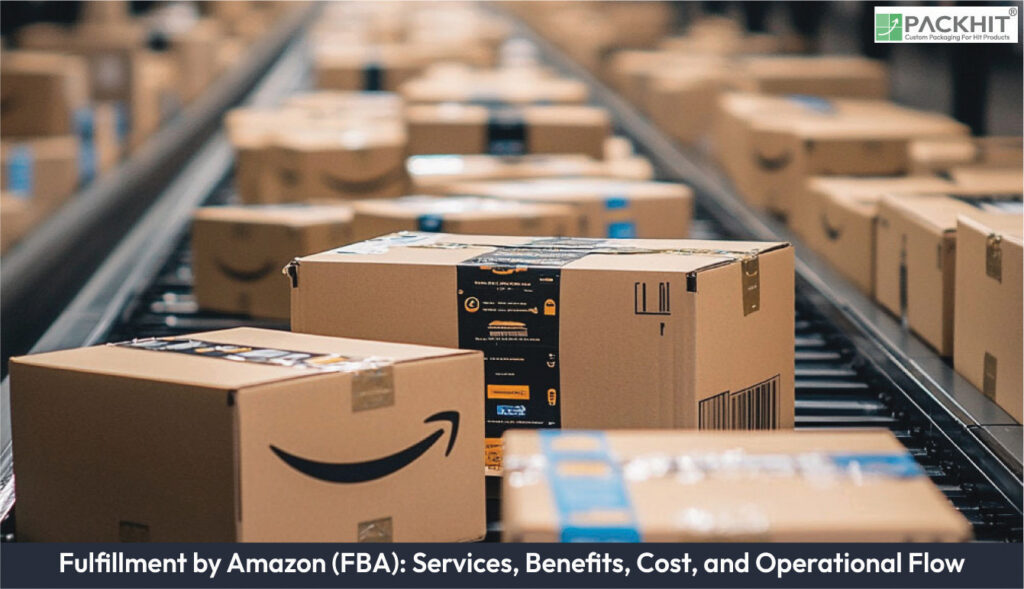
Fulfillment by Amazon (FBA) is a logistics and supply chain management service provided by Amazon, enabling businesses to outsource storage, packaging, and shipping operations. By leveraging Amazon’s extensive fulfillment network, sellers can store their inventory in Amazon’s warehouses, where the company handles order processing, picking, packing, shipping, and customer service. This model is particularly advantageous for manufacturers and retailers seeking to scale operations without investing in their own warehousing or distribution infrastructure. FBA integrates seamlessly with Amazon’s marketplace, offering sellers access to Prime-eligible customers and enhanced delivery speeds. However, the service involves specific cost structures, operational requirements, and packaging standards, which must be meticulously adhered to for optimal performance.
- What Services Does Fulfillment by Amazon (FBA) Provide?
- Benefits of Using FBA
- Access to Amazon’s Fulfillment Network
- Customer Delivery and Prime Eligibility
- Scalability Without a Dedicated Warehouse
- Less Routine Fulfillment Work
- Potential Unit-Cost Advantages
- Operational and Freshness Checks
- How Does the FBA Cost Structure Work?
- What is the Operational Flow of FBA?
- 1. Inventory Preparation
- 2. Shipment to Fulfillment Centers
- 3. Storage and Inventory Management
- 4. Order Processing
- 5. Shipping and Delivery
- 6. Returns and Customer Service
- What are the Packaging Requirements for FBA?
- How Should Manufacturers Measure Amazon Packaging Dimensions?
- Which Packaging Dimensions Reduce FBA Cost Risk?
- How Can Manufacturers Optimize for FBA?
What Services Does Fulfillment by Amazon (FBA) Provide?
FBA encompasses a comprehensive suite of services designed to streamline the logistics process for sellers. These services include:
- Storage: Sellers can store their inventory in Amazon’s fulfillment centers, which are equipped with advanced inventory management systems and climate-controlled environments to ensure product integrity.
- Order Fulfillment: Upon receiving an order, Amazon’s system automatically picks, packs, and ships the product to the customer, ensuring fast and accurate delivery.
- Customer Service: Amazon handles customer inquiries, returns, and refunds on behalf of the seller, providing 24/7 support.
- Prime Eligibility: Products fulfilled through FBA are eligible for Amazon Prime, granting access to millions of Prime members and expedited shipping options.
- Multi-Channel Fulfillment (MCF): FBA can also fulfill orders from non-Amazon sales channels, such as a seller’s own website or other e-commerce platforms.
Benefits of Using FBA
FBA gives manufacturers access to Amazon storage, order processing, shipping, and customer-service operations without building an equivalent in-house network. The practical benefits depend on product dimensions, sales volume, packaging configuration, inventory turnover, and the FBA terms that apply to the seller account and destination.
Access to Amazon’s Fulfillment Network
FBA places sellable inventory in Amazon fulfillment centers, where Amazon stores units, picks orders, packs shipments, and hands them to carriers. Amazon’s network size, receiving locations, and delivery conditions can change, so verify current coverage before basing a distribution plan on a stated facility count. Manufacturers can compare FBA with their own warehouse footprint by reviewing inbound freight, storage, pick-and-pack, parcel delivery, returns, and customer-service requirements.
Customer Delivery and Prime Eligibility
FBA products can qualify for Amazon Prime and related delivery promises if the product, inventory, seller account, and destination meet the applicable requirements. The “Fulfilled by Amazon” designation identifies Amazon-managed fulfillment, but it does not guarantee a particular delivery date. Check current eligibility rules, packaging requirements, and delivery conditions before printing claims on product materials or forecasting order volume.
Scalability Without a Dedicated Warehouse
FBA lets a manufacturer increase or reduce stored units without hiring warehouse staff or leasing additional space. This arrangement can fit seasonal demand, product launches, and changing regional order patterns. Packaging still requires planning: cartons must protect the product during inbound transport and FBA handling, while outer dimensions and shipping weight affect storage, fulfillment, and transportation charges.
Less Routine Fulfillment Work
Amazon handles receiving, storage, picking, packing, shipment processing, returns, and specified customer-service tasks for FBA orders. The seller remains responsible for production planning, labeling, inventory replenishment, packaging compliance, product quality, and account-level decisions. A manufacturer can therefore assign internal staff to product engineering and production control rather than daily parcel processing, while retaining oversight of stock accuracy and order performance.
Potential Unit-Cost Advantages
FBA can lower the per-unit cost of storage and parcel fulfillment when Amazon’s rates compare favorably with the seller’s warehouse, labor, packing-material, carrier, and returns costs. The result is not automatic. Oversized packaging, slow-moving inventory, removals, returns, inbound transportation, and long storage periods can raise the total cost. Calculate the complete FBA cost for each product using current fees and the product’s packed dimensions and shipping weight.
Operational and Freshness Checks
FBA fees, storage rules, inventory-age charges, eligibility requirements, packaging specifications, carrier programs, and delivery conditions can change. Confirm the current FBA terms for the product, seller account, and destination before making packaging, inventory, or cost decisions. Review the same terms again after a product redesign, carton-size change, or shift in sales volume.
How Does the FBA Cost Structure Work?
FBA’s cost structure is composed of several components, each of which varies based on factors such as product size, weight, and storage duration:
- Fulfillment Fees: These fees cover the cost of picking, packing, and shipping orders. They are calculated based on the product’s size and weight, with separate rates for standard-size and oversized items.
- Storage Fees: Storage fees are charged monthly and are based on the volume of inventory stored in Amazon’s fulfillment centers. Rates are higher during peak seasons, such as October through December, to account for increased demand.
- Long-Term Storage Fees: Inventory that remains unsold for more than 365 days incurs additional long-term storage fees. This incentivizes sellers to manage inventory levels effectively and avoid overstocking.
- Optional Service Fees: Additional fees may apply for optional services, such as labeling, repackaging, or removal of unsellable inventory. Sellers can opt for these services to ensure compliance with FBA requirements.
What is the Operational Flow of FBA?
The FBA operational flow involves several key steps, each of which is critical to ensuring efficient order fulfillment:
1. Inventory Preparation
Sellers must prepare their inventory according to Amazon’s packaging and labeling guidelines. This includes using appropriate packaging materials, applying scannable barcodes, and ensuring that products meet Amazon’s safety and quality standards.
2. Shipment to Fulfillment Centers
Once prepared, inventory is shipped to Amazon’s fulfillment centers. Sellers can use Amazon’s partnered carrier program for discounted shipping rates or arrange their own transportation.
3. Storage and Inventory Management
Upon arrival, inventory is scanned, sorted, and stored in Amazon’s warehouses. Sellers can monitor inventory levels and performance metrics through the Amazon Seller Central dashboard.
4. Order Processing
When a customer places an order, Amazon’s system automatically selects the nearest fulfillment center, picks the item, and prepares it for shipment. This ensures fast delivery and minimizes shipping costs.
5. Shipping and Delivery
Orders are shipped using Amazon’s logistics network, which includes partnerships with major carriers and last-mile delivery services. Customers receive tracking information and updates throughout the delivery process.
6. Returns and Customer Service
Amazon handles returns and customer inquiries, providing a seamless post-purchase experience. Returned items are inspected and either restocked, disposed of, or returned to the seller, depending on their condition.
What are the Packaging Requirements for FBA?
FBA packaging must protect each unit, display a scannable product identifier, and remain within Amazon’s current size and weight rules. Amazon measures the packaged unit as it arrives at the fulfillment center, so manufacturers must check the finished retail package rather than the product alone.
- Product labeling: Apply one scannable barcode to each unit. The barcode, such as an FNSKU when Amazon requires one, must match the product listing and remain visible through the outer packaging.
- Unit dimensions: Record the packaged length, width, and height in the measurement order used by Seller Central. Measure the outermost points, including the box, sealed poly bag, labels, and protective inserts. Do not use the product’s bare dimensions when checking FBA requirements.
- Dimensional calculation: Calculate the packaged footprint as length × width × height. Amazon also uses package dimensions and weight to assign fulfillment categories and, where applicable, dimensional-weight charges. A larger paperboard carton can therefore cost more to fulfill even when the product itself is light.
- Weight control: Weigh the complete sellable unit after packaging. Include the carton, cushioning, labels, and every component shipped with the product. Compare the measured weight and dimensions with the current FBA size, weight, and fee tables for the marketplace and product category.
- Protective packaging: Use a corrugated box, sealed poly bag, bubble wrap, or another approved material when the product can break, leak, shed parts, or expose sharp edges during handling. The package must remain closed without loose material that can obstruct barcode scanning.
- Poly-bag warnings: Add a suffocation warning when Amazon’s current poly-bag rule requires one, and seal the bag completely. The warning text, print size, and bag thickness must meet the applicable marketplace requirements.
- Fragile-unit protection: Secure glass, ceramic, liquid, and other breakable units so that the product does not move freely inside the carton. Test the packaged unit before shipment because damage can create customer returns, disposal costs, or inventory restrictions.
- Hazardous-material packaging: Classify products such as chemicals, aerosols, batteries, and flammable goods before shipment. Amazon applies separate labeling, documentation, packaging, storage, and transportation rules to dangerous goods.
How Should Manufacturers Measure Amazon Packaging Dimensions?
Measure the final sealed unit on a flat surface and record length, width, height, and weight separately. Use the longest side as length, the next-longest side as width, and the remaining side as height. Repeat the measurement across production samples because carton compression, inserts, and sealing can change the final size.
Check the recorded measurements against the FBA fee and size classifications shown in Seller Central before approving custom packaging. Amazon can remeasure inventory at the fulfillment center. A measurement that crosses a size or weight threshold can change fulfillment fees, storage charges, shipment limits, or eligibility, while noncompliant packaging can cause preparation requests, relabeling, delays, or rejection.
Which Packaging Dimensions Reduce FBA Cost Risk?
Use the smallest protective package that passes handling and drop requirements. Remove unused headspace, keep inserts close to the product, and avoid decorative features that increase the outer length, width, or height without protecting the unit. Recheck the carton after the final paper-based packaging specification is approved because even a small dimensional change can affect Amazon’s fee category.
How Can Manufacturers Optimize for FBA?
Manufacturers can maximize the benefits of FBA by implementing the following strategies:
- Inventory Forecasting: Use historical sales data and market trends to predict demand and avoid overstocking or stockouts.
- Packaging Design: Optimize packaging to meet FBA requirements while minimizing material costs and maximizing product protection.
- Cost Analysis: Regularly review FBA fees and compare them to alternative fulfillment methods to ensure cost-effectiveness.
- Performance Monitoring: Track key metrics, such as order defect rate and inventory turnover, to identify areas for improvement.
