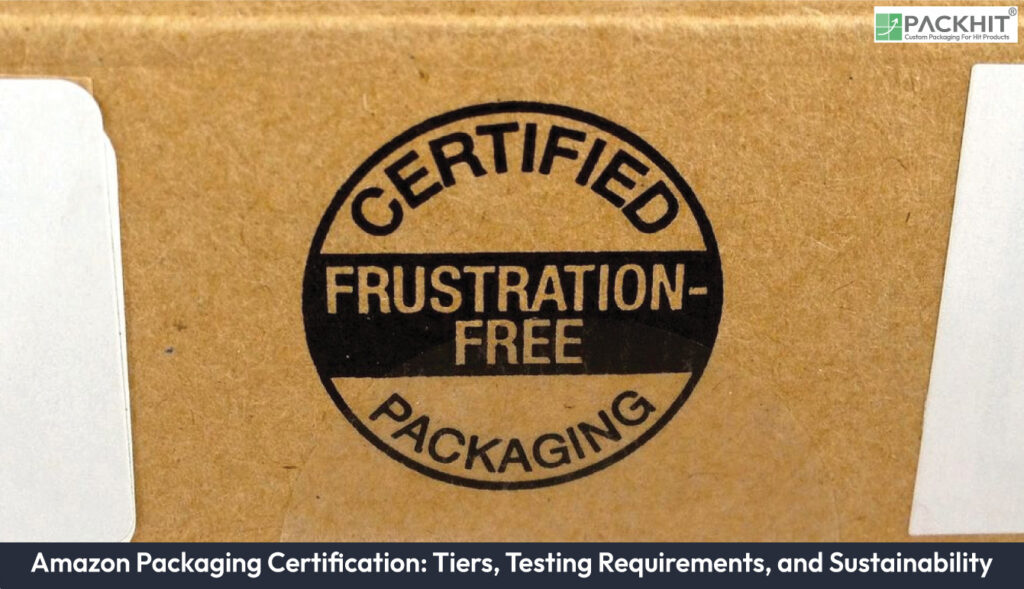
Amazon Packaging Certification is a structured compliance framework designed to ensure that products shipped through Amazon’s fulfillment network meet stringent standards for durability, sustainability, and efficiency. It encompasses three tiers, namely Frustration-Free Packaging (FFP), Ships-In-Own-Container (SIOC), and Prep-Free Packaging (PFP), each tailored to specific packaging needs. Certification requires rigorous testing based on ISTA 6-Amazon.com protocols, including simulations of drops, vibrations, compression, and climatic stressors, to validate packaging performance. Sustainability is a key focus, promoting recyclable materials, waste reduction, and dimensional optimization to minimize environmental impact. Manufacturers benefit from cost savings, enhanced customer satisfaction due to improved packaging design, and alignment with global sustainability goals. The certification process involves designing compliant packaging, conducting approved tests, and submitting results for Amazon’s review. Resources such as the APASS network help streamline this process, enabling manufacturers to meet Amazon’s high standards and improve their operational efficiency.
Key Tiers of Amazon Packaging Certification
Amazon Packaging Certification classifies packaging according to the preparation and shipping protection required for a product. The applicable tier depends on the product, package dimensions, materials, closure, distribution route, and active program criteria. Amazon requirements and submission routes can change, so manufacturers must confirm the current criteria with Amazon or the relevant program contact before describing a package as certified.
A review covers the complete ship-ready unit, not the carton material alone. Record product weight, packaged dimensions, board grade, package components, closure method, cushioning, labels, and intended fulfillment route. Keep the approved design separate from later production changes. A different carton blank, adhesive, insert, or product orientation can change test performance.
1. Frustration-Free Packaging (FFP)
Frustration-Free Packaging (FFP) reduces excess packaging and gives the customer access to the product without a knife, scissors, or another opening tool. The package also protects the product during direct shipment and uses materials that meet the applicable recyclability criteria. Paperboard, corrugated fiberboard, molded paper fiber, and paper-based cushioning can support this format if the completed package passes the required evaluation.
FFP criteria vary by product and program revision. Recyclability remains a design objective, but manufacturers must review material combinations, coatings, labels, adhesives, inks, and local recycling conditions. Direct-to-consumer packaging also requires clear product identification and a closure that remains secure if Amazon ships the unit without an additional outer box.
For paper-based packaging, inspect tear initiation, dust generation, moisture exposure, and fiber separation at opening points. Perforations and tear strips reduce tool use, but they also remove board fibers and require enough remaining strength to prevent premature opening during conveyance.
2. Ships-In-Own-Container (SIOC)
Ships-In-Own-Container (SIOC) packaging moves through fulfillment and last-mile delivery in its original shipping container, without a separate Amazon over-box. The package must withstand handling, conveyance, stacking, and delivery loads. Large products, such as furniture, appliances, and equipment, often receive this assessment because an added outer carton increases package volume and material use.
SIOC qualification depends on the complete package configuration and the product inside it. Record product weight, dimensions, center of gravity, closure method, cushioning locations, and vulnerable components before testing. Changes to board grade, die-cut geometry, adhesive, or internal supports can affect the result and can require a new evaluation.
3. Prep-Free Packaging (PFP)
Prep-Free Packaging (PFP) limits extra fulfillment preparation, such as applying a polybag, bubble wrap, or additional dunnage. The package contains and protects the product during normal handling, while closures and exposed surfaces avoid preventable damage or contamination. Mid-sized products and moderately fragile goods can require this assessment if the retail package enters fulfillment without manual repacking.
The three tier names do not replace a package-specific test report. Product fragility, sharp edges, liquid contents, leakage risk, and package size can change the required preparation even when two products use similar cartons. Confirm the applicable tier for each product and package revision.
Testing Requirements for Certification
Amazon packaging certification uses performance testing that represents distribution hazards. A test plan can include drops, vibration, compression, impact, and temperature or humidity conditioning. The selected sequence depends on the product category, package type, shipment method, and current Amazon requirements. ISTA 6-Amazon.com procedures are associated with certain e-commerce shipment evaluations, but manufacturers must confirm the applicable procedure, laboratory conditions, and acceptance criteria before testing.
ISTA 6-Amazon.com Testing
An ISTA 6-Amazon.com evaluation examines a packaged product under conditions associated with e-commerce fulfillment when that procedure applies. The laboratory records package damage and product damage. A package can fail while the carton remains intact if the contents shift, break, leak, or lose function.
- Drop testing: Applies controlled impacts to assess corner, edge, and face protection during manual handling.
- Vibration testing: Applies repeated motion that represents transport and conveyor handling.
- Compression testing: Measures resistance to stacking loads in storage and vehicles, with attention to carton collapse and product contact.
- Climatic conditioning: Exposes packaging materials and closures to specified temperature or humidity conditions before or during testing if the applicable procedure requires it.
- Inspection: Checks product function, package closure, cushioning position, labeling, and visible damage after the test sequence.
Acceptance depends on the product remaining saleable and functional, not only on the absence of a crushed carton. Inspect controls, screens, seals, fasteners, finishes, and other product-specific failure points after each required sequence. Photograph the specimen before and after testing, and record the location and severity of every defect.
Lab Certification and Testing Partners
Manufacturers can ask an ISTA-certified laboratory or another qualified facility to perform the applicable procedure. The exact laboratory status, test procedure, and submission route require confirmation for the product category and program revision. A laboratory credential does not by itself establish Amazon approval, and a test report does not by itself establish certification.
The test file normally identifies the product, package dimensions, materials, sample configuration, conditioning, equipment, procedure, failures, and final disposition. Retain the report and approved package specification for production control. Submit results through the route confirmed for the applicable Amazon program, if submission is required.
Testing a production-representative sample matters. Prototype board, adhesive, cushioning, or closure differences can change compression strength and impact performance. Inspect production units again if package materials or dimensions change.
A controlled test record includes sample identification, manufacturing lot, package revision, component supplier, material thickness, finished dimensions, gross weight, test date, laboratory details, procedure edition, conditioning, observed failures, and final disposition. Review the package if a supplier changes fiber composition, coating, flute profile, adhesive, or converting method.
How Does Amazon Packaging Certification Promote Sustainability?
Amazon Packaging Certification promotes sustainability by reducing unnecessary packaging, limiting empty shipping volume, and favoring materials that fit applicable recycling systems while preserving product protection. The environmental result depends on the complete package, manufacturing process, transport distance, product damage rate, and local recycling infrastructure. Certification status alone does not establish a specific percentage of material savings or a universal environmental result.
Material Selection and Recyclability
Certified packaging programs generally favor recyclable fiber materials, such as corrugated cardboard and paperboard, if those materials meet performance requirements. A material review covers board grade, coatings, windows, labels, inks, adhesives, and inserts because attached components can affect sorting and recycling. Manufacturers also verify whether the package enters the intended recycling stream in its target market.
Recyclable-material goals do not remove the need for product protection. A thinner carton that causes breakage can increase total waste through replacements, returns, and damaged products. The package specification balances material reduction with edge strength, cushioning, closure security, and moisture resistance.
Packaging Waste Reduction
Packaging waste reduction removes components that do not contribute to containment, protection, identification, or required compliance. Examples include redundant cartons, oversized inserts, plastic clamshells, unnecessary film, and excess filler. Measure package weight, component count, material mix, and damaged-product rate before and after a redesign.
FFP requirements and material outcomes vary with the applicable program criteria and package design. Do not use a universal percentage for material savings unless a documented comparison uses the same product, protection level, shipping conditions, and test method.
Dimensional Optimization
Dimensional optimization reduces empty space around the product while preserving clearance for cushioning and manufacturing tolerances. Review length, width, height, package cube, product orientation, pallet pattern, and closure area. A closer fit can reduce board consumption and shipping volume, while excessive compression or insufficient clearance can increase damage.
Use measured package data to compare a current design with a proposed design. Include material weight, dimensional weight, units per pallet, transport cube, test performance, and product damage in the comparison. This method connects Amazon Packaging Certification with a measurable sustainability review rather than treating recyclability as the only criterion.
Benefits of Amazon Packaging Certification for Manufacturers
Amazon Packaging Certification gives manufacturers a packaging format that meets defined fulfillment, product-protection, and material-use requirements. The resulting design can reduce added shipping materials, limit damage during handling, and document packaging choices for paper-based products.
- Cost control: Certified packaging reduces the need for extra cartons, void fill, tape, and manual repacking during fulfillment. A smaller package can also reduce dimensional weight when its length, width, and height remain sufficient to protect the product.
- Product protection: Packaging that passes distribution testing resists common handling stresses, including drops, compression, vibration, and abrasion. Fewer damaged shipments can reduce replacement and return-processing costs.
- Customer usability: Packaging with fewer unnecessary layers opens with less cutting, tearing, and disposal. Clear opening instructions and secure product placement also reduce complaints caused by difficult access or movement inside the package.
- Material reduction: Manufacturers can reduce packaging waste by removing redundant protective components and selecting recyclable paper-based materials where the product and test results permit. These changes support the sustainability practices described above and may appeal to environmentally conscious consumers.
- Operational consistency: A documented, tested package gives production and fulfillment teams defined material specifications, dimensions, closure methods, and inspection criteria. This consistency helps maintain the same protection level across repeated shipments.
How Can Manufacturers Begin the Certification Process?
Manufacturers begin Amazon Packaging Certification by confirming the correct packaging tier, then documenting and testing the package against Amazon’s fulfillment requirements. The selected tier determines the package configuration, protection requirements, and testing scope.
- Confirm the tier: Match the product, package dimensions, fragility, and fulfillment method to the applicable certification tier.
- Document the package: Record the dimensions, weight, materials, closure method, cushioning, product protection, and shipping labels.
- Check preparation requirements: Confirm whether Amazon requires an over-box, additional preparation, or direct shipment in the product’s own container.
- Arrange testing: Submit the packaged product for ISTA 6-Amazon.com testing through an approved laboratory.
- Review the results: Examine damage, package-opening, and handling results, then correct any failure points before submission.
- Submit the certification file: Send the test report and packaging specifications to Amazon for review.
ISTA 6-Amazon.com testing evaluates whether the packaged product withstands the handling and distribution conditions associated with Amazon fulfillment. Test preparation must use the production-intent package, including the specified board grade, inserts, closures, labels, and protective materials. A design change after testing can require another evaluation because a different package configuration may produce different results.
After Amazon reviews the submission, the applicable certification conditions govern fulfillment. Manufacturers must retain the approved package specification and verify that production units match the tested configuration. Changes to package size, materials, closure method, or internal protection require a review of the certification status before shipment.
Manufacturers can consult Amazon’s Packaging Support and Supplier Network (APASS) to confirm the tier, testing requirements, approved laboratory information, and submission details. Early consultation helps identify missing package data and reduces revisions before testing or Amazon review.