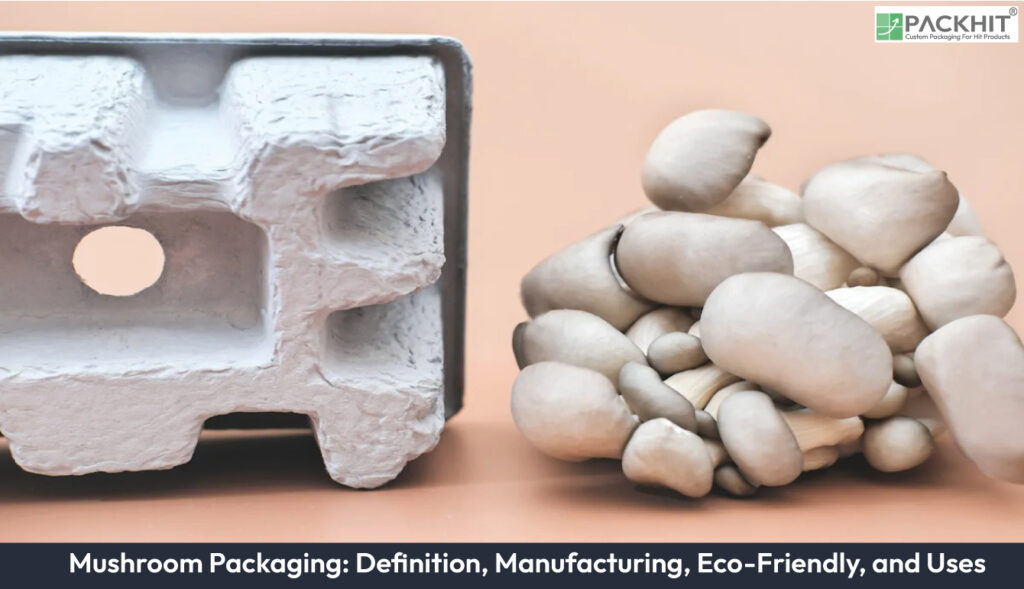
Mushroom packaging is a bio-based protective material made by growing fungal mycelium on agricultural byproducts through a controlled manufacturing process that includes substrate preparation, mycelium growth, molding, drying, and heat treatment. Its suitability depends on the intended application, product protection requirements, environmental conditions, and available disposal infrastructure, making material selection an important consideration for specific packaging needs.
- What is Mushroom Packaging?
- How is Mushroom Packaging Performance Typically Evaluated?
- What Material is Mushroom Packaging Made of?
- How is Mushroom Packaging Manufactured?
- Step 1: Agricultural Waste Collection
- Step 2: Substrate Preparation
- Step 3: Mycelium Inoculation
- Step 4: Mold Formation
- Step 5: Controlled Mycelium Growth
- Step 6: Drying and Heat Treatment
- Step 7: Quality Testing
- Step 8: Final Packaging and Distribution
- What Makes Mushroom Packaging Eco-Friendly?
- What are the Uses of Mushroom Packaging?
- What are the Advantages of Mushroom Packaging Over Traditional Materials?
- Key Properties of Mushroom Packaging
- Manufacturer Evaluation Checklist
- Can Mushroom Packaging Replace Plastic Foam?
- Does Mushroom Packaging Need Industrial Composting?
- Can Mushroom Packaging get Wet?
- What are the Current Limitations of Mushroom Packaging?
- How do Manufacturers Choose Mushroom Packaging?
What is Mushroom Packaging?
Mushroom packaging is a bio-based protective packaging material made from agricultural byproducts and mycelium, the root structure of fungi. It is used as a potential alternative to synthetic protective materials such as expanded polystyrene for certain packaging applications.
Many mushroom-based packaging products are designed for industrial composting when manufactured and certified for that purpose. Products are certified to standards such as ASTM D6400, EN 13432, or equivalent regional requirements; compostability is evaluated under controlled industrial composting conditions using criteria such as disintegration and other compostability requirements defined by the applicable standard. These certifications apply only to the specific formulation that was tested and should not be interpreted as evidence that all mushroom packaging products compost under the same conditions.
Mushroom packaging can provide molded cushioning and impact absorption for selected products when material density, wall thickness, and structural design are matched to the required protection level. Applications requiring higher impact resistance, prolonged moisture exposure, or heavy stacking loads should be validated through application-specific performance testing rather than assumed from the material type alone.
How is Mushroom Packaging Performance Typically Evaluated?
Mushroom packaging performance is typically evaluated using separate test methods for protective performance and compostability. Protective performance is commonly assessed through application-specific packaging tests selected by the manufacturer or customer, which may include evaluations of cushioning performance, compression resistance, handling durability, and moisture resistance under the expected transportation and storage conditions.
Compostability and disposal claims are generally evaluated against recognized industrial compostability standards, such as ASTM D6400, EN 13432, or comparable regional requirements where applicable. These standards define controlled testing conditions for industrial composting and include criteria related to disintegration and other compostability requirements. Test results obtained under these controlled conditions should not be interpreted as representing home composting performance or every disposal environment.
Environmental and energy comparisons discussed in this guide are general lifecycle assessment (LCA) considerations rather than fixed performance values. Reported results depend on the study boundary (for example, cradle-to-gate or cradle-to-grave), feedstock sourcing, manufacturing processes, transportation assumptions, energy sources, and end-of-life scenarios. Because these variables differ between studies and products, environmental comparisons should be based on product-specific LCA documentation rather than assumed for all mushroom packaging.
What Material is Mushroom Packaging Made of?
Mushroom packaging is primarily composed of agricultural residues, such as corn husks, hemp stalks, or other plant-based fibers, combined with fungal mycelium. The mycelium grows through the plant material and acts as a biological binding structure, creating a molded composite material. The environmental characteristics of the material depend on factors including the source of the agricultural fibers, processing methods, additives, if any, and end-of-life conditions. Individual formulations may differ in composting performance and physical properties.
How is Mushroom Packaging Manufactured?
Mushroom packaging is manufactured in eight steps given below:
Step 1: Agricultural Waste Collection
Agricultural byproducts such as hemp, corn stalks, sawdust, and other plant-based residues are collected and prepared as the raw material for mushroom packaging production.
Step 2: Substrate Preparation
The collected plant materials are cleaned, processed, and combined with mycelium to create a suitable growth medium for the packaging structure.
Step 3: Mycelium Inoculation
The prepared substrate is mixed with fungal mycelium, which grows through the plant fibers and acts as a natural binding agent.
Step 4: Mold Formation
The mycelium-based mixture is placed into custom-designed molds to create specific packaging shapes, including protective inserts, trays, and cushioning components.
Step 5: Controlled Mycelium Growth
The molded material is kept in controlled environmental conditions, allowing the mycelium to spread and strengthen the packaging structure.
Step 6: Drying and Heat Treatment
After reaching the required density and strength, the packaging is dried and heat-treated to stop biological growth and stabilize the final product.
Step 7: Quality Testing
The finished packaging is tested for durability, strength, moisture resistance, and protective performance to ensure it meets product requirements.
Step 8: Final Packaging and Distribution
The completed mushroom packaging is trimmed, finished, and delivered for use in applications such as electronics, furniture, cosmetics, and consumer goods.
What Makes Mushroom Packaging Eco-Friendly?
Mushroom packaging is considered a bio-based, eco-friendly packaging option because it uses renewable agricultural byproducts combined with fungal mycelium to create molded structures. Some commercially available formulations are designed to break down under appropriate composting conditions, with decomposition performance varying by the same formulation and environmental factors.
The material production process uses biological growth to bind agricultural fibers into packaging structures, followed by drying or heat treatment to stabilize the finished product. Compared with some conventional packaging processes, certain manufacturing approaches may require different energy inputs; however, environmental comparisons depend on the production method, energy sources, transportation distance, material inputs, and end-of-life scenario used in the assessment.
Rather than assuming a universal environmental advantage, mushroom packaging should be evaluated through factors such as resource sourcing, manufacturing efficiency, product durability, transportation impacts, and whether appropriate composting or disposal systems are available.
What are the Uses of Mushroom Packaging?
Mushroom packaging is utilized across multiple industries, including electronics for protecting sensitive devices, consumer goods for eco-friendly product presentation, and the food and beverage sector for sustainable packaging tailored to single-use applications.
- Electronics Packaging: Mushroom packaging protects sensitive electronic devices by providing cushioning, shock resistance, and protection against damage. It can provide a bio-based alternative for certain protective packaging applications, although the overall environmental performance depends on the product formulation, manufacturing process, transportation, and end-of-life management.
- Consumer Goods: Mushroom packaging is used for cosmetics, small appliances, specialty products, and other consumer items. Its ability to be molded into custom shapes supports attractive product presentation and secure protection.
- Food and Beverage Industry: Mushroom packaging is being developed for food and beverage applications, particularly for compostable single-use packaging. Where the formulation has been evaluated for the intended disposal pathway, mushroom packaging may provide a compostable alternative for selected single-use packaging applications.
What are the Advantages of Mushroom Packaging Over Traditional Materials?
Mushroom packaging can provide advantages in specific protective packaging applications by offering molded structures that fit product shapes and reduce reliance on petroleum-based foam materials. Its cushioning performance depends on factors such as material density, thickness, structural design, and the impact protection required for the product.
Because mushroom packaging uses agricultural byproducts as a primary input, it provides an alternative raw-material pathway compared with petroleum-based protective packaging. However, the overall environmental and economic benefits vary depending on manufacturing scale, transportation requirements, product lifespan, and available end-of-life infrastructure.
Key Properties of Mushroom Packaging
Mushroom packaging is a bio-based packaging solution made by combining agricultural byproducts with fungal mycelium to create lightweight and protective molded structures. Its properties determine where it can be used effectively, how it is manufactured, and what factors should be considered before selection. The table below highlights the key characteristics of mushroom packaging, including materials, production methods, applications, disposal considerations, and selection factors.
| Property | Description |
|---|---|
| Primary Materials | Agricultural byproducts and fungal mycelium |
| Manufacturing | Controlled mycelium growth followed by drying and heat treatment |
| Typical Use | Molded protective inserts and cushioning |
| Moisture | Best suited to dry storage environments |
| Disposal | Composting performance depends on local composting conditions |
| Selection Factors | Product weight, cushioning needs, moisture exposure, and transportation conditions |
Mushroom packaging offers a sustainable alternative for protective packaging applications, particularly where lightweight cushioning and compostable materials are required. As covered throughout this guide, suitability ultimately comes down to matching the product’s specific protective and disposal requirements against the material’s known limitations.
Manufacturer Evaluation Checklist
Before selecting mushroom packaging, manufacturers should confirm:
- Product weight, fragility, and required cushioning performance.
- Expected transportation distance, handling frequency, and stacking loads.
- Storage temperature and humidity throughout the distribution chain.
- Material density, wall thickness, and molded geometry appropriate for the application.
- Available composting or disposal infrastructure consistent with the intended end-of-life pathway.
The suitability of mushroom packaging depends on balancing protective performance, environmental exposure, manufacturing capabilities, disposal options, and total packaging requirements rather than relying solely on its bio-based composition.
Can Mushroom Packaging Replace Plastic Foam?
It can replace expanded polystyrene for some protective packaging applications where the required cushioning performance, moisture conditions, and product weight fall within the material’s design limits.
Does Mushroom Packaging Need Industrial Composting?
The disposal method depends on the product formulation and local composting infrastructure. Manufacturers should follow disposal guidance provided for the specific packaging product.
Can Mushroom Packaging get Wet?
Extended exposure to moisture may reduce structural performance. Dry storage and transportation conditions are generally preferred unless additional protective barriers are used.
What are the Current Limitations of Mushroom Packaging?
Mushroom packaging has several limitations that influence where it can be used effectively. These include production scalability, manufacturing speed, cost competitiveness, moisture sensitivity, and consistency across different formulations.
- Production Scalability: Limited availability for large-scale manufacturing compared with conventional packaging materials.
- Manufacturing Speed: Production processes may be slower due to growth and molding requirements.
- Cost Competitiveness: May have higher costs depending on production scale and available resources.
- Moisture Sensitivity: Can absorb moisture, reducing structural strength in humid or wet conditions.
- Structural Performance: May not be suitable for heavy loads, high compression requirements, or long-term stacking.
- Application Suitability: Best for lightweight products, protective inserts, and dry storage environments.
- Alternative Requirements: May require other packaging solutions for outdoor use, liquid exposure, or demanding distribution conditions.
- Barrier Performance: May provide limited protection against moisture and extended storage challenges.
- Common Failure Modes: Includes reduced rigidity, deformation, edge damage, and decreased cushioning performance under unsuitable conditions.
- Handling and Storage: Requires clean, dry storage and protection from water, humidity, and repeated wet-dry cycles.
- Quality Inspection: Packaging should be checked for cracks, deformation, moisture absorption, or damage before use.
- Protective Measures: Additional barriers or secondary packaging may be needed for challenging shipping environments.
How do Manufacturers Choose Mushroom Packaging?
Manufacturers select mushroom packaging by matching the package design and material characteristics to the product’s protection requirements and end-of-life conditions.
- For lightweight products with basic cushioning needs: choose designs with suitable material density and molded geometry that protect without unnecessary material use.
- For fragile products requiring greater impact protection: evaluate thicker sections, higher-density structures, or customized molded shapes that improve cushioning performance for the expected handling conditions.
- For applications exposed to moisture or long storage periods: verify moisture resistance requirements and consider additional protective barriers or alternative materials if prolonged humidity or liquid exposure could reduce structural performance.
- For shipping environments involving heavy stacking or repeated handling: confirm that the selected design has been tested for the expected compression, impact, and transportation conditions rather than relying only on the material category.
- For compostable disposal goals: confirm that the specific formulation has an appropriate composting pathway and that local infrastructure supports the intended end-of-life option.
The final selection should balance product weight, fragility, transportation demands, moisture exposure, protective performance, and available disposal systems.