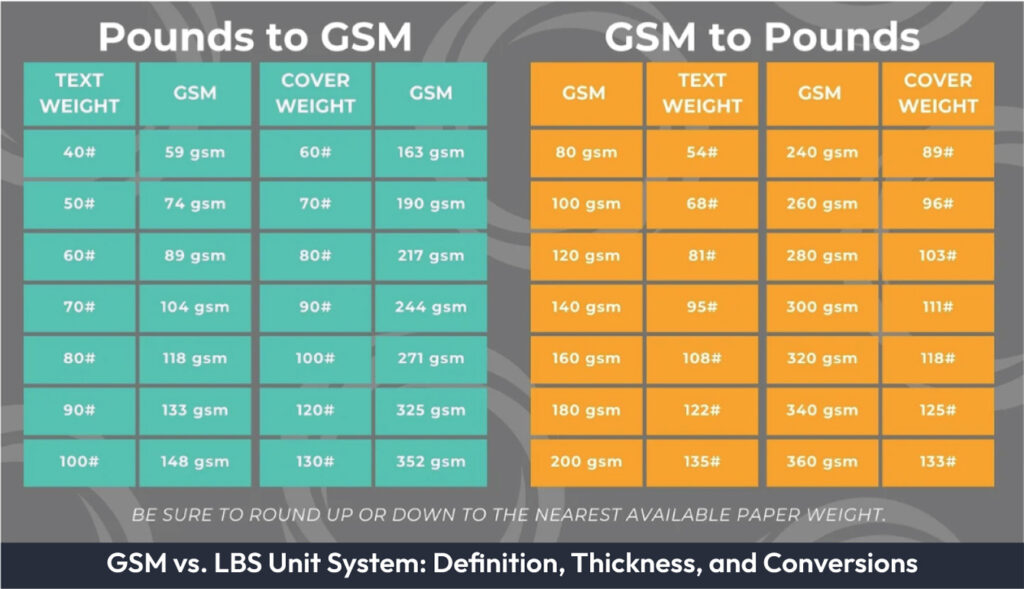
GSM (Grams per Square Meter) and LBS (Pounds per Ream) are two distinct units used to measure the weight and thickness of materials, particularly in the paper and packaging industries. GSM is a metric measurement that quantifies the weight of a single square meter of material, while LBS is an imperial measurement that represents the weight of a ream (500 sheets) of paper based on its basis size. Both units serve as critical benchmarks for determining material quality, durability, and suitability for specific applications. GSM is ideal for industries like printing, packaging, and textiles, as it provides consistent material thickness and durability measurements. LBS, on the other hand, is primarily used in the paper industry, particularly in the U.S, and is tailored to specific paper types and sizes. Conversion between these units helps manufacturers select suitable materials for various applications, from book publishing to packaging design. Emerging trends in both GSM and LBS include the use of digital tools, increased globalization, and a growing focus on sustainability. These trends highlight the evolving nature of material measurement and its role in fostering consistency and eco-friendly practices across industries.
What is GSM (Grams per Square Meter)?
GSM, or grams per square meter, is a standardized metric unit that measures the weight of a material over a defined surface area. It is a useful reference point for comparing material weight and can serve as a proxy for density-related characteristics, but it does not directly determine thickness, stiffness, durability, or overall quality. Final performance depends on factors such as paper type, fiber composition, coatings, finishes, and manufacturing processes.
For packaging applications, materials with the same GSM value may perform differently. For example, a 250 GSM uncoated kraft box and a 250 GSM coated SBS box have the same weight per area but may differ in stiffness, surface feel, print performance, and handling behavior due to differences in structure and finish.
GSM provides an initial specification for material comparison, but supplier technical data or physical samples should be reviewed when finalizing packaging materials. Actual caliper, strength, and performance characteristics may vary even when two materials have the same GSM rating.
Key Features of GSM
The key features of GSM are given below:
- Standardized Measurement: GSM provides a consistent way to compare material weight across industries and regions.
- Weight-Based Indicator: GSM measures material weight per area and may correlate with certain physical characteristics, but higher GSM alone does not guarantee greater durability or quality. Performance depends on paper type, fiber composition, construction, and finishing methods.
- Versatile Applications: GSM is widely used in industries such as printing, textiles, and packaging to define material specifications and compare options.
- Global Relevance: GSM is internationally recognized, making it useful for material sourcing and communication across global supply chains.
- Conversion Potential: GSM values can be mapped to imperial weight units such as LBS when the correct paper type and basis size are known.
GSM is an important specification for material selection, but it should be evaluated alongside supplier specifications, testing data, and physical samples to confirm suitability for a specific application.
What is LBS?
LBS, or pounds per ream, is an imperial unit that measures the weight of a ream of paper (500 sheets) based on its basis size. Unlike GSM, LBS is dependent on the type and size of the paper being measured. For instance, a 20 lb bond paper and a 50 lb cover paper may have different thicknesses despite having the same weight in pounds.
Core Attributes of LBS
LBS (Pounds per Ream) is a critical unit of measurement in the paper and packaging industries, particularly in North America. It provides essential insights into the paper’s weight and suitability for various applications. Below are the core attributes of LBS:
- Imperial Standard: LBS is an imperial measurement system widely adopted in the United States and neighboring regions, making it essential for industries focused on local markets.
- Basis Weight: The LBS value depends on the basis size of the paper (e.g., bond, text, or cover), which varies by paper type and usage.
- Application-Specific: Heavily utilized in printing, publishing, and packaging to ensure the material meets specific weight and thickness requirements.
- Material Versatility: Suitable for assessing a wide range of paper types, from lightweight bond paper used in offices to heavier cover paper for packaging and promotional materials.
- Localized Relevance: Although not globally standardized like GSM, LBS remains the preferred unit in North America for paper weight measurement.
- Conversion Feasibility: Easily convertible to GSM for global comparisons, ensuring compatibility in international trade and material selection.
Understanding these attributes helps manufacturers and consumers effectively evaluate paper materials for regional and international applications, ensuring optimal quality and performance across diverse industries.
Key Differences Between GSM and LBS
The following table shows the primary differences between GSM and LBS (pounds per ream), based on their measurement systems:
| Aspect | GSM (Grams per Square Meter) | LBS (Pounds per Ream) |
|---|---|---|
| Measurement Basis | Measures the weight of a single square meter of material, providing a standardized metric. | Measures the weight of a ream (500 sheets) of paper based on its basis size, making it type-dependent. |
| Standardization | Acts as a universal standard for material weight, widely used across global industries. | Varies depending on paper type and size, predominantly used in North America. |
| Applications | Commonly used in international markets for precise material specifications in packaging, textiles, and printing. | Primarily used in North American markets for paper manufacturing, printing, and material selection. |
| Conversion | Can be converted to LBS using specific formulas based on paper type and basis size. | Can be converted to GSM for international comparison and standardization purposes. |
Understanding GSM and LBS helps manufacturers and printers select the right materials for their applications. Both units are essential for evaluating paper weight, quality, and usage suitability, whether for packaging, printing, or other industries.
For manufacturers sourcing custom packaging, the practical choice usually follows the supply chain: specifying in GSM tends to be easier when working with international or overseas suppliers, since it doesn’t depend on a regional basis size, while LBS remains the more familiar unit for U.S.-based paper mills and printers. Either way, a conversion is a specification-mapping exercise, not a guarantee of identical thickness or feel between two materials rated at equivalent values; the same caveat is covered in more detail further below.
GSM to LBS Conversion
Converting GSM to LBS requires identifying the specific paper type and basis size because the relationship between these units is not universal. A conversion factor applies only to the defined paper category and basis size used to calculate it.
For example, text paper using the standard 25 × 38 inch basis size can use an approximate conversion factor of 0.676 LBS per GSM. This factor is specific to that paper type and basis size and should not be applied to other paper categories, such as bond or cover paper, without the appropriate conversion formula.
Exact results may vary depending on the supplier’s specifications, so converted values should be validated against technical data sheets or material samples before being used for production decisions.
| Variable | Meaning | Example Value |
|---|---|---|
| GSM input | Material weight in grams per square meter | 120 GSM |
| Conversion factor | Text paper, standard 25 × 38 inch basis size only | 0.676 |
| LBS output | Approximate pounds per ream value | 120 × 0.676 ≈ 81 lb |
Example:
For a 120 GSM text paper using the standard basis size conversion:
120 × 0.676 ≈ 81 lb
This result is an estimate for that specific text paper basis size and should not be treated as a universal conversion.
Which industries commonly apply the conversion from GSM to LBS?
The industries that use the GSM to LBS conversion are listed below.
- Printing Industry: Ensures compatibility between international and North American paper standards.
- Packaging Design: Helps manufacturers select materials with the desired thickness and durability for custom packaging.
- Book Publishing: Facilitates the selection of paper weights for different book formats, such as hardcover or paperback.
How GSM and LBS Values Relate to Material Thickness and Durability?
Material thickness and durability may correlate with GSM and LBS values, though these units are weight-per-area proxies rather than direct thickness measurements, and actual performance also depends on fiber composition, paper type, and finish. For example,
- Textiles: Towels with a GSM of 600 are generally denser and more absorbent than those with a GSM of 300.
- Paper: A 100 lb cover paper is generally thicker and more rigid than a 20 lb bond paper, making it suitable for business cards and packaging, though this comparison holds because cover and bond papers use different basis sizes, so the lb figures aren’t directly comparable pound-for-pound without accounting for that difference.
What are the Emerging Trends in GSM and LBS Usage?
The adoption of GSM and LBS in material measurement continues to evolve, driven by technological advancements, globalization, and sustainability goals. Below are some of the emerging trends shaping their usage:
- Digital Tools: Online calculators and conversion charts are increasingly used to simplify GSM-to-LBS conversions.
- Globalization: The growing need for international trade has led to greater emphasis on GSM as a universal standard.
- Sustainability: Higher GSM materials are being adopted for eco-friendly packaging solutions due to their durability and reusability.
These trends reflect the growing need for standardized, efficient, and sustainable practices in industries reliant on material measurement systems like GSM and LBS.
When to Choose: GSM vs. LBS
Choosing between GSM and LBS depends on the region, industry standards, material type, and supplier requirements. Both measurements describe paper weight, but they are used differently across markets.
Choose GSM When:
- Working with international suppliers or manufacturers, as GSM is the globally recognized paper weight measurement.
- Comparing different paper, board, or textile materials across regions.
- Selecting packaging materials where consistent weight-per-area measurement is required.
- Evaluating paper density, thickness expectations, and material performance for applications such as cartons, labels, and specialty papers.
Choose LBS When:
- Working with suppliers in the United States, where pounds (LBS) are commonly used for paper specifications.
- Selecting paper grades that are traditionally sold using basis weight standards, such as bond, cover, text, and cardstock papers.
- Comparing materials within the same paper category where LBS values are directly meaningful.
- Following existing packaging or printing specifications that use U.S. paper weight standards.
For global packaging projects, GSM is often preferred because it provides a universal comparison, while LBS remains useful when working within U.S.-based printing and paper supply systems. Manufacturers should also consider thickness, fiber composition, stiffness, and end-use requirements rather than relying on GSM or LBS values alone.