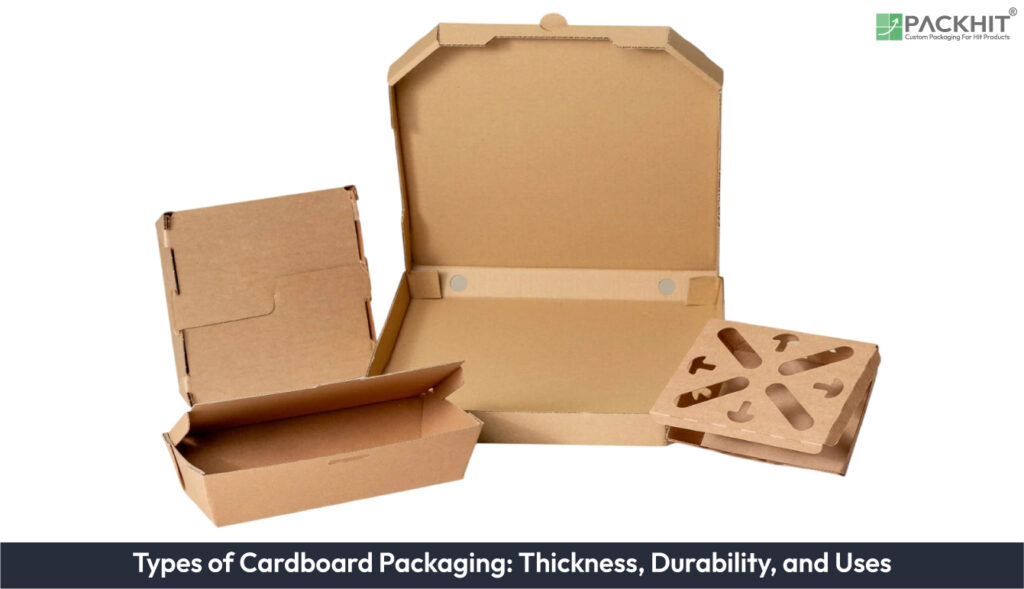
Cardboard packaging is a versatile and widely used material in manufacturing, offering a range of thicknesses, durability levels, and functional uses. It covers multiple types and thickness classes that control strength, stiffness, and surface performance for specific product needs. Manufacturers use corrugated cardboard for heavy-duty shipping, solid cardboard for light items, folding cartons for retail displays, wax-coated cardboard for moisture resistance, honeycomb cardboard for high stiffness, and laminated cardboard for improved appearance and protection. Material composition and layering define the structural behavior; thickness and surface finish shape crush resistance, print quality, and scuff resistance. It also supports practical attributes such as recyclability and customization in formats like die-cut blanks and custom box dimensions.
Types of Cardboard Packaging
Cardboard packaging is classified into several types based on its construction and intended use. Each type offers unique attributes suited to specific applications.
The types of cardboard packaging are discussed below:
1. Corrugated Cardboard
Corrugated cardboard is the standard choice for shipping and transport packaging because its fluted core helps absorb impact while supporting heavy loads. Available in single-, double-, and triple-wall constructions, it can be matched to different load requirements. It is widely used for shipping cartons, warehouse storage, and packaging for fragile products.
2. Solid Cardboard (Chipboard)
Solid cardboard, also referred to as chipboard, is a single-layer board formed by compressing paper fibers into a dense sheet. Producers form it without a fluted core, so it has lower stacking strength than corrugated board, but it delivers a smooth printable surface suited to high-quality graphics. Manufacturers supply chipboard in a range of thicknesses and basis weights depending on the grade, fiber composition, and intended application. Product-specific values should be confirmed with the manufacturer’s technical data (e.g., thicknesses from 0.5 mm to 2 mm and weights around 250 g/m2 to 800 g/m2 depending on grade). Printers use offset, digital, and flexographic processes and apply aqueous coatings, laminates, or spot UV to increase surface resistance and visual impact. Typical uses include cereal boxes, shoe boxes, rigid cosmetic cartons, and inner partitions for bundled products.
3. Folding Carton
Folding cartons are pre-cut, creased cardboard sheets that fold into boxes for retail packaging. Manufacturers produce them in tuck end, reverse tuck, and crash-lock styles to speed assembly and preserve box shape. They assemble easily, accept custom dielines and full-color printing, and take offset and flexographic printing plus spot UV, aqueous coating, or laminate finishes for surface protection and visual detail. Folding cartons are commonly produced in relatively thin paperboard grades (for example, typically ranging from 0.3 mm to 1 mm) suited to lightweight and moderate-weight products. The appropriate thickness varies according to the product load, carton structure, and required level of protection. Common applications include packaging for food, beverages, pharmaceuticals, and consumer goods such as cereal, bottled drinks, over-the-counter medications, and cosmetics.
4. Wax-Coated Cardboard
Manufacturers coat cardboard with a thin wax layer to increase moisture resistance. They apply wax to either corrugated or solid bases, so the board’s thickness corresponds to the chosen base. The waxed surface resists water, produces a smoother finish for printing, and improves durability where humidity, spills, or condensation occur. Producers use wax-coated cardboard for fresh produce (fruits, vegetables), frozen foods (meat, ice cream), and industrial packaging for parts exposed to moisture or oil.
5. Honeycomb Cardboard
Honeycomb cardboard provides a high strength-to-weight ratio by using a hexagonal paper core sandwiched between two flat linerboards. The honeycomb core resists compression, absorbs impact, and increases bending stiffness while keeping overall panel weight low. Manufacturers offer honeycomb cardboard with different cell sizes, panel thicknesses, and facing-paper grades (e.g., cell diameter from about 3 mm to 25 mm; panel thickness commonly ranges from 6 mm to 100 mm) to meet specific strength, weight, and printability requirements. Exact specifications vary considerably by supplier and application and should be verified through the relevant product data sheet. Producers make panels from recycled and virgin fibers, so recyclability remains high and disposal follows standard paper recycling streams. Manufacturers use honeycomb cardboard in three common applications: pallet packaging, structural furniture components, and automotive interior panels.
6. Laminated Cardboard
Laminated cardboard adds extra layers or surface coatings to increase durability and improve visual appearance. It has a glossy or matte finish and a printable surface suitable for high-resolution graphics. Thickness varies with the number of laminated layers. Manufacturers use laminated cardboard for luxury packaging, gift boxes, and marketing displays.
Technical dimensions, basis weights, and performance values vary by manufacturer, material grade, and test method; confirm critical specifications using current supplier documentation or applicable standards before making engineering, purchasing, or compliance decisions.
Cardboard Type Comparison by Durability, Cost, Recyclability, and Use
The table compares corrugated, solid, folding-carton, wax-coated, honeycomb, and laminated cardboard across the main selection criteria. Use the table to identify which option best matches the product, operating environment, budget, and sustainability requirements.
| Type | Durability | Cost | Recyclability | Best Uses |
|---|---|---|---|---|
| Corrugated Cardboard | High | Moderate | High | Shipping, storage |
| Solid Cardboard | Low | Low | High | Retail packaging |
| Folding Carton | Moderate | Moderate | High | Consumer goods |
| Wax-Coated Cardboard | High | High | Moderate | Moisture-sensitive products |
| Honeycomb Cardboard | Very High | High | High | Heavy-duty applications |
| Laminated Cardboard | High | High | Moderate | Luxury packaging |
Each type of cardboard packaging offers distinct advantages and limitations. The comparison above highlights the key differences among the available options.
Factors to Consider When Choosing Cardboard Packaging
Selecting the right type of cardboard packaging depends on the product’s requirements, operating environment, branding objectives, budget, and sustainability goals. The following considerations can help manufacturers evaluate the most suitable option for their application.
- Product Weight: Heavier products require stronger materials like corrugated or honeycomb cardboard.
- Environmental Conditions: Moisture-resistant options like wax-coated cardboard are ideal for humid environments.
- Branding Needs: Laminated or folding cartons offer superior printability for marketing purposes.
- Cost Efficiency: Solid cardboard is a cost-effective choice for lightweight items.
- Sustainability: Recyclable options like corrugated and honeycomb cardboard align with eco-friendly goals.
