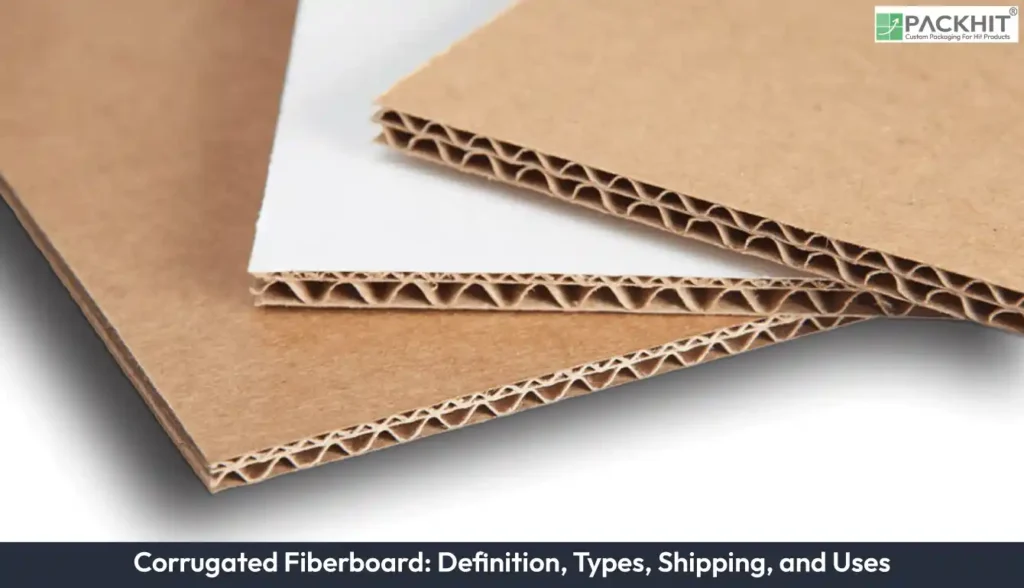
Corrugated fiberboard is an engineered paper-based packaging material designed to provide structural support and product protection across a wide range of applications. Its performance is determined by the combination of linerboard, fluted medium, and board construction, with different wall configurations and flute profiles suited to varying packaging requirements. These characteristics make it a practical choice for shipping, where strength, cushioning, and weight must be balanced. Beyond transportation, it is used in retail, industrial, protective, and creative applications because of its versatility and adaptability. Its recyclable fiber composition and potential for reuse also support packaging systems that prioritize efficient material recovery and responsible resource use.
- Components of Corrugated Fiberboard
- What are the Types of Corrugated Fiberboard?
- Why is Corrugated Fiberboard Widely Used for Shipping?
- Applications of Corrugated Fiberboard
- How Does Corrugated Fiberboard Contribute to Sustainability?
- Corrugated Fiberboard Specifications for Custom Packaging
- Why is Board Grade Important in Custom Corrugated Packaging?
- Do Coatings or Laminates Affect Corrugated Fiberboard Recyclability?
- How to Choose the Right Corrugated Fiberboard for Your Packaging Needs?
Components of Corrugated Fiberboard
Corrugated fiberboard consists of two primary components:
- Linerboard: Flat sheets of containerboard that provide structural integrity and aesthetic appeal.
- Medium: The fluted layer that offers cushioning and compressive strength.
Both the linerboard and medium are made from containerboard, a heavy-duty paper material. This composition ensures the fiberboard is strong, durable, and suitable for various packaging applications. The fluted layer, often referred to as the “medium,” is a wavy texture that provides structural integrity and cushioning. Different flute types, such as C flute, E flute, and B flute, offer varying levels of thickness and durability, catering to specific packaging needs.
What are the Types of Corrugated Fiberboard?
Corrugated fiberboard is available in a variety of types mentioned below:
Single-Wall
Single-wall corrugated fiberboard consists of one row of fluted paper sandwiched between two linerboards. It is suitable for lightweight and general-purpose applications.
Double-Wall
Double-wall corrugated fiberboard features two rows of fluted paper and three linerboards. This type provides enhanced strength and is ideal for heavier goods.
Triple-Wall
Triple-wall corrugated fiberboard includes three rows of fluted paper and four linerboards. It is the most durable option, often used for industrial containers and heavy-duty applications.
Flute Types
Corrugated fiberboard is available in various flute types, including:
- C Flute: Offers a balance between cushioning and strength, commonly used for shipping boxes.
- E Flute: Thinner and more compact, ideal for retail packaging and printing.
- B Flute: Provides excellent stacking strength and crush resistance, suitable for heavy items.
Why is Corrugated Fiberboard Widely Used for Shipping?
Corrugated fiberboard is widely used for shipping because it combines lightweight construction with high strength, helping protect products from impacts, vibration, and compressive stacking loads during transportation. The fluted medium acts as a cushioning layer that absorbs and distributes external forces, while the linerboards provide structural rigidity and help maintain the package’s shape. Different wall constructions and flute profiles allow manufacturers to match packaging strength to the weight, fragility, and shipping conditions of the product. In addition to providing reliable protection, corrugated fiberboard is easy to customize, cost-effective to manufacture, and recyclable, making it a practical choice for e-commerce, retail distribution, industrial shipments, and export packaging.
Applications of Corrugated Fiberboard
Corrugated fiberboard is used in various industries for packaging, shipping, retail displays, crafting, and construction due to its strength, versatility, and protective properties.
- Packaging: Corrugated fiberboard is widely used for packaging goods across industries. Its durability and cushioning properties make it ideal for shipping boxes, retail packaging, and protective containers.
- Retail Displays: Point-of-purchase (POP) displays made from corrugated fiberboard enhance product visibility in retail environments. These displays are lightweight, customizable, and eco-friendly.
- Crafting: Corrugated fiberboard is used in crafting applications, such as creating decorations, gift boxes, and scrapbooking materials. Its durability and aesthetic appeal make it a popular choice among hobbyists.
- Construction: Corrugated fiberboard is employed in construction for covering furniture, floors, and walls during renovation works. Its protective properties prevent damage from paint, tiling, and other construction activities.
How Does Corrugated Fiberboard Contribute to Sustainability?
Corrugated fiberboard plays a significant role in sustainable packaging practices due to its high recyclability and eco-friendly properties. It is predominantly made from recycled paper materials, and its recycling process ensures minimal environmental impact.
Recyclability
Corrugated fiberboard can be recycled through established paper recycling systems in many regions, where appropriate collection and processing facilities are available. Actual recovery and recycling rates vary by country, local collection infrastructure, and waste-management practices. The recycling process typically involves collecting, sorting, shredding, and reprocessing the material into new paper products, which can help reduce waste and the demand for virgin fiber.
Environmental Impact
Corrugated fiberboard is commonly manufactured using a combination of recycled and virgin paper fibers. The proportion of recycled content varies according to product specifications, performance requirements, and manufacturer practices. Using recycled fibers where appropriate can help improve resource efficiency and reduce demand for virgin materials, although the overall environmental impact depends on raw material sourcing, manufacturing processes, transportation, and recycling systems.
Reusability
Many corrugated fiberboard boxes can be reused for additional handling, storage, or shipping cycles if they remain structurally sound. Their reuse potential depends on factors such as moisture exposure, handling damage, load requirements, and the intended application. Extending the service life of suitable boxes can help reduce packaging waste and lower replacement costs.
Corrugated Fiberboard Specifications for Custom Packaging
Custom corrugated fiberboard specifications for branded shipping packages define board type, sheet dimensions, flute profile, liner construction, strength targets, and print-ready dielines so the carton protects the product while matching the manufacturer’s branding. The table below provides general selection guidance to help manufacturers identify a suitable configuration for common custom packaging applications.
| Packaging Requirement | Recommended Option | Why |
|---|---|---|
| Lightweight consumer products | Single-wall | Balances protection and material efficiency |
| Fragile products | C flute or double-wall | Additional cushioning and stacking strength |
| Heavy products | Double-wall or triple-wall | Greater compression resistance |
| Premium retail packaging | E flute | Thin profile with good print quality |
| Long-distance shipping | Double-wall with appropriate flute | Better resistance to handling and stacking loads |
| High-humidity environments | Moisture-resistant board or protective coatings | Helps maintain structural performance |
A suitable corrugated specification should be confirmed through prototype testing or supplier validation before full production. This helps identify potential issues with fit, compression, handling, printing, and transit performance while changes are still practical and cost-effective.
Why is Board Grade Important in Custom Corrugated Packaging?
Board grade determines the overall strength and performance of corrugated fiberboard by influencing its resistance to compression, punctures, and handling stresses. Even when two boxes have the same wall construction or flute type, different board grades can provide different levels of protection. Selecting an appropriate board grade helps ensure the packaging performs as intended throughout storage and transportation.
Do Coatings or Laminates Affect Corrugated Fiberboard Recyclability?
They can. Wax coatings, plastic laminates, metallic finishes, and certain barrier treatments may make corrugated packaging more difficult to process through standard paper recycling systems. Manufacturers should confirm whether the selected treatment is compatible with local recycling facilities, especially when moisture resistance or premium finishes are required.
How to Choose the Right Corrugated Fiberboard for Your Packaging Needs?
The right corrugated fiberboard depends on the product’s weight, fragility, shipping conditions, and storage requirements. Single-wall board is suitable for lightweight consumer products and general shipping. In contrast, double-wall and triple-wall boards provide greater stacking strength and impact resistance for heavier or industrial goods. Flute selection is equally important: the C flute offers a balance of cushioning and strength, the B flute provides improved crush resistance, and the E flute is commonly used where a thinner profile and high-quality printing are required. Selecting the appropriate board grade and flute combination helps protect products, reduce transit damage, and avoid unnecessary packaging costs.
What Factors to Consider When Selecting Corrugated Fiberboard?
Before selecting corrugated fiberboard for custom packaging, identify the product’s dimensions, weight, fragility, stacking requirements, shipping method, moisture exposure, and branding needs. These factors determine the appropriate wall construction, flute profile, board grade, and box design, helping achieve adequate product protection without using more material than necessary.
