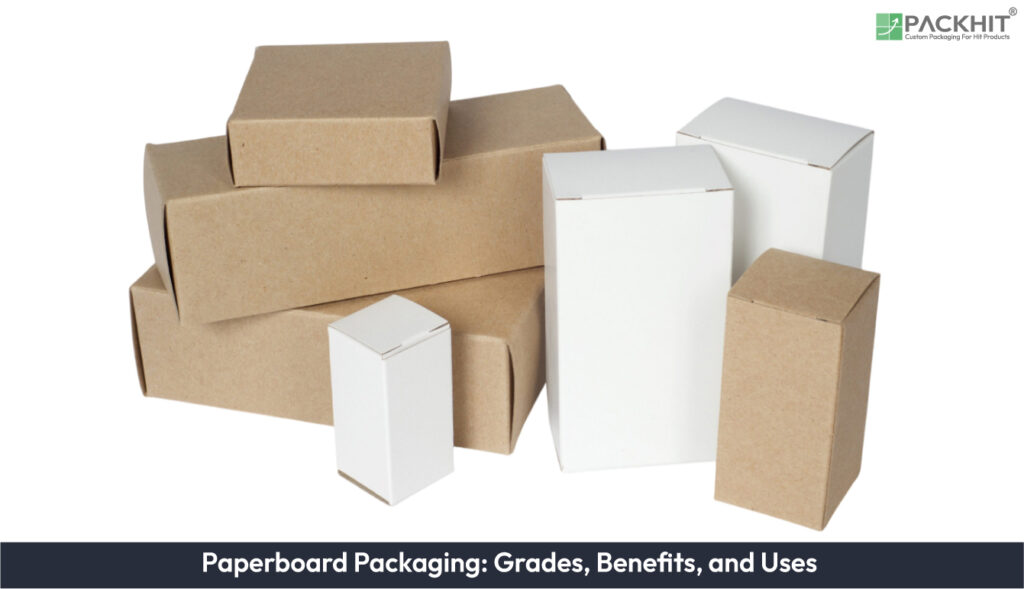
Paperboard packaging is packaging made from paperboard sheets and formed boxes or cartons for protecting, printing, and stacking products. Paperboard is available in several grades, including SBS, CUK, recycled paperboard, FBB, and WLC, each suited for specific applications based on strength, appearance, and sustainability. Its benefits span environmental (biodegradability, renewable sourcing), economic (cost-efficiency, lightweight shipping), and functional (customizability, protection, branding) advantages. Paperboard packaging is used across consumer, food and beverage, retail, and industrial sectors, competing favorably with plastic, metal, and glass due to its eco-friendliness and versatility.
- Types of Paperboard Grades in Packaging
- 1. Solid Bleached Sulfate (SBS):
- 2. Coated Unbleached Kraft (CUK)
- 3. Recycled Paperboard
- 4. Folding Boxboard (FBB)
- 5. White-Lined Chipboard (WLC)
- What are the Benefits of Paperboard Packaging?
- What are the Uses of Paperboard Packaging?
- Comparative Analysis: Paperboard vs. Other Packaging Materials
- Future Trends in Paperboard Packaging
Types of Paperboard Grades in Packaging
Paperboard grades used in packaging include SBS (solid bleached sulfate), SBB (solid bleached board), and kraft or recycled liners, with each grade chosen for stiffness, surface brightness, printability, and moisture resistance.
1. Solid Bleached Sulfate (SBS):
SBS is processed from virgin fibers, which produces a smooth white surface. That surface supports fine line detail and consistent ink laydown, making it a strong option for premium graphics where appearance matters. This grade often supports high-visibility converting processes such as embossing and foil stamping, which depend on a stable, bright top layer. Common applications include packaging for food, pharmaceuticals, and cosmetics.
2. Coated Unbleached Kraft (CUK)
CUK uses unbleached wood fibers, and its internal strength carries through heavy-duty structures. Coatings on CUK improve print coverage and surface strength, while the kraft fiber base contributes better moisture and puncture resistance than many fully bleached boards. Beverage carriers and frozen food packaging use this balance because the material needs strength during drop, stacking, and temperature swings. The natural look also supports brands that prioritize an earth-toned appearance for shelf communication.
3. Recycled Paperboard
Recycled paperboard uses recycled fiber inputs, which reduces reliance on virgin pulp and supports a circular packaging approach. It is common for secondary packaging, including corrugated liners, retail cartons, and internal partitioning. Cost control drives many selections, while performance depends on grade consistency and basis weight. Recycled grades work best when the package does not require the same level of brightness or barrier performance as solid bleached boards, unless coatings or laminations add the needed protection.
4. Folding Boxboard (FBB)
FBB has a lightweight, multi-layer structure that balances stiffness with folding performance. Packaging uses it for folding cartons because it resists edge crush in transit while still forming clean die lines at the carton creases. Its print surface supports sharp graphics for confectionery, cosmetics, and pharmaceutical labels where brand color accuracy matters. When printers and converters choose finishes such as aqueous coatings, varnishes, or lamination films, FBB’s layered construction helps maintain flatness after processing.
5. White-Lined Chipboard (WLC)
WLC combines a white top ply for printing with a gray or brown core built from recycled fibers. That structure keeps material costs lower while retaining enough thickness for rigid-feel carton builds and retail packaging. Household goods, toys, and electrical appliance packaging use WLC because it supports die-cut windows and labeling needs without requiring fully bleached brightness across the entire sheet. Durability depends on basis weight and the presence of moisture protection films when the packaged product faces humidity.
Each paperboard grade gives distinct trade-offs, so selection links to the package closure and any coating or moisture-barrier layer. Choose SBS for fine-detail graphics and premium surface performance if moisture resistance can be handled through coatings or barrier films for the intended environment. Choose CUK when strength and moisture resistance matter in demanding conditions, but expect a more natural base color that affects print brightness compared with fully bleached grades. Recycled grades reduce material cost and support sustainability targets, if the product protection requirement stays within the board’s baseline barrier limits or coatings correct for humidity exposure.
What are the Benefits of Paperboard Packaging?
Paperboard packaging provides environmental, economic, and functional advantages that fit common US shipping and retail requirements for products that use paper-based packaging.
The benefits of paperboard packaging are detailed below:
Environmental Benefits
- Sustainability: Paperboard is biodegradable and recyclable, which reduces long-term waste when local recycling programs accept paper-based cartons and liners. Production often uses energy-efficient forming and drying steps, and manufacturers reduce scrap through tighter converting tolerances.
- Renewable Resource: Paperboard comes primarily from wood pulp. Certified sustainable forestry sourcing supports long-term fiber availability and consistent feedstock for packaging runs.
Economic Benefits
- Cost-Effectiveness: Paperboard costs less than many metal or rigid plastic options per unit of packaging volume. Unit costs drop as manufacturers order common sizes and run long production batches with low changeover time.
- Efficient Production: Paperboard converts through established processes like folding, gluing, and die-cutting, which supports consistent dimensions across cartons and sleeves while reducing in-plant handling time.
- Lightweight Shipping: Lower material weight compared to metal or glass reduces shipping costs and can cut fuel use during distribution, especially for products shipped by volume rather than by mass.
Functional Benefits
- Customizability: Paperboard accepts changes in thickness, flute structure, and surface finish to match packaging requirements. Converting processes such as die-cutting, embossing, and lamination support specific handling needs and presentation goals.
- Product Protection: Package stiffness and board strength support stacking and reduce edge deformation during transit. Barrier selection controls specific risks, so choose grease and moisture barrier coatings based on the food or product contact level, such as a grease-resistant coating for oil-bearing foods and a stronger moisture barrier for high-humidity items.
- Branding Opportunities: Printability on smooth paperboard surfaces supports sharp logos, product labels, and regulatory text, including small type for ingredient or handling details.
In practice, paperboard works best when the closure, coating, and moisture/barrier needs match the product category; for higher-moisture foods or extended cold-chain storage, barrier coatings should be selected to prevent softening or edge wicking.
What are the Uses of Paperboard Packaging?
Paperboard packaging is used for protecting and presenting consumer and industrial products in shipping cartons, retail boxes, folding cartons, and subscription or gift packaging.
Consumer Goods
Paperboard is widely used for packaging consumer goods such as food, beverages, cosmetics, and electronics. Its ability to be customized and printed makes it ideal for branding and product differentiation.
Food and Beverage Packaging
Paperboard is commonly used for food and beverage packaging, including cereal boxes, frozen food cartons, and beverage carriers. Coatings can be applied to enhance moisture resistance and ensure food safety.
Retail Packaging
Retail products such as clothing, accessories, and small electronics often use paperboard packaging for its aesthetic appeal and protective qualities.
Industrial Applications
Paperboard is also used for industrial applications, such as packaging for tools, hardware, and automotive parts, where durability and strength are essential.
Comparative Analysis: Paperboard vs. Other Packaging Materials
Packaging materials are crucial in determining the functionality, sustainability, and cost-effectiveness of a product’s packaging solution. The table below shows a comparative analysis that highlights the strengths and weaknesses of paperboard when weighed against other common materials like plastic, metal, and glass.
| Material | Advantages | Disadvantages |
|---|---|---|
| Paperboard | Eco-friendly, lightweight, customizable, cost-effective | Limited moisture resistance without coating |
| Plastic | Durable, moisture-resistant, versatile | Non-biodegradable, higher environmental impact |
| Metal | Strong, long-lasting, excellent barrier properties | Heavy, expensive, less customizable |
| Glass | Reusable, inert, premium appearance | Fragile, heavy, costly |
This comparison underscores the unique advantages of paperboard as a packaging material, particularly for manufacturers prioritizing sustainability and cost-efficiency. While each material has its niche applications, paperboard’s balance of functionality, customizability, and environmental benefits positions it as a versatile and forward-thinking choice in modern packaging solutions. By understanding these distinctions, manufacturers can make informed decisions tailored to their specific packaging needs.
Future Trends in Paperboard Packaging
The paperboard packaging industry is evolving to meet changing consumer demands and environmental challenges. The key trends in paperboard packaging are mentioned below:
- Increased Use of Recycled Materials: Manufacturers are incorporating more recycled fibers to enhance sustainability.
- Innovative Coatings: Development of biodegradable and compostable coatings to improve barrier properties.
- Smart Packaging: Integration of QR codes and NFC technology for interactive consumer experiences.
- Lightweight Designs: Focus on reducing material usage while maintaining strength and functionality.