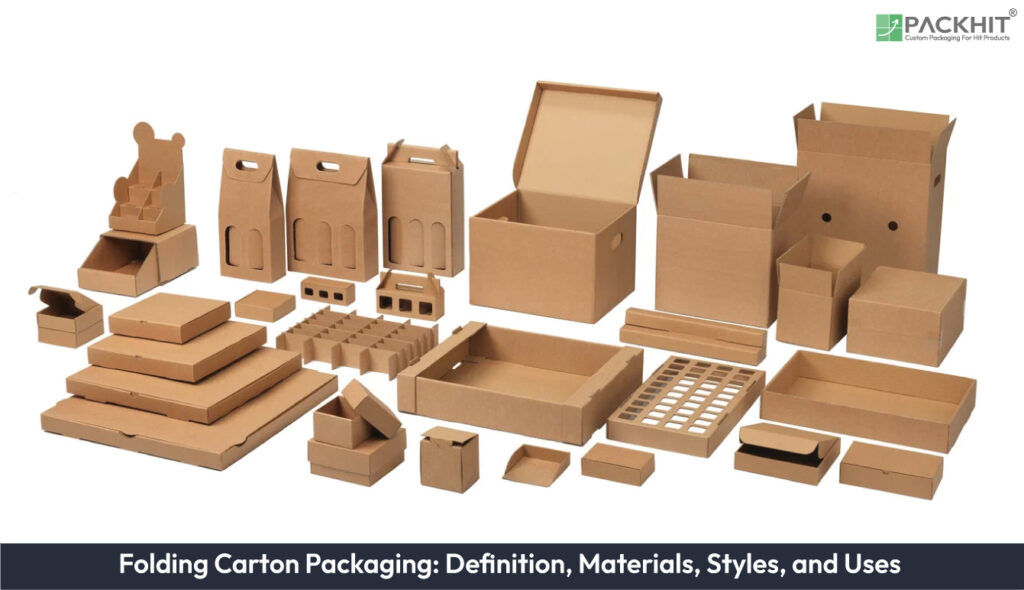
Folding cartons are paperboard packaging boxes that are printed, cut, and shipped flat for efficient storage, then assembled for use. They are primarily made from materials like SBS, CRB, and uncoated paperboard, with optional specialty coatings such as gloss, matte, barrier layers, and foil laminations. Common styles of folding cartons include straight tuck end, reverse tuck end, auto-bottom, and two-piece designs, each tailored for specific product needs. These cartons are widely used across industries such as food and beverage, cosmetics, pharmaceuticals, and consumer electronics.
- What is a Folding Carton?
- What Materials are Used to Manufacture Folding Cartons?
- What are the Styles of Folding Cartons?
- Which Industries Use Folding Cartons?
- The Benefits of Folding Carton Packaging
- Can Folding Cartons Support Heavy or Fragile Products?
- Are Folding Cartons Environmentally Friendly?
- What Types of Businesses Benefit the Most from Using Folding Cartons?
- How to Choose the Right Folding Carton?
What is a Folding Carton?
A folding carton is a type of packaging made from paperboard that is cut, folded, laminated, and printed to create a box or container. These cartons are shipped flat to save space and are assembled at the point of use. Folding cartons are known for their structural integrity, ease of customization, and ability to accommodate a wide range of product types.
What Materials are Used to Manufacture Folding Cartons?
The most common materials used to manufacture folding cartons are discussed below:
Paperboard Grades
Paperboard is the primary material used in folding cartons, available in various grades:
- Solid Bleached Sulfate (SBS): A high-quality, white paperboard ideal for printing and premium packaging.
- Coated Recycled Board (CRB): Made from recycled fibers, suitable for cost-effective and eco-friendly packaging.
- Uncoated Paperboard: Provides a natural, matte finish for a rustic or eco-conscious look.
Specialty Coatings and Laminations
To enhance functionality, folding cartons can include specialty coatings such as:
- Gloss or Matte Coatings: Improve visual appeal and provide surface protection.
- Barrier Coatings: Offer resistance to moisture, grease, or UV light.
- Foil Laminations: Add a metallic finish for luxury packaging.
What are the Styles of Folding Cartons?
Folding cartons come in a variety of styles, each designed to meet specific packaging needs. They are crafted to enhance functionality, durability, and visual appeal, while catering to the requirements of various industries.
The following are the most common styles of folding cartons:
1. Straight Tuck End (STE)
Straight tuck end feature tuck flaps on both ends that fold in the same direction, creating a seamless and professional look. These cartons are ideal for lightweight products such as cosmetics, pharmaceuticals, and small retail items. Their efficient design also supports high-speed assembly lines, making them a popular choice for manufacturers prioritizing productivity.
2. Reverse Tuck End (RTE)
Reverse tuck ends have tuck flaps that fold in opposite directions, aimed at improving stability and helping secure closures. These cartons are commonly used for retail goods like toys, electronics, and food products, and provide a cost-effective packaging solution with a polished presentation.
3. Auto-Bottom
Auto-bottom features a pre-glued bottom that automatically locks into place when the carton is opened to provide additional structural support. This makes them well-suited for heavier items such as jars, bottles, and industrial components. These cartons are also time-saving during assembly, streamlining packaging operations for high-volume products.
4. Two-Piece
A two-piece consists of a separate lid and base, often used for luxury and premium products such as gift items, high-end cosmetics, and specialty foods. Their elegant design enhances the unboxing experience, elevating brand perception. These cartons can be customized with premium finishes, including embossing, foil stamping, and specialty coatings, for added sophistication.
Which Industries Use Folding Cartons?
Folding cartons are an integral part of packaging solutions across numerous industries, such as food and beverage, cosmetics, and pharmaceuticals, due to their versatility, durability, and customizable design.
Below are some key sectors that rely heavily on folding carton packaging:
Food and Beverage
Folding cartons are widely used in the food and beverage industry for products such as cereal, frozen foods, and beverages. They provide excellent branding opportunities and can include barrier coatings for food safety.
Cosmetics and Personal Care
In the cosmetics industry, folding cartons are used to package items like skincare products, perfumes, and makeup. Their customizable design allows for premium finishes that enhance brand perception.
Pharmaceuticals
Pharmaceutical companies use folding cartons for packaging medicines, supplements, and medical devices. These cartons can include tamper-evident features and detailed labeling for compliance.
Consumer Electronics
Folding cartons are also used for small consumer electronics such as headphones, chargers, and accessories. They protect during transit and a professional presentation.
The Benefits of Folding Carton Packaging
Folding carton packaging offers cost-effective, customizable, sustainable, and flexible protection for manufacturers shipping tangible products in the United States.
The key benefits of folding carton packaging are discussed below:
- Cost-Effective: Folding cartons reduce material usage because they ship flat and assemble on-site. Space savings also reduce freight volume and warehouse storage, using the same die-cut blanks for repeated runs.
- Customizable: Folding cartons support structural changes such as window cut-outs and auto-bottom (open-and-fold) builds. Branding and graphics customize the carton surface through methods like embossing, foil stamping, and print finishes aligned to the carton grade and artwork coverage.
- Sustainable: Many folding cartons use recyclable paperboard bases with water-based inks. Coatings match the exposure type: water-based coatings support general moisture control, while grease-resistant coatings address handling oils; manufacturers can also use cellulose-based window materials to reduce reliance on plastic films.
- Versatile: Folding cartons cover consumer and industrial lines. Food packaging uses barrier-coated constructions for safety and shelf life, while premium retail uses design options such as magnetic closures and waterfall windows for expanded product reveal.
- Enhanced Product Protection: Barrier and functional coatings target transit conditions. UV protection coatings manage light exposure for photosensitive items, while moisture-resistant and grease-proof layers reduce transfer from condensation and oily fingerprints during storage and distribution.
- Optimized Assembly: Auto-bottom cartons and pre-glued designs reduce manual steps. Pre-glued flaps speed packing on high-volume lines and keep carton sealing consistent across shifts.
Can Folding Cartons Support Heavy or Fragile Products?
Yes. Use a reinforced paperboard grade such as solid bleached sulfate (SBS) or kraft linerboard if the product needs higher crush strength and puncture resistance. Add a moisture barrier film coat if exposure to grease or humidity happens, and select an auto-bottom or two-piece carton structure if drop and handling impacts occur.
Are Folding Cartons Environmentally Friendly?
Yes. Folding cartons commonly use recyclable paperboard, if the pack is recovered through local paper recycling streams. Choose a low-migration aqueous coating if food-contact or general exterior rub happens, and specify a cellulosic or glass-free window material if customers need display visibility without plastic.
What Types of Businesses Benefit the Most from Using Folding Cartons?
Food and beverage, cosmetics, pharmaceuticals, and consumer electronics benefit from folding cartons if brand labeling and shelf-ready presentation matter. Pick coated carton stocks with good printability if fine graphics need sharp edges, and select moisture or abrasion protection if product use includes contact, condensation, or transport wear.
How to Choose the Right Folding Carton?
Choose a folding carton by matching product weight and distribution needs to the carton’s board grade, selecting the print and coating options for shelf and moisture exposure, and confirming the dieline, closure method, and test data for shipping performance.
- Weight: Use the board strength (board grade or burst/compression strength) that matches the packed product mass and the handling scenario, such as conveyor transport or retail associates pick-and-pack; request the board strength test result or specification sheet that correlates to the packed carton weight and handling loads.
- Moisture exposure: Add coatings or barrier layers if the product sits in humid warehouses, sees condensation, or ships near cold storage.
- Shelf exposure: Pick print inks and surface finish for abrasion and scuff resistance, if carts are stocked in high-touch retail bays.
- Distribution handling: Choose a closure method that resists opening, if the carton runs through long-distance trucking or mixed pallet patterns.
- Assembly speed: Align flap geometry and glue points to the packing equipment, if your line requires fast blank-fed folding with low jam rates.