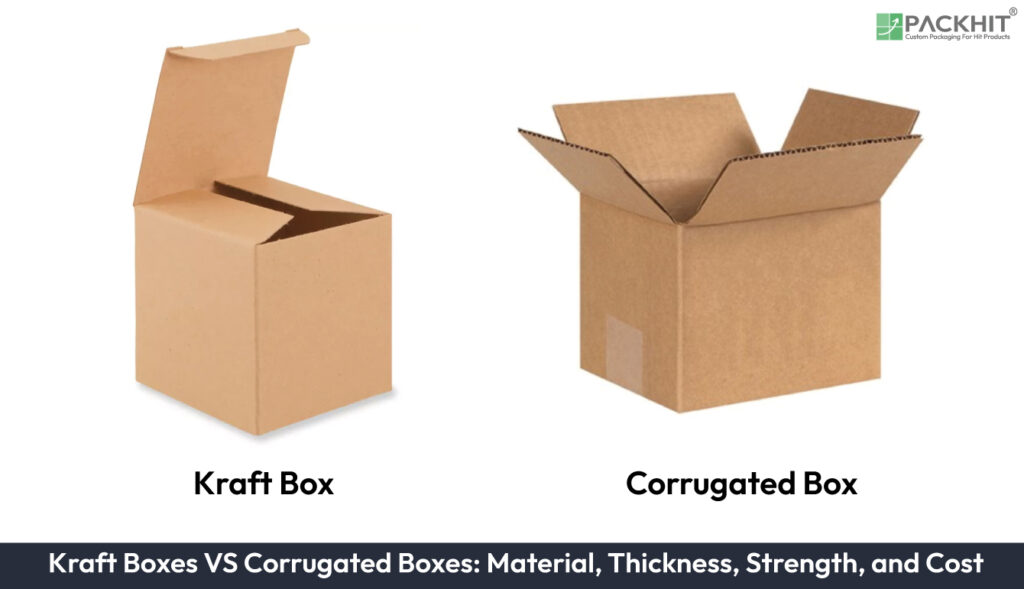
Kraft boxes and corrugated boxes represent two distinct categories of paper-based packaging solutions, each optimized for specific applications based on their material composition, structural properties, and cost-effectiveness. Kraft boxes are made from kraft paper, derived from softwood fibers like pine or spruce, offering a lightweight yet robust packaging solution ideal for eco-friendly and cost-effective applications. Their single-layer construction provides moderate strength, suitable for lightweight retail items, though they can be reinforced with corrugated layers for added durability. In contrast, corrugated boxes feature multi-layered cardboard with fluted layers that enhance strength and load-bearing capacity, making them suitable for heavy-duty applications like shipping electronics and industrial goods. While kraft boxes are affordable and environmentally friendly, corrugated boxes offer superior protection but come at a higher cost. Both packaging types are recyclable, with kraft boxes being particularly praised for their sustainability.
- What is the Difference Between Kraft Boxes and Corrugated Boxes?
- 1. Material and Structure
- 2. Thickness and Size
- 3. Strength and Load Capacity
- 4. Cost
- 5. Environmental Impact and Sustainability
- What are the Applications of Kraft and Corrugated Boxes?
- Specifications Comparison of Kraft Boxes vs. Corrugated Boxes
- Are Kraft Boxes Stronger Than Corrugated Boxes?
- Can Kraft Boxes be Used for Shipping?
- Which is More Sustainable: Kraft Boxes or Corrugated Boxes?
- How to Choose Between Kraft Boxes and Corrugated Boxes?
What is the Difference Between Kraft Boxes and Corrugated Boxes?
Kraft boxes and corrugated boxes differ in several critical aspects, including material composition, structural design, thickness and size, strength and load capacity, cost, and environmental impact and suitability. Understanding these differences helps manufacturers select the most appropriate packaging solution for their specific needs.
The five key differences between Kraft boxes and corrugated boxes are detailed below:
1. Material and Structure
Kraft boxes are constructed from kraft paper, a material derived from the chemical pulping process of softwood fibers such as pine or spruce. This process produces kraft paper with useful tensile and tear properties for many packaging applications. Actual strength depends on paper grade, basis weight, fiber characteristics, and manufacturing specifications. The material is lightweight yet robust, making it suitable for packaging applications that prioritize eco-friendliness and cost efficiency. Kraft boxes are often single-layered but can incorporate corrugated cardboard for added strength when required.
Corrugated boxes are composed of corrugated cardboard, a multi-layered material featuring a fluted inner layer sandwiched between two flat linerboards. This structure can improve rigidity, cushioning, and impact resistance compared with single-layer paper formats, although performance depends on flute profile, board grade, wall construction, and testing conditions. The fluting, available in various grades (e.g., A, B, C, E), determines the box’s cushioning properties and load-bearing capacity. Corrugated cardboard is typically made from recycled paper fibers, contributing to its sustainability profile.
2. Thickness and Size
Kraft paper thickness varies according to paper grade, basis weight, and the intended packaging application. Some lightweight retail cartons use relatively thin kraft paper, while reinforced constructions combine kraft paper with corrugated board or additional layers to improve durability. Actual thickness should always be confirmed using the supplier’s specification sheet. This adaptability allows kraft boxes to accommodate a range of packaging needs, from lightweight retail items to moderately heavy goods.
Corrugated board thickness depends on flute profile, board grade, wall construction, and manufacturing specifications. Single-wall, double-wall, and triple-wall boards provide progressively greater thickness and structural performance. Manufacturers should compare supplier specifications rather than relying on generalized dimensions alone.
3. Strength and Load Capacity
Kraft boxes provide moderate strength for lightweight retail packaging such as food products, cosmetics, mugs, jars, and similar consumer goods. Their performance depends on factors including paper grade, board thickness, box design, and the expected handling environment. For applications requiring additional protection, kraft paper can be combined with corrugated board or internal protective inserts.
Corrugated boxes are designed for higher compression strength and impact resistance because their fluted core distributes loads more effectively than single-layer paperboard. Typical load-bearing performance varies according to flute profile, board grade, wall construction (single-, double-, or triple-wall), box dimensions, and testing conditions. Rather than relying on generalized weight limits, manufacturers should review supplier specification sheets and relevant test data when selecting corrugated packaging for stacking, shipping, or heavy products.
4. Cost
Kraft boxes can be cost-efficient for applications where lightweight protection and simple construction meet product requirements. Actual cost advantages depend on material grade, production volume, printing requirements, and transportation factors. Their lightweight nature reduces shipping costs, and their recyclability aligns with cost-saving sustainability initiatives. For manufacturers prioritizing budget constraints, kraft boxes offer an economical solution without compromising on basic functionality.
Corrugated boxes are generally more expensive than kraft boxes, reflecting their complex manufacturing process and superior material properties. The cost increases with the addition of multiple walls or specialized flute grades. However, their durability and protective features often justify the higher expense, particularly for applications involving high-value or fragile goods. Bulk production and the use of recycled materials can mitigate costs to some extent.
5. Environmental Impact and Sustainability
Kraft boxes are commonly manufactured from kraft paper, which is typically recyclable where suitable recycling facilities exist. Depending on the paper grade, coatings, adhesives, laminations, inks, and local waste-management infrastructure, some kraft packaging may be compatible with composting or biodegradation pathways when the specific paper formulation, coatings, adhesives, inks, and applicable local systems support those outcomes.
Corrugated boxes are also widely recyclable and frequently contain recycled fiber. Their environmental performance depends on factors such as recycled content, manufacturing methods, transportation, coatings, adhesives, and local recycling systems. Although corrugated packaging generally uses more material than single-layer kraft paper, its durability can reduce product damage and support reuse in certain distribution environments.
Manufacturers should evaluate sustainability based on the complete packaging system, including material composition, product protection requirements, transportation conditions, and available end-of-life recovery options, rather than relying on generalized environmental claims.
Performance, recyclability, and end-of-life suitability vary by paper grade, coatings, adhesives, board construction, and local waste-management infrastructure. Manufacturers should confirm material specifications and relevant test data from suppliers before applying these characteristics to a specific packaging requirement.
What are the Applications of Kraft and Corrugated Boxes?
The applications of kraft and corrugated boxes are given below:
Kraft Boxes:
- Retail Packaging: Commonly used for artisanal products, cosmetics, food items, and small gifts due to their natural appearance and strong branding appeal.
- Eco-Conscious Product Packaging: Preferred by brands seeking a sustainable and minimal packaging style that highlights environmentally friendly values.
- Bulk Packaging: Offers a cost-effective solution for lightweight products and applications where heavy-duty protection is not required.
Corrugated Boxes:
- Shipping and Logistics: Widely used for transportation and distribution because of their strength, durability, and protective structure.
- Electronics Packaging: Provides cushioning and impact protection for sensitive products such as electronic devices and components.
- Industrial and Food Transportation: Used for industrial parts, perishable goods, and other products requiring reliable protection during handling and long-distance shipping.
Specifications Comparison of Kraft Boxes vs. Corrugated Boxes
Kraft boxes and corrugated boxes are both widely used paper-based packaging solutions, but they differ in construction, strength, cushioning performance, and shipping suitability. Kraft boxes are commonly chosen for lightweight retail packaging and presentation, while corrugated boxes are designed to provide greater protection during storage and transportation. The table below compares their key specifications.
| Attribute | Kraft Boxes | Corrugated Boxes |
|---|---|---|
| Construction | Single-layer kraft paper (may be reinforced) | Fluted medium between linerboards |
| Weight | Lightweight | Moderate to heavy-duty |
| Protection | Moderate | High |
| Cushioning | Limited | Excellent |
| Stacking Performance | Moderate | High |
| Shipping Suitability | Short-distance or lightweight products | Shipping and distribution |
| Printing Surface | Excellent | Good |
| Cost | Generally lower | Generally higher |
| Sustainability | Depends on paper grade, coatings, and local recycling systems | Depends on recycled content, coatings, and local recycling systems |
The choice between kraft and corrugated boxes depends on the product’s protection requirements, transportation conditions, branding priorities, and budget. Kraft boxes are well suited for lightweight products and attractive retail presentation, whereas corrugated boxes provide superior durability and cushioning for shipping, warehousing, and distribution applications.
Are Kraft Boxes Stronger Than Corrugated Boxes?
No. Corrugated boxes generally provide greater compression strength and cushioning because of their fluted structure. The exact performance depends on board grade, wall construction, flute profile, and package design.
Can Kraft Boxes be Used for Shipping?
They can be used for lightweight shipments or retail products with limited handling. Products requiring higher protection or heavy stacking generally benefit from corrugated packaging.
Which is More Sustainable: Kraft Boxes or Corrugated Boxes?
Both materials can support sustainable packaging objectives when selected appropriately. Environmental performance depends on recycled content, coatings, manufacturing methods, transportation, reuse potential, and the recycling or composting infrastructure available after use.
How to Choose Between Kraft Boxes and Corrugated Boxes?
Choosing between kraft boxes and corrugated boxes depends on balancing product protection, transportation demands, branding goals, sustainability objectives, and overall packaging cost.
- Choose kraft boxes for lightweight retail products where print quality, presentation, lower material usage, and cost efficiency are the primary priorities.
- Choose corrugated boxes for products that require cushioning, stacking strength, or protection during storage and shipping.
- Review supplier specifications for paper grade, board construction, flute profile, and performance testing when protection requirements are critical.
- Consider the complete packaging system, including storage conditions, transportation, product fragility, and recycling or disposal requirements before selecting a material.
For many businesses, kraft and corrugated materials are used together, with kraft supporting retail presentation and corrugated providing protective transport packaging.