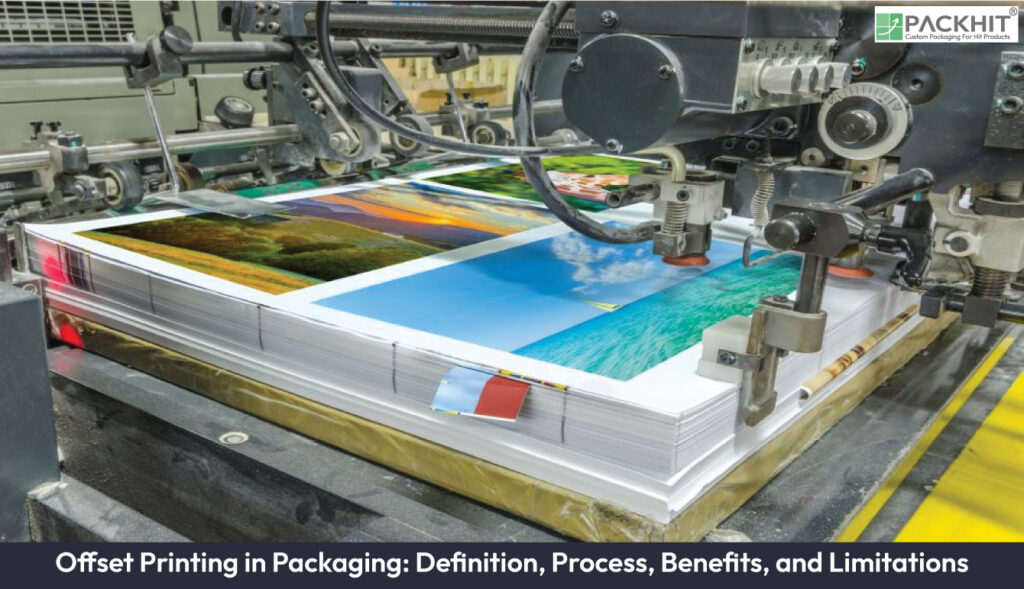
Offset printing, also known as offset lithography, is a printing technique that transfers an inked image from a metal plate to a rubber blanket and then onto the printing surface. It is commonly used for packaging applications that require detailed graphics, consistent color reproduction, and controlled production quality. While it ensures sharp colors and consistent results, it has drawbacks like high setup costs and limited customization.
- What is Offset Printing?
- How Does Offset Printing Work?
- What are the Key Components of Offset Printing?
- Benefits of Offset Printing
- Limitations of Offset Printing
- Applications of Offset Printing in Packaging
- What are the Differences Between Offset Printing and Digital Printing?
- When to Choose Offset Packaging?
What is Offset Printing?
Offset printing, also referred to as offset lithography, is a mass-production printing method that involves transferring an inked image from a metal plate to a rubber blanket and then onto the printing surface. This indirect printing process supports consistent image reproduction, making it suitable for packaging applications where detailed graphics, brand colors, and repeatable output are important. For packaging manufacturers, factors such as substrate surface, artwork complexity, and finishing requirements should be reviewed before production because these can affect print sharpness and final appearance.
Properties of Offset Printing
Offset printing is defined by its ability to deliver consistent, high-quality output across large production volumes. Its main characteristics relate to production efficiency, material compatibility, and image reproduction quality.
- Type: Printing technique designed for high-volume production.
- Material: Uses metal plates, rubber blankets, and wet ink.
- Use: It is commonly used for printing on paper, cardboard, and other packaging materials.
- Applications: Offset printing is widely used for packaging, books, newspapers, and promotional items.
- Emerging Trends: Advancements in eco-friendly inks and digital integration are enhancing the efficiency and sustainability of offset printing.
- Purpose: To enable efficient, high-quality printing for mass production.
- Features: High-quality image reproduction, cost-effectiveness for large runs, and compatibility with diverse materials.
How Does Offset Printing Work?
The offset process relies on a sequence of controlled transfers that move artwork from a prepared plate onto the final packaging surface.
1. Plate Preparation
Plate preparation creates the metal plates that carry the printable image; printers most often use grained aluminum plates. Color-separated artwork converts to CMYK or specified Pantone plates, then a computer-to-plate (CTP) device images each plate. Technicians develop and wash the plates, apply a protective coating or gum, and inspect registration marks and trapping before mounting.
2. Ink Application
The press meters and distributes ink across a series of rollers that contact each plate. A water-based dampening system keeps non-image areas hydrophilic, so ink adheres only to the image areas. Operators adjust ink keys and viscosity to balance color density and maintain consistent ink film across the run.
3. Image Transfer
Each plate transfers its ink to a rubber blanket; the blanket then transfers the image to the substrate. The impression cylinder applies controlled pressure to produce sharp detail on paper or cardboard. Multi-unit presses register successive colors (CMYK or spot inks) using mechanical registration and inline sensors to keep colors aligned.
4. Drying and Finishing
Printers dry or cure inks using hot-air, infrared dryers, or UV curing for UV inks. After drying, the workflow proceeds to inline or offline finishing, such as aqueous or UV varnish, lamination, foil stamping, embossing, die-cutting, folding, and gluing. For packaging applications, manufacturers should confirm that selected coatings or decorative finishes maintain the readability of small text, symbols, and barcodes. Finishing choices should also match the intended handling conditions and appearance requirements of the package.
What are the Key Components of Offset Printing?
Three main elements control how an offset press transfers artwork onto packaging: the plate that carries the image, the blanket that transfers the ink, and the press system that manages the printing process.
Metal Plates
Metal plates carry the printable image and transfer ink to the rubber blanket. Printers most often use grained aluminum plates and polymer plates as examples. Each color uses a separate plate for CMYK or for spot Pantone inks. Plate durability can vary significantly depending on plate type, press conditions, ink system, and production requirements. In high-volume applications, plates are designed to support extended production runs while maintaining consistent image transfer.
Rubber Blankets
Rubber blankets receive the inked image from the plate and transfer it to the substrate. The blanket surface compresses to accommodate substrate texture, and it reduces direct wear on the plate. Printers select blanket hardness based on the substrate type, for example, coated paper or corrugated board. Blankets support full-color CMYK transfers and spot ink, and they require periodic replacement to maintain image sharpness.
Printing Press
The printing press mounts plates and blankets and feeds substrate through the inking and dampening systems. Press types include sheetfed presses that feed individual sheets and web presses that print from roll stock for long runs. Modern presses use registration controls, ink adjustment systems, and drying technologies to maintain consistent results during production. The choice of drying and finishing options depends on the packaging material and desired appearance; for example, coatings may be selected when additional surface protection or a specific visual effect is required. Manufacturers should confirm that the selected finish does not reduce text readability, barcode scanning, or compatibility with the final packaging application.
Benefits of Offset Printing
For packaging manufacturers, offset printing is mainly valued when visual consistency, detailed graphics, and efficient large-scale production are priorities.
High-Quality Image Reproduction
Offset printing produces sharp, continuous-tone images with fine detail and smooth gradients; it reproduces photographs, product images, and fine typography. Printers use halftone screening and precise registration control to reproduce detailed images, logos, and small text. The achievable level of detail depends on factors such as press setup, substrate quality, and the requirements of the packaging design.
Cost-Effectiveness for Large Runs
Unit cost declines as run length increases because plate and setup costs are fixed and spread across more units. Offset printing often becomes more cost-efficient as production volume increases because plate preparation and setup costs are distributed across more printed units. The point where offset becomes economical depends on factors such as order size, substrate choice, and production requirements. Manufacturers source offset printing services, including full-color offset printing.
Material Versatility
Offset presses print on a wide range of substrates, including coated paper, uncoated stock, folding cartons, and some corrugated boards. Common applications include folding cartons, coated papers, and packaging materials where surface quality and finishing options are important. The suitable substrate depends on factors such as thickness, surface texture, and the intended finishing process. Blanket hardness and plate selection adapt to substrate texture to preserve image fidelity.
Color Precision
Offset supports process CMYK and spot Pantone inks for repeatable brand colors. Printers use color management processes and measurement tools to monitor consistency during production. These controls help maintain repeatable brand colors, although results can vary depending on substrate characteristics, ink systems, and production conditions.
Limitations of Offset Printing
Some of the limitations of offset printing are mentioned below:
- High Setup Costs: The initial investment in plates and prepress equipment makes it less cost-effective for small print runs.
- Longer Turnaround Time: The multi-step process requires more time compared to digital printing.
- Limited Customization: Offset printing is less adaptable for projects requiring frequent updates or variable data printing.
- Material Waste: The setup process generates more waste compared to digital printing, which may impact sustainability efforts.
These limitations do not prevent offset printing from being effective for packaging; instead, they influence when it is the appropriate choice. A stable design produced at higher volume may justify the additional preparation steps, while projects with frequent artwork changes or uncertain demand may benefit from a method with greater flexibility.
Applications of Offset Printing in Packaging
In packaging applications, offset printing is often selected when appearance, consistency, and premium presentation are important factors.
- Custom Packaging Designs: Enables manufacturers to create intricate designs, vibrant colors, and unique finishes that help products stand out on shelves.
- Brand-Specific Color Matching: Uses CMYK and Pantone color systems to support repeatable brand colors across packaging materials. Manufacturers should review color expectations against the actual substrate because coated and uncoated surfaces can affect how colors appear after printing.
- High-Volume Production: Ideal for large-scale production, reducing per-unit costs while maintaining consistent quality across thousands of packages.
What are the Differences Between Offset Printing and Digital Printing?
Offset printing and digital printing are two widely used methods, each with its own strengths and weaknesses. For instance, offset printing offers high image quality and is ideal for printing a large number of copies, while digital printing is best when a small quantity is required.
The following table shows several differences between offset printing and digital printing, highlighting features like image quality, cost-effectiveness, setup time, material versatility, and customization.
| Feature | Offset Printing | Digital Printing |
|---|---|---|
| Image Quality | Superior for large runs | Good for small runs |
| Cost-Effectiveness | High for large volumes | Better for small volumes |
| Setup Time | Longer | Shorter |
| Material Versatility | Wide range | Limited |
| Customization | Limited | High |
When comparing offset and digital printing for packaging, the most important decision factor is usually not print quality alone but how the packaging will be produced and updated over time. Offset is often better suited when artwork remains consistent and production quantities justify setup preparation. Digital printing may be preferable when packaging requires frequent revisions, personalized information, or shorter production cycles. However, manufacturers should also consider substrate compatibility, required finishes, and whether the final package must maintain readable text and scannable codes after production.
When to Choose Offset Packaging?
Offset printing is a suitable choice for packaging when high-quality graphics, accurate color reproduction, and premium finishes are required. It is commonly used when packaging designs require stable artwork, detailed graphics, and compatibility with finishing processes such as coatings or decorative effects. Production volume, turnaround requirements, and customization needs should also be considered before selecting offset. Offset packaging is ideal for folding cartons, luxury packaging, and products that require detailed images, sharp text, and complex designs. It is also preferred when brands need a professional appearance with options such as coatings, embossing, and specialty finishes.
How to Decide if Offset Printing is Right for Packaging?
Offset printing is generally considered when packaging requirements prioritize consistent appearance, detailed graphics, and efficient production at higher volumes. Before selecting offset printing, manufacturers can evaluate these factors:
- Production volume: Offset becomes more suitable when the setup effort for plates and press preparation can be distributed across a larger quantity of packages. For frequent small artwork updates or limited quantities, the setup process may reduce flexibility.
- Packaging material: Confirm that the selected substrate, such as folding cartons, coated papers, or compatible board materials, can achieve the required print quality and finishing results.
- Artwork stability: Offset works well when designs remain unchanged for longer production cycles. Projects requiring frequent design revisions or personalized package information may require a more flexible printing approach.
- Turnaround requirements: Offset involves multiple preparation stages, including plate creation and press setup, so production schedules should account for prepress and finishing steps.
- Finishing requirements: If packaging requires coatings, foil stamping, embossing, die-cutting, or other decorative effects, confirm that the selected substrate and finish combination maintains readability and the intended appearance.
This section should replace generic “choose the right method” language with practical decision criteria.