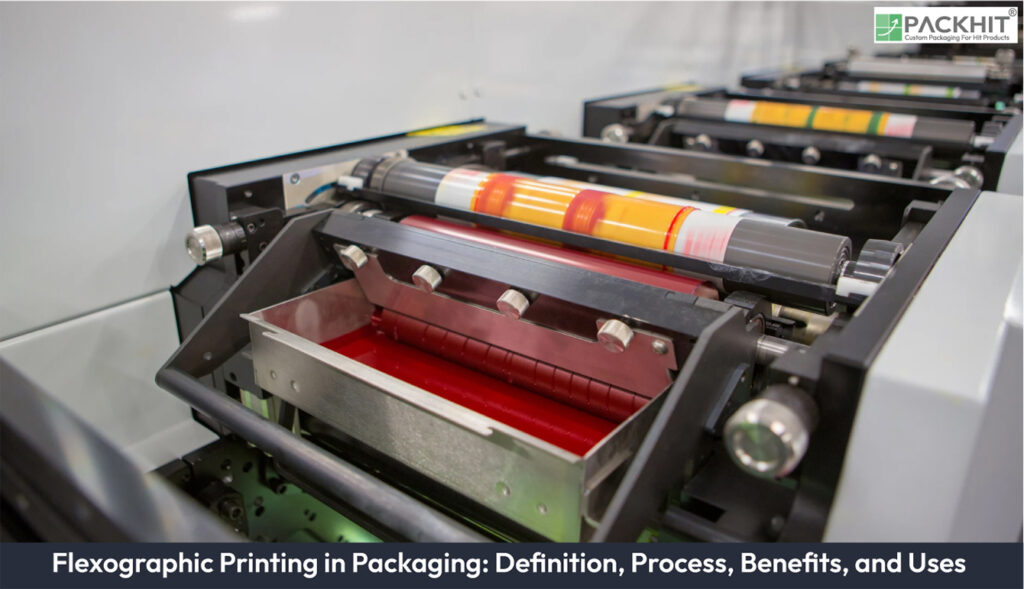
Flexographic printing is a high-speed rotary printing method that uses flexible relief plates to transfer ink onto a wide variety of packaging substrates, including paper, corrugated board, plastic films, labels, and foils. The flexographic printing process involves preparing printing plates, transferring ink through anilox rollers, feeding the substrate through successive printing stations, and drying the printed material before finishing. Its key benefits include versatility, high-speed production, cost-effectiveness, and consistent high-quality print output. Flexographic printing is widely used across food, pharmaceutical, industrial, retail, and decorative packaging applications.
- What is Flexographic Printing?
- Process of Flexographic Printing
- 1. Preparation of Printing Plates
- 2. Ink Transfer Using Anilox Rollers
- 3. Substrate Feeding
- 4. Drying and Finishing
- Benefits of Flexographic Printing
- Applications of Flexographic Printing
- Challenges of Flexographic Printing
- What are the Future Trends of Flexographic Printing?
- How to Choose Flexographic Printing for Packaging?
What is Flexographic Printing?
Flexographic printing is a rotary printing process that utilizes flexible printing plates wrapped around cylinders. These plates are designed to transfer ink onto substrates with precision and consistency. The process is characterized by its high-speed operation, adaptability to various materials, and ability to produce vibrant, high-resolution prints. Flexographic printing is particularly suited for large-scale production runs, making it a preferred choice for industries requiring high-volume packaging and labeling solutions.
Process of Flexographic Printing
The flexographic printing process involves several key steps, each designed to ensure efficient and high-quality output. Below is a detailed breakdown of the process:
1. Preparation of Printing Plates
Flexible relief plates are created for each color in the design. These plates are mounted onto cylinders, ensuring precise alignment for accurate ink transfer.
2. Ink Transfer Using Anilox Rollers
Anilox rollers, etched with shallow wells, are used to transfer a controlled amount of ink to the printing plates. The ink is evenly distributed, ensuring consistent coverage across the substrate.
3. Substrate Feeding
The substrate, such as paper, plastic film, or metallic foil, is unwound from a roll and fed through the printing stations. Each station applies a specific color, building the final design layer by layer.
4. Drying and Finishing
Fast-drying inks, including water-based or UV-curable options, are used to ensure quick drying. The printed substrate is then rewound into rolls or cut into sheets, ready for further processing or distribution.
Benefits of Flexographic Printing
Flexographic printing offers numerous advantages, making it a popular choice for packaging and labeling applications. The key benefits of flexographic printing include the following:
Versatility
Flexographic printing can handle a wide range of substrates, including flexible films, kraft paper, metallic foils, and textured materials. This versatility makes it suitable for diverse applications, from food packaging to industrial labeling.
High-Speed Production
With its ability to operate at high speeds, flexographic printing is ideal for large-scale production runs. This efficiency reduces turnaround times and ensures timely delivery of printed materials.
Cost-Effectiveness
The use of durable and reusable printing plates minimizes production costs, particularly for bulk printing. Additionally, the single-pass process eliminates the need for multiple printing steps, further reducing expenses.
Eco-Friendly Practices
Flexographic printing can support packaging sustainability initiatives through options such as water-based inks, recyclable materials, and process optimization. The environmental impact depends on the selected materials, ink formulations, production methods, and waste-management practices.
High-Quality Output
Flexographic printing delivers high-resolution prints with vibrant colors and sharp details, making it competitive with offset and digital printing methods. This quality is essential for creating visually appealing packaging that enhances brand recognition.
Applications of Flexographic Printing
The applications of flexographic printing are as follows:
- Food Packaging: Flexible films, paper bags, and cartons. Low-migration inks can be specified, where appropriate, to help reduce the risk of flavor transfer, depending on the ink formulation, substrate, and printing process. Flexographic printing may be used with barrier films and heat-seal layers when properly configured and validated. Consistent print quality depends on equipment setup, materials, and process controls.
- Pharmaceutical Packaging: Blister packs, cartons, and sachets. Flexographic printing supports features such as tamper-evident printing and variable data printing for lot codes, batch numbers, and expiration dates. For regulated pharmaceutical products, inks, substrates, and printing processes must be selected, validated, and documented to meet applicable regulatory requirements (such as FDA or other jurisdiction-specific requirements where applicable). These capabilities can support traceability workflows but do not, by themselves, constitute regulatory compliance.
- Industrial Labeling: Durable labels for machinery, tools, and equipment. Depending on the selected ink system and substrate, flexographic printing can produce labels designed to resist solvents, oils, abrasion, UV exposure, and other environmental conditions. It supports printing on materials such as polyester and vinyl and can produce barcodes and other variable information when properly configured.
- Retail Packaging: Shopping bags, gift wrap, and product boxes. Flexographic printing supports gloss and matte coatings, spot coatings, and cold foil effects. It is commonly used for both high-volume and selected short-run packaging applications and can help maintain consistent brand colors through appropriate color management and process controls.
- Decorative Printing: Wallpaper and decorative laminates. Flexographic printing supports metallic and textured finishes, repeat pattern printing, and compatibility with embossing and specialty coatings, enabling a wide range of decorative surface effects.
Note: The suitability of flexographic printing for food-contact, pharmaceutical, or other regulated applications depends on the specific inks, substrates, coatings, manufacturing process, jurisdictional requirements, and supplier documentation. Any compliance or performance claims should be verified through appropriate testing, validation, and consultation with quality assurance, regulatory, or compliance professionals.
Challenges of Flexographic Printing
The challenges of flexographic printing are listed below:
- High Plate Production Costs: Flexographic printing requires custom photopolymer plates for each design, increasing setup costs, especially for short print runs.
- Longer Setup Time: Plate mounting, color registration, and press calibration can take time before production begins, making small jobs less cost-effective.
- Limited Fine Detail Reproduction: Although print quality has improved, flexographic printing may struggle to reproduce extremely fine text, intricate graphics, and smooth gradients compared to digital or gravure printing.
- Color Matching Challenges: Maintaining consistent color across multiple print runs requires precise ink formulation, press calibration, and ongoing quality control.
- Dot Gain Issues: Ink spread during printing can cause printed dots to appear larger than intended, affecting image sharpness and color accuracy if not properly managed.
- Substrate Compatibility: Different materials absorb ink differently, requiring adjustments to inks, anilox rollers, drying systems, and press settings for optimal results.
- Ink Drying and Smudging: Inadequate drying can lead to smudging, blocking, or poor adhesion, particularly during high-speed production or on non-porous substrates.
- Plate Wear Over Time: Printing plates gradually wear during long production runs, which can reduce print quality and require plate replacement.
- Environmental and Regulatory Compliance: Printers must comply with environmental regulations regarding ink formulations, solvent emissions, and waste disposal while maintaining production efficiency.
- Skilled Operator Requirement: Achieving consistent, high-quality results requires experienced press operators to manage plate alignment, ink viscosity, registration, and overall press performance.
What are the Future Trends of Flexographic Printing?
Technological advancements and a growing emphasis on sustainability shape the future of flexographic printing. Some of the key trends include the following:
- Improved Ink Formulations: Development of eco-friendly inks with enhanced color vibrancy and durability.
- Automation and AI Integration: Adoption of automated systems and artificial intelligence to optimize printing processes and reduce errors.
- Customization Capabilities: Enhanced ability to produce personalized packaging solutions for niche markets.
- Sustainability Initiatives: Increased use of recyclable materials and waste-reduction strategies to align with environmental goals, making it an invaluable tool for manufacturers.
How to Choose Flexographic Printing for Packaging?
Selecting flexographic printing for packaging depends on several factors, including the type of material, production volume, print requirements, and desired performance characteristics. The key factors to consider are outlined below.
- Substrate Compatibility: Flexographic printing can be used on a wide range of packaging materials, including paper, plastic films, foil, and coated surfaces. The appropriate ink system and press settings should be selected based on the specific properties of the substrate.
- Production Volume: Flexographic printing is ideal for medium- to high-volume packaging production where fast printing speeds, consistent quality, and cost efficiency are important.
- Print Requirements: Projects requiring detailed graphics, variable data, brand colors, or specialty effects should be assessed based on the required print resolution, color accuracy, and finishing options.
- Ink and Drying Requirements: Water-based, solvent-based, or UV-curable inks can be selected depending on the packaging material, application needs, drying conditions, and environmental considerations.
- Quality and Compliance Considerations: For food, pharmaceutical, and other regulated packaging applications, manufacturers should evaluate ink suitability, substrate compatibility, production controls, and documentation to meet applicable industry requirements.
When to Consider Other Printing Methods or Specialist Guidance?
Flexographic printing may not always be the best option for applications requiring extremely fine details, complex gradients, frequent design changes, very short production runs, or highly precise color matching. In such cases, manufacturers may compare alternatives such as digital or gravure printing or seek guidance from printing specialists to identify the most suitable printing method for their specific requirements.
