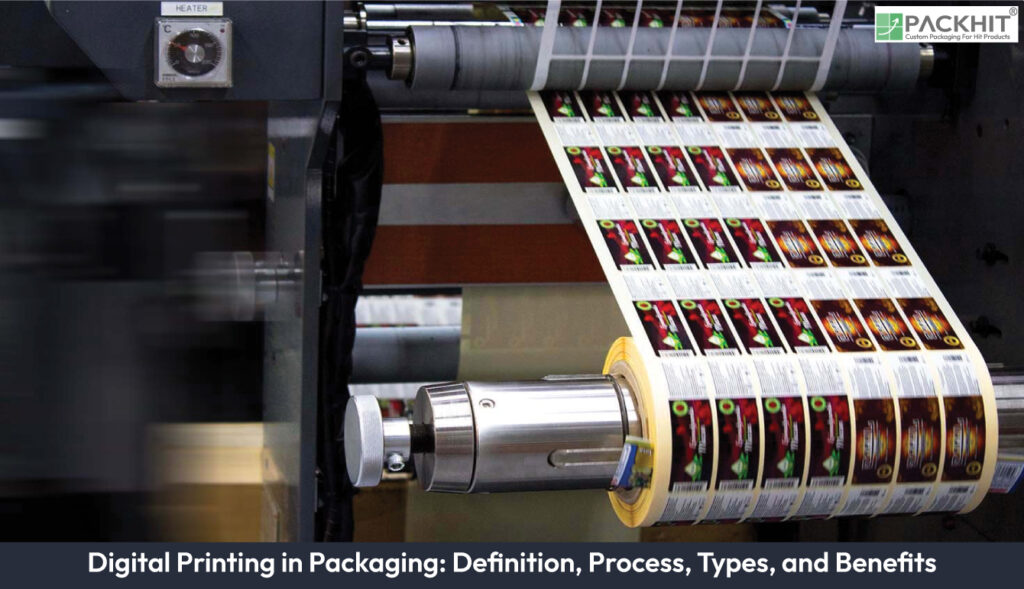
Digital printing transfers digital artwork directly onto packaging materials without printing plates. It is widely used for short production runs, customized packaging, and rapid turnaround. The following sections explain its process, types, benefits, applications, comparison with traditional printing, and future developments.
- What is Digital Printing?
- What is the Digital Printing Process?
- What are the Types of Digital Printing?
- What are the Benefits of Digital Printing in Packaging?
- What are the Applications of Digital Printing in Packaging?
- Common Challenges in Digital Printing
- Digital Printing vs. Traditional Printing Methods
- What are the Emerging Trends in Digital Printing?
- Integration with AI and Automation
- Expansion of Substrate Compatibility
- Growth in 3D Printing
- Sustainability Initiatives
- How to Choose the Right Digital Printing Method?
What is Digital Printing?
Digital printing refers to the process of printing digital-based images directly onto a variety of media substrates. Unlike traditional methods such as offset or screen printing, digital printing eliminates the need for plates or prepress procedures, allowing for faster setup and reduced costs. This method is ideal for short-run jobs, on-demand printing, and projects requiring high levels of customization.
Main Features of Digital Printing
The most common features of digital printing are listed below:
- Printing Speed: Digital printing offers fast turnaround times, making it suitable for time-sensitive projects.
- Customization: Supports variable data printing, enabling personalized designs for each print unit.
- Color Accuracy: Can support vibrant, consistent color reproduction using CMYK with proper calibration.
- Environmental Impact: Can reduce setup-related waste and energy use compared to some traditional methods, depending on print volume and workflow.
- Substrate Compatibility: Can print on diverse materials, including paper, fabric, plastics, and more.
What is the Digital Printing Process?
The digital printing process involves several key steps, each designed to ensure high-quality and efficient production:
1. File Preparation
Designers create or edit digital files using software such as Adobe Illustrator or Photoshop. These files are then converted into a format compatible with digital printers, such as PDFs or rasterized images.
2. Direct Transfer to Printer
The digital file is sent directly to the printer, which uses inkjet or laser technology to apply ink or toner onto the substrate. This eliminates the need for printing plates or intermediate steps.
3. Printing
The printer applies ink or toner in precise amounts to create high-resolution images. Advanced technologies allow for the simultaneous printing of multiple colors, helping produce consistent results when the printer is correctly calibrated.
4. Post-Processing
After printing, the substrate may undergo additional processes such as cutting, binding, laminating, or coating to enhance durability and aesthetics.
What are the Types of Digital Printing?
The three types of digital printing are mentioned below:
Inkjet Printing
Inkjet printing uses tiny droplets of liquid ink to create images on substrates. It is ideal for high-resolution prints and is commonly used for packaging, textiles, and promotional materials.
Laser Printing
Laser printing employs electrostatic charges to attract toner (a fine powder used instead of liquid ink) onto selected image areas. Heat then fuses the toner permanently to the substrate, producing sharp text and graphics.
Direct-to-Substrate Printing
This method involves printing directly onto materials such as fabric, plastic, or metal. It is widely used in the packaging industry for creating custom designs on flexible and rigid substrates.
What are the Benefits of Digital Printing in Packaging?
Digital printing in packaging offers numerous advantages for manufacturers and businesses in the packaging industry. The core advantages of digital printing in packaging are discussed below:
- Cost-Effectiveness: Digital printing reduces setup costs by eliminating processes such as plate creation, making it a cost-efficient option for short runs, customized orders, and on-demand printing.
- Customization and Personalization: Variable data printing allows businesses to create personalized packaging with unique designs, text, QR codes, and targeted content for specific audiences or markets.
- Faster Turnaround Times: Minimal setup requirements enable quicker production cycles, helping businesses respond efficiently to changing market demands and shorter deadlines.
- High-Quality Output: Digital printing delivers sharp images, precise details, and vibrant colors, creating visually appealing packaging with professional-quality finishes.
- Sustainability: Digital printing may support sustainability by eliminating plate production, reducing setup waste, lowering material spoilage during short production runs, and minimizing inventory through on-demand printing.
For packaging manufacturers, digital printing is often most valuable when flexibility, customization, and shorter production runs are more important than maximum economies of scale. However, selecting a digital printing method should not rely only on speed or cost advantages. Substrate compatibility, ink adhesion, curing requirements, and the expected handling environment often determine whether the final packaging performs successfully.
What are the Applications of Digital Printing in Packaging?
Digital printing is extensively utilized across different industries for packaging purposes, which are mentioned below:
- Custom Product Packaging: Digital printing allows manufacturers to create unique packaging designs that strengthen brand identity, improve shelf appeal, and differentiate products in competitive markets.
- Limited-Edition Packaging: Brands use digital printing for seasonal, promotional, and special-event packaging because it supports short production runs without requiring extensive setup. Brands can economically produce seasonal or promotional packaging because digital printing avoids plate-change costs associated with traditional methods.
- Prototyping: Packaging prototypes can often be produced directly from approved digital artwork without creating printing plates, allowing faster design validation before mass production.
- Personalized Marketing Campaigns: Digital printing enables customized labels and packaging with variable designs, names, messages, or targeted content to connect with specific customer groups.
Common Challenges in Digital Printing
Digital printing delivers high-quality results, but print quality and production efficiency can be affected by substrate selection, printer settings, ink compatibility, and finishing conditions. The most common challenges include:
- Color Variation Between Substrates: The same digital file can produce different color results on coated, uncoated, textured, or synthetic materials because each substrate absorbs or reflects ink differently. Color profiling and substrate-specific calibration help improve consistency.
- Ink Adhesion Problems on Coated Materials: Some coated plastics, films, and specialty papers may not allow inks to bond effectively, leading to peeling or smudging. Selecting compatible inks, applying suitable primers when required, and following the manufacturer’s substrate recommendations can improve adhesion.
- Banding in Large Solid Colors: Visible horizontal or vertical lines may appear across large areas of solid color because of clogged printheads, inconsistent ink delivery, or incorrect print settings. Routine printhead maintenance and proper printer calibration help minimize banding.
- Scratching Before Curing: Freshly printed graphics can be vulnerable to scratching if the ink or coating has not fully cured before handling or finishing. Allowing sufficient curing or drying time before cutting, laminating, or shipping helps reduce surface damage.
- Registration Errors: Minor misalignment between successive color passes can affect image sharpness and text clarity. Accurate media feeding, routine printer calibration, and stable substrate handling help maintain registration accuracy.
- Surface Compatibility Limitations: Not every digital printing technology performs equally well on every material. Factors such as surface energy, texture, thickness, flexibility, and heat sensitivity influence print quality. Manufacturers should confirm substrate compatibility with the selected digital printing process before production, particularly for packaging applications requiring specialized finishes or durability.
In practice, print reliability is usually determined by how well the printing process matches the packaging material and production conditions. If the substrate, ink system, curing process, or finishing method is not compatible, issues such as poor adhesion, scratching, or inconsistent color may occur. Manufacturers should confirm these factors before moving from prototype printing to larger production runs.
Digital Printing vs. Traditional Printing Methods
Digital printing and traditional printing methods each offer unique advantages depending on project requirements, production volume, customization needs, and quality expectations. The table below compares these printing methods across key factors such as cost, setup time, customization, and print quality.
| Comparison Factor | Digital Printing | Traditional Printing Methods |
|---|---|---|
| Cost | More cost-effective for small to medium print runs due to minimal setup requirements | More economical for large-volume production because of lower per-unit costs at scale |
| Setup Time | Requires minimal setup, allowing faster production and quicker turnaround times | Requires plate creation, machine setup, and alignment, resulting in longer preparation time |
| Customization | Highly flexible, supporting variable data printing and personalized designs | Limited customization options due to fixed plates and setup requirements |
| Quality | Provides excellent color accuracy, consistency, and high-quality results for short and medium runs | Delivers high-quality output, especially for large-volume projects requiring consistent production |
The choice between digital and traditional printing depends on factors such as order quantity, turnaround requirements, personalization needs, and budget considerations. Digital printing is ideal for flexible, short-run projects, while traditional methods remain effective for high-volume production where cost efficiency is a priority.
What are the Emerging Trends in Digital Printing?
The digital printing industry continues to evolve, driven by advancements in technology and changing market demands. The future trends in digital printing are listed below:
Integration with AI and Automation
AI-powered systems are enhancing efficiency and reducing errors in the digital printing process.
Expansion of Substrate Compatibility
Ongoing innovations are enabling digital printing on a broader range of materials, including biodegradable and recyclable substrates.
Growth in 3D Printing
The integration of digital and 3D printing technologies is opening new possibilities for packaging design and prototyping.
Sustainability Initiatives
As businesses prioritize eco-friendly practices, digital printing is becoming a preferred choice for sustainable packaging solutions. Digital printing has become an important printing solution for packaging applications because it offers strong flexibility, rapid setup, and efficient customization, particularly for short- and medium-run production.
How to Choose the Right Digital Printing Method?
Selecting the right digital printing method depends on factors such as packaging material, production volume, customization requirements, and the type of output needed. Different digital printing technologies are suited to specific applications, as shown in the table below.
- Substrate compatibility: Choose a printing method based on the packaging material surface. Non-porous materials such as plastics may require specific ink systems, surface treatment, or curing processes to achieve proper adhesion. If ink scratching, poor bonding, or incomplete curing occurs, the substrate and ink combination should be reviewed before production.
- Run length and turnaround requirements: Digital printing is often suitable for short and medium runs because it reduces setup time and allows efficient customization. For very high-volume packaging runs, conventional printing methods may become more cost-effective because setup costs are spread across larger quantities.
- Print quality requirements: Inkjet printing can support variable data and customized designs, but large solid color areas may require careful calibration to avoid issues such as banding or uneven coverage. Applications requiring strict color consistency should confirm printer capabilities and quality controls before production.
- Durability and finishing needs: Packaging exposed to handling, abrasion, or environmental conditions may require compatible inks, coatings, or curing processes. If printed surfaces show scratching, fading, or poor resistance after finishing, the printing method or protective layer may need adjustment.