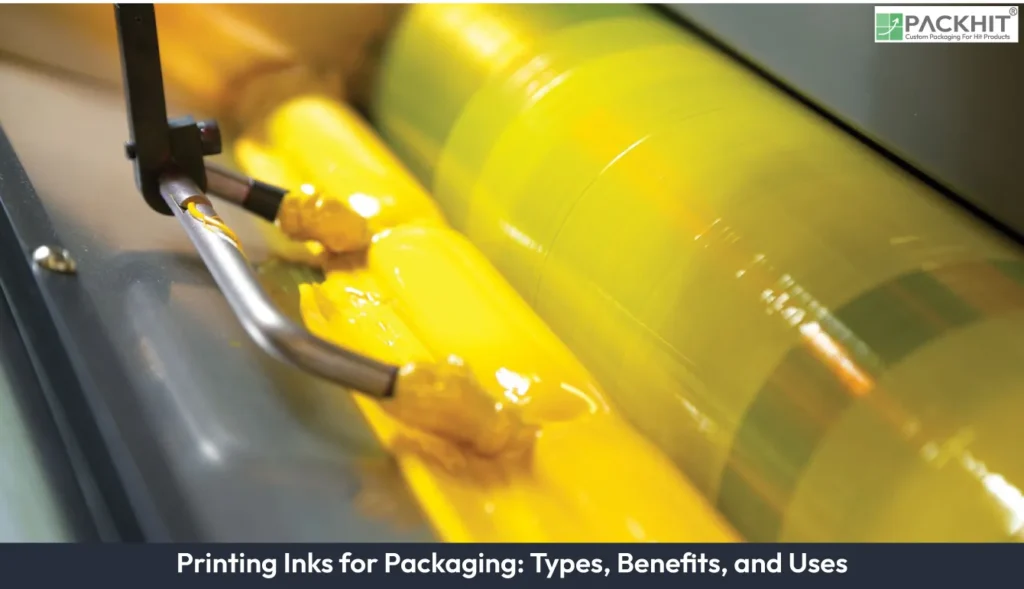
Printing inks for packaging are specialized ink formulations designed to create text, graphics, branding, product information, and regulatory markings on packaging materials while maintaining print quality, adhesion, durability, and compatibility with different printing processes. Depending on the printing method and packaging application, they include offset, flexographic, digital, water-based, and food packaging inks, each offering distinct performance characteristics for different substrates and production requirements. The benefits of printing inks for packaging include enhanced branding, compatibility with diverse substrates, sustainability, and food safety. Their common uses span industries such as food and beverage, pharmaceutical, cosmetic, and industrial packaging.
- Different Types of Printing Inks for Packaging
- 1. Offset Printing Inks
- 2. Flexographic Printing Inks
- 3. Digital Printing Inks
- 4. Water-Based Inks
- 5. Printing Inks for Food Packaging
- Benefits of Using Printing Inks for Packaging
- What are the Uses of Printing Inks in Packaging?
- Printing Ink Specifications for Packaging
- What is the Difference Between Water-Based, Solvent-Based, and UV-Curable Inks?
- Can the Same Printing Ink be Used on All Packaging Materials?
- What are Low-Migration Inks for Food Packaging?
- Are Environmentally Friendly Packaging Inks Available?
- How Does the Right Printing Ink Improve Sustainability?
Different Types of Printing Inks for Packaging
Printing inks for packaging are categorized based on their composition, printing method compatibility, and environmental impact. Below are the major types:
1. Offset Printing Inks
Offset inks are used in offset printing processes, which involve transferring ink from a plate to a rubber blanket and then onto the substrate. These inks are known for their high consistency, vibrant colors, and suitability for printing on paper-based packaging such as books, magazines, and cartons. Offset printing inks is that they require printing plates and setup time, making them less cost-effective for short-run or customized packaging projects.
2. Flexographic Printing Inks
Flexo inks are designed for flexographic printing, a method commonly used for flexible packaging materials like labels, pouches, and shrink films. These inks offer high adhesion, quick drying, and vibrant color output, making them ideal for high-speed printing applications. One limitation of flexographic printing inks is that they may not reproduce highly detailed graphics and fine images as accurately as offset or digital printing.
3. Digital Printing Inks
Digital printing inks, including inkjet inks, are used in digital printing systems to deliver high-quality prints on various substrates. These inks are formulated with pigments suspended in carrier liquids, ensuring precision and versatility for short-run and customized packaging applications. Digital printing inks may increase production costs when printing large quantities, making them less cost-effective for mass production.
4. Water-Based Inks
Water-based inks are eco-friendly alternatives to solvent-based inks, featuring low volatile organic compounds (VOCs) and biodegradable properties. They are commonly used for printing on paper substrates, such as kraft paper packaging, and are gaining popularity due to their reduced environmental impact. One drawback of water-based inks is that they can dry more slowly than solvent-based inks, especially in humid environments.
5. Printing Inks for Food Packaging
These inks are specifically designed for food-safe applications, ensuring compliance with regulatory standards. They are compatible with technologies like Thermal Inkjet (TIJ), Piezo Inkjet (DOD), and Continuous Inkjet (CIJ), and are available in aqueous formulations with dye and pigment options. Printing inks for food packaging must comply with food safety standards, making their development and production more complex and costly.
Benefits of Using Printing Inks for Packaging
Printing inks for packaging offer several benefits that enhance the functionality, aesthetics, and sustainability of packaging materials:
- Enhanced Branding and Visual Appeal: High-quality printing inks enable manufacturers to create vibrant and visually appealing designs that enhance brand recognition and consumer engagement.
- Compatibility with Diverse Substrates: These inks are formulated to adhere to a wide range of materials, including paper, cardboard, plastics, metals, and flexible films, ensuring versatility in packaging applications.
- Sustainability: Eco-friendly inks, such as water-based and low-VOC formulations, support sustainable packaging practices by reducing environmental impact and improving recyclability.
- Food Safety: Inks designed for food packaging comply with stringent safety standards, ensuring that printed materials do not contaminate food products.
What are the Uses of Printing Inks in Packaging?
Printing inks are used across various industries to create functional and aesthetically pleasing packaging solutions. Key applications include:
- Food and Beverage Packaging: Ensures compliance with food safety standards; delivers high-quality prints on cartons, labels, and flexible films; provides excellent print clarity and durability.
- Pharmaceutical Packaging: Produces precise labels, barcodes, and batch codes; offers durable, smudge-resistant printing; supports regulatory compliance and product traceability.
- Cosmetic Packaging: Creates vibrant, high-quality graphics; enhances brand appeal; provides durable prints with excellent color consistency and finish.
- Industrial Packaging: Prints functional markings, logos, and product information on corrugated boxes and metal containers; offers strong adhesion and resistance to abrasion, chemicals, and environmental conditions.
Printing Ink Specifications for Packaging
Printing inks used in packaging vary by process, substrate, and end-use requirement. The specification table below summarizes the core details such as ink types, compatible substrates, performance characteristics, and industry-specific considerations as a quick reference for how these inks are typically defined and applied.
| Specification | Details |
|---|---|
| Ink Types | Water-based, solvent-based, UV-curable, LED UV, and oil-based inks. |
| Composition | Pigments, binders/resins, solvents or water, and performance additives. |
| Compatible Substrates | Paper, paperboard, plastics (PE, PP, PET), foil, glass, and metal. |
| Printing Processes | Flexographic, gravure, offset, digital, screen, and inkjet printing. |
| Drying/Curing | Air drying, heat drying, solvent evaporation, UV, or LED UV curing. |
| Typical Uses | Food, beverage, pharmaceutical, cosmetic, flexible, and corrugated packaging. |
| Key Properties | Good adhesion, abrasion resistance, moisture resistance, chemical resistance, and color consistency. |
| Food-Safe Inks | Low-migration formulations designed to meet applicable food packaging regulations. |
| VOC Options | High (solvent-based), low (water-based), or very low (UV/LED UV). |
| Selection Factors | Substrate type, printing method, curing process, durability, compliance, and cost. |
The specifications above reflect general industry norms rather than fixed rules. The actual ink formulation and compliance requirements can vary by supplier, region, and packaging application. Where food-grade or pharmaceutical use is involved, it’s worth confirming current regulatory status directly with the ink or packaging supplier rather than relying solely on general specification tables.
What is the Difference Between Water-Based, Solvent-Based, and UV-Curable Inks?
Water-based inks are generally preferred for applications requiring lower VOC emissions and environmentally conscious solutions. Solvent-based inks provide strong adhesion, durability, and resistance properties, making them suitable for demanding applications. UV-curable inks use ultraviolet light to cure quickly, offering high print quality and excellent performance. The best choice depends on the substrate, printing equipment, and end-use requirements.
Can the Same Printing Ink be Used on All Packaging Materials?
No. Different packaging materials, including paper, plastic films, metal foils, and corrugated board, have unique surface characteristics. Ink selection must consider factors such as adhesion, print quality, drying performance, and durability to achieve the best results for each substrate.
What are Low-Migration Inks for Food Packaging?
Low-migration inks are specially formulated printing inks used for food packaging applications to minimize the potential transfer of ink components into food products. These inks are designed to support food safety requirements by controlling the migration of substances through the packaging structure. Their performance depends on factors such as ink formulation, substrate type, printing process, curing or drying conditions, packaging design, and compliance with applicable food-contact regulations and industry standards.
Are Environmentally Friendly Packaging Inks Available?
Yes. Many manufacturers offer environmentally friendly options, including water-based and low-VOC ink formulations. The sustainability benefits of these inks depend on their composition, printing method, application requirements, and compliance with environmental regulations.
How Does the Right Printing Ink Improve Sustainability?
Sustainable printing inks, such as water-based, low-VOC, and other environmentally responsible formulations, can help reduce emissions and environmental impact while maintaining print quality and performance. These ink technologies support more sustainable packaging solutions and contribute to improved environmental practices across packaging applications.
