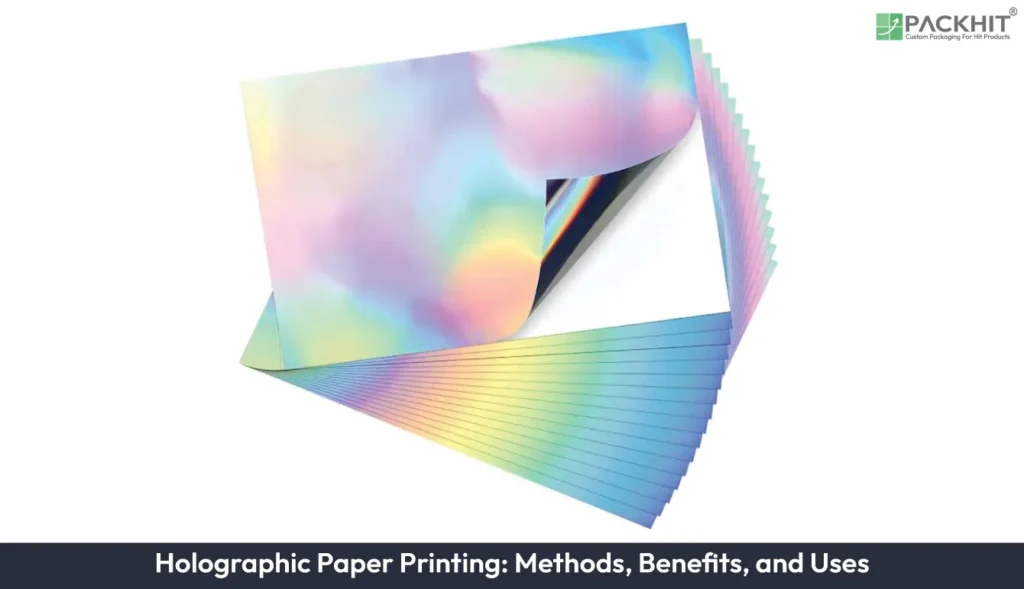
Holographic paper printing is a specialty printing and finishing technique that creates iridescent, light-diffracting visual effects on paper and other printable substrates using holographic films, foils, or patterned surfaces. Different methods of holographic paper printing include holographic foil stamping, UV flatbed printing, embossing and debossing, and digital printing, each offering different levels of coverage, production flexibility, substrate compatibility, and visual effects. The benefits of holographic paper printing include enhanced visual appeal, premium brand presentation, design versatility, and the availability of more sustainable material options for selected applications. Holographic paper printing is widely used for product packaging, promotional materials, art prints, and security features where distinctive visual effects, brand differentiation, or authentication elements are required.
- What is Holographic Paper Printing?
- Methods Used for Holographic Paper Printing
- Benefits of Holographic Paper Printing
- Enhanced Visual Appeal
- Association with High Quality
- Customization and Versatility
- Eco-Friendly Options
- Uses of Holographic Paper Printing
- Limitations of Holographic Paper Printing
- Key Considerations Before Choosing Holographic Paper Printing
What is Holographic Paper Printing?
Holographic paper printing involves applying holographic finishes that use light-diffracting techniques to create iridescent visual effects on paper and other printable substrates. Depending on the printing or finishing process, holographic effects are typically created by applying holographic films, foils, or patterned surfaces that refract light to produce color shifts that vary with the viewing angle. The appearance can differ depending on the holographic material, substrate, printing process, and lighting conditions. These optical effects can make packaging and printed materials more visually distinctive, although the final appearance depends on the printing method, substrate, lighting conditions, and surface finish.
Methods Used for Holographic Paper Printing
Different printing and finishing techniques can produce holographic effects, but each is suited to specific design requirements, production volumes, and budget considerations. Selecting the right method depends on factors such as the amount of holographic coverage, artwork complexity, substrate compatibility, and print quantity.
Holographic Foil Stamping
Holographic foil stamping transfers a holographic foil onto paper using heat and pressure. It is commonly chosen when holographic effects are required only on selected design elements, such as logos, brand names, seals, or decorative graphics. Because the foil is applied only where needed, this method can provide sharp detail while minimizing holographic coverage compared with full-surface printing.
UV Flatbed Printing
UV flatbed printing cures specialized UV inks instantly using ultraviolet light. When compatible holographic substrates or coatings are used, it can produce detailed graphics across larger printed areas. This method is often selected for promotional materials, packaging prototypes, retail displays, and short-to-medium production runs where image quality and fast turnaround are priorities.
Embossing and Debossing
Embossing creates raised designs, while debossing produces recessed patterns. When combined with holographic foils or holographic paper, these finishing techniques add both texture and optical variation, creating packaging that is visually distinctive and tactile. However, they require custom tooling, making them more suitable for medium- to high-volume production.
Digital Printing
Digital printing can be combined with compatible holographic papers or specialty substrates to produce customized designs without printing plates. It is generally preferred for prototypes, personalized packaging, seasonal promotions, and smaller production runs where design flexibility is more important than the lowest unit cost.
Practical consideration: If only selected elements such as logos or titles need holographic highlights, foil stamping is often the more efficient option. For designs requiring holographic effects across larger printed areas, printing directly onto holographic substrates may be more suitable. The best method depends on artwork coverage, production volume, substrate compatibility, and budget.
Benefits of Holographic Paper Printing
When applied appropriately, holographic paper printing can provide both visual and functional advantages. The actual results vary depending on the printing process, substrate quality, finishing method, and intended application.
Enhanced Visual Appeal
The light-reflective surface creates changing colors and patterns as the viewing angle changes, helping printed materials attract attention under different lighting conditions. This effect is commonly used on retail packaging and promotional materials where shelf visibility is important.
Association with High Quality
Holographic finishes are frequently used on premium packaging because their reflective appearance and decorative effects can contribute to a higher-quality visual presentation. The perceived premium effect depends on factors such as print registration, finish consistency, artwork quality, and the overall packaging design rather than the holographic finish alone. When these elements are well executed, holographic effects can reinforce premium brand positioning, but they do not guarantee higher perceived value by themselves.
Customization and Versatility
Holographic effects can be incorporated into logos, patterns, backgrounds, or full-package graphics using different printing and finishing techniques. This flexibility allows brands to tailor the effect for industries such as cosmetics, electronics, apparel, food, and promotional products.
Eco-Friendly Options
Some manufacturers offer holographic papers, films, or transfer processes that are designed to reduce material usage or improve recyclability compared with certain conventional alternatives. The environmental performance of a holographic package depends on factors such as the substrate, adhesive system, coatings, manufacturing process, and the recycling facilities available in the intended market. These factors should be evaluated for each application rather than assuming all holographic packaging provides the same environmental benefits.
Uses of Holographic Paper Printing
Holographic paper printing is used across many industries where visual differentiation or decorative effects are important.
- Product Packaging: Can add reflective decorative effects to packaging for cosmetics, apparel, electronics, food, beverages, and luxury products. The final appearance depends on the selected printing or finishing method.
- Promotional Materials: Often used on posters, brochures, postcards, flyers, business cards, and event marketing materials to create eye-catching graphics that may improve visibility in retail or promotional environments.
- Art Prints: Used for artwork, photography prints, illustrations, and limited-edition collectibles to create color-shifting effects that change with lighting and viewing angle.
- Security Features: Holographic elements can be incorporated into packaging, certificates, labels, tickets, and official documents as one layer of anti-counterfeiting protection. Their effectiveness depends on factors such as pattern complexity, manufacturing precision, and integration with other authentication features, since holographic finishes alone are not intended to prevent all forms of counterfeiting. In practice, they are commonly combined with additional security measures to strengthen product authentication.
Limitations of Holographic Paper Printing
While holographic paper printing creates premium-looking products, it also has practical limitations that should be considered before production.
- Higher Material Costs: Holographic paper generally costs more than standard coated or uncoated paper, increasing the overall printing budget, particularly for large-format or premium projects.
- Limited Color Accuracy: The reflective surface can alter the appearance of printed colors, making exact color matching more challenging than on conventional paper stocks.
- Reduced Readability: Dense holographic patterns behind small text, fine lines, or QR codes may reduce legibility and scanning performance if the artwork is not designed carefully.
- Printing Compatibility Constraints: Not every digital, offset, or flexographic press is optimized for holographic substrates. Some projects may require specialized inks, coatings, or press adjustments to achieve consistent results.
- Surface Vulnerability: Unprotected holographic finishes can become scratched, scuffed, or marked during handling, transportation, or frequent use, especially without a protective coating or laminate.
- Registration Challenges: Designs that require precise alignment between printed graphics and holographic patterns demand accurate press registration. Misalignment can reduce the intended visual effect and increase production waste.
- Longer Production Times: Custom holographic patterns, specialty finishing processes, and additional quality checks may extend production lead times compared with standard paper printing.
- Recycling Considerations: Some holographic papers incorporate laminated films or metallic layers that can complicate recycling compared with conventional paper products, depending on their construction and local recycling capabilities.
Key Considerations Before Choosing Holographic Paper Printing
Selecting the right holographic paper printing solution requires balancing production requirements, durability, and budget. Keeping the following considerations in mind can help you choose the most suitable packaging method.
- Match the method to your application: Holographic printing on compatible substrates can provide broader decorative coverage.
- Balance appearance with practicality: Full-surface holographic effects create greater visual impact but may increase production costs and reduce text readability if overused.
- Consider durability needs: If the printed product will be handled frequently, protective coatings or laminates can help reduce scuffing and surface wear.
- Verify printing compatibility: Ensure the chosen holographic paper or substrate works with your intended printing process, such as digital, offset, UV, or foil stamping.
- Plan for production requirements: Custom holographic patterns or specialty finishes may require additional setup time and longer lead times than standard print jobs.
- Prioritize overall project goals: The best choice depends on your design objectives, production volume, budget, and required finish rather than selecting a holographic effect based on appearance alone.