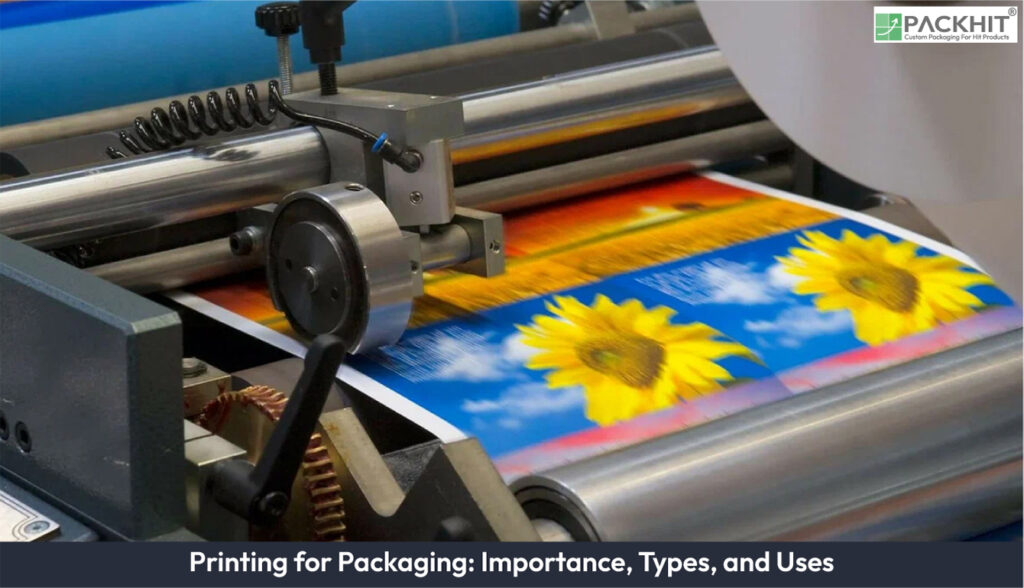
Printing for packaging involves applying text, images, designs, and branding elements onto packaging materials using methods such as flexographic printing, offset lithography, digital printing, rotogravure, and screen printing. The most suitable printing method typically depends on factors such as packaging material, production volume, print quality expectations, and whether variable information is required. For example, digital printing can produce unique QR codes, serial numbers, or personalized graphics for each package without requiring new printing plates, while offset and rotogravure are commonly selected for consistent output across long production runs.
- What is Printing for Packaging?
- Why is Printing Important for Packaging?
- What are the Types of Printing Methods Used for Packaging?
- Uses of Printing in Packaging
- Comparative Analysis of Printing Methods
- How to Choose the Right Printing Method for Packaging?
- Factors to Consider When Selecting a Printing Method
- What are the Common Trade-Offs in Packaging Printing?
- When Should You Consult a Printing Specialist?
- What are the Emerging Trends in Printing for Packaging?
What is Printing for Packaging?
Printing for packaging is the process of applying text, images, graphics, and branding elements onto packaging materials. Depending on the packaging material, production volume, desired print quality, and finishing requirements, manufacturers may use printing techniques such as flexographic printing, offset lithography, digital printing, rotogravure, or screen printing.
Why is Printing Important for Packaging?
Printing can help communicate important product information and create visually distinctive packaging. It enables manufacturers to display information such as ingredients, nutritional facts, manufacturing and expiry dates, barcodes, safety warnings, and usage instructions where applicable. Packaging may also include logos, colors, graphics, QR codes, or personalized content to support product identification and customer engagement. The specific information required on packaging depends on the product category and target market. Before production, manufacturers typically confirm that required details such as ingredients, safety information, usage instructions, dates, and identification codes are included, positioned correctly, and remain readable after printing, coatings, or other finishing processes are applied.
When planning printed packaging, manufacturers should verify readability after the complete production process, including printing and finishing. Checks may include whether small text maintains sufficient contrast, whether coatings affect barcode scanning, and whether the chosen substrate allows important information to remain visible during handling and storage. Depending on the product category and target market, manufacturers may review elements such as product identification, ingredient or material information, manufacturing and expiry dates where applicable, safety warnings, usage instructions, barcodes, and required regulatory markings before finalizing artwork.
What are the Types of Printing Methods Used for Packaging?
The five types of printing used in packaging are offset printing, digital printing, flexographic printing, screen printing, and rotogravure printing.
Offset Printing
Offset printing is a traditional printing process that uses printing plates to transfer ink onto packaging materials. It is commonly used for large production runs because setup costs are spread across higher volumes. It can provide consistent color reproduction and is often used for folding cartons, retail packaging, and premium labels.
Digital Printing
Digital printing transfers artwork directly from digital files without printing plates. It is commonly selected for short to medium production runs, rapid design changes, and variable data printing such as unique serial numbers or personalized graphics. Typical applications include custom e-commerce packaging, promotional campaigns, and limited-edition packaging.
Flexographic Printing
Flexographic printing uses flexible relief plates to print on a wide variety of substrates, including paper, cardboard, plastic films, and some metal foils. It is commonly used for labels, corrugated packaging, flexible packaging, and high-speed production where substrate versatility is important.
Screen Printing
Screen printing applies ink through a mesh stencil onto the packaging surface. It is commonly used on irregular shapes or textured materials and can produce thicker ink layers than many other printing methods. Typical applications include glass bottles, promotional packaging, specialty containers, and decorative finishes.
Rotogravure Printing
Rotogravure printing uses engraved cylinders to transfer ink onto packaging materials. It is commonly used for long production runs that require consistent image quality, particularly for flexible packaging such as pouches, wrappers, and laminated films.
Uses of Printing in Packaging
Printing has multiple uses in packaging, including creating custom e-commerce packaging, ensuring compliant and informative food labeling, enhancing luxury product appeal with premium finishes, and supporting sustainable practices through eco-friendly materials and methods.
- Custom Packaging for E-Commerce: Creates personalized packaging with vibrant colors and unique branding to enhance the unboxing experience and attract customers. Variable-data printing can also generate unique QR codes, promotional codes, or serialized identifiers for each package without changing the overall package design.
- Food and Beverage Packaging: Uses flexographic and offset printing to produce durable packaging with nutritional information, barcodes, safety details, and promotional graphics. Packaging should also maintain sufficient contrast for small text and barcode readability. If labels are exposed to moisture, refrigeration, or frequent handling, ink and substrate compatibility may also require evaluation.
- Luxury Product Packaging: Screen printing may be selected for thicker ink deposits or textured decorative effects, while offset printing is commonly used for detailed graphics and consistent color reproduction. Depending on the design, metallic inks, embossing, textured coatings, or thicker ink layers can create visible and tactile differences that affect how packaging reflects light and feels when handled. Because not every decorative finish is compatible with every packaging material, finish selection is typically evaluated together with the substrate before production.
- Sustainable Packaging: Uses eco-friendly inks and recyclable materials while digital printing reduces waste through on-demand production and minimizes environmental impact. Digital printing can support on-demand production, which may reduce obsolete inventory when artwork changes frequently. Manufacturers may also evaluate whether selected inks, coatings, or decorative finishes are compatible with the intended recycling or recovery process for the chosen packaging material.
Comparative Analysis of Printing Methods
The following table compares the major printing methods used in packaging based on their best applications, key advantages, and common uses. This comparison helps in selecting the most suitable printing technique according to production volume, packaging material, and quality requirements.
| Aspect | Digital Printing | Offset Printing | Flexographic Printing | Rotogravure Printing | Screen Printing |
|---|---|---|---|---|---|
| Best For | Short runs and customization | High-volume production | Medium runs, labels, and corrugated boxes | Long runs and flexible packaging | Unique shapes and textured surfaces |
| Advantages | Fast turnaround, variable data, personalized printing | Excellent color consistency, cost-effective for bulk orders | Versatile, durable, and economical | Exceptional image quality and print consistency | Suitable for specialty items, thick ink application, and textured finishes |
| Common Applications | Personalized packaging, e-commerce packaging | Cartons, brochures, and premium packaging | Food labels, cartons, and corrugated packaging | Flexible packaging, magazines, and decorative packaging | Promotional items, glass, textiles, and luxury packaging |
Each printing method offers unique benefits depending on the packaging requirements. Choosing the appropriate printing method requires balancing production volume, material compatibility, and design requirements. For example, digital printing may be preferred when packaging requires frequent artwork changes or unique codes, while offset or rotogravure printing may be more suitable when consistent appearance across large production runs is the priority.
How to Choose the Right Printing Method for Packaging?
When selecting a packaging printing method, manufacturers commonly consider several factors:
- Production volume: Digital printing is generally suited to short runs, while offset and rotogravure are often more economical for larger production volumes.
- Packaging material: Flexographic printing supports a broad range of substrates including paper, films, and corrugated materials, whereas screen printing is often selected for irregular or textured surfaces.
- Variable data and personalization: Digital printing is commonly chosen when unique graphics, QR codes, serial numbers, or personalized packaging are required.
- Image quality and color consistency: Offset and rotogravure are often selected where consistent image reproduction across long production runs is important.
- Specialty finishes: Screen printing may be preferred for thicker ink deposits or decorative textured effects.
When multiple selection factors conflict, it is generally helpful to evaluate them in order of importance. First, confirm that the printing method is compatible with the packaging material and can reproduce any required product information clearly. Next, consider production volume, since this often influences overall production efficiency. Finally, compare print quality, turnaround time, personalization needs, and finishing options. For example, if every package requires different information or artwork, digital printing may be preferable despite a potentially higher per-unit cost, whereas offset or rotogravure may be more suitable when consistent color reproduction across long production runs is the higher priority.
Factors to Consider When Selecting a Printing Method
The printing method should first be selected based on substrate compatibility and the ability to reproduce important product information clearly. After these requirements are met, consider factors such as production volume, customization needs, and artwork changes. Digital printing is often suitable for short runs with variable designs, while offset or rotogravure printing works better for large runs with consistent artwork. The final decision should also account for setup requirements, finishes, coatings, and overall production efficiency.
What are the Common Trade-Offs in Packaging Printing?
The common trade-offs in packaging printing are as follows:
- Digital printing reduces setup time but may be less economical than conventional methods for very large print runs.
- Offset printing provides consistent print quality but requires printing plates and setup before production.
- Flexographic printing offers high production speed across multiple substrates but may require plate changes for design revisions.
- Rotogravure provides high-quality long-run printing but typically involves higher initial cylinder preparation costs.
- Screen printing supports specialty decorative effects but generally operates at lower production speeds than flexographic or rotogravure printing.
When Should You Consult a Printing Specialist?
A printing specialist should be consulted when selecting the most suitable printing method, materials, or finishing options for a packaging project. Their expertise helps ensure high-quality results, cost efficiency, and compatibility with production requirements. Consultation is especially important when dealing with complex designs, large production volumes, specialty materials, color accuracy requirements, regulatory standards, or advanced finishing effects. A printing specialist can provide guidance on artwork preparation, substrate selection, printing technology, and quality control to achieve the desired packaging outcome.
The selection of an appropriate packaging printing technique depends on several factors, including production volume, packaging material, design complexity, customization needs, and finishing requirements. The following table provides an overview of common packaging printing methods, their applications, advantages, and important considerations to help determine the most suitable printing approach for different packaging needs.
| Specification | Details |
|---|---|
| Primary Printing Methods | Offset, Digital, Flexographic, Screen, and Rotogravure are selected based on volume, substrate, design, and finish requirements. |
| Best for Short Runs | Digital printing is ideal for quick production, customization, and variable data without plate setup. |
| Best for Long Runs | Offset and Rotogravure printing provide consistent quality and cost efficiency for large volumes. |
| Variable Data Printing | Digital printing enables QR codes, serial numbers, and personalized graphics with easy design changes. |
| Setup Requirement | Offset, Flexographic, and Rotogravure require plates or cylinders, while Digital printing avoids plate setup. |
Choosing the right packaging printing technique requires balancing quality, cost, production volume, and design requirements. Digital printing is ideal for short runs and customization, while offset and rotogravure printing are better suited for large-scale production with consistent quality. Flexographic and screen printing provide advantages for flexible materials and specialty effects. Careful evaluation of printing requirements and pre-production checks ensures efficient production and high-quality packaging results.
What are the Emerging Trends in Printing for Packaging?
Emerging trends in printing for packaging include advancements in digital printing technology, sustainable practices with biodegradable inks, and increased personalization to meet consumer demand for customized packaging.
Advancements in Digital Printing Technology
Digital printing technology continues to develop with improvements in print resolution, production speed, and substrate compatibility. Some manufacturers are also exploring smart packaging features and other digitally enabled packaging applications where appropriate.
Sustainable Printing Practices
Many packaging manufacturers are evaluating printing processes that use recyclable materials, lower-waste production approaches, or inks developed for specific environmental objectives. Adoption varies by packaging application, regulatory requirements, and material compatibility.
Personalization and Customization
Demand for personalized packaging has increased interest in digital printing because it supports variable data printing and rapid design changes without requiring new printing plates. This capability may be useful for promotional campaigns, regional packaging variations, and limited-edition product packaging.