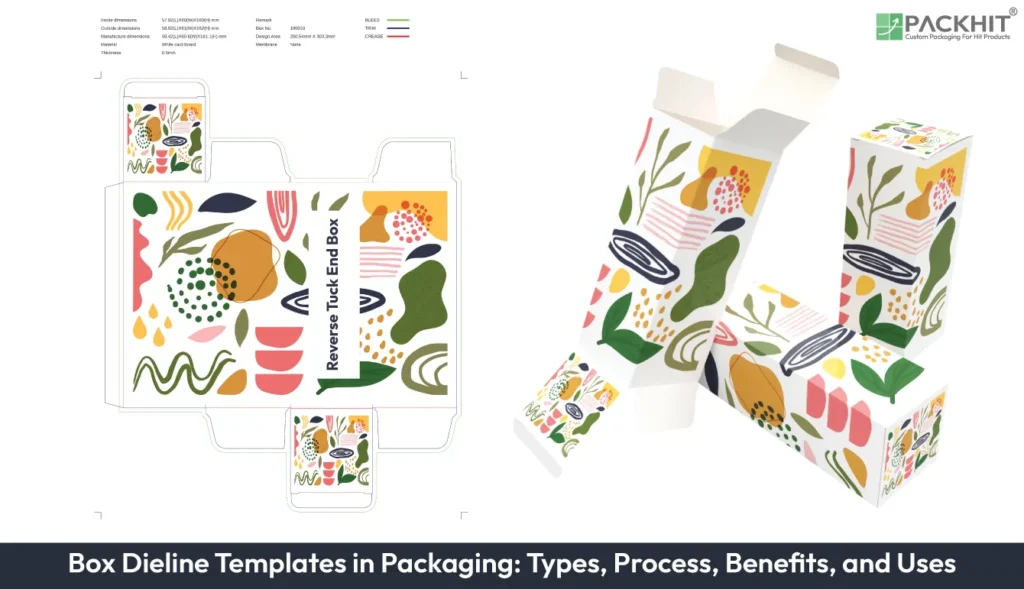
A box dieline template is a two-dimensional structural layout used to plan, cut, fold, and assemble packaging accurately before production. Depending on the packaging structure and application, box dieline templates include mailer, tray, rigid, bottle carrier, and sleeve box designs, each developed for specific packaging requirements. The process of creating a box dieline template involves defining package dimensions, designing structural elements, organizing artwork and production layers, and exporting the file in compatible formats. Using box dieline templates helps improve dimensional accuracy, customization, material efficiency, error prevention, and production planning, making them widely used across e-commerce, food, luxury, and retail packaging applications.
- What is a Box Dieline Template?
- Types of Box Dieline Templates
- How to Create a Box Dieline Template?
- Step 1: Define Dimensions
- Step 2: Design Structural Elements
- Step 3: Separate Layers
- Step 4: Export in Compatible Formats
- What are the Benefits of Using Box Dieline Templates?
- Applications of Box Dieline Templates
- How to Choose the Right Box Dieline Template?
What is a Box Dieline Template?
A box dieline template is a two-dimensional blueprint used to prepare packaging designs for cutting and assembly. It provides the structural framework needed to produce a box, including measurements, fold areas, cut paths, and perforation points. By organizing these elements in a digital file, designers can create packaging layouts that are easier to review, adjust, and prepare for manufacturing.
Types of Box Dieline Templates
The type of dieline selected depends on the product, packaging purpose, and required construction method. Each structure has unique considerations, from shipping durability to display presentation.
Mailer Box Dieline
For e-commerce shipments and subscription products, a mailer box dieline focuses on creating a secure package that can be assembled efficiently. These templates define the folding structure, locking features, and branding areas needed for a functional shipping box. They can be adjusted with custom artwork, logos, and text to match different product identities.
Tray Box Dieline
Tray box dielines are commonly used when products need an open-top or display-oriented structure. They provide accurate guides for folds and cuts, making them suitable for applications such as food packaging, retail displays, and product inserts. Material thickness and support requirements should be considered to maintain stability during use.
Rigid Box Dieline
Rigid box dielines support premium packaging designs where appearance and structural strength are key priorities. They are often used for cosmetics, electronics, luxury goods, and gift packaging. These templates help plan precise dimensions and construction details needed for high-quality finishes and durable assembly.
Bottle Carrier Dieline
Bottle carrier dielines are developed for packaging that holds and protects multiple bottles during handling and transport. They typically include reinforced sections, dividers, and handle placements to improve carrying convenience. Beverage brands often customize these layouts with printed graphics and product information.
Sleeve Box Dieline
Sleeve box dielines are designed for packaging that slides over an inner tray or container. Their simple structure makes them suitable for gift packaging, retail products, and branded presentation boxes. Designers can modify the sleeve dimensions and artwork areas to create different visual effects while maintaining a proper fit.
How to Create a Box Dieline Template?
Creating a dieline requires careful planning of both structural requirements and production limitations. The following steps outline the general process:
Step 1: Define Dimensions
Start by measuring the product and determining the required package size. Consider material thickness, folding allowances, closures, tabs, and other structural requirements to ensure the final package fits correctly.
Step 2: Design Structural Elements
Add the necessary construction features, including cut lines, fold lines, perforations, handles, windows, or locking mechanisms. These elements should reflect how the package will be assembled and used.
Step 3: Separate Layers
Organize structural elements and artwork into separate layers within the design file. Clear layer separation helps designers and manufacturers review the dieline and reduces potential conflicts between graphics and production marks.
Step 4: Export in Compatible Formats
Save the completed dieline in formats such as PDF, DXF, or AI based on the requirements of the design and manufacturing workflow. Proper file preparation helps maintain accuracy when transferring the template between design and production systems.
What are the Benefits of Using Box Dieline Templates?
Box dieline templates provide practical advantages for packaging development, including:
- Precision and Accuracy: Dieline templates help maintain consistent measurements and alignment, reducing the likelihood of errors during cutting, folding, and assembly.
- Customization: Dieline templates can be adapted to different product dimensions and branding requirements, allowing designers to incorporate logos, artwork, and other visual elements.
- Material Efficiency: Optimized dieline layouts can improve material usage by reducing unnecessary waste and helping manufacturers plan more efficient packaging structures.
- Error Prevention: Clear dieline guides can help identify alignment issues, incorrect dimensions, and artwork placement problems before production begins.
- Sustainability Contribution: Dieline templates can support more sustainable packaging practices by helping reduce material waste and improve the efficiency of resource use.
Applications of Box Dieline Templates
Box dieline templates are used across industries where packaging must balance protection, functionality, and visual presentation.
- E-commerce Packaging: Mailer box dielines help create shipping packages with accurate structures and customizable branding areas, supporting secure product delivery and a more consistent unboxing experience.
- Food Packaging: Tray box dielines help develop packaging for baked goods, frozen foods, and fresh products by providing controlled dimensions and structural layouts suited to different food applications.
- Luxury Packaging: Rigid box dielines support premium packaging by allowing precise construction planning, decorative finishes, and detailed branding elements.
- Retail Display: Custom dielines help create display-ready packaging that improves shelf presentation while supporting efficient stacking and product arrangement.
Understanding these applications allows manufacturers and designers to select suitable dieline structures for different packaging requirements. Whether developing mailer boxes, tray boxes, or rigid packaging, dieline templates provide a foundation for creating accurate and production-ready designs.
What are the Common Formats for Box Dieline Templates?
Box dieline templates are commonly provided in formats such as PDF, DXF, and AI. These file types support compatibility with professional design tools and allow packaging teams to create scalable layouts suitable for review, modification, and production.
How to Choose the Right Box Dieline Template?
Choosing the right box dieline template depends on factors such as the product type, packaging purpose, material, and design requirements. Mailer box dielines are suitable for e-commerce shipping, tray box dielines are ideal for food and display packaging, rigid box dielines are preferred for luxury products, and bottle carrier or sleeve box dielines are selected for specialized packaging needs.
By selecting the appropriate dieline template, manufacturers and designers can achieve accurate production, minimize material waste, reduce errors, and create packaging that delivers both functionality and strong visual appeal. A well-chosen dieline ensures the final package meets product protection, branding, and sustainability goals.