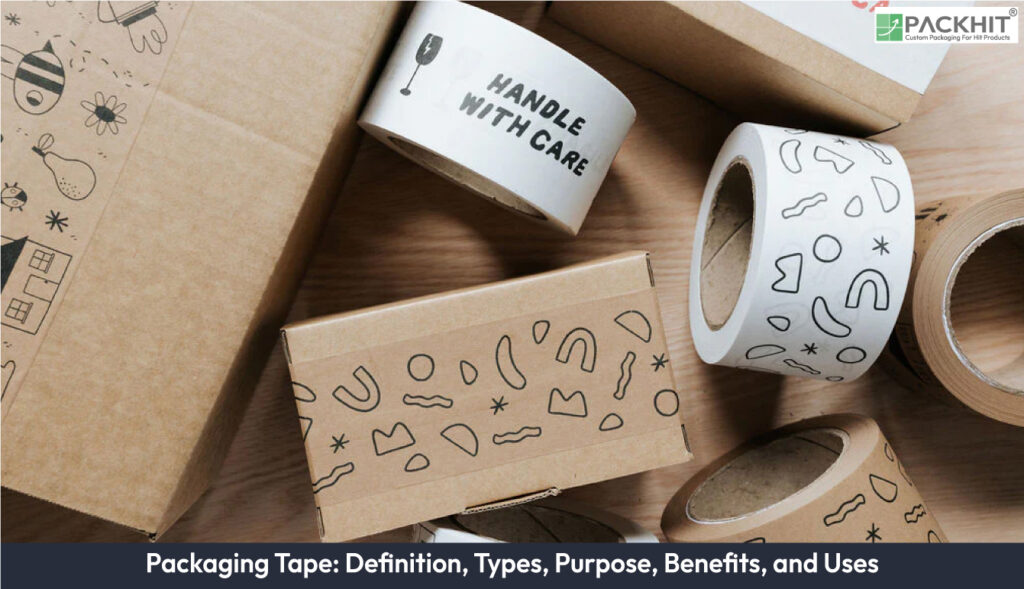
Packaging tape is an adhesive material used to secure, seal, and protect packages during storage, transit, and handling. It comes in multiple types, such as kraft tape, adhesive tape, and compostable packaging tape, each suited to specific uses, including sustainable packaging, strong adhesion, and eco-friendly solutions. The primary purpose of packaging tape is to ensure package integrity, prevent tampering, and safeguard contents from environmental factors while often serving branding purposes through customizable designs. Benefits of packaging tape include eco-friendliness, strong adhesive properties, and customizability for tailored applications. Packaging tape is widely used for securing shipments, stabilizing materials in manufacturing, promoting sustainability, enhancing branding, bundling items, and protecting goods from environmental elements. Emerging packaging tape trends emphasize recyclable and paper-based materials, reduced-plastic constructions, automation-compatible adhesives, improved performance on recycled corrugated cartons, and printed or tamper-evident formats. Packaging tape plays multifunctional roles across industries, ensuring secure, efficient, and sustainable packaging solutions.
- Types of Packaging Tape
- What is the Purpose of Packaging Tape?
- Benefits of Packaging Tape
- Uses of Packaging Tape
- Sealing and Securing Packages
- Stabilizing Materials in Manufacturing Processes
- Supporting Sustainable Packaging Strategies
- Enhancing Branding and Communication
- Bundling and Organizing Items
- Protecting Package Openings
- What are the Emerging Trends in Packaging Tape?
- How to Choose the Right Packaging Tape?
Types of Packaging Tape
Common packaging tape options include kraft tape, pressure-sensitive adhesive tape, and compostable tape, with suitability depending on carton material, sealing method, package weight, storage conditions, and end-of-life requirements.
Kraft Tape
Kraft tape uses a paper-based backing and may be supplied with pressure-sensitive or water-activated adhesive. It is often a strong choice for corrugated cartons when paper-based construction, recyclability considerations, or visible evidence of opening are priorities. It may be less suitable where moisture exposure, carton coatings, or sealing equipment are incompatible with the selected adhesive system.
Adhesive Tape
Pressure-sensitive packaging tape bonds when pressure is applied and is available with different backing materials and adhesive formulations. It is a practical choice for general carton sealing where quick application and broad format compatibility are important. Performance can drop on rough, dusty, cold, or high-recycled-content surfaces, so adhesive selection should reflect the carton and shipping environment.
Compostable Packaging Tape
Compostable packaging tape is made from materials designed to break down under specified composting conditions. It is most relevant when compostability is a defined packaging requirement and suitable disposal infrastructure is available. It is less useful when the complete tape construction, adhesive, or local waste system does not support the intended composting claim.
What is the Purpose of Packaging Tape?
The primary purpose of packaging tape is to close and secure cartons or other packages during handling, storage, and transportation. Depending on its construction, tape may also provide visible evidence of opening, carry handling information, or display printed branding. The required tape depends on factors such as package weight, carton surface, closure method, and distribution conditions.
Functional Roles of Packaging Tape
Packaging tape serves multiple functional roles, including securing packages, preventing tampering, and protecting contents. It also facilitates branding through custom designs and contributes to sustainability by offering eco-friendly options. In industrial applications, adhesive tape ensures precision during processes such as die-cutting, while compostable tape supports green packaging initiatives.
Benefits of Packaging Tape
Packaging tape can support secure sealing, material compatibility, and package communication, but these benefits depend on how the tape interacts with the carton and shipping environment. For example, a textured or recycled-fiber carton may require a different adhesive response than a smooth surface, while temperature and humidity can affect how reliably the bond performs.
- Material Options: Paper-based, plastic-film, and compostable constructions give manufacturers different choices for sealing performance and end-of-life requirements. Recycling or composting suitability depends on the complete tape construction and the available recovery system.
- Secure Sealing: A suitable adhesive can help maintain carton closure during handling and transit. Carton surface, package weight, temperature, humidity, application pressure, and sealing method can all influence bond performance.
- Customizability: Tape can be specified by backing material, adhesive system, width, roll format, and printed design. These variables allow manufacturers to adapt tape for manual or automated sealing while adding logos, handling instructions, or other package information where required.
Eco-friendliness is strongest with kraft or compostable options, but performance depends on carton surface and storage conditions, so match the adhesive system to your transit environment
Uses of Packaging Tape
Packaging tape is used for carton sealing, temporary material positioning, bundling, identification, and other packaging or manufacturing tasks. The appropriate construction depends on the surface, required bond, handling environment, and duration of use. For automated lines, prioritize tapes designed to unwind consistently and bond quickly; otherwise, adhesion can vary with carton texture and packing speed.
Sealing and Securing Packages
Packaging tape is commonly applied across carton seams to help keep packages closed during storage, handling, and shipping. Kraft, pressure-sensitive, and water-activated tapes can serve this purpose, although their performance varies with the carton material and application conditions.
Stabilizing Materials in Manufacturing Processes
Specialized adhesive tapes can temporarily hold materials or components in position during processes such as printing, converting, and die-cutting. The required adhesive should provide sufficient holding strength without creating unwanted residue or surface damage when removal is necessary.
Supporting Sustainable Packaging Strategies
Paper-based or compostable tapes may support packaging strategies intended to improve end-of-life options, depending on their construction and the available recycling or composting infrastructure. Manufacturers should evaluate the complete tape-and-carton combination rather than assuming environmental performance from the backing material alone.
Enhancing Branding and Communication
Custom-printed tape can combine carton sealing with logos, handling instructions, promotional messages, or other information. Print layout should account for tape width, seam placement, and application method so important elements remain visible after sealing.
Bundling and Organizing Items
Suitable adhesive tapes can be used to bundle or organize certain products and materials during handling or storage. Tape strength and removability should be matched to the weight, surface, and length of time the bundle needs to remain secured.
Protecting Package Openings
Packaging tape can help close carton seams and limit the entry of dust or incidental moisture through those openings. It should not be treated as a complete moisture or environmental barrier unless the overall package has been designed and tested for that requirement.
What are the Emerging Trends in Packaging Tape?
Packaging tape trends are increasingly shaped by recyclability, material reduction, fulfillment automation, and performance across different shipping environments.
- Paper-Based and Water-Activated Tapes: Kraft and water-activated tapes are gaining attention where compatibility with corrugated recycling and tamper evidence are priorities.
- Reduced-Plastic Constructions: Thinner BOPP films and lower-material tape designs are being developed to reduce plastic use while maintaining required sealing performance.
- Automation Compatibility: High-volume packing operations increasingly require tapes that unwind consistently, bond quickly, and work reliably with automated case-sealing equipment.
- Performance on Recycled Corrugated: Adhesive systems are being optimized for cartons containing more recycled fiber, where surface texture can affect bonding.
- Application-Specific Adhesives: Manufacturers are paying greater attention to temperature, humidity, carton surface, package weight, and storage conditions when selecting acrylic, hot-melt, natural-rubber, or water-activated systems.
- Printed and Tamper-Evident Tape: Custom printing and reinforced or water-activated formats continue to be used where branding, handling instructions, or visible evidence of package opening is required.
How to Choose the Right Packaging Tape?
Choose packaging tape based on carton material, package weight, shipping conditions, sealing method, and end-of-life requirements. Pressure-sensitive tape suits convenient general carton sealing, while kraft or water-activated tape may be preferred when paper-based construction or visible evidence of opening is a priority. When removability matters, avoid choosing solely for maximum adhesion; when secure closure is the priority, favor bond performance over easy removal. For recyclable or compostable packaging goals, evaluate the complete tape-and-carton combination rather than the backing alone.
For automated lines, confirm unwind behavior and case-sealer compatibility. If tape repeatedly lifts, tears, or fails to bond because of recycled corrugated, coatings, humidity, temperature, unusual substrates, or production speed, test another adhesive or tape construction before full-scale use.