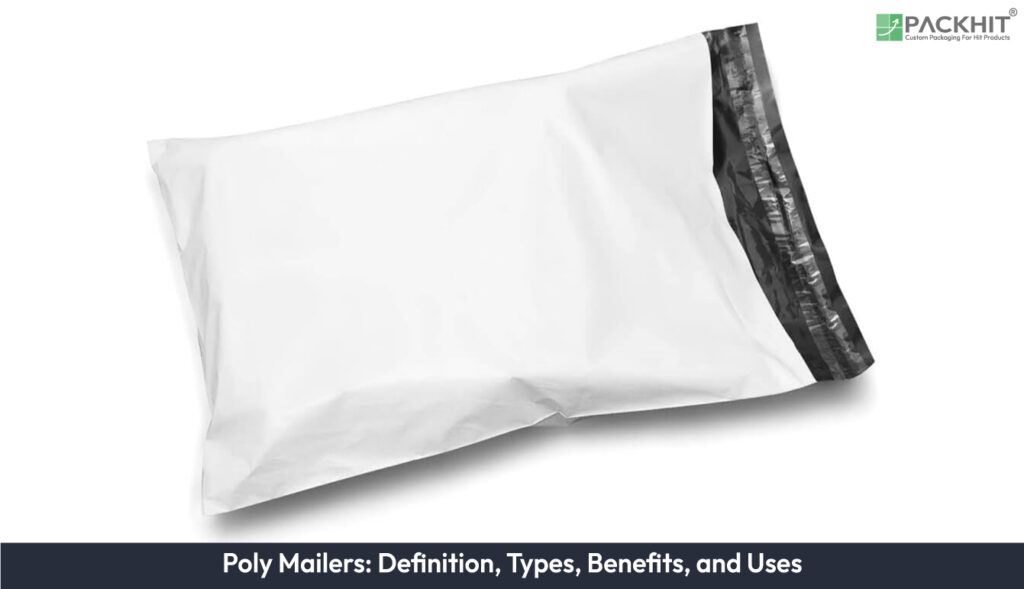
Poly mailers are flexible shipping bags used mainly for lightweight and non-fragile products, with performance influenced by film type, thickness, closure design, and package fit. Flat, bubble-lined, gusseted, recycled-content, and other formats address different needs for cushioning, capacity, returns, and material recovery. Current design trends increasingly emphasize mono-material structures, recycled content, lightweighting, tamper-evident closures, and return-ready features. The right format depends on product fragility, shipping conditions, closure requirements, and intended end-of-life pathway.
What are Poly Mailers?
Poly mailers are flexible mailing bags made from polyethylene, a thermoplastic polymer valued for its strength and resilience. These mailers are typically opaque, providing privacy for shipped items, and feature a self-sealing adhesive strip for secure closure. Their lightweight construction minimizes shipping costs, while their water-resistant and tear-resistant properties ensure product integrity during handling and delivery.
Material Composition and Structure
The primary material used in poly mailers is low-density polyethylene (LDPE), which offers a balance of flexibility and durability. LDPE is processed into thin yet robust sheets, which are then heat-sealed to form the mailer’s structure. The outer surface is often treated to allow for easy labeling or printing, while the inner surface may include additional coatings to enhance moisture resistance. Standard thicknesses range from 2.0 to 3.5 mils, depending on the intended application.
Different Types of Poly Mailers
Poly mailers are available in various types, each tailored to specific shipping needs. The most common types include flat poly mailers, bubble poly mailers, gusseted bottom mailers, and eco-friendly options such as compostable or recycled poly mailers. Each type offers unique features that cater to different product categories and shipping requirements.
Flat Poly Mailers
For clothing, textiles, and other soft goods, flat poly mailers provide a slim, flexible shipping format. Their envelope-like construction keeps material use and storage space relatively low, making them practical for high-volume fulfillment.
Poly Bubble Mailers
When a product needs extra cushioning, a poly bubble mailer adds an internal bubble layer inside the outer polyethylene shell. This format is often used for books, small electronics, and other items that need more impact protection than a flat mailer can provide.
Gusseted Bottom Poly Mailers
Bulkier or irregularly shaped products can benefit from a gusseted mailer because the sides or bottom expand as the package is filled. The added volume makes this format more suitable for items such as footwear, bundled products, or compact boxed goods.
Eco-Friendly Poly Mailers
For packaging programs focused on material recovery or reduced virgin-plastic use, recycled-content or alternative-material mailers may be considered. The right option depends on the mailer’s material composition, required shipping performance, and the recycling or composting infrastructure available at the destination.
Benefits of Using Poly Mailers
Poly mailers offer several practical advantages for suitable shipping applications. Their material and construction can provide lightweight handling, compact storage, tear resistance, moisture resistance, and secure closure features.
- Lower Package Weight: Poly mailers generally add less packaging weight than rigid boxes for lightweight, non-fragile items, though actual shipping cost depends on carrier pricing, packed dimensions, and service level.
- Durability: Polyethylene film can help resist tearing, punctures, and incidental moisture, with performance varying by film gauge, seams, closure quality, and handling conditions.
- Space Efficiency: Flat mailers require relatively little storage space before use compared with assembled corrugated boxes.
- Closure Security: Self-sealing and tamper-evident closure designs can help keep packages closed and make opening more visible during transit.
For branding applications, poly mailers can also be custom printed with logos, graphics, or handling information, allowing the packaging to carry visual or communication elements without changing its basic shipping function.
What are the Common Uses of Poly Mailers?
Poly mailers are widely used across various industries, particularly in e-commerce and retail. Their applications include shipping apparel, accessories, documents, and lightweight non-fragile items. They are also employed in subscription box services, where their customizable designs enhance brand presentation. Additionally, poly mailers are used in direct mail campaigns for distributing promotional materials and samples.
E-Commerce Shipping
In the e-commerce sector, poly mailers are a preferred packaging solution for shipping clothing, footwear, and small consumer goods. Their lightweight design reduces shipping costs, while their durability ensures product protection.
Retail and Subscription Services
Retailers and subscription box providers use poly mailers to deliver products directly to customers. Custom-printed mailers enhance the customer experience by reinforcing brand identity and creating a professional appearance.
Document and Sample Distribution
Poly mailers are also used for mailing documents, catalogs, and product samples. Their water-resistant properties protect contents from environmental damage, making them suitable for direct mail campaigns.
Emerging Trends in Poly Mailer Design
Emerging poly mailer design trends focus on recyclability, material reduction, return convenience, and shipping performance.
- Recyclable Mono-Material Films: Manufacturers are moving toward simpler polyethylene structures that are easier to sort and recycle than complex multi-layer constructions where suitable collection systems exist.
- Post-Consumer Recycled Content: More mailers are incorporating PCR resin to reduce reliance on virgin plastic and support recycled-content targets.
- Lightweighting: Thinner, downgauged films are being developed to reduce material use while maintaining the tear and puncture resistance required for shipping.
- Return-Ready Closures: Dual adhesive strips and resealable designs are increasingly used in e-commerce so the same mailer can be reused for customer returns.
- Tamper-Evident Features: Security seals and visible opening indicators are being incorporated where shipment integrity is a priority.
- Compliance-Focused Design: EPR rules and recyclability requirements are making material composition, labeling, and end-of-life compatibility more important design considerations.
- Printed Branding: Custom graphics and printed messaging remain common, but designs increasingly need to work within recyclability and material-efficiency requirements.
Poly Mailer Selection Guide
Poly mailer specifications affect how well the package fits, closes, and protects a product. The table below connects the main construction features with practical shipping requirements.
| Specification | Common Options | Selection Consideration |
|---|---|---|
| Material | LDPE, recycled-content polyethylene, alternative compostable materials | Match material to durability and intended end-of-life requirements |
| Film Thickness | Often available around 2.0–3.5 mil, depending on supplier and application | Heavier or more demanding shipments may require greater puncture and tear resistance |
| Construction | Flat, bubble-lined, gusseted | Choose according to product shape, bulk, and cushioning needs |
| Closure | Self-sealing, return-ready dual adhesive, tamper-evident | Match closure to one-way shipping, returns, or security requirements |
| Cushioning | None or bubble-lined | Fragile products may require cushioning beyond a standard flat mailer |
| Moisture Resistance | Depends on film, seams, and closure | Consider expected exposure during storage and distribution |
| Printing | Plain or custom printed | Allow sufficient printable area for branding, labels, and shipping information |
| Product Fit | Flat, flexible, or expandable | Avoid excessive empty space while preventing stress on seams and closures |
These specifications should be considered together. A thicker film does not compensate for missing cushioning, for example, while a bubble mailer may still be unsuitable when a product requires rigid protection against crushing.
How Do Poly Mailers Compare to Other Packaging Options?
Compared to corrugated boxes, poly mailers are more cost-effective for shipping lightweight and non-fragile items. They require less storage space and are easier to handle, making them ideal for high-volume shipping. However, boxes may be preferred for heavy or fragile items due to their structural rigidity. Poly mailers also outperform paper envelopes in terms of durability and water resistance, offering better protection for shipped goods.