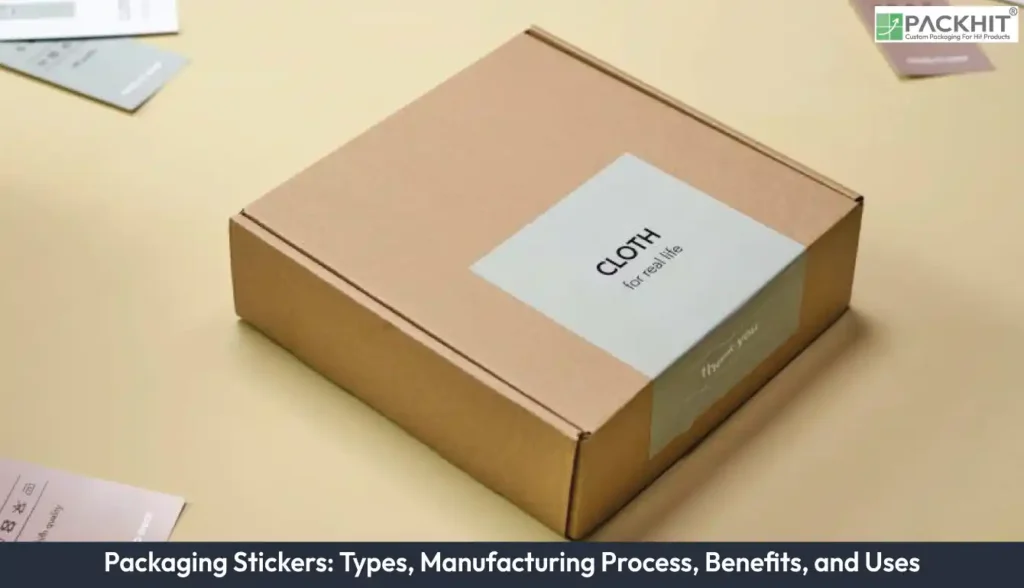
Packaging stickers are adhesive-backed labels used for branding, product identification, tamper evidence, and other packaging functions, with performance shaped by the facestock, adhesive, print method, and application surface. The primary material used in packaging stickers is heavy-duty sticker stock, which ensures durability and resistance to wear. Die-cut, roll, compostable, smart, and other formats address different production and end-use requirements across retail, food, e-commerce, and related industries. Manufacturing involves controlled converting and finishing processes that determine print quality, adhesion, shape, and application performance. For example, adhesive compatibility affects bond reliability, while die-cut accuracy affects fit and alignment. Current developments emphasize recycling-compatible materials, material efficiency, digital printing, automation, and connected features such as QR codes, NFC, and RFID.
- Types of Packaging Stickers
- How are Packaging Stickers Manufactured?
- 1. Material Selection
- 2. Printing and Design Application
- 3. Die Cutting for Precision Shaping
- 4. Adhesive Application
- 5. Finishing Processes
- 6. Quality Control and Packaging
- Why Precision Matters in Sticker Manufacturing?
- Benefits of Packaging Stickers
- How are Packaging Stickers Used?
- Emerging Trends in Packaging Stickers
- Choosing the Right Sticker for Your Packaging
Types of Packaging Stickers
Packaging stickers differ by material, format, and intended application. Common options include vinyl, compostable, die-cut, and roll stickers.
- Vinyl Stickers: For applications exposed to moisture or repeated handling, vinyl stickers provide a durable, flexible option. Their printable surface also supports branding and identification across suitable packaging applications.
- Compostable Stickers: Where compostability is a packaging priority, stickers made from materials designed for specified composting conditions may be considered. Suitability depends on the complete construction, including the facestock and adhesive, as well as the available composting pathway.
- Die-Cut Stickers: Custom shapes are the main advantage of die-cut stickers. Cutting the material to a defined outline allows logos, graphics, and other design elements to follow the shape required for the package.
- Roll Stickers: For repeated manual or automated application, roll stickers provide a continuous format that simplifies dispensing. Roll dimensions, liner construction, label spacing, and adhesive should be matched to the intended application equipment.
How are Packaging Stickers Manufactured?
Production typically starts with substrate and adhesive selection, followed by printing, cutting, finishing, and inspection The exact process varies with the sticker material, design, adhesive system, production volume, and required finish.
1. Material Selection
Material choice starts with the package environment. Moisture, handling, surface type, and end-of-life requirements help determine whether vinyl, compostable, or another substrate is appropriate. Popular options include durable vinyl for weatherproof needs and compostable substrates for eco-friendly solutions. For example, a moisture-resistant facestock still requires an adhesive suited to the package surface and expected temperature range; otherwise, the label may lift even when the printed material remains intact.
2. Printing and Design Application
Digital or offset printing applies artwork, text, barcodes, and other graphics, with the method selected according to volume, design complexity, and print requirements. These methods allow for high-resolution prints, vibrant colors, and intricate details, ensuring that the stickers align with branding requirements.
3. Die Cutting for Precision Shaping
A die defines the sticker’s final outline, allowing standard or custom shapes while controlling dimensional accuracy, while print registration and application accuracy can affect barcode or QR-code readability. Labels that fail dimensional, adhesion, or scan-readability checks should be corrected or rejected before packaging.
4. Adhesive Application
An adhesive layer is applied to the back of the stickers to ensure secure attachment to packaging surfaces. Pressure-sensitive adhesives bond when the sticker is pressed onto the package surface, while adhesive properties can be selected for permanent, removable, repositionable, or tamper-evident applications. Performance depends on factors such as the package material, surface texture, temperature, and required duration of adhesion.
Permanent adhesives suit labels intended to stay in place, while removable or repositionable adhesives suit temporary or adjustable applications. Moisture, contamination, temperature, and textured surfaces can reduce adhesion and cause lifting.
5. Finishing Processes
After cutting, finishing touches such as laminating or varnishing are applied to enhance the durability and appearance of the stickers. Lamination adds a protective layer against wear and tear, while varnishing provides a polished look, ensuring the stickers maintain their quality over time.
6. Quality Control and Packaging
The final quality-control stage checks attributes such as print clarity, color and artwork alignment, die-cut accuracy, adhesive performance, and the readability of barcodes or QR codes where applicable. For roll stickers, manufacturers may also verify label spacing, liner release, and roll configuration for compatibility with the intended application equipment. Approved stickers are supplied in rolls, sheets, or individual units according to the intended application method. Barcodes and QR codes should be checked after printing and application, as poor contrast, wrinkles, or distortion can reduce scan reliability.
Why Precision Matters in Sticker Manufacturing?
Precision in manufacturing ensures that packaging stickers fulfill their dual purpose of functionality and aesthetics. From selecting durable materials to applying adhesives and designing intricate cuts, each step contributes to creating high-performance stickers tailored to specific industry needs.
Benefits of Packaging Stickers
The practical value of packaging stickers depends on matching the material, adhesive, format, and finish to the package surface and application conditions. For example, textured or moisture-exposed surfaces may require a more suitable material and adhesive to prevent lifting and maintain readability. Key considerations include durability, environmental compatibility, customization, and application efficiency.
Durability
Moisture, abrasion, and repeated handling are key reasons to consider durable materials such as vinyl. Whether exposed to moisture, sunlight, or physical wear, these stickers retain their integrity and visual appeal, ensuring long-lasting performance.
Eco-Friendliness
Compostable stickers, crafted from biodegradable materials, align with sustainable practices and reduce environmental impact. These eco-friendly options are ideal for brands that prioritize green initiatives and aim to minimize waste.
Customization
Die cutting, variable printing, and specialty finishes give manufacturers different ways to adapt stickers to package shapes, product variants, and branding requirements. Custom shapes, variable printing, and specialty finishes can adapt stickers to package geometry, product variants, or specific communication needs.
Efficiency
Roll stickers can support repeated manual application and automated labeling lines. In high-volume production, label spacing, liner release, adhesive performance, and equipment compatibility are often more important than the roll format itself.
How are Packaging Stickers Used?
Packaging stickers support branding, product identification, tamper evidence, and promotional communication; depending on the application, they can carry logos, ingredients, barcodes, QR codes, or package-opening indicators.
- Branding: Stickers featuring logos and designs enhance brand visibility and create a professional appearance for products.
- Product Identification: Labels and stickers provide essential information such as product names, ingredients, and barcodes.
- Tamper Evidence: Box seal stickers act as tamper-evident seals, ensuring product integrity during transit.
- Promotional Use: Custom stickers are used in marketing campaigns to attract consumer attention and reinforce brand identity.
Applications in Specific Industries
Sticker requirements vary by industry: retail emphasizes product identification and branding, food packaging may require regulatory information, and e-commerce applications often prioritize fulfillment and package communication.
- Retail: Custom labels and stickers are used for product branding and promotional packaging.
- Food Packaging: Compostable stickers are increasingly adopted for labeling food products in sustainable packaging solutions.
- E-commerce: Roll stickers streamline packaging processes and enhance the unboxing experience for customers.
Emerging Trends in Packaging Stickers
Current packaging sticker trends focus on recyclability, material efficiency, digital production, smarter product information, and compatibility with evolving packaging regulations.
- Recycling-Compatible Labels: Sticker materials, adhesives, and constructions are increasingly being selected to work with the recycling pathway of the underlying package rather than treating the label as a separate component.
- Recycled and Reduced-Material Constructions: Manufacturers are exploring recycled-content facestocks, thinner materials, and other lightweight constructions to reduce material use while maintaining the required print and application performance.
- Digital Printing and Shorter Production Runs: Digital label printing supports variable graphics, shorter runs, version changes, and product-specific information without relying on the same setup requirements as conventional printing methods.
- Smart and Connected Stickers: QR codes, NFC, RFID, and other data carriers are expanding the role of packaging stickers beyond printed identification by connecting physical products with traceability, authentication, product information, or digital experiences.
- Digital Product Information: Regulatory developments are increasing interest in labels that connect users to structured digital information. QR codes and other machine-readable carriers can provide access to product, circularity, compliance, and end-of-life information where applicable.
- Automation-Compatible Labels: High-volume packaging operations increasingly require stickers that dispense, apply, adhere, and scan consistently on automated labeling lines, making liner, adhesive, surface, and application compatibility important design considerations.
- Regulatory and End-of-Life Labeling: Packaging regulations are placing greater emphasis on clear recycling, reuse, material, and disposal information. Manufacturers therefore need to consider not only sticker appearance but also whether its materials, markings, and digital elements support the intended market and packaging system.
Choosing the Right Sticker for Your Packaging
Sticker selection should account for the package surface, expected exposure conditions, application method, production volume, and end-of-life requirements. Material and format choices can affect adhesion, durability, application efficiency, and compatibility with the package.
- Choose vinyl stickers when packaging may encounter moisture, frequent handling, abrasion, or other conditions that require a durable and flexible label. Confirm that the adhesive is suitable for the package material and expected temperature range.
- Choose compostable stickers when compostability is an important packaging requirement and an appropriate composting pathway is available. Verify the complete sticker construction, including facestock, adhesive, inks, and finishes, against the intended composting conditions rather than assuming the facestock alone determines suitability.
- Choose die-cut stickers when a custom outline supports branding, package geometry, sealing, or another functional requirement. Complex shapes and narrow sections may require additional attention to cutting accuracy and edge adhesion.
- Choose roll stickers for repeated manual dispensing or automated labeling. Roll dimensions, winding direction, label spacing, liner release, and adhesive performance should be compatible with the intended equipment and application speed.
Final decision: Choose vinyl when durability and handling are the priority; choose compostable materials when end-of-life compatibility is more important and a suitable composting pathway exists. Choose permanent adhesion for long-term labeling, removable options for temporary use, and tamper-evident constructions where evidence of opening matters. For automated application, equipment compatibility should take priority over format convenience.
Common Performance Issues and What to Check
Packaging sticker performance can be affected by the package surface, environmental conditions, application process, and label construction. Common issues include:
- Lifting or loss of adhesion: Edges may lift, or the sticker may detach when the adhesive is poorly matched to the surface, when packages are exposed to unsuitable temperatures or moisture, or when dust, oil, condensation, or other contamination interferes with bonding. Check surface cleanliness, application temperature, adhesive selection, and whether sufficient pressure is applied during labeling.
- Edge curl or poor conformity: Stickers may curl or fail to remain flat on curved, textured, flexible, or small-diameter packages. Check whether the facestock and adhesive are sufficiently flexible for the package geometry, and whether the sticker size and shape impose excessive stress on its edges.
- Barcode or QR-code readability problems: Poor print contrast, abrasion, wrinkles, unsuitable finishes, or distorted application can make machine-readable codes difficult to scan. Verify print quality and contrast, protect the printed area where necessary, and test codes on the finished package under expected handling and scanning conditions.
Testing the selected sticker on the actual packaging material and under representative storage, handling, temperature, and moisture conditions can help identify compatibility issues before full-scale production.