Packaging supplies are essential materials and tools designed to protect, store, and present products throughout their lifecycle, categorized into primary, secondary, and tertiary types based on function. Types of packaging supplies include containers (corrugated boxes, mailers), flexible bags (poly mailers, padded envelopes), cushioning/void fill (bubble wrap, air pillows, packing peanuts), sealing/labels (tape, labels), handling (strapping, stretch film), and ancillary items (stickers, markers). Their composition ranges from traditional paper-based materials like kraft paper and corrugated cardboard to innovative options like bioplastics and multi-layer laminates, emphasizing properties such as durability, flexibility, and environmental sustainability. They offer critical benefits such as product protection, cost-efficiency, branding opportunities, and alignment with sustainability goals. Specific applications vary by sector: manufacturers utilize them for safeguarding goods during production and transit, retailers for enhancing shelf appeal, e-commerce businesses for customer satisfaction and damage prevention, and the food industry for freshness and compliance with eco-friendly standards. Emerging trends, including sustainable materials, smart packaging technologies, and customization, are shaping the future of the industry, driven by consumer demand and regulatory changes.
- What are Packaging Supplies?
- Types of Packaging Supplies
- Padded Envelopes
- Poly Mailers
- Bubble Mailers
- Mailer and Shipping Boxes
- Labels
- Stickers
- Corrugated Trays and Cartons
- Packaging Tape
- Bubble Wrap
- Packing Peanuts
- Void Fillers
- What Materials are Used in Packaging Supplies?
- Benefits of Packaging Supplies
- How are Packaging Supplies Used Across Industries?
- What Trends are Shaping the Future of Packaging Supplies?
- How to Choose the Right Packaging Supplies?
What are Packaging Supplies?
Packaging supplies are materials and tools used to contain, protect, store, handle, and identify products during packing, storage, and transit. Examples include corrugated boxes for rigid parcels, bubble wrap for cushioning, tape for carton sealing, and labels for shipping or product information. The appropriate combination depends on factors such as product weight, fragility, dimensions, storage conditions, shipping method, and presentation requirements.
Types of Packaging Supplies
Packaging supplies fall into 11 common types: padded envelopes, poly mailers, bubble mailers, mailer and shipping boxes, labels, stickers, corrugated trays and cartons, packaging tape, bubble wrap, packing peanuts, and void fillers.
Padded Envelopes
Padded envelopes protect small or relatively fragile items by combining an outer mailer with an internal cushioning layer. Common formats include sizes around 6 × 9 and 8.5 × 11 inches, but the appropriate size depends on the product dimensions and the clearance needed for sealing without compressing the contents. Outer shells may use paper or polyethylene, while recycling options depend on whether the cushioning can be separated and whether the materials are accepted locally.
Poly Mailers
Poly mailers provide a lightweight shipping format for flexible, non-fragile products such as clothing and textiles. Sizes can range from small mailers around 6 × 9 inches to much larger formats, with the required dimensions determined by the folded product size and the space needed for closure. Low-density polyethylene (LDPE) is commonly used because it produces a flexible, moisture-resistant film, although recycling generally depends on access to an appropriate film-collection program.
Bubble Mailers
Bubble mailers combine an outer envelope with an internal bubble layer to provide light cushioning for items such as small electronics, accessories, or cosmetics. Kraft paper and polyethylene are common outer materials, but construction affects disposal: mixed paper-and-plastic mailers may need separation before recycling where facilities accept the individual materials. The mailer should also leave enough room for the product without allowing excessive internal movement.
Mailer and Shipping Boxes
Mailer and shipping boxes provide rigid outer protection for parcels, returns, and retail shipments. Corrugated construction may use single-wall or double-wall board, while flute profiles such as B or C influence properties such as thickness, cushioning, stacking performance, and print surface. Rather than choosing a board type by flute name alone, manufacturers should match the construction to product weight, package dimensions, stacking requirements, and expected distribution conditions.
Labels
Labels carry shipping, regulatory, identification, or product information on packaging. Common constructions combine a pressure-sensitive adhesive with paper or film face stock, while printing formats can include thermal and conventional printable labels. Adhesive and face material should be matched to the package surface and environment because texture, moisture, temperature, and handling can affect adhesion and readability.
Stickers
Stickers can add logos, promotional messages, seals, or tamper-indicating elements to a package. Paper and vinyl are common face materials, while removable and permanent adhesives support different applications. A removable adhesive may be appropriate for temporary information, whereas a permanent adhesive may be preferable when the sticker needs to remain attached throughout handling and use.
Corrugated Trays and Cartons
Corrugated trays and cartons can combine product containment with stacking, separation, or shelf-ready presentation. Formats include multipack trays and partitioned cartons, with the layout determined by the number, dimensions, and weight of the products being packed. For fragile component groups, partitions can also reduce direct contact between individual items rather than relying only on empty-space filling.
Packaging Tape
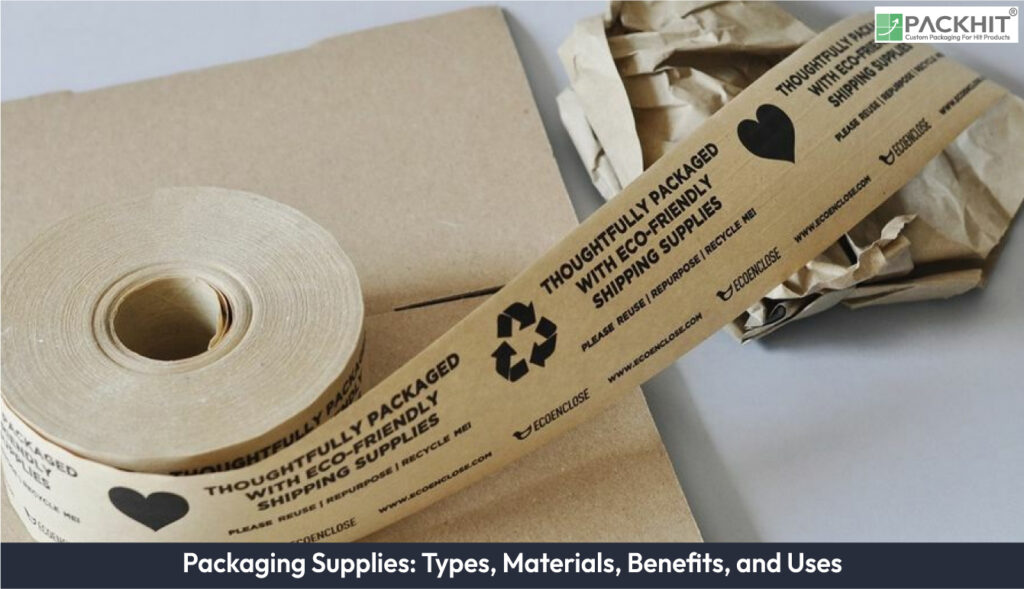
Packaging tape seals cartons and can provide visible evidence when a package has been opened or disturbed. Common options include acrylic, hot-melt, and water-activated kraft tape, with 2-inch widths frequently used for standard carton seams. Tape selection should account for carton surface, storage temperature and humidity, package weight, and case-sealing equipment because these conditions can affect adhesion or activation. Roll length also varies by product and equipment, so manufacturers should confirm that the selected format is compatible with manual dispensers or automated sealing systems.
Bubble Wrap
Bubble wrap cushions and separates fragile components by creating an air-filled layer around or between products. It is commonly made from polyethylene film, with bubble sizes ranging from small profiles such as 3/16 inch to larger formats approaching 1 inch. Smaller bubbles provide a thinner, more flexible wrapping layer, while larger bubbles occupy more space and may provide additional cushioning for larger items. The appropriate size should therefore be chosen according to product fragility, shape, available package space, and the amount of cushioning required.
Packing Peanuts
Packing peanuts fill irregular voids around products and can help restrict movement inside a carton. Common options include lightweight foam peanuts and starch-based alternatives, which differ in disposal characteristics and moisture sensitivity. Loose fill works best when enough material surrounds the product to limit migration, but it may be less suitable when precise positioning or rigid structural support is required.
Void Fillers
Void fillers occupy unused space inside shipping cartons so products have less room to move during handling and transit. Common options include crumpled paper, air pillows, and foam-based materials, each providing a different balance of cushioning, weight, and rigidity. Paper can suit applications requiring dense fill, while air pillows add relatively little shipping weight; heavier or sharp-edged products may require a more robust solution.
What Materials are Used in Packaging Supplies?
Packaging supplies use materials ranging from paper and corrugated board to plastics, molded fibers, and compostable materials. Material selection should account for the package’s required strength, flexibility, moisture resistance, product compatibility, manufacturing process, and intended end-of-life pathway.
Paper-Based Materials
Paper, paperboard, and corrugated board are widely used for wrapping, cartons, inserts, and shipping boxes. Kraft paper provides a flexible wrapping or void-fill option, while corrugated board adds fluted layers that provide greater structural support for shipping applications. The appropriate paper-based material depends on product weight, exposure to moisture, stacking requirements, and the strength required during distribution.
Biodegradable and Compostable Options
Materials such as molded bagasse and some starch-based polymers can be used when a packaging application calls for biodegradable or compostable alternatives. Their suitability depends on the specific material formulation, product contact requirements, storage environment, and available end-of-life infrastructure. Manufacturers should verify applicable compostability or disposal claims rather than assuming that every bio-based material will break down under the same conditions.
Plastic and Synthetic Materials
Plastics remain common where packaging requires flexibility, moisture resistance, clarity, or structural durability. HDPE, for example, is often selected for comparatively rigid containers, while PET can provide clarity and dimensional stability for bottles and other packaging formats. The appropriate polymer depends on the product being contained, barrier requirements, processing method, expected handling conditions, and applicable recycling system.
Benefits of Packaging Supplies
Packaging supplies perform different functions depending on the product and distribution environment:
- Product Protection: Boxes, cushioning, dividers, and void fill can help limit impact, movement, contamination, or exposure to environmental conditions when matched to the product’s vulnerabilities.
- Operational Efficiency: Standardized boxes, labels, tapes, and other supplies can simplify packing, identification, handling, and storage when their dimensions and formats match the packing workflow.
- Branding and Information: Printed boxes, labels, stickers, and inserts provide surfaces for logos, instructions, regulatory information, and other product communication.
- Material Efficiency: Right-sized containers and appropriately selected cushioning can reduce unnecessary packaging material while still providing the required containment or protection.
How are Packaging Supplies Used Across Industries?
Packaging requirements vary by industry because products encounter different handling, storage, regulatory, and distribution conditions.
Manufacturing and Logistics
Manufacturers use packaging supplies to contain and protect raw materials, components, and finished goods during storage and transportation. Pallets, stretch film, cartons, dividers, and cushioning may be combined according to load weight, stacking requirements, handling equipment, and transit conditions. Logistics operations also need package dimensions and structures that work with warehousing, palletization, and distribution processes.
Retail and E-Commerce
Retail packaging may need to support both product presentation and efficient shelf handling, while e-commerce packaging places greater emphasis on parcel distribution and protection during individual shipment. Mailers, shipping boxes, labels, tape, and void fill should therefore be selected according to product fragility, parcel dimensions, carrier handling, and the amount of unused space inside the package.
Food and Beverage Industry
Food and beverage packaging must account for product protection, storage conditions, material compatibility, and applicable food-contact or labeling requirements. Depending on the product, solutions can range from corrugated transport packaging to insulated containers, sealed pouches, molded fiber components, or other suitable materials. Material selection should be based on the food or beverage, required barrier properties, temperature conditions, intended shelf life, and relevant regulatory requirements.
What Trends are Shaping the Future of Packaging Supplies?
Packaging supplies are increasingly being shaped by material efficiency, recyclability requirements, digital functionality, and changes in packaging regulations. Key trends include:
- Recyclable and Simplified Materials: Manufacturers are increasingly evaluating packaging based on whether materials can be collected and recycled within existing systems. This is encouraging simpler structures, fiber-based alternatives, and packaging designs that are easier to sort and recover.
- Lightweighting and Right-Sizing: Companies are reducing unnecessary material by using lighter mailers, thinner protective materials, and boxes sized more closely to the product. Right-sized packaging can also reduce excess void fill and improve shipping efficiency.
- EPR and Packaging Compliance: Extended Producer Responsibility programs are making material type, packaging weight, recyclability, and recovery more important considerations when selecting packaging supplies. Manufacturers increasingly need accurate packaging specifications to support reporting and compliance requirements.
- Smart Packaging Supplies: QR codes, NFC tags, RFID, and sensors are being incorporated into labels and packaging components for product information, traceability, recycling instructions, authentication, and supply-chain tracking.
- Performance-Based Material Selection: Instead of choosing materials based only on sustainability claims, manufacturers are placing greater emphasis on whether the packaging can withstand storage, packing-line handling, moisture, impact, and transportation while still meeting recyclability or material-reduction goals.
How to Choose the Right Packaging Supplies?
Choose packaging supplies by matching them to the product’s size, weight, fragility, shipping method, storage conditions, and presentation needs. Fragile items may require rigid boxes and cushioning, while lightweight, non-fragile products may be better suited to poly mailers or padded envelopes. Also consider sealing requirements, recyclability, order volume, and whether custom printing or labeling is needed. For manufacturers and e-commerce businesses, testing the complete packaging setup before large-scale use can help confirm fit, protection, and packing efficiency.