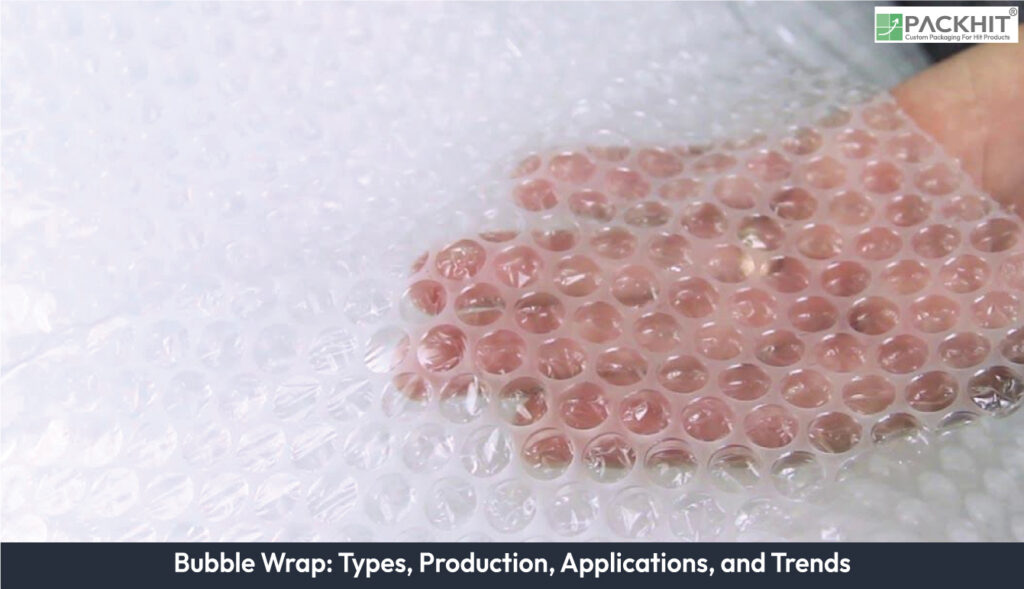
Bubble wrap is a flexible cushioning material available in standard, anti-static, heavy-duty, and more rigid protective formats for different packaging needs. It is typically produced by forming and sealing air pockets between plastic film layers, with bubble size, film construction, and finishing influencing its use. Common applications include e-commerce, logistics, manufacturing, and the handling of fragile or irregular items, while current developments focus increasingly on recyclable films, reduced material use, and paper-based alternatives. Its suitability compared with other cushioning materials depends on product fragility, package weight, handling conditions, flexibility, and end-of-life requirements.
- Types of Bubble Wrap
- How is Bubble Wrap Manufactured?
- 1. Polyethylene Resin Preparation
- 2. Sheet Extrusion
- 3. Bubble Formation
- 4. Lamination and Air Sealing
- 5. Cutting and Finishing
- The Primary Applications of Bubble Wrap
- Emerging Trends in Sustainable Bubble Wrap
- How Does Bubble Wrap Compare to Alternative Packaging Materials?
- What are the Environmental Considerations for Bubble Wrap?
- How to Choose the Right Bubble Wrap?
Types of Bubble Wrap
Bubble wrap is available in various forms to meet specific packaging requirements:
- Standard Bubble Wrap: Features medium-sized bubbles suitable for general-purpose cushioning.
- Anti-Static Bubble Wrap: Designed for electronic components, this variant prevents static electricity buildup.
- Heavy-Duty Bubble Wrap: Offers enhanced durability for packaging heavy or sharp-edged items.
- Corrugated Bubble Wrap: Combines bubble cushioning with a corrugated layer for added strength and rigidity.
How is Bubble Wrap Manufactured?
Bubble wrap is manufactured by preparing polyethylene resin, extruding it into thin film, forming bubble cavities, laminating a second film layer to trap air, and converting the finished material into rolls or sheets. Each stage influences characteristics such as film consistency, bubble formation, cushioning performance, and finished dimensions.
1. Polyethylene Resin Preparation
The process begins with polyethylene resin granules, which are fed into an extrusion system and heated until they become molten. The material must reach a suitable processing consistency so it can flow evenly through the extrusion equipment and form a continuous plastic film.
2. Sheet Extrusion
The molten polyethylene is pushed through a die to produce thin, continuous film. Maintaining a relatively uniform film thickness is important because variations can affect bubble formation, material flexibility, and the consistency of the finished cushioning layer.
3. Bubble Formation
One layer of film is drawn over a forming drum containing regularly spaced cavities. Vacuum forming pulls the heated film into these cavities, creating the familiar bubble pattern. The size and arrangement of the cavities determine the dimensions and distribution of the bubbles across the material.
4. Lamination and Air Sealing
A second polyethylene film is bonded to the formed layer, closing the bubble cavities and trapping air inside them. This sealed-air structure creates the cushioning effect associated with bubble wrap. A consistent bond between the layers also helps prevent individual bubbles from opening during normal handling.
5. Cutting and Finishing
After lamination, the continuous bubble-wrap material is cooled and converted into the required finished format. It may be slit into narrower widths, cut into sheets, perforated for easier separation, or wound into rolls. Manufacturers can adjust the finished dimensions and bubble configuration according to the intended packaging application.
The Primary Applications of Bubble Wrap
Bubble wrap is extensively used in industries that require the safe handling and transportation of fragile goods. Its applications span multiple domains:
- E-commerce: Protects items such as electronics, glassware, and collectibles during shipping.
- Logistics: Serves as a cushioning layer in bulk shipments to prevent damage from vibrations and impacts.
- Manufacturing: Used to package and store delicate components, including machinery parts and medical devices.
- Art and Antiques: Ensures the safe transport of valuable and irregularly shaped items.
Emerging Trends in Sustainable Bubble Wrap
Sustainable bubble wrap innovations are reshaping the packaging industry by offering eco-friendly alternatives to traditional options. These developments aim to minimize environmental impact while retaining essential protective properties.
- Biodegradable Materials: Derived from plant-based polymers such as cornstarch, these bubble wraps naturally decompose over time, reducing landfill accumulation and contributing to a circular economy.
- Recyclable Options: Designed for seamless integration into existing recycling systems, these variants help manufacturers align with global waste management protocols while maintaining cost efficiency.
- Corrugated Bubble Wrap: Created by repurposing corrugated cardboard into cushioning materials, this alternative offers a biodegradable and reusable solution that mirrors traditional bubble wrap’s shock-absorbing function.
- Reduced Plastic Content: Advances in material engineering have enabled the production of bubble wraps with lower plastic content, significantly reducing their carbon footprint and promoting sustainable manufacturing practices.
These emerging trends highlight a growing shift in the packaging industry toward sustainability. By adopting these innovative solutions, manufacturers can reduce their environmental impact while meeting consumer demands for eco-friendly products.
How Does Bubble Wrap Compare to Alternative Packaging Materials?
Bubble wrap is well suited to flexible cushioning and surface protection, especially for fragile or irregularly shaped items. Its performance depends on bubble size, film thickness, product weight, handling conditions, and puncture risk, so it should be compared with paper, foam, or corrugated options based on the protection each application requires.
- Cushioning: Bubble wrap provides flexible impact cushioning, while paper, foam, and corrugated materials offer different levels of cushioning or structural support depending on the application.
- Weight: Because much of its cushioning volume consists of trapped air, bubble wrap can add relatively little packaging weight compared with denser cushioning materials of similar volume.
- Durability: Performance depends on film thickness, bubble size, handling conditions, and puncture exposure; sharp or heavy items may require additional protection.
- Flexibility: Bubble wrap conforms around irregular shapes more readily than rigid packaging components, although it does not provide the same structural support as fitted foam or corrugated inserts.
What are the Environmental Considerations for Bubble Wrap?
Conventional bubble wrap is commonly made from polyethylene film, and its recyclability depends on the material construction and local film-collection facilities. Some alternatives use recyclable mono-material films, reduced-plastic designs, or other materials intended to improve end-of-life options. Claims such as recyclable, biodegradable, or compostable should be checked against the specific material specification and the collection or disposal system available where the packaging will be used.
How to Choose the Right Bubble Wrap?
Choose bubble wrap according to the product’s fragility, weight, shape, surface sensitivity, and handling conditions.
- Standard bubble wrap: Suitable for general cushioning and separating lightweight or moderately fragile items.
- Anti-static bubble wrap: Preferable for static-sensitive electronic components where electrostatic discharge is a concern.
- Heavy-duty bubble wrap: Better suited to heavier, fragile, or irregular products that require additional cushioning.
- More rigid or layered cushioning: Consider when the product needs greater structural support than flexible bubble wrap alone can provide.
Bubble wrap should not be relied on as the only protection when products are very heavy, have sharp edges that may puncture the film, or require rigid immobilization. Manufacturers should also avoid wrapping sensitive surfaces too tightly and verify that the selected material is compatible with the product and expected storage and transit conditions.