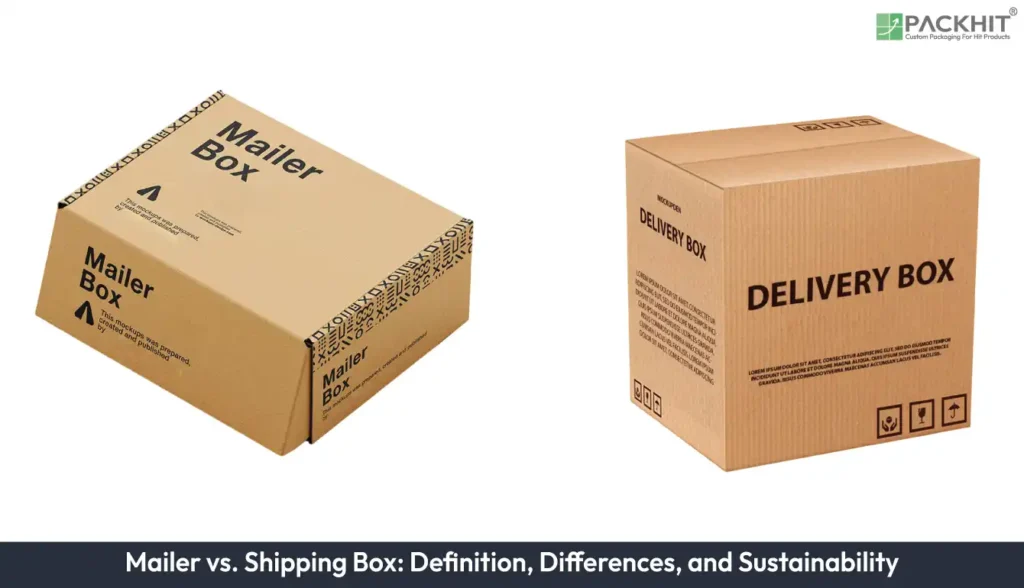
Mailer boxes and shipping boxes serve distinct purposes in packaging, catering to different needs based on product type, shipping requirements, and environmental considerations. Mailer boxes are lightweight, self-locking, and customizable containers ideal for e-commerce, subscription services, and retail packaging, focusing on branding and unboxing experiences. In contrast, shipping boxes are robust, multi-layered corrugated cardboard containers designed for durability and protection, making them suitable for long-distance transit of heavier or bulkier items. While mailer boxes emphasize convenience and aesthetics, shipping boxes prioritize strength and secure delivery. Both play essential roles in shipping logistics, with mailer boxes excelling in cost-effective, localized deliveries and shipping boxes dominating in industrial, long-haul transport. From a sustainability perspective, both can be eco-friendly when made from recycled or FSC-certified materials, with innovations in biodegradable coatings and modular designs further enhancing their environmental impact. Manufacturers must choose the appropriate packaging solution by evaluating the product’s weight, fragility, destination, and branding goals.
- What is a Mailer Box?
- What is a Shipping Box?
- How Do Mailer Boxes and Shipping Boxes Differ?
- Structural and Material Differences
- Functional and Use-Case Variations
- Core Properties and Features of Mailer Boxes vs. Shipping Boxes
- What are the Sustainability Considerations for Mailer Boxes and Shipping Boxes?
- When Should You Choose a Mailer Box vs. a Shipping Box?
What is a Mailer Box?
Mailer boxes are built for presentation, easy assembly, and lightweight shipping. Their self-locking flaps make them convenient for direct-to-consumer orders such as apparel, cosmetics, books, and subscription products, where branding and unboxing experience often matter alongside protection.
What is a Shipping Box?
Shipping boxes focus more on structural protection during handling and transit. They typically use stronger corrugated construction and are suited to heavier, bulkier, or fragile products that may face stacking, compression, and repeated movement through distribution networks.
How Do Mailer Boxes and Shipping Boxes Differ?
The primary differences between mailer boxes and shipping boxes lie in their structural design, material composition, and intended use. Mailer boxes are lightweight, self-locking, and designed for aesthetic appeal, making them ideal for direct-to-consumer packaging. In contrast, shipping boxes prioritize durability and are constructed to withstand the rigors of long-distance transportation.
Structural and Material Differences
Mailer boxes are typically made from single-layer corrugated cardboard or paperboard, offering moderate protection and high customizability. Shipping boxes are typically chosen when greater compression and impact resistance are required because their heavier or multi-layer corrugated construction can provide more structural support than lighter mailer designs.
Functional and Use-Case Variations
Mailer boxes are best suited for lightweight, non-fragile items and are often used to enhance the customer experience through visually appealing designs. Shipping boxes are designed for heavier, bulkier, or fragile items, ensuring their safe delivery through reinforced construction and additional protective features.
Core Properties and Features of Mailer Boxes vs. Shipping Boxes
Mailer boxes and shipping boxes differ in structure and intended use because mailers prioritize light, quick presentation while shipping boxes prioritize corner protection, stacking strength, and impact resistance for transit.
| Aspect | Mailer Boxes | Shipping Boxes |
|---|---|---|
| Material | Corrugated cardboard or paperboard | Multi-layer corrugated cardboard |
| Function | Combines product protection with presentation and unboxing appeal | Prioritizes protection during handling and transportation |
| Applications | Apparel, cosmetics, subscription products, gifts, and small electronics | Appliances, furniture, bulk goods, fragile products, and general shipments |
| Structure | Lightweight and often self-locking | Stronger, reinforced construction |
| Protection | Moderate | High |
| Customization | Highly customizable with logos, colors, patterns, and printing | Customizable with dividers, cushioning, reinforcement, and printing |
| Closure | Commonly self-locking or tuck-style | Commonly sealed with tape or staples |
| Best For | Lightweight, non-fragile products and DTC packaging | Heavy, bulky, fragile, or long-distance shipments |
| Key Advantage | Presentation, convenience, and lower packaging weight | Strength, durability, and greater product protection |
| Main Limitation | Limited protection for heavy or fragile products | Typically heavier and more material-intensive |
Choose a mailer box when the distribution channel reduces drop height and the package ships briefly; choose a shipping box when the carton crosses carrier networks, includes lift and tilt handling, and requires higher structural performance.
What are the Sustainability Considerations for Mailer Boxes and Shipping Boxes?
Both mailer boxes and shipping boxes can contribute to sustainable packaging practices, depending on their material composition and end-of-life management. Many manufacturers now use recycled or FSC-certified materials to produce these boxes, aligning with environmental standards.
Recyclability and Material Sourcing
Mailer boxes are often made from recyclable paperboard, making them an eco-friendly option for short-term use. Shipping boxes, constructed from corrugated cardboard, are also recyclable and can be reused multiple times, reducing waste in the supply chain.
Emerging Trends in Sustainable Packaging
The packaging industry is increasingly adopting innovations such as biodegradable coatings, water-based adhesives, and modular designs to enhance the sustainability of both mailer and shipping boxes. These developments can reduce material use or improve recyclability, although their environmental benefits depend on material composition, package weight, reuse or recycling options, and the protection required for the product.
When Should You Choose a Mailer Box vs. a Shipping Box?
Choose a mailer box for lightweight, non-fragile products when compact packaging, branding, and presentation are important. It is particularly suitable for apparel, cosmetics, subscription products, books, and small accessories.
Choose a shipping box for heavy, bulky, valuable, or fragile products that need greater protection from stacking, impacts, and repeated handling. It is generally more suitable for long-distance shipping, international transportation, and products requiring additional cushioning or reinforcement.
As a practical rule, use a mailer when light-duty protection is sufficient and a shipping box when transit risk requires greater structural strength.