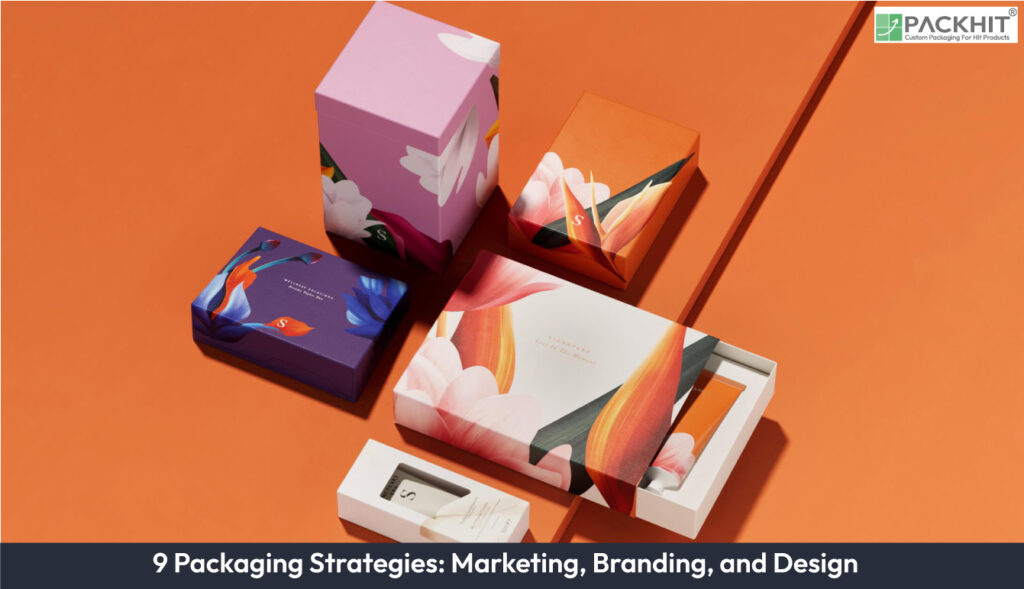
Packaging strategies encompass a range of methodologies aimed at optimizing product presentation, enhancing brand identity, and influencing consumer behavior. Effective packaging may enhance brand identity, can help influence purchasing decisions, and improve product visibility. Key strategies include functional design for practical usability, sustainable materials to minimize environmental impact, and minimalist designs to communicate elegance. Personalized packaging fosters emotional connections, while color psychology helps shape consumer perceptions. Smart packaging leverages technology for interactivity, and the unboxing experience enhances customer engagement. Modular packaging increases flexibility and cost efficiency, while transparent materials build trust by showcasing product quality. Sustainable packaging continues to grow in importance as consumers seek eco-friendly options.
Below are 9 key packaging strategies to balance product protection, operational efficiency, sustainability, and brand appeal:
1. Functional Design
Functional design prioritizes practicality and usability by ensuring packaging performs its primary roles effectively: product protection, accessibility, containment, and storage efficiency. Key components may include closures, seals, dispensing features, handles, inserts, and protective structures selected according to the product and distribution environment. For example, resealable bags help food products retain freshness and prevent spills, while tamper-evident seals for pharmaceuticals indicate interference. Ergonomic features such as easy-pour spouts or handles improve usability during filling, dispensing, and transport.
Functional features work best when convenience or protection directly affects product performance, and when closures, seals, and dispensing components match the product format and expected transport and storage conditions. Poor seal integrity, weak structures, or overly complex mechanisms can cause leakage, contamination, or handling failures, so packaging performance should be evaluated under relevant operating conditions.
Choose functional design when handling steps create real failure risks, such as leaks during distribution or contamination during opening, and avoid over-mechanizing if the product needs simple, reliable barriers at minimum unit cost.
2. Sustainable Materials
Sustainable materials aim to reduce environmental impact while maintaining the protection, processability, and appearance required by the product. Options may include recycled paper, recycled plastics, fiber-based materials, biodegradable materials, and plant-based alternatives. Corrugated cardboard containing post-consumer fiber can support a recyclable option for many secondary and transport packaging applications. Material selection includes moisture resistance, barrier performance, mechanical strength, compatibility with filling equipment, and end-of-life infrastructure in the product’s shipping lane.
Replacing conventional materials without testing can increase damage, spoilage, or waste. Reducing material weight also affects stiffness, cushioning, and crease resistance, which changes breakage rates during drops and palletization. Packaging teams balance recyclability or renewable content with the packaged product’s shelf-life requirements and protection targets.
Favor sustainable materials when the product’s barrier and mechanical needs match the available end-of-life route, and avoid them when moisture or oxygen control requirements exceed the tested barrier performance.
3. Minimalist Packaging Design
Minimalist packaging design emphasizes simplicity and clarity by reducing unnecessary visual and structural elements while retaining essential product, branding, and compliance information. Monochromatic color schemes, restrained typography, simplified graphics, and streamlined structures create a clean appearance, particularly in premium and luxury markets. Minimalism can also reduce printing complexity or unnecessary material use, but visual simplification does not remove functional structure.
Removing protective components, reducing board thickness, or minimizing labels beyond functional requirements can weaken packaging or make important information harder to identify. This strategy works best when presentation can be simplified without compromising structural strength, product protection, usability, traceability, or required information such as ingredients, allergen statements, batch or lot coding, and regulatory markings.
Use minimalist design when the information set remains readable and scannable at shelf distance, and avoid aggressive reduction when compliance labels or rugged transport protection require extra area or structural redundancy.
4. Personalized Packaging
Personalized packaging tailors design, messaging, or presentation to consumer segments, occasions, locations, or preferences. Examples include custom-printed messages, limited-edition designs, regional artwork, and event-specific packaging. Variable data printing can change text, imagery, or identifiers between units while keeping larger production runs. This can support targeted labeling, seasonal versions, and controlled promotions for specific retail channels.
Personalization works best when differentiation and consumer engagement justify extra design, data-management, and production complexity. Frequent artwork changes can create version-control errors, increase setup requirements, or disrupt production efficiency. Controlled artwork workflows and standardized structural components help keep personalization from interfering with readability, manufacturing consistency, and mandatory labeling content.
Pick personalization when label accuracy and version control processes reduce risk, and avoid it when the product line changes too often for stable lot coding, ingredient text, or regulatory data.
5. Color Psychology
Color influences how consumers interpret packaging and supports product positioning and brand recognition. Blue often links to trust and reliability, while green can communicate natural or sustainability-related positioning. Color choices should reflect brand identity, product category, target audience, and the environment where the package is displayed rather than relying on generalized associations alone.
Color appearance varies across substrates, printing processes, coatings, lighting conditions, and digital versus physical viewing. Poor reproduction can weaken brand consistency or make required information difficult to read. Packaging and design teams balance psychological effect with print consistency, contrast, legibility, and accessibility for common viewing conditions, including fluorescent retail lighting.
Use color psychology when brand recognition depends on repeatable shade and contrast at shelf distance, and avoid it when substrate color, coating, or label readability constraints dominate the design requirements.
6. Smart Packaging
Smart packaging integrates QR codes, NFC tags, indicators, or sensors to provide digital information, improve traceability, support consumer interaction, or monitor product conditions. QR codes on food packaging can link users to nutritional information, recipes, or sourcing details, while NFC tags on electronics can provide access to manuals or warranty registration. Time-Temperature Indicators (TTIs) may be used to indicate exposure to temperature conditions relevant to product quality.
Smart packaging delivers value when added information or monitoring solves a defined consumer, safety, or supply-chain need. Printed codes can become unreadable if damaged or poorly positioned, NFC functions depend on compatible devices, and indicators or sensors add complexity and cost. Digital features must complement essential physical information that remains on-package throughout distribution, including lot codes, usage instructions, and safety notices.
Choose smart packaging when traceability or condition monitoring reduces concrete risk, and avoid it when abrasion, moisture, or regulatory labeling constraints make the smart elements unreliable or unreadable.
7. Unboxing Experience
A designed unboxing experience strengthens customer engagement, particularly for e-commerce, premium products, gifts, and subscription services. Internal layouts, protective inserts, tissue paper, personalized messages, and coordinated product presentation can create a distinctive opening process. These elements protect and organize the product during transport before serving decorative purposes.
Excessive inserts, oversized boxes, or fragile presentation features increase material consumption, shipping volume, cost, and damage risk. Product fit and transport protection come first, then, experience-enhancing elements get added where the branding value matches the added logistics burden and where the product remains stable during handling.
Add unboxing elements when shipping protection and unit stability remain measurable and within cost targets, and avoid elaborate inserts when returns, breakage, or material constraints increase operational risk.
8. Modular Packaging
Modular packaging uses standardized structures or interchangeable components to accommodate different product sizes, shapes, or configurations. A common outer box can combine with adjustable inserts, dividers, trays, or sleeves for different products. This approach reduces the number of packaging formats, simplifies inventory management, and limits dedicated tooling across product lines.
Over-standardization can create unused space, insufficient restraint, or poor fit for products with very different dimensions or fragility levels. Adjustable components also need secure positioning during handling and transportation to prevent shifting and abrasion. Modular systems work best when products share compatible dimensions and protection requirements, while dedicated formats remain preferable when product-specific safety or performance needs outweigh efficiency gains.
Use modular designs when SKU families share compatible protection geometry, and avoid them when small dimensional differences cause contact, crushing, or label placement failures.
9. Transparent Materials
Transparent or semi-transparent packaging allows inspection of product attributes such as color, fill level, texture, portion size, or visible condition before purchase. Common materials include clear plastics and glass, which support foods, beverages, cosmetics, and other products where appearance affects purchasing decisions. Transparent produce packs allow assessment of visible freshness, while clear cosmetic containers display product shade and texture.
Transparency applies only when product visibility does not compromise protection. Light-sensitive products may need UV or light barriers, while glass adds weight and breakage risk. Clear surfaces also show scratches, fingerprints, condensation, and product residue more clearly. Decisions balance visibility against shelf-life requirements, impact resistance, barrier needs, handling conditions, package weight, and presentation quality.
Choose transparent materials when the product’s sale depends on visible quality and the barrier and impact requirements fit clear substrates, and avoid them when light sensitivity, breakage risk, or cleanliness demands dominate.
How Should Manufacturers Choose Among Packaging Strategies?
Manufacturers should select packaging strategies according to the product’s protection requirements and operating environment rather than applying design trends in isolation. Product fragility, moisture or oxygen sensitivity, shelf-life requirements, transport conditions, storage environment, closure and tamper-evidence needs, filling-line compatibility, production volume, sustainability objectives, branding requirements, consumer convenience, and total packaging and logistics costs should all influence the decision. Mandatory product protection, safety, regulatory, and functional requirements should take priority, after which manufacturers can optimize sustainability, branding, technology, user experience, and cost. For example, lightweighting should not reduce structural strength below what distribution conditions require, transparent materials should not expose light-sensitive products to damaging conditions, and premium unboxing features should not add unnecessary material or shipping volume without sufficient customer or brand value.